Racism

Wokeness is the return of white supremacy

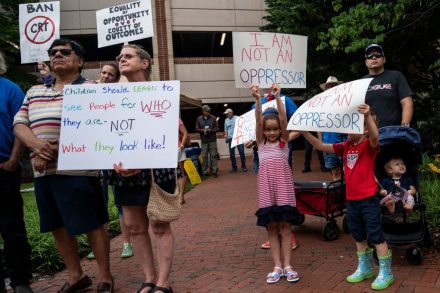
There are white people in this country and elsewhere who rank human beings by race, with the whites at the top, blacks at the bottom and everyone else in between. They are convinced that whites have a divine or natural right to rule, and they abhor racial intermarriage. They are a minuscule minority, here and elsewhere. White supremacists hold no government power. Their resources are negligible. They gather in obscure places, online as in person, and their conventions are ridiculous spectacles in which the costumes are as odious as the fantasies are pathetic. It wasn’t always like this. From about the sixteenth century to the middle of the twentieth century, the world was theirs to exploit. Western politicians, thinkers and scientists theorized freely about racial hierarchy.

white supremacy

Joe Biden and the realities of the N-word

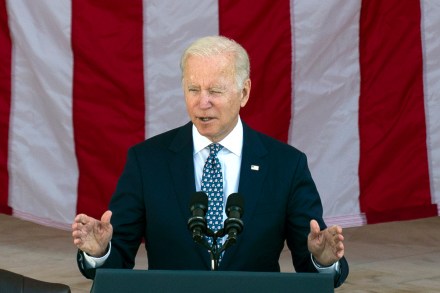
“If you didn’t vote for Biden, you ain’t black,” tweeted 2020 Florida Republican congressional candidate Lavern Spicer on Thursday, “I guess you’re a negro.” Spicer, who is black, was referring to President Joe Biden’s latest gaffe. Delivering his first Veterans Day address at Arlington National Cemetery to a nation reeling from the baleful effects of his failed presidency, and amid historically low approval ratings, Biden referred to the 1940s black baseball player Satchel Paige as “the great negro,” apparently because Paige could still competitively play at age 47. https://twitter.com/ForAmerica/status/1458851297378119684 Biden’s history with race is, at the risk of using a woke euphemism, troubled.

n-word

Bernardine Evaristo sets a rousing example of ‘never giving up’

From our UK edition

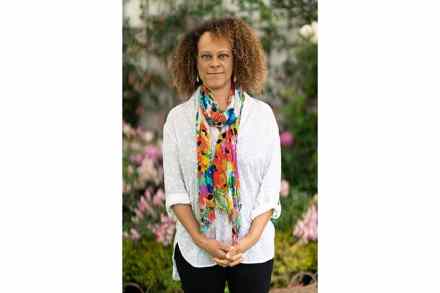
Bernardine Evaristo’s Manifesto — part instructional guide for artists, part call to arms for equality, part literary memoir —shimmers with unfailing self-belief and a strong vein of humility. When Evaristo won the Booker Prize in 2019 for her magnificent seventh novel Girl, Woman, Other, the first black woman to do so, it was the pinnacle of a career devoted not just to honing her craft but to helping others traditionally excluded from the literary world, through teaching, mentoring and activism. There is a great deal of style to Evaristo’s life story; her childhood has strong storybook notes. Her home was a huge, rundown house in south London with 12 rooms, eight children and a bannister valiant enough to bear them.

I’m a racist, you’re a racist, we are racists all

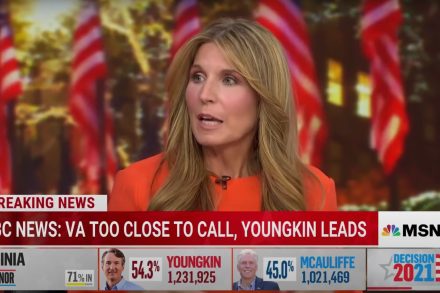
What news network did you watch on election night? Thankfully we all had plenty of options. There was CNN, where John King's magic wall grows ever more granular: "we're moving the Kelleher household into the leans-Republican column, Wolf, though their dog remains undecided. Now next door to the Smiths..." There was Fox News, where loud people shout at each other until Bret Baier and Martha MacCallum finally pull over the car and tell everyone to knock it off. And then there was MSNBC. Oh, Lord, was there MSNBC. There did we find Nicolle Wallace, one of the network's fastidiously objective anchors, declaring that Virginia governor-elect Glenn Youngkin "worshipped at the altar of Donald Trump.

racist

Tsunami of piffle: Rockets and Blue Lights at the Dorfman Theatre reviewed

From our UK edition

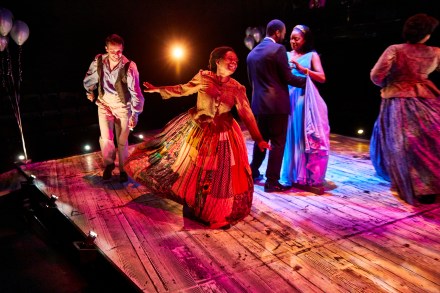
Deep breath. Here goes. Winsome Pinnock’s new play about Turner opens with one of the most confusing and illogical scenes you’re ever likely to see. A teacher on a school trip is showing her pupils a Turner painting displayed in a gallery housed inside a ship donated by the producers of a film starring a famous actress, Lou, who happens to be on board wearing a sumptuous outfit for an awards ceremony, which she plans to avoid for fear that a coveted prize will be handed to a rival. Lou invites the school teacher to an after party that is scheduled to start when the awards ceremony ends. She then gets distracted by the sight of movement on the surface of the Turner canvas. The painted figures, frets Lou, appear to be shifting and jerking.

In defence of footballers taking the knee

From our UK edition

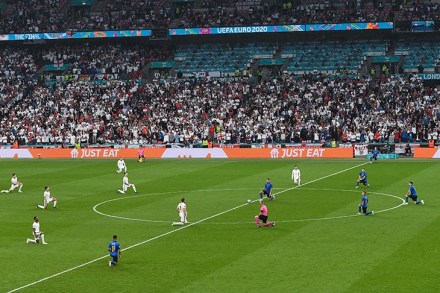
Before the television presenter Guto Harri took the knee live on air — which cost him his job at GB News last week — he explained that his understanding of the gesture had changed. Having initially thought of it as political with a capital ‘p’, he now realised that in the eyes of most people, including England’s young football players, it is simply a way of expressing your opposition to racism, as well as solidarity with its victims. It is not an expression of support for the Black Lives Matter organisation or its more controversial aims. In retrospect, that seems pretty obvious.

What a comic treat: The Game of Love and Chance at the Arcola reviewed

From our UK edition

Lady Sylvia is a gorgeous aristocrat whose hand is sought by the charming Dorante whom she has never met. To avoid the stiff formalities of courtship, Lady Sylvia swaps places with her maid and observes Dorante from the safety of pretended servitude. But instead of falling for Dorante, she becomes enamoured of his manservant. However, there’s another wrinkle coming in Marivaux’s classic comedy. Deronte’s manservant, unbeknown to Lady Sylvia, is actually Dorante himself, who has pulled an identical switcheroo with his valet. The story is so hopelessly contrived that its sheer artificiality becomes part of the joke. This production of The Game of Love and Chance, directed by Jack Gamble, captures the fun-loving spirit of the original.

The Marcus Rashford mural – an anatomy of a moral panic

From our UK edition

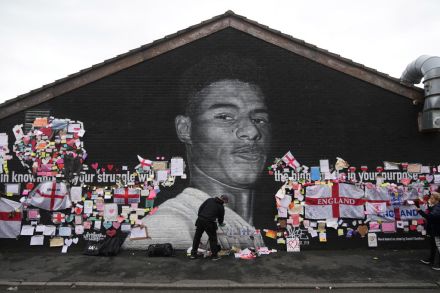
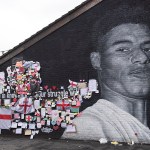
Late on Sunday night, less than an hour after England lost on penalties to Italy in the European championship final, a mural of the United striker Marcus Rashford was defaced in his hometown of Withington in south Manchester.  Shortly afterwards the defaced part of the mural was hidden by black bin-liners and an online campaign was launched by the artist to repair the mural. Mr S believes the first report from the Manchester Evening News described the vandalism as ‘indecipherable lettering, daubed in blue paint on Sunday night, [which] can barely be seen over the powerful black and white image.’ On Monday morning, Greater Manchester Police released a statement which said they had responded to ‘reports’ of racially aggravated damage to the mural.

What did the Romans ever do for us?

From our UK edition

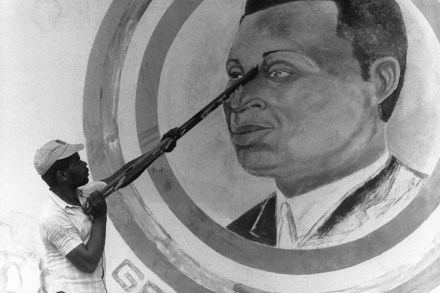
The mayor of London, Sadiq Khan, is planning to install a statue of John Chilembwe in Trafalgar Square. Mr Chilembwe was a Malawian Baptist famous for, among other things, leading an uprising where the head of a Scottish farmer was chopped off and put on a pole. He is much revered in his home country for all this and his face has appeared on banknotes. In truth, Mr Chilembwe didn’t incite the murder of many people, in the great scheme of things. If the mayor is searching for a murderer who did punch his weight, he could do worse than hoist up a statue of Francisco Macías Nguema, the former dictator of Equatorial Guinea.

A shrill, ugly, tasteless muddle: Romeo & Juliet reviewed

From our UK edition

What shall we destroy next? Romeo & Juliet seems a promising target and the Globe has set out to vandalise Shakespeare’s great romance with a scruffy, rowdy, poorly acted and often incomprehensible modern-dress production. It starts with two lads having a swordfight using curtain poles. Enter the Prince who fires a gun and halts the action. Then the preaching starts. ‘Rather than trying to understand the nature of the violence, the Prince threatens the community,’ says an actor. These intrusions continue. ‘Patriarchy,’ says someone else, ‘is a system in which men hold power.’ The slogan appears on a screen as well.

Yes, they’re deplorable – but those football tweets don’t prove Britain is racist

From our UK edition

There are two certainties whenever England’s football team plays; one that is long-established and the other a recent phenomenon. Players who never miss a penalty during training sessions will end up fluffing their attempts under the pressure of a shoot-out. And the post-match discussion of football will quickly move on to the issue of racism. England’s first appearance in the final of a major tournament since the 1966 World Cup ought to have been a moment of national celebration. Indeed, that is how it seemed until the three missed penalties. Within hours, though, few seemed to be talking about anything other than the racist abuse directed at the three players who missed the target.

Why do those who abuse Priti Patel get a free pass?

From our UK edition

Remember when Labour MP Clive Lewis got into trouble for saying, ‘On your knees, bitch’? It was at a fringe event hosted by Momentum during the Labour conference in Brighton in 2017. Lewis uttered the line as a joke to the actress Sam Swann. People went nuts. Labour bigwigs accused Lewis of misogyny. He eventually ‘apologised unreservedly’ for his ‘offensive’ language. That phrase — ‘On your knees, bitch’ — sprung back into my mind this week as I read an exchange between Alastair Campbell and Priti Patel. No, Campbell did not use the B-word. He is far too civilised for that. But he did tell Patel to get on her knees.

Isn’t it time social media cracked down on racism?

From our UK edition

No sooner had Bukayo Saka’s penalty kick thudded into the gloves of the Italian goalkeeper than you could see it coming. Racists were not going to miss the opportunity to attack the England team. And sure enough, within hours the sewer that is Twitter (even at the best of times) had become a torrent of effluent. I don’t know a great deal about coding, but I can’t think it is really all that difficult to pick up certain words and remove them Yes, it does show there is still an underbelly of racism in English society — even if the charge that we are a country of ‘systemic racism’ left over from our days as a colonial power is wrong-headed and unfair.

Don’t blame ‘white privilege’ for the plight of working-class kids

From our UK edition

Tory MP Robert Halfon is right to say that the underachievement of white working-class students is a ‘major social injustice’. He is also correct to call for ‘a proper funding settlement’ so that we have an ‘education system fit for purpose’. But this much-needed debate has been overshadowed by a red herring in the Education committee's report: the use of the term ‘white privilege’. The report claims that the use of such phrases may have contributed to the neglect of disadvantaged white kids. Of course, as Halfon says, ‘it is wrong to tell a white disadvantaged family that they are white privileged even though they may come from a very poor background and may be struggling’.

The fatal flaw in ‘see something, say something’

From our UK edition

The official review into the Manchester Arena bombing was published this week. Four years after 22 mainly young people were killed at a pop concert, the review by Sir John Saunders reveals a catalogue of failings, as such reviews always do. Yet one failing stood out in particular. On the night in question the bomber, Salman Abedi, had been standing around the exits to the stadium for over an hour and a quarter. You would have thought that in that time, the sweaty young man with a rucksack might have attracted some attention. And you would be right. A number of people, including security guards hired to protect the venue, expressed alarm about the man struggling to walk because of the weight of his rucksack, which was packed with a 32kg bomb.

Taking the knee isn’t the best way of showing black lives matter

From our UK edition

As a black football fan who grew up going to matches in the seventies and eighties, I know more than most about the beautiful game’s troubles with racism. I can still remember my own club West Ham United being the first English Football League side to select three black players in their starting team on Easter Saturday 1972; and I can still recall, for two seasons in a row, a particular section of fans in the old west side stand ‘Sieg Heil' saluting during every home game. Nowadays, racism in football is less obvious but it still exists – and it needs to be called out. But I’m convinced that ‘taking the knee’ isn’t the way to do it.

France is divided on ‘taking the knee’

From our UK edition

Until this month 'taking a knee' has not been a French phenomenon. When the Black Lives Matter movement spilled out of America twelve months ago and spread across the world, France was one of the few Western nations where it failed to make any headway. In a bold television address at the time, Emmanuel Macron declared that there would be no statues toppled in France. Meanwhile, the leader of the far-left France Insoumise, Jean-Luc Mélenchon, rubbished the idea of 'white privilege'. The French looked on in bemusement as Britain seemed to lose the collective plot, hauling down statues, denigrating Churchill and then, when the rugby and football seasons started, dropping to their knees.

Does Google really understand racism?

From our UK edition

Opponents of the new racial extremism typically object that it vilifies white people in much the same way that classical racism does black people or other minorities. While this ideology does retail racist theories about white people (collective racial privilege, heritable racial guilt), when progressives want to get really racist, they invariably turn to another target: Jews.  Kamau Bobb was, until a few days ago, Google’s head of diversity strategy. The Washington Free Beacon uncovered a blog Bobb penned in 2007 in response to Israeli actions against Hamas in Gaza. It wasn’t your standard progressive plea for Israel to stop making such a fuss and let those nice Islamists drive it into the sea.

The soul of Flannery O’Connor

Since the racial riots last summer, Flannery O’Connor has been scrutinized by literary critics and activists for reasons wholly unrelated to her literary artistry and her formidable oeuvre, whose size, though not large, is remarkable for a writer who died at the age of 39 after having been diagnosed in her mid-20s with lupus. The abruptly renewed interest in Miss O’Connor could be said almost to amount to an O’Connor revival were it not focused on a single question: ‘Was Flannery O’Connor a racist, or was she not?’ Attempts to answer it have involved an evaluation of her character based on her novels, stories and voluminous correspondence, and led in one instance to the critical conclusion that she was ‘not a saint’.

O'Connor

British universities aren’t institutionally racist

From our UK edition

There is a spectre haunting British universities: the spectre of institutional racism. 'There is a lot of evidence that points towards universities perpetuating systemic racism, being institutionally racist,' the University of East Anglia’s vice-chancellor, David Richardson, told an upcoming BBC Three documentary 'Is Uni Racist?'. Viewers are likely to be left in no doubt that the answer to that question is 'Yes'. Two people I know appeared in it, and it was moving to hear them share their experiences. Yet the reality is that for most black students there has never been a better time to study at a university in Britain. Of course, that doesn't mean there aren't still problems.