Racism

If love now rules supreme, should incest and polygamy also be legalised?

From our UK edition

The question is, says the Guardian in a report from San Francisco, whether God is actually gay, what with the gay marriage movement being on such a roll. The US Supreme Court majority ruling that marriage between same-sex couples is a constitutional right usefully coincided with a similar ruling on gay marriage in Mexico, which makes a nice change, I expect, from worrying about the narcotics-related homicide rate. In Australia, Malcolm Turnbull says it's bound to happen there. Quite a coup, this, for the social media companies like Facebook, Apple and Google who've been campaigning for just this outcome.

The questions you don’t ask at the BBC

From our UK edition

There was a remarkable scene in one BBC Today programme morning meeting in about 1995, as all the producers gathered together to discuss what stories would be on the following day’s show. The big story was the European Union; the splits occasioned by the EU within the Tory party and the battle, on the part of racist neanderthal xenophobes, to keep us out of the Exchange Rate Mechanism, from which we had ignominiously exited three years before. The meeting cackled and hooted at the likes of Bill Cash and his assorted fascists on the Eurosceptic right. ‘They think the Germans are determined to dominate Europe!’ and ‘They’re just racists!’ and ‘They’re all old Monday Club little Englanders!’ How everyone laughed.

High life | 18 June 2015

From our UK edition

When I founded the American Conservative 13 years ago — the purpose being to shine a light on the neocon shenanigans that led to the greatest American foreign policy disaster ever — Pat Buchanan and I held a press conference in the Washington DC Press Club to herald the event. There were reporters galore, and I could tell from their expressions that it wasn’t going to be a friendly session. Buchanan went first and held his own. Then came my turn. A hatchet-faced female hack in the first row asked me if Saudi money was behind me. ‘I wouldn’t accept Saudi blood money if it meant bedding Romola Garai,’ answered the modern Homer (I had seen a preview of I Capture the Castle featuring a nude Romola). ‘What do you mean by that?’ she said.

If comedians can’t take a politically incorrect joke, who can?

From our UK edition

Jerry Seinfeld’s takedown of the political correctness of today’s youth should give us all pause for thought. In an interview on US radio, the sitcom and stand-up star said that college campuses have become a no-go area for comedians. ‘I don’t play colleges, but I hear a lot of people tell me, “Don’t go near colleges. They’re so PC”' he said, before launching into a story about the time his 14-year-old daughter accused his wife of being ‘sexist’ for suggesting that she may soon want to start seeing boys. ‘They just want to use these words. That’s racist. That’s sexist. That’s prejudice. They don’t know what the fuck they’re talking about.

A course in Dangerous Ideas would be the perfect tonic for our dull universities

From our UK edition

There have been a number of articles recently by American liberals warning about the intolerance of academia, in particular pointing to the dangers of a generation who’ve never had their views challenged. The latest is by an academic using the pseudonym Edward Schlosser, who writes in Vox last week: Things have changed since I started teaching. The vibe is different. I wish there were a less blunt way to put this, but my students sometimes scare me — particularly the liberal ones. I once saw an adjunct not get his contract renewed after students complained that he exposed them to 'offensive' texts written by Edward Said and Mark Twain. His response, that the texts were meant to be a little upsetting, only fueled the students' ire and sealed his fate.

Migrants face many dangers. Are we one of them?

From our UK edition

A few weeks ago someone very dear to me passed on a question about The Spectator, asked them by a friend. The friend, who I know and like, had read Douglas Murray’s recent report from Lampedusa about the poor Med-faring migrants, and her question was this: ‘Is everyone at The Spectator a racist?’ Some insults brush past without leaving a mark, others pierce the skin and sink in. This one sunk like a splinter, and like a splinter I’ve been worrying away at it ever since, turning what was a small injury into a painful, bloody mess. I can dismiss the accusation easily enough — the Spectator office is multi-racial, the magazine’s editorial line consistently pro-immigration. It’s the questioner who haunts me.

Hope against hope

From our UK edition

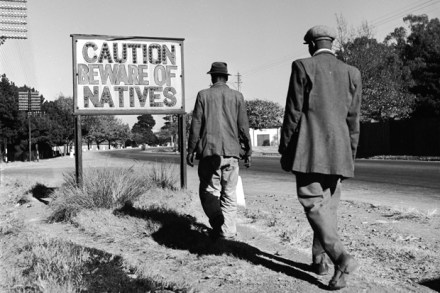
At the eye of apartheid South Africa’s storm of insanities was a mania for categorisation. Everything belonged in its place, among its own kind, as if compartments for scientific specimens had been laid out across the land. Or, as Christopher Hope puts it in his caustic new satire, people were ‘corralled in separate ethnic enclosures, colour-coded for ease of identification’. Reminding us that ‘Jim Fish’ was a derogatory term for a black man in South Africa, Hope thrusts his eponymous hero, who fits no racial category, into this mad system of classification. To some, Jimfish appears ‘as white as newly bleached canvas’, to others ‘faintly pink or tan or honey-coloured’. Nonetheless, racist whites treat him as ‘not the right sort of white’.

Snow White or black beauty?

From our UK edition

God Help the Child, Toni Morrison’s 11th novel, hearkens back to two of her earliest. Like The Bluest Eye, it is a story of internalised racism and paedophilia; like Tar Baby it is a fable about sexual and racial autonomy in the form of a love story between a beautiful, vain woman and a man who thinks she has lost her moral compass. But unlike those earlier efforts, Morrison’s latest book offers only the most inconsequential answers to questions of grave consequence. Her abiding interest has always been self-possession and self-recovery, an especially charged problem for black people in a racist culture; but this novel reads like a précis of those themes, in which conviction substitutes for complexity — a colouring book that no one bothered to colour in.

Patriotism isn’t uncivilised – it’s what makes civilisation possible | 23 April 2015

From our UK edition

Is it racist to be patriotic? Is patriotism, by definition, small-minded and exclusive? When you strip away the onion layers of sentiment about history and hymns, Shakespeare and lawn clippings, does it have a hateful heart? I ask because, as I’ve written before, I feel patriotic, and until recently I’ve considered this to be a good thing. I felt particularly patriotic at a service in Ravenstonedale, Cumbria, last week. I slid in late and guilty, amid snippy Sunday stares. After the sermon we trooped outside and in the suddenly sunlit graveyard the vicar whipped a trumpet from his cassock and began to play. A pair of starlings began their electric warble, the motes and midges were bright against the dark church wall.

What’s more disturbing than a group of discredited old Nazis? The Green Party

From our UK edition

Yesterday's Mail on Sunday had an interesting account of a meeting in London of Nazis, neo-Nazis, British National Party types and anti—Semites of various other hues. The paper infiltrated the meeting and exposed what was said - which is a very good service and deserves praise. But I challenge anyone to look through the photos and biographies of the few participants who gathered at Victoria station and then in a nearby hotel and not reflect that this is a gratifyingly washed-up and pathetic movement. During their deliberations they appear to have gone over the usual stuff about how they think the Holocaust was made up and been used by Jews for their own advantage and so on.

Don’t try and bring race into the voting booth. It has no place there

From our UK edition

The voting booth is, to borrow a fitting phrase from history, the great leveller. Outside the voting booth, you might be a blinged-up billionaire with more yachts than most people have shoes, but inside you're the same as everyone else. In that booth the billionaire becomes indistinguishable from the poor woman who shines his silver: both have the exact same power to determine the future of Britain. One cross for the billionaire, one cross for the silver polisher. For a moment, she’s as powerful as her boss. It's the most magnificent thing about democracy: it takes no heed of wealth or race or sex and instead treats us as human beings; it levels us. ‘One person, one vote.

‘The truth is hard’: an interview with Roger Scruton

From our UK edition

To the extent that Britain has philosophers, we do not expect them to address issues of any relevance to the rest of us. They may pursue some hermeneutic byway perhaps, but not the urgent or profound issues of our time. Roger Scruton has always been an exception in this regard, as in many others. He has spent his adult life thinking and writing about the nature of love, the nation state, belonging, alienation, beauty, home and England. But even his closest readers may gulp at the relevance of his latest subject matter. His new novel, The Disappeared, is set in the north of England and centres on the recent rape-gang cases. It’s a gripping, disturbing narrative dealing with abduction and abuse but also love, escape and a type of redemption.

Raised by Wolves review: council-estate life but not as you know it

From our UK edition

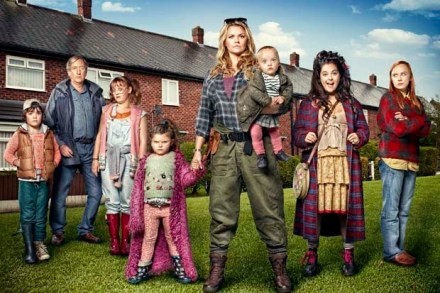
Journalist, novelist, broadcaster and figurehead of British feminism Caitlin Moran, who writes most of the Times and even had her Twitter feed included on a list of A-Level set texts, is now bidding to break into the sitcom business. Can one woman shoulder this ever-increasing multimedia load, along with the fawning tide of adulation that follows her everywhere? Wisely, she enlisted the help of her sister Caroline to create Raised By Wolves (Channel 4, Monday), a wily reimagining of their home-schooled childhood (alongside six siblings) on a Wolverhampton council estate. After a 2013 pilot, it’s back for a six-part series, with the hyperactive, motormouthed Germaine (the fictionalised Caitlin) played by Helen Monks and her caustic, intellectual sister Aretha by Alexa Davies.

I have absolutely no sympathy for liberals who find themselves being called ‘right-wing’

From our UK edition

This week I would like you to share the deep pain of a liberal who has been called ‘right-wing’. This is a terrible thing to happen. It is hard to think of anything worse. There you are, being dutifully liberal all over the place and suddenly, perhaps inadvertently, you divest yourself of the opinion that — for example — Islam may, in some way, have some sort of weird, unfathomable connection to the jihadists of the Islamic State and kaboom, your credibility is blown to shreds. All of a sudden people are calling you horrible names online, like ‘right wing’. People who are quite like you calling you this. Nice, bien-pensant people with adorable views. This has happened to a chap called Tim Lott, a journalist for one of our regional newspapers.

The abolition of anti-discrimination laws would prove how tolerant Britain had become

From our UK edition

My mum once told me about a man she knew who’d come from a poor background and had no luck finding a job. He’d applied for over 400 positions but never got a response, but then he made one change to his CV and the next job he landed straight away. What did he do? He used a friend’s address, a friend who lived in a neighbouring postcode. The point of her story was that perseverance and lateral thinking will win out in the end, but what I took from it was that employers tend to choose people on arbitrary grounds. Postcodes are just one way in which employers use direct or indirect discrimination to get the right person, because when they’re going through 300 applicants firms are bound to use shorthand of some sort.

50 years on, the battle for civil rights continues in America

From our UK edition

Fifty years since the first civil rights march from Selma to Montgomery, America still has huge problems with race. Only this week a federal investigation into the killing of an unarmed black man in Ferguson last year concluded that the police there were racist. They’ve been making millions of dollars by targeting black people and issuing tickets for minor traffic infractions. Across America, black people are still poorer, less educated and more likely to go to gaol than white people. In 1962 The Spectator’s New York correspondent Murray Kempton wrote: In the best of cases, to be a Negro in America is to have a station below your capacities… The American economy sometimes seems almost designed for the care and feeding of incompetent and unproductive white men.

Israel has become a life-insurance policy for many British Jews

From our UK edition

Weekends are quality time in the Alderman household. On Saturday evenings, following the termination of the Sabbath, my wife and I are accustomed to sit together, review the week that has just ended, and map out the week ahead. But last Saturday the conversation took a very different turn. My wife and I considered the drama that had unfolded in Copenhagen, and asked ourselves, for the very first time in over forty-one years of marriage, whether we should not make plans to leave (flee?) England – this green and hitherto pleasant land in which we had both been born and educated– and seek shelter in some foreign field.

The orthodoxy of safety

From our UK edition

Props to Goldsmiths Students' Union, for taking the ‘safe space’ concept to absurd new levels. Last week, one faction of the union hosted a screening of the film Dear White People and advertised it as being 'for BME students'. BME stands for ‘black and minority ethnic’ – and the poster specifies that this screening is for students of ‘African, Caribbean, Arab, Asian and South American ethnic origin'. The union's welfare and diversity officer and education officer both reiterated this message on Facebook and Twitter, then stated that before the screening, there was a BME ONLY social happening at Cafe Natura.

The delicious cant of the Guardian is such a treat on a Saturday morning

From our UK edition

One of the highlights of my week comes on a Saturday morning, when I make myself a cup of fair-trade coffee and settle down to read the letters page of the Guardian. My wife usually joins me — it’s a sort of date thing, romantic in its own way — and we sit there cackling, our cares and woes forgotten for a while. Sometimes it is the smug little commendations of some earnest article that has uncovered the suffering of an hitherto unreported minority of the population — that stuff is quite funny. But then all newspapers print letters from readers telling them how good they are.

If we want to tackle anti-Semitism we must challenge hate speech, not censor it

From our UK edition

One month on from the Charlie Hebdo massacre, free speech is still under attack. The outpouring of public revulsion at the bloody silencing of ‘blasphemous’ cartoonists after the attack was inspiring. It was a visceral display of support for the right to speak one’s mind – as crudely, offensively and blasphemously as one chooses – that has been absent for some time. But deep-rooted ambivalences have remained – and now these look to be exploited by policymakers looking to institute blasphemy laws of their own. When it comes to cracking down on aberrant ideas, Europe has long been leading the way. Restrictions on hate speech are in place across Europe.