Quentin Tarantino

The truth about ninjas

One of my favorite scenes in Kill Bill, Quentin Tarantino’s black comedy martial arts film, is the meeting of Beatrix “the Bride” Kiddo, played by Uma Thurman, with sword-maker Hattori Hanzo at his scruffy sushi bar in Okinawa. Hanzo: What do you want with Hattori Hanzo? Kiddo: I need Japanese steel. Hanzo: Why do you need Japanese steel? Kiddo: I have vermin to kill. Hanzo: You must have big rats, to need Hattori Hanzo’s steel. Tarantino filched his sword-maker’s name from history. Hattori Hanzo was a real ninja (or rather, the historically correct word shinobi). Born in 1542, he spent his life in the service of the shogun Tokugawa Ieyasu and compiled the manual Shinobi Hiden (Legends of Ninja Secrets).

ninja

The Hateful Eight hand the House to the Democrats

In Quentin Tarantino’s The Hateful Eight, a posse of violent ne’er-do-wells forced by circumstance into a house together descend, through duplicity, avarice and lies, into bloody chaos which leaves everyone dead. The title is a fitting one for the eight Republicans who crossed party lines to vote with House Democrats, unanimous in their belief that they are better off without Kevin McCarthy as speaker. In doing so, they ensured the House is controlled by Democrats in all but name. As the speaker race begins, the odds favor Steve Scalise or Jim Jordan — both more satisfying to the right wing than McCarthy, but far less capable of fundraising as he did to protect the tenuous hold of moderates in blue states.

house hateful eight

Into the video archives with Quentin Tarantino

Most directors don’t voluntarily retire. If you’re lucky enough to make movies at a studio level for decades, you’re not going to stop unless you can’t remember the name of the president or what year it is. Plastic enhancements may have extended the shelf life of actors and musicians, but directors can keep working until they’re on oxygen (John Huston), half-blind (John Ford), blind (Akira Kurosawa) or cancer ridden, manic, and defecating in buckets (Michael Curtiz). For over a decade, Quentin Tarantino has said that he’ll retire after ten movies — or when he hits sixty, the age he insists all filmmakers begin their steep decline.

Tarantino

Wes Anderson movies have become meaningless

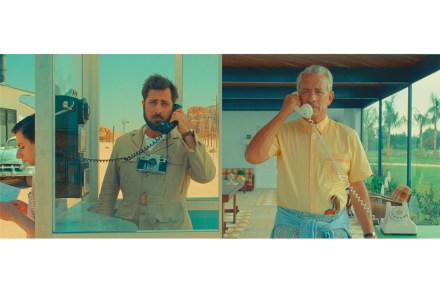
The trailer for Wes Anderson’s latest film, Asteroid City, depicts the lonesome, desert sci-fi-induced death of twee. A sepia-toned artifice of the American West filmed near Madrid, it has everyone you would expect to be in a Wes Anderson movie, depicting themselves as always, with that special twinge of beautifully centered shots combined with at least one saccharine line which is designed to make you choke up a bit about a character who probably died off screen. Here is the trailer. https://www.youtube.com/watch?v=9FXCSXuGTF4&ab_channel=FocusFeatures There is something so horribly depressing about this.

wes anderson asteroid city

Is Quentin Tarantino finished as a filmmaker?

Throughout his career, director Quentin Tarantino has been admirably consistent about his ambition to make ten films — no more, no less — and then move on to other fields. He once stated, “I like that I will leave a ten-film filmography… it’s not etched in stone, but that is the plan. If I get to the tenth, do a good job and don’t screw it up, well that sounds like a good way to end the old career.” He was savvy enough to include a caveat: “if, later on, I come across a good movie, I won’t not do it just because I said I wouldn’t.” He concluded, “But ten and done, leaving them wanting more — that sounds right.

Quentin Tarantino’s iconoclastic obsessions

Quentin Tarantino’s inevitable first volume of film writing presents a challenge: how can an established artist, especially one this famous, pivot to criticism? No matter how insightful his opinions, it runs the risk of merely illuminating what he values as a filmmaker. To his credit, Cinema Speculation doesn’t pretend it’s not taking you through a highly personal journey of one man’s cinematic obsessions. The tone isn’t too far off from the hundreds of interviews he’s given for thirty years. References to his own films are common, and unlike serious critics, he can pepper his criticism with quotes from sources he can call at any time — from critics (Elvis Mitchell) to filmmakers (Walter Hill) to miscellaneous others (Robert Wuhl).

tarantino

Hollywood, fist-fights and getting canceled

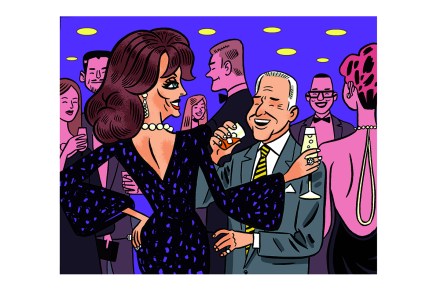
Introductions Scene: a drawing room in London. When the recording starts, Taki is already mid-anecdote... Taki: I was sent out to Monte Carlo to speak to Roger Moore. The Spectator offered to pay all my expenses. I said thank you, I’ll pay my own. I went and had a terrific drunken dinner with Roger who really spilled the beans, cos we were buddies. I came back. The tape was empty because I’d never turned the recorder on. Joan: I’d known Roger since I was fifteen, because my father was a big agent in London and I came back from school — oh, fourteen actually, because I left school at fifteen — and there’s the most gorgeous man I’ve ever seen standing there. He came over and said, “How do you do? You must be Joan, my name is Roger Moore.

Joan Collins

The media horror at Joker’s Oscar nods is deeply predictable

If you’re looking for answers as to why Joker, the Todd Phillips-helmed, gritty comic book Scorsese knock-off, garnered 11 Oscar nominations on top of being the highest-grossing R-rated film of all time, then buddy, this isn’t the piece for you. I don’t have an explanation. Joker is not a ruckus Marvel CGI theme ride. It’s an excruciating anxiety-inducing and unforgiving character study, a very good one along the lines of older cult callings like Henry: Portrait of a Serial Killer.

joker oscar

Who killed the American arts?

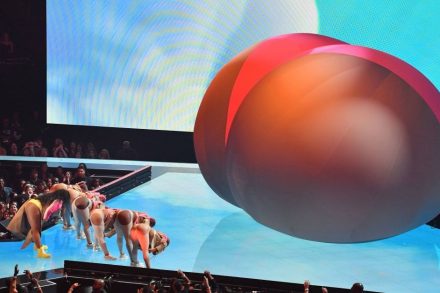
This article is in The Spectator’s inaugural US edition. Subscribe here to get yours. The arts in America are dying. In the 20th century, Americans defined the world’s popular culture, but the 21st century world has no need of America’s arts. Through technology transfer, the world entertains itself with knock offs like Bollywood and K-Pop. In the 20th century, Americans created a new art form in jazz and its derivatives, and turned Hollywood into the world’s dream factory. In the 21st century, African American music has collapsed into monotone misogyny, and digital sex (see Julie Bindel) is America’s real movie business. Americans are in the gutter, looking up at porn stars.

lizzo arts

Tarantino’s male fantasy rejects your hypothesis

Once Upon a Time...in Hollywood is Quentin Tarantino’s most pleasurable film since the first installment of Kill Bill. It’s delightful pop esoterica, blending the sensational disposability of a pulp novel with an antique edition of Playboy filled with crackling cigarette ads you can practically inhale off the page. The film is a visual banquet with a daft machismo that puts Tarantino out of step with the marketing plans of today's priggish e-cigarette smoking snoots. Ultimately, Once Upon a Time... is a stylish fairytale where the two anti-heroes are a neurotic leather-clad TV cowboy named Rick Dalton (Leonardo Di Caprio in his funniest performance) and Cliff Booth, a sadistic and square-jawed drunk who feeds his dog canned slop, played by Brad Pitt.

tarantino hollywood