Queen

A lifelong friendship: the Elizabeth I knew

From our UK edition

On 29 January 1947, the Queen and Princess Elizabeth came to St Mark’s in Mayfair to attend my marriage to Eric Penn. On the following day they set sail on HMS Vanguard for South Africa where King George VI and the Queen, accompanied by their two daughters, were to make a historic tour of the region at a pivotal moment not just in the history of the union of South Africa, but of the British Empire itself. Princess Elizabeth and I were both born in 1926 within three months of one another, but our paths did not cross until I became engaged to Eric. He was comptroller of the Lord Chamberlain’s Office in the Queen’s household and I became a lady-in-waiting to Queen Elizabeth, the Queen Mother.
The Queen’s strength was that she did not change

From our UK edition

Her task – did she ever quite realise it? – was to preside over a country in decline; and not merely to preside over it, but to be the nation’s anaesthetic, creating the illusion that the nightmare was not happening. When she was born, at 17 Bruton Street, by Caesarean section, on 21 April 1926, Britain commanded the mightiest, richest empire in the history of the world. By the time she died, Britain had ceased even to be what Gore Vidal once called it, an American aircraft-carrier. It was simply a muddle of a place, which had lost most of its manufacturing industrial wealth, all its political influence in the world, and any sense of national identity.

Memories of Princess Elizabeth

From our UK edition

I am completely and utterly devastated by the passing of our wonderful, inspirational Queen, as I’m sure are so many in our fair isles. It is the end of the brilliant Elizabethan era. I was so proud to have been part of her last Jubilee. After being driven along the circuitous pageant route around London, I finished up seated in the Royal Box, waving at Her Majesty in what would prove to be her last appearance on the balcony of Buckingham Palace, where she sparkled in emerald green. This brought back memories of May 1945, when we were all celebrating the end of the second world war. My father drove his Riley Saloon as close to the gates of Buckingham Palace as was allowed, so that my mother, my sister Jackie and I could wave to the royal family while surrounded by cheering crowds.

The Queen’s act of Union

From our UK edition

In death, as in life, Elizabeth II has been a unifying force for her country. For all the political rancour of recent years, this week has revealed a country at ease with itself. People of all political persuasions have come together to show their respect – in Scotland just as much as in England. It has been a reminder of what a force for good a monarch can be when he or she devotes their life to service. After the Queen’s coffin was transferred from Balmoral Castle to Holyroodhouse, up the Royal Mile to St Giles’ Cathedral, members of the public lined up to see it as it lay in state. Nicola Sturgeon was as effusive in her tributes as any Westminster politician. The new King was heard by the Scottish parliament with respect.

What Charles shouldn’t do

From our UK edition

One of the most regrettable trends of the past few decades is the creep of politics into every aspect of our public life. Institutions tasked with preserving our heritage, such as Tate Britain, Kew Gardens and the National Trust, are busy holding themselves to account for their historic links to slavery and colonialism, while the police, the civil service and the Church of England have embraced the mantra of equity, diversity and inclusion. The people in charge of these organisations – liberal, urban, highly educated – don’t think of these values as politically contentious, while those of us who don’t fall into those categories – probably the majority of the population – cannot help but feel alienated and disenfranchised.

The Queen’s life was anchored by Christianity

From our UK edition

King Charles III began his first speech as monarch by recalling the pledge made by his mother on her 21st birthday in 1947. Speaking from Cape Town on the occasion of her 21st birthday, Princess Elizabeth declared ‘before you all that my whole life, whether it be long or short, shall be devoted to your service and the service of our great imperial family’. She ended by saying: ‘God help me to make good my vow and God bless all of you who are willing to share in it.’ We know now that the Queen was given a long life during which the world, as it was when she was 21, was transformed. Cape Town is now part of an independent post-apartheid South Africa. The Empire dissolved, to be replaced by a Commonwealth.

How to survive the queue for the Queen’s lying-in-state

From our UK edition

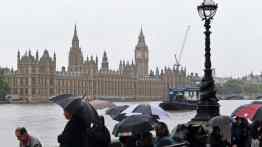
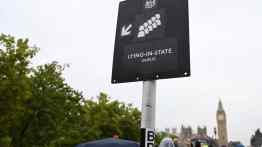
The news that mourners may have to line up for 35 hours to pay their respects to the late Queen has made headlines – and unsurprisingly so. They say we Brits love queueing, but surely that love affair has its limits.  Elizabeth II's lying-in-state in Westminster Hall is open to the public 24 hours a day, from 5 p.m. today until 6.30 a.m. on Monday. Last night Whitehall released the details of the military-style logistics operation that they hope will see the event run as smoothly as possible – with more than 300,000 mourners expected to form a five-mile human line stretching from SW1 along the South Bank and past HMS Belfast into the borough of Southwark.  https://www.youtube.com/watch?

Dear Mary: Can I save someone a spot in the queue to pay respects to the Queen?

From our UK edition

Q. I plan to travel up from Gloucestershire to pay my respects to Queen Elizabeth, and I’m happy to stand in the queue for however long it takes. My husband is only free from work a little later, but is it OK for him to join me in the queue? Or will his cutting in attract hostility? – Name and address withheld A. It will be fine as long as you warn the immediate cluster around you to expect your husband at a later stage. Bear in mind that the prevailing atmosphere in this historic queue will be civilised, in keeping with the spirit of our former Queen, and that scuffling is unlikely to break out. This is an extract from Dear Mary. The full article is available in this week's issue of The Spectator, out tomorrow.

The unsettling business of painting the Queen’s portrait

From our UK edition

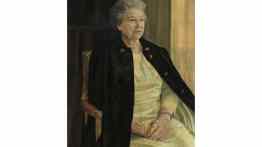
In March 1995, I entered the Royal Society of Portrait Painters annual exhibition with a portrait of the Right Revd Michael Adie CBE, Bishop of Guildford. A new prize had been created that year to be awarded to the best portrait in the show. Unusually, the reward was in the form of a commission to paint someone in public life. The identity of the sitter was a secret. The evening before the opening, I was informed, to my astonishment, that I had won and the sitter would be Her Majesty the Queen. I had to wait nearly six months before my first sitting. During that time there was very little I could do to prepare apart from think about how it might go.

Elizabeth II was our greatest diplomat

From our UK edition

The grief is still raw and the news has barely sunk in. I feel quite heartbroken. But I know that many the world over feel the same. The death of Queen Elizabeth II has special resonance here in this country, in the Realms and in the Commonwealth. Yet there is barely a corner of the world that her smile did not touch. There is quote in The Great Gatsby I have always liked, and now it makes me think of her. For she ‘had one of those rare smiles with a quality of eternal reassurance in it, that you may come across four or five times in life. It faced, or seemed to face, the whole external world for an instant and then concentrated on you with an irresistible prejudice in your favour.

Lessons for life from the Queen

From our UK edition

Having taken the Queen’s remarkable longevity, good health and work ethic for granted right until the end, might her subjects now appreciate her approach to life? Because through her combination of sheer graft – she received Liz Truss to kiss hands two days before she died – and her attitudes towards health, leisure and emotional resilience, Queen Elizabeth II bestowed on us an invaluable guide to living well. The problem is that most of us haven’t spotted it. It begins with some obvious don’ts: don’t smoke – the Queen had that lesson first-hand from her father George VI (albeit her sister Margaret didn’t listen).

She lived her best life

CNN and Fox were fine, but you had to tune in to the British news channels to get the full weight of the Queen's death on Thursday. Every anchor, every reporter, spoke in a voice burdened by grief. So it was easy to forgive one Sky News commentator when she said, "At a time when it's all about having a brand, the Queen stood in defiance of that trend." In fact, it's hard to think of anyone who had a more cultivated brand than Elizabeth II. Her every public appearance, every utterance, every twitch was carefully calibrated toward the image of a stately monarch. Yet you can also understand what the Sky commentator meant.

The monarchy will survive Diana’s death (1997)

From our UK edition

Today marks 25 years since the death of Diana, Princess of Wales. Andrew Roberts wrote The Spectator’s cover story that week, republished below and available at our digitised archive. The story that ended so horribly in that functional concrete Parisian tunnel early on Sunday had begun with a television show in 1969, when the victim was seven years old. In contradiction of Walter Bagehot's advice, daylight was let in on the magic of the monarchy. Before 1969, all had been deliberately obscure. Who now remembers Commander Colville? For over two decades, Commander Richard Colville DSC was press secretary, first to George VI and then to the present Queen.

Are republicans becoming an endangered species?

From our UK edition

How disappointing. Come Jubilee time and the Guardian can usually be relied upon to lead the way in publishing sour pieces moaning about ‘jingoism’, attacking the extravagance of a royal procession and trying to claim that the people who turn up to watch and join in with the celebrations are somehow outnumbered by people who would rather get rid of the royal family and live under a republic. At the time of the Queen’s Golden jubilee in 2002, Mary Riddell wrote of a ‘family that knows how to command a deference out of kilter with its popularity’, adding that ‘a third of the population wants a republic, a third couldn’t care what befalls the monarchy, but damp-palmed curtseyers abound.

This isn’t the beginning of the Charles Regency

From our UK edition

One of the cruellest and most accurate remarks made about Prince Charles is that he is less king-in-waiting and more the perennial prince, forever hanging about in his mother’s shadow and increasingly desperate to assume the throne. Yet he is now 73 years old, and will be the oldest monarch to ascend the throne since William IV, who became king aged 64 in 1830. This is a source of endless frustration to Charles. Newspaper briefings by well-placed courtiers have suggested he longs for greater involvement in the day-to-day running of ‘the Firm’, perhaps even culminating in an official Regency, given his mother’s declining health.

Will Prince Andrew fuel a republican boom?

From our UK edition

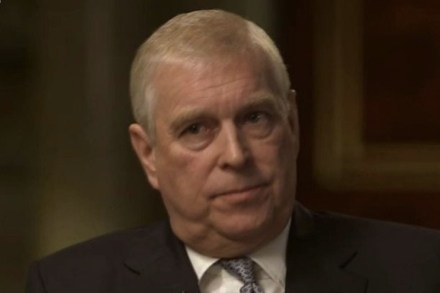
So that’s that then. After years of claims and counter-claims, Prince Andrew has settled with Virginia Giuffre for an eight-figure sum thought to be in the region of £12 million. This, for a woman he said he had never met. Hmm.  The humiliation for the disgraced royal isn’t over yet though: self-promoting Corbynista Rachel Maskell, the MP for York Central, has been quick today to demand his title as Duke of York be removed to avoid offence to the good people of God’s own county. And it seems that Labour backbenchers aren’t the only critics to whom Andrew is giving succour. For pressure group Republic, which campaigns for the abolition of the monarchy, has seen an uptick in its fortunes in recent weeks.

Will the end of monarchy in Barbados spark a chain reaction?

From our UK edition

As of this week, the Queen is down to 15 thrones, after the royal standard was lowered in Barbados in the early hours of Tuesday morning. A presidential flag now flies there. Elizabeth II still remains, by some margin, the host with the most in terms of square miles per head of state. Presidents Xi, Biden and Putin do not come close to the Queen of Canada, Australia and Papua New Guinea plus a chunk of Antarctica, little old Britain and all the rest of her realms and territories. Depending on how much ocean you include, she remains Sovereign of somewhere between an eighth and a sixth of the Earth’s surface. So, at 167 square miles, Barbados may have been a mere blip in the portfolio. This is a significant moment, though, all the same.

Donald Trump: monarchist?

From our UK edition

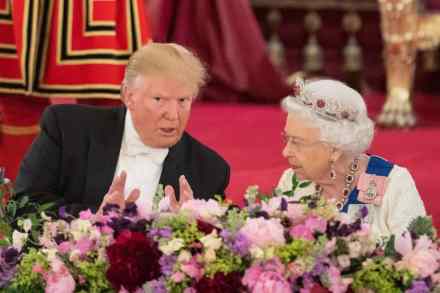
As the Harry and Meghan carnival rumbles on, the Queen has found an unexpected source of support: Donald Trump. During an interview with Nigel Farage, Trump said of Meghan: ‘I’m not a fan of hers. I wasn’t from day one…she is trying do things that I think are very inappropriate.’ Meanwhile, he painted the Duke of Sussex as her plaything: ‘I think Harry’s been used and been used terribly. I think it’s ruined his relationship with his family, and it hurts the Queen…I think some day he will regret it.’ If Trump doesn't like Harry and Meghan, there's no doubting his affection for the Queen.

Why the Oxford Queen portrait row matters

From our UK edition

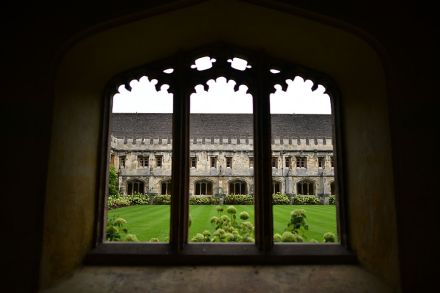
The sheer scale of the outrage over Magdalen College Oxford electing to remove a portrait of the Queen from the postgraduate common room can seem on the face of it to be absurd; why should we care what pictures a group of students choose to put on the wall? We didn’t care when they put it up in 2013. Why should we mind if they happen to have better decor available today?  A little digging however shows that, as is generally the case, this latest flashpoint is less about the putative cause and more to do with ideology. The portrait was taken down because 'for some students depictions of the monarch and the British monarchy represent recent colonial history'.