Quarantine

Three mistakes the UK made at the start of the corona crisis

From our UK edition

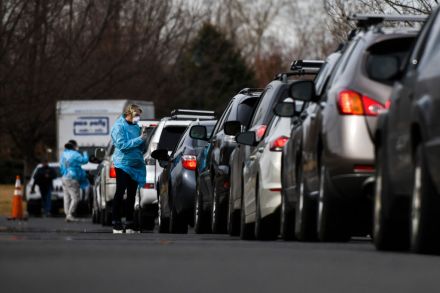
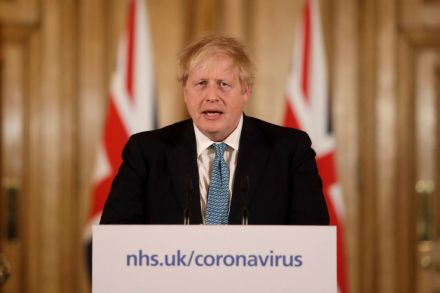
There are three areas where government policy now implicitly accepts that they made mistakes in their earlier handling of the pandemic. The first is the desire to increase testing to 200,000 tests a day. This suggests that the earlier decision to pull back from a test and trace strategy because the infection was being spread in the community was due to a lack of a testing capacity; something that could have been remedied if the government and Public Health England had adopted the collaborative approach to testing that they now have. The second is care homes.
Cooking for dad: real food is nothing fancy

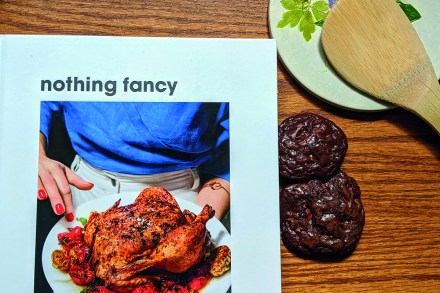
I fled New York City in March for my hometown in Pennsylvania. I brought with me one suitcase, a good chunk of it filled by my favorite book: the bestselling Nothing Fancy by Alison Roman of the New York Times. I’m now facing weeks here with three shirts and an impractical selection of underwear, but I regret nothing about my packing. As my father drove up the turnpike to evacuate me, I had decided in a burst of wartime can-do spirit that my contribution to the household would consist in cooking for the family, and damn if I wasn’t going to make a go of it. There was more than a little self-interest in this idea. Like all middle children, I long for a chance to shine in front of my family.

alison roman

Lockdown is over. Someone tell the government

The coronavirus shutdown is over by public demand. There are crowds of sunbathers in the parks of New York City and mobs on the steps of the statehouses. Pedestrian and road traffic are rising and businesses are defying orders by informally reopening. The people are speaking — the people who used to work on a hand-to-mouth economy, the people who cannot afford to stay indoors indefinitely, the people who cannot be bothered to stay in when the sun comes out.These people are not all the people. They are not the doctors, who counsel caution. They are not the state governors, who are terrified of votes being washed away by a post-reopening second wave of casualties. They are not state employees, who can trust that their jobs will be waiting for them.

lockdown
myself

It’s gonna be a long day with myself

I wake up confused. Oh. This is really happening. I wasn’t dreaming that the entire world is on house arrest. It’s actually real. I’m disoriented. What day is it? What month is it? What is time anyway? I’ve lost all concept of it. Am I in Vegas? Oh that’s right, Vegas is closed. Today is going to be the day. The day I live my best quarantine life. I’ll practice guitar and spend an hour learning Arabic and bake sourdough bread and do some YouTube workouts. This is the 19th day in a row I’ve said that. Who am I kidding? I don’t even own a guitar. And where the hell am I gonna use Arabic other than when I’m binge-watching Jack Ryan? Again. I don’t trust the subtitles. I don’t trust anything anymore. Except the mirrors.

The changes to come in the post-COVID world order

The Democrats are taking their stand on the coronavirus crisis in an untenable position. It is like building a defensive redoubt in a valley surrounded by hills in the hands of the enemy (like the French at Dien Bien Phu in 1955, as President Eisenhower warned them). Whether this is tactical stupidity by the president’s enemies or strategic genius by the president or — more likely — a bit of both, is not clear except to insiders. Readers will recall that the Democrats charged out of the gate on the issue of taking science seriously and reacting comprehensively; the president picked up the gauntlet, brought prominent scientists forward, and 'flattened the curve'.

changes come covid pakistan

Why men don’t read books anymore

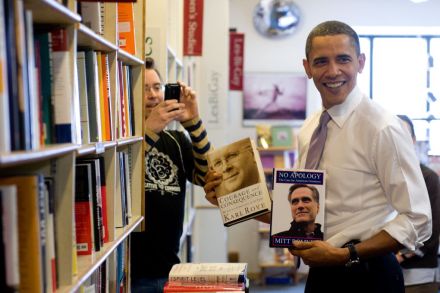
When John F. Kennedy was dating Jacqueline Bouvier, he gave her two books. One was Pilgrim’s Way (1940) a memoir by the British spy and author John Buchan. The other was The Young Melbourne (1939) by Lord David Cecil, which describes the raffish exploits and political intrigues of a Whig aristocrat, and later prime minister, in the early 19th century. Quite what Jackie thought of this is unrecorded. Later President Kennedy told Life magazine what his favorite books were. Both of the titles above were in this proto-listicle, along with works about Byron, John C. Calhoun, Talleyrand and Gibbon’s The Decline and Fall of The Roman Empire.

read books
connected lockdown heads covid-19

Heads in the cloud

‘Nothing will ever be the same again.’ You hear a lot of that glibly categorical punditry around the COVID-19 outbreak. Already, the progress of a mindless virus through the human population is being touted as the herald of the reorganization of the world’s economic system and the end of neoliberalism, the harbinger of a world in which nurses and shelf-stackers are valued more highly than investment bankers. Well, we’ll see. There are, as has been often said, two great things of which we can always be certain: death and taxes. The former is currently enjoying a bit of a moment. But the latter, sooner or later, is going to make the sort of roaring comeback not seen since First Blood Part II.

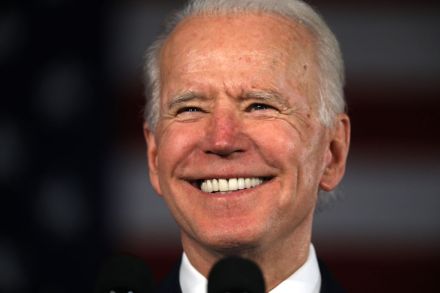
Why Joe Biden’s America loves a lockdown

COVID-19, the Wuhan virus, is an epidemiological scourge — but it’s also a clarifying catalyst for American politics. The virus’s relevance for globalization has been widely noted: this disease of Chinese origin has exposed how incapable the de-industrialized West has become of providing its own masks, drugs, and ventilators. It has highlighted the class divide that globalization produces within countries such as America as well. The highly educated professional classes can work from home, and their jobs are relatively secure; the service class, on the other hand — the waiters and cooks and hotel maids and retail clerks and others — are out of their jobs and shit out of luck. Not to worry: the professional class will write all of them checks for $1,200.

joe biden lockdown

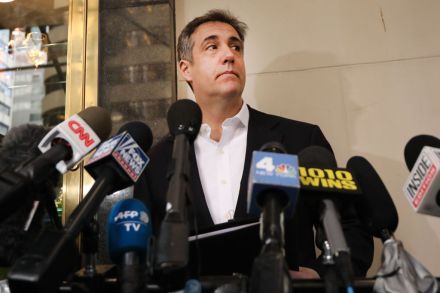
Liberate…Michael Cohen?

President Trump sent out a number of tweets today demanding liberation, but he probably wasn’t thinking of his old fixer Michael Cohen. Cohen, who squealed on Donald Trump before Congress, went to jail for a variety of financial and campaign finance crimes. Thanks to the coronavirus, his own problem is largely fixed. He’s getting an early reprieve from his three-year jail sentence at a medium-security prison in Otisville, New York and headed for home confinement. Another member of Trump’s rogues gallery, Paul Manafort, has asked to be released from Loretto federal prison in Pennsylvania because of the pandemic, but there’s no word yet whether his request will be granted. Unlike Cohen, Manafort remained unflinching.

liberate michael cohen
cowardice

Coronavirus lockdowns are cowardice

This is a piece about death. Obviously death is a serious topic, perhaps as serious as anything you could possibly write about, but in these truly weird times of a global pandemic and unprecedented threat to what most people would conceive as normality, let’s start with a joke. How do you make ordinary citizens accept an indefinite period of economic shutdown and deprivation of their most basic civil liberties? Two weeks at a time!There seems to be a bit of a trend regarding disclaimers among those who have an opinion in favor of a return to everyday life anytime soon so I’ll start with the usual caveats: I accept that coronavirus, COVID-19, SARS-CoV-2 or whatever you prefer to call it, is a serious health threat.

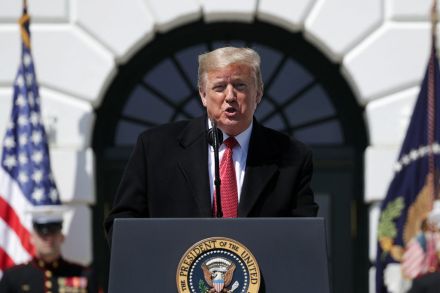
Trump walks the recovery tightrope

President Trump’s decision to set the United States back on the path to work will be decried as mere politics, but it is the right decision. It is the task of politicians to consider the general welfare. This consideration sets the current emergency against the coming one, the need to reduce deaths from COVID-19 against the need to forestall the human cost of an economy in open-ended limbo. The data on COVID-19 remains insufficient and will probably remain so. The economic prognosis is, however, clearer, and we have the data too.The IMF is warning that a prolonged shutdown will lead to a Thirties’-style Depression.

recovery
climbing

Climbing the walls

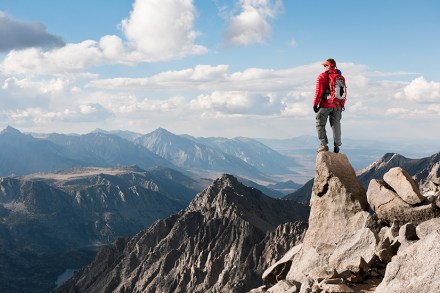
Colombo In January, I promised a visiting Army reservist friend that we’d climb Adam’s Peak. That plan was scotched when I came down with dengue fever. But I’d climbed Adam’s Peak before (the first time, Christmas 2004, when the tsunami struck, probably saved my life) and there would always be another chance to do it, right? Things change. Like everyone else in town, I was already bored and irritable from the first week of our lockdown when I saw a burst of British news items on COVID-19 nixing Everest expeditions, pensioners trying to keep fit indoors and some chap figuring out how many stairs it took to ‘top’ the mountains of the British Isles. Challenge accepted.

COVID in Colorado

Denver, Colorado is not New York City. There are not thousands of people stacked on top of one another here. To borrow from Arcade Fire, it’s a ‘massive sprawl with mountains beyond mountains’. The population skews toward young professionals in the downtown area and upper middle class families in the immediate suburbs. It’s a city and a state full of recreationalists, participating in a natural social distancing of the mountains in Aspen So how does a city population known for their isolated outdoor activities handle a statewide lockdown order, like the one issued by first-term Gov. Jared Polis on March 25? Colorado faced the grim reality of ranking within the top 15 states for reported cases of COVID-19.

denver colorado
liquor alexandria northern virginia

Lacking liquor in Northern Virginia

It’s been one day since Northern Virginia closed its liquor stores and already civilization has collapsed. Fires burn on the horizon as the cry of the sober mob reverberates through the streets. People nail boards over their windows and spray paint ‘NO VODKA’ on them. Yuppies have descended into the underground Metro stations, where rumor is they’ve become something less than human. Harvesters, we call them, and last night they came for my friend Bone Saw… That, of course, is not what’s happened in Virginia since the state ordered the temporary closing of some liquor stores last week. Life in the quarantined DC suburbs has mostly continued as usual.

Actually, it’s not ‘OK’

‘It’s ok’ is a meme that enables lazy millennials across social media to bail on plans last minute in favor of wallowing in self-pity. It seemed to have already completed its meme rounds, having come to its satirical end in January. Now, however, ‘It’s ok’ has experienced a resurgence — thanks to Lord COVID.Social media has been even more drowned in comforting posts than normal. ‘It’s ok’ posts are in overdrive. Would-be influencers insist, ‘It’s ok to eat chips three meals in a row,’ ‘It’s ok to do literally nothing!

ok

Society needed this reset

BrooklynI live on a grim block. Each year another glass-and-steel human filing cabinet, billed by developers as ‘luxury living’ and so sterile you could perform surgery inside, sprouts up to accommodate the millennial hordes charging into neoliberalism’s hippest zip code. These residences have names like The Edge, or The Brooklyn, or The Douchebag. They’re crumbling before anyone has even moved in. The sun-bleached, warped particleboard facades must be constantly replaced. A strong wind hurls Styrofoam paneling, used to resemble concrete or stucco, onto the streets, and rain streaks the aluminum paneling with brown sludge that bakes into a stain.

society

Forget doctors and nurses, Madonna is the true hero of this pandemic

As soon as the lockdown guidelines were announced across the UK last week, I made the decision to move back in with my parents. As you can imagine after three years at university, this has been a somewhat challenging situation to adjust to! It has been made even more testing due to the fact father has had to lay off many of the staff due to them calling in sick. We are down to one cook and a mere handful of cleaners. It’s a nightmare! Thankfully we have a solid internet connection and I have been able to occupy myself on social media the past few days. I say ‘occupy’, but that’s more of an understatement. It’s been more of an essential lifeline to me.

madonna

Fear, guilt and the virus

Fear and the frisson of fear are two very different emotions. The one is horrible and the other delightful or at least often sought after.Who, after all, does not enjoy a good fright in a cinema or while reading a thriller? When I arrived in Paris just before the lockdown was announced and one was no longer allowed out of the house without a laissez-passer (signed by oneself), all the places of public resort such as bars, restaurants and cinemas, had already been closed: but the atmosphere was still one of frisson of fear rather than of fear itself.

virus

Why aren’t my exes texting me during quarantine?

A scroll through a millennial’s Twitter feed in the time of coronavirus shows a few dominant themes: adorable pets; extravagant home-cooked meals; worrying scatter charts; and the Text From An Ex.All our exes are bored, the meme goes, and nostalgic, and it’s so annoying, and so typical. 'Crazy times,' they say, 'Hope you’re doing OK ;).' The thing to do is to post the screenshot and complain about the ex’s ham-fisted manipulations while secretly reveling in the attention, smug and secure in the knowledge that we’re the ones who got away.Don’t get me wrong: a ritual ‘checking in’ on significant figures from your past seems to be a harmless, if slightly disingenuous, emotional safety valve in a catastrophe.

exes

The virus is not invincible, but it’s exposing who’s irreplaceable

In all the gloom and doom, and media-driven nihilism, there is actually an array of good news. As many predicted, as testing spreads, and we get a better idea of the actual number and nature of cases, the death rate from coronavirus slowly but also seems to steadily decline. Early estimates from the World Health Organization and the modeling of pessimists of a constant four percent death rate for those infected with the virus are for now proving exaggerated for the United States. More likely, as testing spreads, our fatality rates could descend to near one percent. There is some evidence from Germany and to a lesser extent South Korea, that it may be possible to see the fatality rate dip below one percent.

virus