Putin

Donald Trump is wrong about Germany being a ‘captive’ of Russia

From our UK edition

"What good is Nato if Germany is paying Russia billions of dollars for gas and energy?" tweeted Donald Trump on 11 July. Trump was surely referring to Nord Stream 2, the controversial deal between Russia and Germany, whereby Russia will pump natural gas direct to Germany through a new pipeline across the Baltic Sea. Trump reckons such arrangements make Germany a 'captive' of Russia. Is he right? America isn't the only country that's getting hot and bothered about Nord Stream 2. Denmark and the Baltic States have also voiced concerns. The most vociferous opponent of the scheme is Ukraine.

Putin says he’s making Russia great again. In reality, it’s crumbling

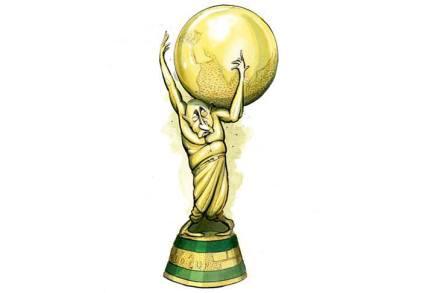
This is Putin’s time. Next week, the Fifa World Cup kicks off in Moscow, and the Kremlin has spared no expense to showcase Vladimir Putin’s new Russia as a vibrant, safe and strong nation. Half a million visitors will be welcomed — with the Russian press reporting that the notorious ‘Ultra’ hooligans have been officially warned to behave themselves or face the full wrath of the state. Despite four years of rock-bottom oil prices, Putin has nonetheless found the cash to build or refurbish a dozen new stadiums. Moscow has undergone a two-year city-wide facelift that has left it looking cleaner, fresher and more prosperous than any European capital I have seen.

The Spectator Podcast: Putin’s Losing Game

From our UK edition

In this week’s episode, we talk about Russia’s hidden fragility, and ask, is Putin surviving on luck? We’ll also be getting to the bottom of Trump’s tariffs – is there really no rhyme or reason to them? And last, with all that’s going on in the world, is kindness what we all need more of? The Russia World Cup is due to start in a week, and as the streets of Moscow are cleaned up in preparation, things seem to be going pretty well for Putin’s Russia. Russia has been asked to fill the void left by Trump in the Iran nuclear deal, Russophile parties are wreaking havoc to the EU establishment across Europe, and Russia’s involvement in Syria has established the country as a serious power broker in the region.

Putin’s rot

This is Putin’s time. Next week, the Fifa World Cup kicks off in Moscow, and the Kremlin has spared no expense to showcase Vladimir Putin’s new Russia as a vibrant, safe and strong nation. Half a million visitors will be welcomed — with the Russian press reporting that the notorious ‘Ultra’ hooligans have been officially warned to behave themselves or face the full wrath of the state. Despite four years of rock-bottom oil prices, Putin has nonetheless found the cash to build or refurbish a dozen new stadiums. Moscow has undergone a two-year city-wide facelift that has left it looking cleaner, fresher and more prosperous than any European capital I have seen.

A brutal band of thieves

From our UK edition

Mark Galeotti’s study of Russian organised crime, the product of three decades of academic research and consultancy work, is more than timely. In these days of ever more bizarre Russian attacks, it reads like the essential companion to a bewildering and aggressive new world, a world that is no longer confined behind Russian borders but seeks actively to penetrate and disrupt our own society. Essentially a history of the development of Russia’s unique form of organised crime, it constantly illuminates and clarifies the familiar, legal narrative of Russian history and the attitudes of Putin’s clique. The Russian mafia’s distinctive culture originally emerged during the years of revolution and civil war.

The 10 graphs that explain Vladimir Putin’s Russia

This is an edited version of a presentation given by Owen Matthews at The Spectator's What does Russia want? event. What I’d like to do is give a run-through of how we got to where we are with Russia. From the end of the Cold War onwards, focusing on the economy – and how the economy, in true Marxist fashion, has shaped the politics and political realities that we see in Russia today. The first metric is the big story of the post-Cold War world. Very simply, the graph above shows what’s happened between the collapse of the Soviet Union and the present day. It’s very clear: America's GDP has gone from $10 trillion to $18 trillion, China is catching up and Russia is flatlining.

The Spectator’s Notes | 19 April 2018

From our UK edition

Everyone speaks about the Windrush. The boat was actually called the Empire Windrush. The full name reveals what the story was about. The boat was one of a series called Empire X, X being the name of a British river, as if each were a tributary to a common stream. Mass coloured immigration to Britain was the act of an imperial power — almost, one might say, an imperialist act. In 1948, a Labour government (Attlee’s) created a common ‘Citizenship of the United Kingdom and Colonies’. Just as we wanted the raw materials of our colonies, so — later in the day — we wanted their labour. This also explains the context of Enoch Powell’s ‘Rivers of Blood’ speech 50 years ago this week.

Corbyn shows his true colours

From our UK edition

The Tories’ great worry after the last election was that they had effectively vaccinated the electorate against Jeremy Corbyn. They feared that the next time they tried to show that he was extreme, weak on national security and too friendly with the West’s enemies, voters would yawn and declare that they had heard it all before. They would be immune to any attacks on the Labour leader. Compounding this worry was the fear that Corbyn would present himself, as he had quite successfully during the general election campaign, as a more mainstream figure than he really is. If Corbyn had followed this ‘kindly grandad’ approach, the Conservatives would be in deep trouble right now. Labour’s moderates would also lack any obvious cause for complaint.

What does Russia want?

From our UK edition

With Russian poisoners stalking the streets of Salisbury and the real possibility of a hot war with the Kremlin’s troops in Syria, The Spectator’s debate this Wednesday – What does Russia want? – could hardly be more timely. The line-up of guests we’ve assembled promises to be an explosive mixture. Russian Presidential candidate Ksenia Sobchak, who made a doomed run against Vladimir Putin in March’s elections on a platform of liberal reform, will lead the anti-Kremlin side. Sobchak is more than just a prominent liberal politician – she’s the ultimate political insider. Sobchak’s father Anatoly was an iconic liberal mayor of St Petersburg – and was Putin’s boss and political mentor in the years after he left the KGB.

How have the Russian oligarchs got away with swaggering around London for so long?

From our UK edition

A decade ago I commissioned an article about Vladimir Putin’s business cronies. Among other lines of enquiry, it sought to finger ‘a coterie of wealthy and politically influential industrialists, many believed to be former or current secret service officials’ who allegedly had shareholdings in Russian companies which, if we or anyone else had been able to prove that they were controlled by the president, might have evidenced a personal Putin fortune of tens of billions. Sensibly, The Spectator’s lawyer would not let me publish — but the US Treasury has now done its own version of the job by imposing sanctions on seven oligarchs and 17 senior Russian officials who are believed to form the innermost presidential clique.

President Erdogan’s Syrian dilemma

From our UK edition

Istanbul It is a bad time to have an ally on the fence. With US military action in Syria looking more likely by the minute, and the West’s frosty relations with Russia in danger of deepening into a new Cold War, Washington is eyeing the actions of Turkey’s President Erdogan with concern. Turkey, a NATO member since 1952, the ally with the second biggest army and the only one to share a border with Syria, has spent the past two years cosying up to Russia. Ankara is part of the Astana troika alongside Moscow and Tehran – an initiative that has snatched the peace-broking lead in Syria from the UN and Western-back Geneva talks.

The US shows London how to cold-shoulder Putin’s cronies

From our UK edition

A decade ago I commissioned an article about Vladimir Putin’s business cronies. Among other lines of enquiry, it sought to finger ‘a coterie of wealthy and politically influential industrialists, many believed to be former or current secret service officials’ who allegedly had shareholdings in Russian companies which, if we or anyone else had been able to prove that they were controlled by the president, might have evidenced a personal Putin fortune of tens of billions. Sensibly, The Spectator’s lawyer would not let me publish — but the US Treasury has now done its own version of the job by imposing sanctions on seven oligarchs and 17 senior Russian officials who are believed to form the innermost presidential clique.

Sergei Skripal being out of a critical condition doesn’t get Moscow off the hook

From our UK edition

The latest news from the Salisbury attack is that Sergei Skripal is no longer in a critical condition and that his daughter Yulia is now talking and will be well enough to leave hospital at some point. This, obviously, has implications for the investigation into their attempted assassination. Yulia will, presumably, soon be able to tell the police about what happened in the days and hours leading up to them both being found on the verge of death in Salisbury city centre. Internet conspiracy theorists will, I’m sure, declare that the fact the Skripals are not dead is proof that the Russians weren’t behind this. But given that it appears that the Skripals absorbed the nerve agent through their skin rather than breathing it in, it is unsurprising that it was less effective.

Could the Russian economy benefit from some Roman history?

From our UK edition

The Russian economy is not in the greatest of shapes. That being the case, one would have thought friendly diplomatic and economic relations with the West would be a priority for Vladimir Putin, given his need for cash to build weapons against threats from superpowers such as Estonia. A little Roman history would help. As has been well documented, the collapse of the Roman Empire in the west in the 5th C ad heralded something of an economic dark age for Europe for some 200 years. The long-nurtured Roman economic networks extending east as far as China simply could not survive the break-up that would create the beginnings of today’s Europe. The ancient sources, as well as the archaeological record, make clear just how connected that world had been.

There is no crack in Theresa May’s case against Russia

From our UK edition

Theresa May has never published her case blaming Russia for the Salisbury poisoning. She has reason to be wary of Blair-style intelligence dossiers, and she didn’t need to make everything public to win the support of allies. But as things stand, her case against Russia is open to misinterpretation by the Kremlin. As we have seen with this morning’s headlines. Yesterday, Sky News interviewed Gary Aitkenhead, chief executive of Porton Down, who said: “We were able to identify it as Novichok, to identify it was a military-grade nerve agent. We have not verified the precise source, but we have provided the scientific information to the government, who have then used a number of other sources to piece together the conclusions that they have come to.

Octavian’s poison legacy

From our UK edition

Barely a day passes without yet another Russian explanation for the Salisbury nerve agent attack. What’s new? Such disinformation has a very ancient history. After Caesar’s assassination in 44 bc, his old friend Mark Antony and the 18-year-old Octavian, Caesar’s adopted son and heir, emerged as the two contenders for power. In 32 bc, it had become clear that it war between them was inevitable. At this critical juncture, two allies of Antony deserted to Octavian, and revealed that Antony had a will, which had been lodged with the Vestal Virgins. It was illegal to open the will of a living man, and the Virgins told Octavian that they would not touch it.

Portrait of the week | 22 March 2018

From our UK edition

Home Britain and the European Union agreed on a transitional period after Brexit on 29 March 2019 until the end of 2020 in which Britain can make trade deals and EU citizens will be able to claim UK residency. The Irish border question was unresolved. British fisherfolk were sold down the river, despite an undertaking a week earlier by Michael Gove, the Environment Secretary, and Scottish Conservative leader Ruth Davidson. In a joint statement, the two politicians had promised: ‘Britain will leave the CFP [Common Fisheries Policy] as of March 2019.’ In fact, Britain will merely be ‘consulted’ on fishing quotas during the transitional period.

Our response to the nerve gas attack has been an act of self harm

From our UK edition

There was a growling Russian maniac on the BBC’s Today programme last week, an MP from the United Russia party called Vitaly Milonov. Breathing rather heavily, as if he were pleasuring himself, Mr Milonov likened our country to Hitler’s Germany for having accused Russia over the attempted murder of Sergei Skripal and his daughter Yulia. At this point he was cut off by the presenter — rather a shame, I thought, at the time. I would have liked to hear Vitaly expand upon some of his other beliefs, such as homosexuals being responsible for the Ebola virus and Jews being Satanists. He also hates cyclists, so not all bad, then. If you wanted to conjure up a post-commie reactionary Russian pantomime villain, Vitaly is what you would end up with.

Two things that must change after Salisbury

From our UK edition

As I say in The Sun this morning, one of the things about the Salisbury attack that has disconcerted the UK government is how--relatively obvious--the Russians have made it, that it was them. They clearly wanted to send a message. In Whitehall, the thinking is that there were three things that Moscow was trying to achieve with the poisoning of Sergei Skripal. First, to show Russia’s enemies that they are never safe. If they can hit a former spy for Britain who was keeping a low profile in a small English City then they can get to anyone. Second, they think that the Russians were trying to test Britain. This country is now the major Western power that is most consistently arguing for a robust approach to Vladimir Putin.

The Spectator Podcast: Putin’s toxic power

From our UK edition

On this week’s episode, we look at the situation with Russia, and whether diplomatic relations have been poisoned. We also discuss the bullying scandal in Westminster and consider whether sledging in cricket has gone too far. The nerve agent attack on Sergei Skripal in Salisbury has led to an outbreak of antagonism between Britain and Russia. Theresa May has now expelled a host of Russian diplomats, but can anything be done to stop Putin’s assault on Western values? That’s the question Owen Matthews asks in the magazine this week, and he joins the podcast along with Tom Tugendhat, chair of the Foreign Affairs select committee, and then former Foreign Minister of Poland, Radek Sikorski, joins us. As Owen writes: "Putin lies, barefacedly and repeatedly.