Putin

The truth about Russia’s hidden Covid deaths

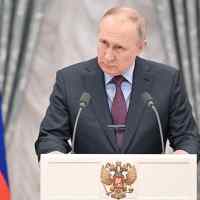
The secret is out: the Russian government has been lying to its people. Officially, Russia’s coronavirus death toll for last year — as reported on state television and logged at the World Health Organisation — was an impressively low 86,498 for a population of 146 million. In his traditional December press conference Vladimir Putin proudly reeled off statistics on how quickly Russia’s economy was recovering from the pandemic, and last month he made a triumphant address to a packed public concert to celebrate the anniversary of the annexation of Crimea in 2014. ‘Today is a holiday for our entire vast country,’ Putin told an 80,000-strong, maskless crowd at Luzhniki stadium. ‘Please, take a deep breath and answer this: Do we love Russia?

Russian sabre-rattling over Ukraine demands a different response

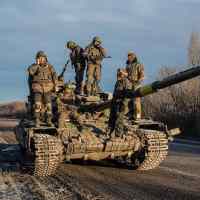
Russian heavy armour is on the move, and Moscow is making no move to hide it. Is this the prelude to a new upsurge in fighting in south-eastern Ukraine, or especially brutal sabre-rattling? The problem is that we don’t know – and this challenges our usual responses. The war in the Donbas – neither civil war nor straightforward foreign intervention, but a messy and toxic mix of the two – has tended to flare up at the end of winter. As thick spring thaw mud begins to dry, campaign season begins. Politically, it already has.

Boris’s Russia review will delight Putin

The strategy outlined within the integrated review lacks the urgency, agility, and need for ambiguity needed to take on the country it deems our ‘most acute threat’: Russia. Described as the ‘biggest review of our foreign, defence, security and development policy since the end of the Cold War’, in fact — when it comes to Russia — much of the IR reads more like a literature review than a 21st Century ‘Long Telegram’. Russia is referenced only fourteen times directly, and then with a great deal more descriptive analysis than comprehensive plans of action. Much of the content is welcome: one section deals with Russia under the new term of ‘state threats’.

Why autocracy in Russia always fails in the end

Churchill was wrong: Russia is neither a riddle nor an enigma. Russians themselves concoct endless stories to glorify their country’s achievements and minimise its disasters and crimes. But the rest of us do much the same, as we try to explain Britain’s imperial history or the impact slavery still has on America’s revolutionary ideals. Russia is little harder to understand than anywhere else. But you need to separate the facts from the myths, as Mark Galeotti does in A Short History of Russia, an informative, perceptive and exhilarating canter through 1,000 tumultuous years. He starts with two founding events, each a mixture of fact and myth.

Amnesty International has undermined Navalny’s fight for freedom

In his fight against Putin, Alexei Navalny needs all the help he can get. The might of the Russian state is pitted against him. Having failed to kill Navalny, the Kremlin has achieved its aim, at least in the short term, of silencing him: by locking him up in prison. Navalny and his supporters have called on the west to assist him. So far, the response has been fairly measly: this week, the EU announced sanctions against a handful of figures in the Russian regime.  This small scale retaliation for the attempted murder of a political opponent won't bother Putin much. Now, though, Navalny's attempt to take on Putin has been undermined once again by an organisation which should know better.

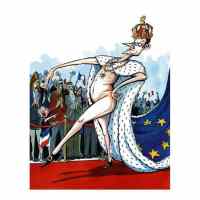
The EU’s sorry excuse for sanctions won’t change Putin’s ways

Russian opposition leader Alexei Navalny has been poisoned and then sentenced to two and a half years in prison. But never mind, the European Union is on the case and has decided to impose sanctions. Just not that many. There are apparently just four officials on the list: Alexander Bastrykin, head of the Investigative Committee, which tackles major crimes; Alexander Kalashnikov, head of the Federal Prison Service; prosecutor-general Igor Krasnov; and Viktor Zolotov, the much-feared commander of the National Guard. There is, to be sure, some rationale. Bastrykin, under British sanctions since July, was a key figure in pushing trumped-up charges against Navalny.

Will Iron Felix scare Moscow’s protesters?

While in the West, the debate seems to be about which statue to topple next, in Russia it’s rather different. Felix Dzerzhinsky – ‘Iron Felix,’ founder of the Bolshevik secret police – looks like he may be coming home, thirty years after his statue was pulled down from its place in front of the KGB’s Lubyanka headquarters. Dzerzhinsky, a Polish aristocrat turned revolutionary, was charged by Lenin in 1917 to form what was then called the All-Russia Extraordinary Commission to Combat Counter-Revolution and Sabotage – rather more concisely known as the Cheka after the Russian initials for ‘extraordinary commission’ – and lead it into the coming civil war.

Biden vs Merkel: the battle over Russian gas is heating up

Two months ago, a Russian pipe-laying ship called the Akademik Cherskiy left the Baltic island of Rügen to finish the last few miles of the most controversial gas pipeline in the world. Germany hopes that Nord Stream 2 will improve its access to Russia’s vast reserves of natural gas. In America, however, the project is seen as a way for Moscow to exert influence over Europe. Its completion marks the biggest diplomatic crisis in transatlantic relations since the Iraq War and now, as then, we see Germany pitched against the US. But this time, Germany is far more determined. Since its inception, the pipeline —which runs directly from Russia to Germany — has been opposed by many in Europe who share America’s concerns about dependency on Russian energy.

The sticky truth about Navalny

His courage is exhilarating. Even if you think his cause hopeless, Alexei Navalny, the Russian opposition leader and Putin-baiter, deserves our admiration. To return to Moscow after being poisoned, surely knowing arrest awaited him, is beyond brave. The chances are he will be crushed. But annihilation is not certain; and if one day he wins his battle with Putin, his return to Moscow this winter will become the stuff of legend. Navalny is not crazy: he has made a rational calculation, weighing the relative safety of a tedious future in grey and indefinite exile against a small possibility of making Russian history. With open eyes he has chosen risk. That sooner or later Vladimir Putin will be swept away is likely — but when? Might it be sooner?

Alexei Navalny is getting under the Kremlin’s skin

Only half a year ago the opposition leader Alexei Navalny was a non-person on Russian state media, and Putin’s opulent palace built on the Black Sea was largely unheard of inside the country. Navalny had his loyal base of supporters who followed him on YouTube, and the palace had been discussed in the West for a decade. But for the overwhelming majority of Russians, both were unknown. Today, Navalny is everywhere on the Russian media. Vladimir Putin himself may still not be willing to name ‘that man’ – which after a certain point begins to look downright strange – but the President’s loyal army of pundits, news anchors and state journalists have leapt into the fray.

Russians are daring to dream of life after Putin

Alexei Navalny, Russia’s leading opposition figure, demonstrated unfathomable courage in returning home after the Kremlin had poisoned him with Novichok. Arrested on arrival, Navalny is now holed up in Moscow’s notorious Sailor’s Silence transit prison. Yet as he languishes behind bars, Navalny poses his greatest threat yet to Vladimir Putin’s regime. And today, on the streets of Russia, things could come to a head in the fight between Navalny and Putin. This week, Navalny’s Anti-Corruption Foundation released its biggest exposé yet: a YouTube investigation of Putin’s voracious greed.

Navalny and Putin: the next chapter

‘Arrest me? Why would anyone arrest me?’ said Russian opposition politician Alexei Navalny to reporters last week as he boarded a Moscow-bound plane. Four hours later he was in jail — but not before spending an hour circling above the Russian capital as riot police shut down the airport where 2,000 supporters awaited him and diverted his plane to another. Did Navalny truly believe he would not be arrested? Did anyone? A week before his planned return from Berlin, where he had been recovering from being poisoned by Russia’s security services, Navalny posted a video on social media in which he openly taunted Vladimir Putin. ‘Putin has been stamping his little feet, demanding that they do everything to prevent me from returning,’ he said.

Will Navalny’s gamble backfire?

For years, Alexei Navalny had been – barely – tolerated by a Kremlin that was willing to permit very limited opposition and criticism. When security officers tried to poison him last year, it reflected a distinct swing towards more ruthless authoritarianism. Back in Russia, and back in prison, Navalny likewise seems to have taken off the gloves. Until now, everyone was fair game for Navalny’s investigations into official corruption – except for Vladimir Putin and his family. Yesterday, after Navalny had been sent to Moscow’s notorious Matrosskaya Tishina prison until his next trial date in February, his team released their latest investigation.

Why Navalny is becoming a danger to Putin

The man with no name is now a prisoner with a number. Alexei Navalny, the Russian opposition leader poisoned by security officers back in August, flew back to Moscow yesterday and was promptly arrested. Whether this is symbolic catch-and-release or a sign that the Kremlin plans to bury him – literally or metaphorically – in its prison system remains to be seen. The Kremlin certainly did everything they could to prevent his return being a media event. He was due to arrive at Moscow’s Vnukovo airport, where a crowd of journalists, supporters and riot police jostled in anticipation. So too did a rent-a-mob of supposed fans of a Russian media personality who, judging by her Instagram feed, wasn’t expecting this kind of reception. Anything to muddy the waters.

Alexei Navalny: a profile in courage

Vladimir Putin likes his opponents in exile: it makes them easier to portray as defectors who have turned their back on Russia. It suited him to have Alexei Navalny, the most prominent opposition leader in Russia, hiding in Germany fearing he’d be arrested (or worse) if he returned. But now, Navalny has flown back to Moscow – and was duly arrested at passport control. Every stage of his return – his flight out, his arrest, his goodbye to his wife – has been vividly documented on social media with images already making their way around Russia and the world. Navalny has made a swap: he has sacrificed his liberty to leave no doubt about his commitment to his country. And no doubt about how Putin operates.

Why Merkel and Putin are cooperating on the Sputnik vaccine

Churchill, FDR and Stalin could cooperate against Hitler, so perhaps we shouldn’t be too surprised that even amidst talk of a new Cold War, sanctions and more than a little sanctimony, people in the West are willing to make deals with Moscow in the name of fighting the new global threat, Covid-19. Russia’s Sputnik V vaccine may have been rushed through its certification at home and been the subject of some overblown nationalist hype (not that the Oxford-AstraZeneca vaccine has been entirely free of the latter), but so far it appears to be a serious and effective jab, with a potential 91.4 per cent efficacy.

Putin’s New Year’s resolution: survive

Even in tough times, Russia tends to put on a show to welcome the New Year, and 2020/21 is no exception. But what may be on Vladimir Putin’s New Year’s resolutions this time round? Most immediately, to test Joe Biden’s incoming administration. We have already had a taster, with alternating calls for renewed arms control talks and tough rhetoric about the need for Russia to field advanced new weapons. Beyond a not-so-secret relief at having a White House that will at least be relatively stable and predictable, the Kremlin is not expecting an easy time from a Biden administration on a range of fronts, from sanctions to Ukraine.

Putin is finally waking up to Russia’s climate change problem

The snow is falling in Moscow, but that is after the warmest autumn there on record. Meanwhile, perhaps reflecting that with the arrival of vaccines, there is at least the prospect of an end to the Covid-19 crisis, the climate change debate is rekindling – and with a particular geopolitical angle. Much of the conventional wisdom is that it is a perverse boon to Russia. Representative of this perspective, for example, has been a recent study that led the New York Times to predict that Moscow will ‘win the climate crisis’ – while its partner, ProPublica, warned that ‘Russia could dominate a warming world.’ Stirring stuff, and no doubt music to Vladimir Putin’s ears.

Heads will roll following the Navalny prank call blunder

From vicious tragedy to outright farce, the saga of the poisoning of Russian opposition leader Alexei Navalny has acquired a surreal new chapter. Pretending to be an aide to the powerful secretary of Russia’s Security Council, Navalny actually rang up one of his would-be assassins and got him to confess, on tape. It’s hilarious; it’s astonishing; it’s embarrassing. Does it prove that Russia’s security agencies are the Keystone Kops of the intelligence world? Citizen investigator outfit Bellingcat and the Russian journalists of the Insider recently published the results of an extraordinary inquiry into the attempted assassination in August 2020, when he was on a campaign visit to Tomsk, in Siberia.

Putin’s festive message: the world’s naughty, but I’m nice

It’s the most wonderful time of the year. When a reclusive figure comes bearing gifts, when the air is full of familiar golden oldies, and when time itself seems to stand still. I am talking, of course, of Vladimir Putin’s annual marathon press conference this week. Stretching for hours – four-and-a-half in this case – these carefully choreographed events have in the past been opportunities for Putin to present himself in a variety of roles: the omnicompetent chief executive; the caring father of the nation; the stern defender of the Motherland. This one was much the same, but somehow the magic has been slipping away. The coronavirus precautions probably didn’t help.