Publishing

Twenty years on from Jonathan Strange & Mr. Norrell

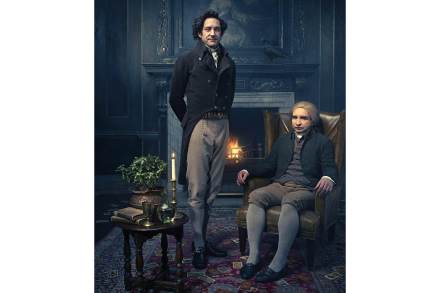
"Some years ago there was in the city of York a society of magicians. They met upon the third Wednesday of every month and read each other long, dull papers upon the history of English magic.” So begins Susanna Clarke’s modern masterpiece Jonathan Strange & Mr. Norrell, first published two decades ago and now regarded, rightly, as the greatest work of British fantasy literature since the Gormenghast novels. Revolving around two indelible characters — the fussy, pedantic “practical magician” Gilbert Norrell and the swashbuckling, Byronic Jonathan Strange — it has an epic sweep and dares to take the existence of magic, and magicians, wholly seriously, giving its oft-maligned genre an intellectual and emotional heft that few other comparable books possess.

Clarke

The frustrating rise of celebrities ‘writing’ children’s books

When you are next visiting a bookstore, and find your way to the children’s section, you might be forgiven for thinking that there is no longer such a thing as a children’s author. Instead, you will be ambushed by piles of books blazoned with the names of actors, singers, comedians, DJs and people who generously exhibit themselves on social media. “Writing” a children’s book has become another string to the celebrity bow. Imagine the scene. You’ve married a prince, and opened a shop that sells vaginal eggs. What more is there to do? A-ha, thinks the celebrity, perhaps while she is sitting on a bench. All those untutored minds, eager for moi! My personal brand will bring them such joy, such self-worth! They will all feel seen!

chidren's

Where will the vogue for censoring our best-loved authors lead?

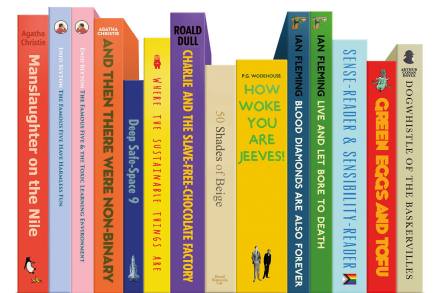
It was recently announced in the Daily Telegraph that the novels of P.G. Wodehouse — much beloved by millions, including me, for their combination of wit and soufflé-light evocation of an England that never really existed but which almost might have done — are the latest to fall foul of that new scourge of writers the world over, the “sensitivity reader.” New editions of Wodehouse’s masterly works Right Ho, Jeeves and Thank You, Jeeves have been reissued with the craven disclaimer “Please be aware that this book was published in the 1930s, and contains language, themes and characterizations which you may find outdated. In the present edition, we have sought to edit, minimally, words that we regard as unacceptable to present-day readers.

authors

Turn Every Page is an engaging film about how news used to work

Could it be that 2023’s most engaging film centers on two ninety-year-olds (give or take) from the publishing world who have engaged in a decades-long debate over the uses and abuses of the semicolon? Why, yes, it could. Director Lizzie Gottlieb’s Turn Every Page is a charming chronicle of the fifty-year collaboration between her father, the famed editor Robert Gottlieb, and our nation’s finest historian, Robert Caro. The two shy, bookish products of New York City have, for half a century now, collaborated on two of the most influential biographies of the past half century: The Power Broker: Robert Moses and the Fall of New York and the four-volume (and counting) The Years of Lyndon Johnson.

Stephen Rubin, the publisher who speaks truth to power

Stephen Rubin may not be a household name, but one gets the impression that doesn’t bother him much. Since he began his career in the '80s, he has built his reputation on publishing zeitgeist-baiting fiction and non-fiction alike, ranging from the undeniably good (John Grisham’s The Firm) to the undeniably bad but hugely lucrative (The Da Vinci Code), along with George W. Bush’s memoir Decision Points. You may not like all, or even most, of the thousands of books that Rubin has been involved with, but you cannot deny his commercial acumen. He knows what people want to buy, and has been as responsible as anyone in the United States for bringing it to them.

The publishing mega-merger that wasn’t

If you sit down and talk to an author for any length of time, you will hear gripes. (Writers will never be confused with the sunniest of people on this planet.) About the visibility of their books; about the size of their advances; about their sales, relative to their other titles and to their peers; about publicity campaigns; about cover designs. There will be a lot of gripes, and if you are cornered by an author in a bar, or at a party, you might be advised to make your excuses and flee. But if you have some sympathy for this much-maligned breed, it may occur to you that the basis of their complaints ultimately comes down to a simple lack of appreciation by their publishers: those all-powerful entities that have the power to make or break careers at the touch of a button.

publishing

Think autofiction is easy? Think again

"No, Lisa." As rejection letters go, it was admirably concise. I’d made an attempt at “autofiction,” that amorphous genre which inhabits the space between autobiography and fiction, and this was the entirety of my editors’ response. Any writer who has been at it for any length of time will have received Dear Johns from publishers, but is two words a record? It was something to cling to, at least, during the five further years it took for the book to find a home. Eventually, a French house took it, and Les Femmes de mes amants staggered unobtrusively into print in June this year. Obviously, I should have set my sights on Paris from the first.

autofiction
book

How to throw a book party

London The launch party for my book has gotten sensational reviews. “Party of the year!” said one friend. “Simply brilliant!” said another. A hack from the Times declared, “It was like an old-fashioned Fleet Street Party” — by which he meant everyone was drunk, dancing and misbehaving. Unfortunately, my book has not gotten sensational reviews. It’s gotten no reviews — at least from the national press. This is a cause for worry. Or so my publisher Todd Swift of Eyewear Publishing thinks. The day after the party he calls me. I’m still buzzing with my party reviews; he’s buzzing with panic. Todd tells me that no reviews mean we can’t get my book into the major bookshops! I’d hate to see your great book die, he says.

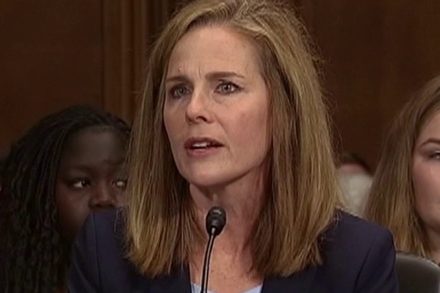
Publishing staff demand axing of Amy Coney Barrett book

Cockburn would like to issue a preemptive apology to those who thought being extraordinarily accomplished was enough to justify a lucrative book deal. Apparently an author's manuscript should be sent to the shredder if he or she holds an unorthodox opinion on hot-button political issues. That's the case made by the coffee-fetchers and typo-catchers in the publishing industry who signed an open letter denouncing Supreme Court Justice Amy Barrett's upcoming book with Penguin Random House. The group of "concerned publishing professionals" claim that paying Coney Barrett a $2 million advance to outline her judicial philosophy constitutes an international human rights violation. No, seriously.

amy coney barrett

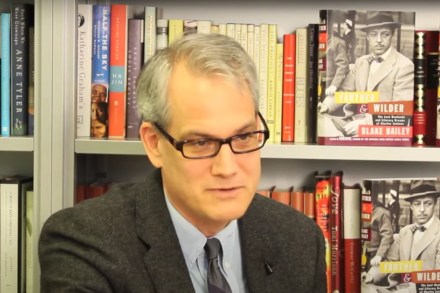
Blake Bailey deserves to be heard one more time

At the beginning of 2021, author Blake Bailey might have been forgiven for thinking that his literary career was not merely assured but stellar. He had gathered significant accolades for his writing, including a Guggenheim Fellowship and the National Books Critics Circle Award, and he was a Pulitzer Prize finalist. He had specialized in writing about heavy-drinking Great American Novelists, including the perennially underrated Richard Yates, John Cheever and The Lost Weekend’s Charles Jackson. His most recent subject was the elusive Philip Roth, a man whose literary brilliance was matched by his checkered reputation both on and off the page. Eighteen months later, matters have changed beyond recognition.

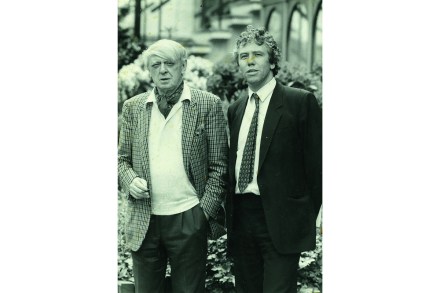
The circus that was 80s literary Britain

Many years ago, when I mistakenly thought that I stood a chance of embarking on a career in publishing, I went for an interview at an independent publisher to be editorial assistant and all-around dogsbody. I remember the interview well, because it was the shortest I ever had. The first question was, “How do you like to be managed?” I replied, “sternly, with a large whip.” The second was “What would your ideal role in publishing be?” and I answered, “running Jonathan Cape in the Eighties.” It became clear that our paths were not to join, and I left the room with thanks and smiles. I don’t believe that I was ever actually rejected for the job.

Walsh

How a small publisher survived the digital age

Godine at Fifty: A Retrospective of Five Decades in the Life of an Independent Publisher, by David R. Godine, David R. Godine, 2021 In The Truth about Publishing, Sir Stanley Unwin writes: “It is easy to become a publisher, but difficult to remain one.” David R. Godine has accomplished the difficult task of remaining one for fifty years, and in the beautifully designed and set Godine at Fifty — would we expect any less from a Godine book? — he tells the story of the company’s beginning and survival and of each book he has published over the years, chock-full of reproductions of the company’s covers, woodcuts, and illustrations. This is a book about books for book lovers. Raised in Boston, David R.

When diversity means uniformity

I’d been suffering under the misguided illusion that the purpose of mainstream publishers like Penguin Random House was to sell and promote fine writing. A colleague’s forwarded email has set me straight. Sent to a literary agent, presumably this letter was also fired off to the agents of the entire Penguin Random House stable. The email cites the publisher’s ‘new company-wide goal’: for ‘both our new hires and the authors we acquire to reflect UK society by 2025.’ (Gotta love that shouty boldface.) ‘This means we want our authors and new colleagues to reflect the UK population taking into account ethnicity, gender, sexuality, social mobility and disability.