Public schools

Eliminating the Education Department is the key to restoring American culture

Since the US Department of Education’s inception in 1980, the agency has proven itself to be incompetent at its principal task: teaching American children. Adding insult to injury, the agency has also earned a big, fat F when it comes to fiscal responsibility. Despite this reality, headlines announcing the Trump administration’s newly streamlined Department of Education cast a somber tone. Layoffs “gutted” the Education Department, reports the AP. Democratic attorneys general are suing over “gutting of Education Department,” echoes the New York Times. The cuts will “decimate” the agency that “compiles ‘Nation’s Report Card’ and measures student performance,” laments ABC News. Cutting, gutting, decimating.
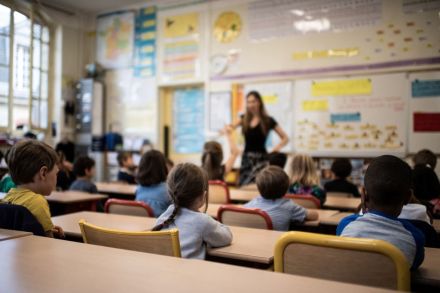
Is there a solution to chronic absenteeism in schools?

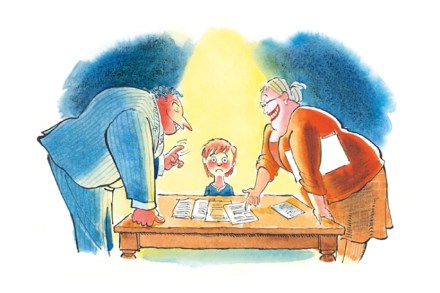
I hated going to school so much as a kid that to this day, the sight of Back to School! signs printed in cutesy kiddy font on glowing school-bus yellow that fill stores every August strikes me with dread. I want to punch them. My elementary school years were fine; I attended a teeny-tiny Catholic school where I think most of the dedicated teachers qualified for food stamps. I knew my classmates so well that they were essentially extended siblings (and a couple of them still are). I graduated first in my class (out of ten) and was star of the pathetic basketball team. High school was a Catholic school too, but insular and snooty. I was an outsider there, from “over the mountain.” I wasn’t bullied or anything, but no matter what, I always felt like I was imprisoned.

absenteeism

The battle against phones in school

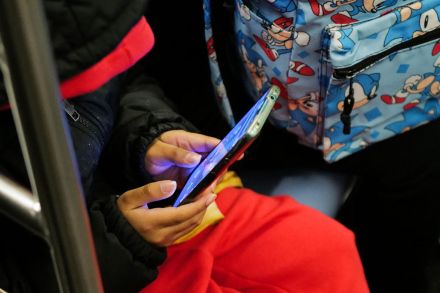
Should students be allowed to use their phones during school? The answer seems like it should obviously be no. But apparently this is has become a difficult subject for school districts to grapple with. Across the country, school boards and administrators recognize that phones distract students from learning, diminish attention spans and affect students’ mental health. But few have the gumption to remove personal devices entirely from schools.

teachers teaching

Why can’t America produce proficient teachers?

“Record drops in teen math and reading scores.” “National Math, Reading Scores Hit Historic Lows.” “Test Scores Flashing Red!” The headlines roll in weekly, each more alarming than the last. In February, twenty-six schools in Baltimore failed to bring a single student up to the most basic math requirements. The same month, sixty-seven schools in Illinois couldn’t produce a single proficient reader. We’ve reached a national education crisis, and its roots run deeper than many are willing to admit. The pressing question is: why can’t America produce proficient students? But perhaps a more crucial question is: why can’t America produce proficient teachers?

The reality of homeschooling

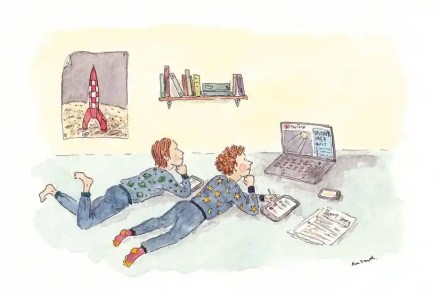
Are children more likely to be abused in a homeschool environment than in a public school? That key question has emerged in response to the recent surge of parents who have chosen to homeschool their children. Late last year, I wrote in this newsletter about an anti-homeschooling series by the Washington Post. The Post series argued that parents regularly use homeschooling as a shield for abuse, most aggressively in an article headlined “What home schooling hides: a boy tortured and starved by his stepmom.”  “Most schools have teachers, principals, guidance counselors — professionals trained to recognize the unexplained bruises or erratic behaviors that may point to an abusive parent.

homeschooling

The data is in and the cost of school closings was terrible

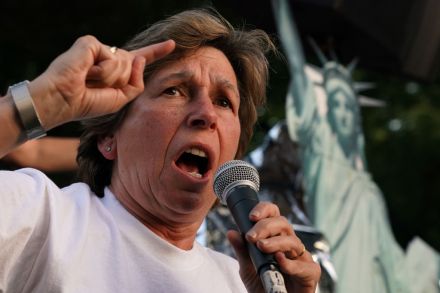
Monday's release of the nation's report card on the academic performance of schoolchildren is just the latest stunning measure of how closed schools damaged young Americans. The National Assessment of Educational Progress, which looks at the test scores of fourth and eighth graders in math and reading, is a devastating indictment of the nation's political leaders and teachers' unions, who collaborated to shut down schools and keep them shut for in-person learning long after those across most of the West had already reopened. We're only just beginning to comprehend the wreckage, which has had significant effects on school districts across the country, even after it was clear they could reopen safely. When Covid first arrived in America, its danger to young students was unclear.

randi weingarten

Why I left public education for a Christian school

Another school year has begun. It's another year that I’m grateful to have left public education. From the outside, it doesn’t make much sense for me to have left. I had a good reputation in my district among staff, students, and administration. The pay at public schools is markedly better. And being a private school teacher makes you something of an outcast among teacher colleagues — never quite “one of us.” I did not leave because of the standard accusation — that I couldn’t “handle it.” In many ways, my private school jobs have been far more difficult than my public school one.

Universal school choice would transform real estate

A new Arizona law which funds all the state’s K-12th grade children to attend a school of their family’s choosing, public or private, has been widely hailed as a landmark education reform, although evidence suggests the benefits will go far beyond academics. Studies by the Manhattan Institute, New Jersey’s E3, and Connecticut’s Yankee Institute all show that subsidizing students to use alternative placements would save any state millions each year. But perhaps the most unexpected promise of universal school choice is the impact it would have on area real estate markets, simultaneously lowering the cost of what families must pay for a desirable home, improving the value of distressed areas, and equalizing the quality of life between rich and poor communities.

The school choice moment is now

There’s been a lot of professed outrage lately over woke school boards. According to Republican candidates for office, they're infiltrating children’s curricula with critical race theory, recruiting drag queens to read at story hour for pre-schoolers, and engaging in other forms of — shall we say — “incompetence.” But the real heroes pushing back against left-wing ideologies in government schools are the parents, when it ought to be lawmakers. Outspoken parents in New Jersey made headlines when they protested their school district removing holiday names from the school calendar. Voters in San Francisco — yes! — recalled school board members who thought renaming schools “with a connection to colonialism” was more important than educating kids.