Propaganda

Were the lies we told to combat communism so shameful?

This, we might imagine, is the Age of the Fake. AI videos; TikTok fascists; the Joycean mind-fragments of a US president for whom truth itself is an ever shifting quantum concept. Surely no other generation has had to navigate such a disorientating landscape of deceit. Or perhaps they have. Our old friends the Russians gave the world The Protocols of the Elders of Zion at the start of the 20th century – a lethal, widely circulated (and still circulating) hoax outlining the world-dominating plots of Jewish people. Meanwhile, a still unidentified forger composed the Zinoviev Letter, which was published by the Daily Mail a few days before the 1924 general election.

Consorting with the enemy: The Propagandist, by Cécile Desprairies, reviewed

As a young child in the mid-1960s, Cécile Desprairies listened hour after hour to her mother Lucie dreamily recalling the 1940s, dwelling on a past peopled by undefined heroes and ‘the bastards’ who murdered them. Names were rarely mentioned or hastily passed over. In the fashionable Paris apartment there were daily gatherings – her mother, aunt, cousin and grandmother twittering like birds, obsessed with fashion and cosmetics. Between trying on clothes, there was endless looking back at a lost golden age and lamenting the disasters that followed. Lucie was always in charge, her second husband Charles, Cécile’s father, casually excluded. There was gossip about acquaintances, women with Jewish names described as ‘wealthy’, all apparently orphaned.

Four dangerous visionary writers

‘The production of souls is more important than the production of tanks... And therefore I raise my glass to you, writers, the engineers of the human soul.’ The quote is usually attributed to Stalin, though the phrase ‘engineers of human souls’ most likely came from someone else. Who’s to argue? Purges, executions, deportations – what’s a little light plagiarism in comparison? Whoever coined the phrase, it certainly struck a chord and indeed continues to ring various alarm bells whenever one comes across writers who deliberately set out to influence politics and ideas – and not just the big beasts, the Nobel Prize winners, say, or the shopfront-filling non-fiction authors hawking their wares, or the endless novelists with their little axes to grind.

Propaganda from the Russian Front: The People Immortal, by Vasily Grossman, reviewed

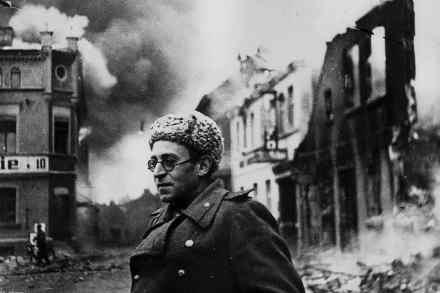
On its posthumous publication in 1980, Vasily Grossman’s Life and Fate was widely compared with War and Peace. For all the novel’s many virtues, the comparison was hyperbolic. In one respect, how-ever, Grossman’s was the more remarkable achievement. Whereas Tolstoy wrote about historical events with the benefit of hindsight, Grossman wrote about ones that he had recently endured. Life and Fate was the third of Grossman’s novels set during the Nazi invasion of the former Soviet Union. The first was The People Immortal, which, like the second, Stalingrad, is now available in an unexpurgated edition, superbly translated by Robert and Elizabeth Chandler.

Lord Northcliffe’s war of words

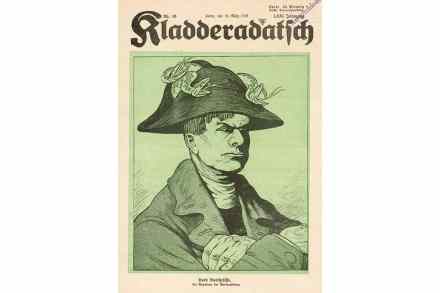
‘What a man,’ enthused Wilhelm II from exile in 1921. ‘If we had had Northcliffe we would have won the war.’ The Kaiser wasn’t describing a general or politician but a not- so-humble newspaperman, Lord Northcliffe, the pugnacious proprietor of the Times, Daily Mail and a host of other print publications, who had ended the Great War pumping news into Germany as the British government’s director of propaganda in enemy countries. Northcliffe brought to that post the drive he had shown building up his media empire over three decades.

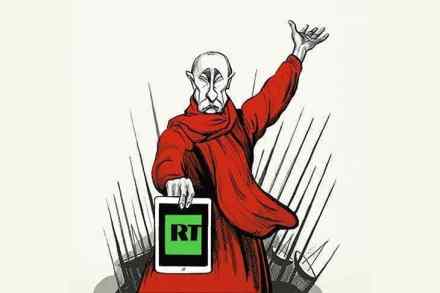
Putin’s mistake was to discard the velvet glove

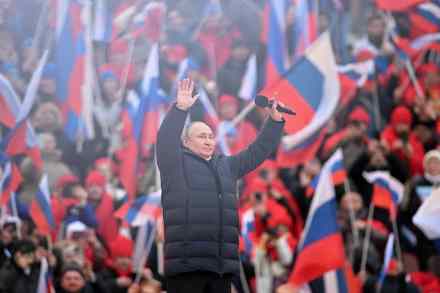
To study international politics since the turn of the century has been, in large part, to study the changing nature of autocracy – and the West’s relationship to it. We kicked things off by trying to realise the Trotskyite dream of ushering in global democracy through the barrel of a gun. We wanted to bring an end to the world’s tyrants – or the ones of relevance to us at any rate. We got Iraq. But if we failed to end tyrants, we played our part in helping to mould them. As Sergei Guriev and Daniel Treisman observe in their intelligent, important book Spin Dictators, throughout this time something far more interesting and dangerous was happening.

Why more and more Russians are backing the war

O, do the Russians long for war? Ask of the stillness evermore, Ask of the field, or ask the breeze, And ask the birch and poplar trees. So begins a famous Soviet-era song and poem, written by Yevgenii Yevtushenko during Khrushchev’s Thaw. Volodymyr Zelensky cited the poem in his eve-of-war address to Russians, hoping it would rekindle these pacifistic sentiments and encourage resistance against the Kremlin’s imminent invasion. Apart from a relatively few (very) brave souls, Russians did not rise up.

What TV is telling Russians – and why they believe it

If you want to understand how Russians see the world, it helps to watch Russian TV. The Kremlin’s control over the airwaves permeates every part of Russia’s television schedules. There are no longer soaps or series during waking hours, just relentless TV shows about Russia’s place in the world. The popular and execrable ‘news’ discussion show 60 Minutes now often lasts two to three hours. It is as if EastEnders and Coronation Street were replaced with 200 minutes of state propaganda. Such shows depict Russia’s horrific assault on Ukrainian towns, cities and people as a special military operation. They are punctuated with clips of Vladimir Putin celebrating a successful and pre-emptive mission to free Donbas from genocidal Ukrainian butchers.

Russian memoirs are prone to a particular form of angst

Perhaps the secret to understanding Russian history lies in its grammar: it lacks a pluperfect tense. In Latin, English and German the pluperfect describes actions completely completed at a definite point in the past... Early Russian had such a tense, but it was erased. This grammatical lack costs its speakers dear. Russian history never becomes history. Like a stubborn page in a new book, it refuses to turn over. Thus wrote the Soviet dissident and writer Igor Pomerantsev, my father, during his exile in London in the 1980s. When I returned to Russia in the 2000s I had the sense that beneath the Potemkin democratic veneer, Putin’s Russia was actually a case of history repeating, and retrod my parents’ route back to England.

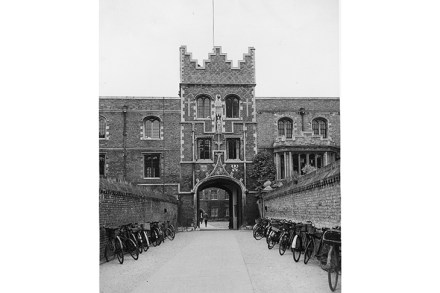
Cambridge University is kowtowing to China

Last month, writing elsewhere, I quoted the website of the China Centre at Jesus College, Cambridge: ‘Under the leadership of the Communist party of China since 1978, [China] has experienced an extraordinary transformation… China’s national rejuvenation is returning the country to the position within the global political economy that it occupied before the 19th century.’ The tone sounded propagandist not academic. This month, all mention of the Chinese Communist party disappeared from the China Centre home page. Now the Centre says it concentrates on ‘mutual understanding between China and the West’, contributing to ‘harmonious global governance’, which should be ‘non-ideological and pragmatic’.