Prison

Nasty piece of work

From our UK edition

Finders Keepers is a sort-of sequel to last year’s Mr Mercedes, Stephen King’s first foray into what he called ‘hard-boiled detective fiction’. The new book is not so much hard-boiled as slowly poached, Heston Blumenthal style, in a sous-vide water oven, then finished on a violently hot grill. King has the popular novelist’s gifts in spades — a flawless sense of pace, an ear for dialogue, an eye for the telling detail, a no-mess-no-fuss approach to characterisation. He also has special insights into the uncanny: his frequent forays into the supernatural are wrenchingly plausible, while his rendering of ‘ordinary’ things — a face, a doorway, the hollowed-out roots of a tree — is steeped in mystery and threat.


Warning: this column may soon be illegal

From our UK edition

[audioplayer src="http://rss.acast.com/viewfrom22/theelectionwhereeverybodyloses/media.mp3" title="Listen to Douglas Murray discuss Islamophobia" startat=1350] Listen [/audioplayer]A couple of weeks back I wrote an article headed: ‘Call me insane, but I’m voting Labour.’ Among the many hundreds of people who reacted with the rather predictable ‘Yes, you’re insane’ was my wife, Mrs Liddle. She pointed out that Ed Miliband had vowed that upon being elected, Labour would make Islamophobia a crime. ‘So,’ she concluded, with a certain acidity, ‘not only will we be substantially worse off under a Labour government, but at nine o’clock on the morning of 8 May the police will arrive to take you away.

Snowden now faces the traitor’s fate – worship from hipsters and Hollywood

From our UK edition

New York Brooklyn is the hipster heaven of New York, which is perhaps why it was there that a bust of Edward Snowden was unveiled yesterday.  Not that it stayed long.  The bust of the former National Security Agency contractor was put on a pedestal sometime on Monday with the word ‘Snowden’ glued on the base at the Prison Ship Martyrs' Monument at Fort Greene Park.  It was taken down a few hours later by parks and recreation employees. I don’t want to read too much into this, but the brief deification and bringing down of Snowden’s image does seem apposite.

We need body scanners to tackle the prison drug problem

From our UK edition

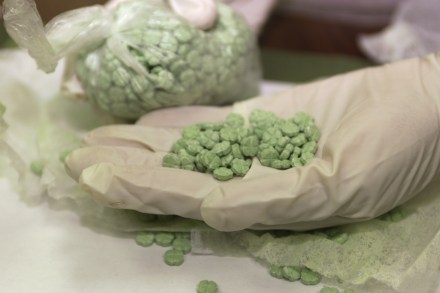
As every prisoner and ex-prisoner knows the most frequently used route for drug smuggling into all categories of jails is 'bottling it'. This is the crude but effective smuggling technique of inserting a package of drugs into an inmate’s anus. Unless prison staff receive a tip off that a particular prisoner is acting as 'a mule' for this route they will likely avoid detection, as routine anal searching at prison receptions is rare. It is not generally realised how many prisoners have to go in and out of prison during their sentences for court appearances, requisition order hearings, hospital check-ups, legal town visits, or transfers to other establishments.

The utterly ludicrous and petty campaign against Ched Evans

From our UK edition

A new name to help us welcome in the new year: Jean Hatchet. A name which is almost certainly too good to be true for a perpetually infuriated radical feminist — much as, say, Roz Termagant or Betty Hitler would be. It is a pseudonym, apparently. Ms Hatchet — I assume that is the title she would prefer, although Mx is catching on quite quickly — is the woman behind the petitions to prevent the footballer and convicted rapist Ched Evans from earning a living from his trade. The first petition was got up when Evans began training with his former club, Sheffield United — who quickly washed their hands of him as a consequence of the publicity. There was a sort of furore.

Even rapist footballer Ched Evans deserves a second chance

From our UK edition

There has been a rumbling row for a while about Sheffield United footballer Ched Evans. He was found guilty of rape and has served his time, but now many people say he should not be able to resume his career as a professional footballer. This is based on the idea that being a footballer is a privilege, and makes him a role model, and that by committing such a vile offence he has lost that privilege. His crime was indeed despicable, but as a female football fan, I think he should be allowed to go back to playing. If I were a Sheffield United fan I wouldn’t want his name on my replica shirt but, having served the time, Evans does have the right to reintegrate and begin working again. What use is rehabilitation and prison otherwise?

Portrait of the week | 27 March 2014

From our UK edition

Home David Cameron, the Prime Minister, said that inheritance tax ‘shouldn’t be paid by people who’ve worked hard and saved and who bought a family house’ and that this would be addressed in the Conservative manifesto. Two opinion polls after the Budget, by Survation for the Mail on Sunday and by YouGov for the Sunday Times, had put Labour one percentage point ahead of the Conservatives. Nineteen Labour movement figures wrote to the Guardian warning the party not to hope to win the election on the basis of Tory unpopularity. The rate of inflation fell from 1.9 to 1.7 per cent, as measured by the Consumer Prices Index, or from 2.8 to 2.7 per cent as measured by the Retail Prices Index. The government said it would sell another 7.

Take it from an ex-con — the outrage over prison books is misplaced

From our UK edition

When I was doing my time in HMP Standford Hill, a strange pair of heavily perfumed Korans and Bibles were delivered to one inmate, ostensibly to help him with his 'studies in comparative religion'. As intended, the perfume threw the sniffer dogs off the scent. But a suspicious prison officer found a significant quantity of heroin stuck between the pages of these holy books. This was an example of 'parcelling it,' con-speak for getting drugs into jails. So Chris Grayling, the Justice Secretary, has a point now that he is trying to restrict the supply of books into prisons. But not much of a point: such examples are real but rare.

My drug-addict friend needs medical help, not a prison sentence

From our UK edition

 Gstaad ‘On ne touche pas une femme, même avec une fleur,’ says an old French dictum, one not always adhered to in the land of cheese, or anywhere else, for that matter. However hackneyed it may sound — don’t you hate it when a hack declares an interest in order to gain brownie points for honesty? — I nevertheless will declare one. I’ve been a friend of the Somerset family for about 50 years, starting with the father, David Beaufort, whom I met sailing around the Med back in 1963. He was then David Somerset and is now the Duke of Beaufort, and his four children are all close friends of mine. His second son, Edward Somerset, was recently jailed for two years for mentally and physically abusing his wife of 30 years.

One Yorkshireman’s commendable bid for freedom

From our UK edition

Richard Milburn, a burglar, broke out of Kirkham Prison near Preston because he was sick to the back teeth of the Scousers in the place. And the Mancs. And the Scallies and the La’s (not my apostrophe; I think it’s a local peculiarity). Richard is a Yorkshireman, even if his surname suggests a still better provenance a hundred or so miles north east of there. But given what he was up against Yorkshire will do just fine. This blog has not always been understanding towards the complaints and aspirations of our criminal underclass. But I think I will make an exception for Richard. The Scousers with their hilarious ready wit, the Mancs skagged out of their brainboxes – I think he had a point.

Why is there no God in the British Library’s latest exhibition?   

From our UK edition

Georgians Revealed: Life, Style and the Making of Modern Britain at the British Library (until 11 March) would have you believe that the religious life was not a feature of Georgian Britain. God is an invisible force in this exhibition and the viewer has to know a fair amount about the period’s history to see Him at work among the exhibits. Josiah Wedgwood’s famous anti-slavery medallion is shown; but there is nothing about the non-conformist religious tradition that inspired him and other abolitionists. The decision to ignore that religious past means that the viewer cannot learn about the century-long tension between the established Church of England and the other protestant churches; the resolution of which helped to form the basis of our tolerant, liberal society.

Chris Grayling plays Scrooge

From our UK edition

Chris Grayling is a nasty piece of work, isn't he? To wit: [N]ew rules, which forbid prisoners from receiving any items in the post unless there are exceptional circumstances, were introduced in November as part of the government’s changes to the Incentives and Earned Privileges (IEP) scheme. Under the rules, families are prevented from sending in basic items of stationery such as cards, paper or pens to help people in prison keep in touch with their friends and families and wish them a happy Christmas. They are also prevented from sending books and magazines or additional warm clothes and underwear to the prison.

Chris Grayling gets a relatively easy ride over reoffending rates

From our UK edition

Theresa May accepted her Spectator Politician of the Year award with the quip: 'It used to be a joke that I lock them up and Ken Clarke lets them out, now they say I lock them up and Chris Grayling throws away the key.' The right wing press, as Ken Clarke is given to calling it, is much enamoured with Grayling and May. ConservativeHome’s Mark Wallace describes them as the ‘dynamic duo’, and writes a long appreciation of their ‘increasingly strong message on crime’. There is, of course, as Wallace concedes, more to governing than messages. The Mail on Sunday carries a small item about reoffending rates under the headline ‘scandal of prisoners who strike again’.

Why did Penelope Fitzgerald start writing so late? 

From our UK edition

‘Experiences aren’t given us to be “got over”, otherwise they would hardly be experiences.’ The opening sentence of the first draft of The Bookshop, published in 1978 when Penelope Fitzgerald was 62, didn’t survive in the finished version, but its author had found her voice, and, in a way, her subject. She had learnt how to look back. She had begun publishing only four years earlier, with a life of Edward Burne-Jones. There followed a thriller, written to amuse her husband as he lay dying, and a second biography, The Knox Brothers. This was about her father, ‘Evoe’ Knox, editor of Punch and author of light verse, and his three brothers, two of whom became priests in different denominations.

Peter Hitchens is wrong (on the internet!). There really is a War on Drugs.

From our UK edition

Before I headed off on honeymoon I took a pop at Peter Hitchens' rather odd assertion that there was no such thing in this country as the War on Drugs. Mr Hitchens duly responded on his Mail on Sunday blog and this in turn deserves a response. Even a belated one. First, an apology: I rather regret suggesting Mr Hitchens is a nitwit. That was unnecessary. I do think his argument - impeccably sincere as it may be - runs towards nincompoopery but since we all hold beliefs other people consider idiotic we might do well, at least occasionally, to recall the usefulness of treating the man and the ball as separate concerns. Nevertheless, I can't say that I'm much persuaded by Hitchens' rebuttal. This may not surprise either of us.

Less alcohol, fewer drugs: how the British seem to be shedding their harmful habits

From our UK edition

Gripped by his habitual despair, the French novelist Gustave Flaubert wrote to a friend in 1872, ‘I am appalled at the state of society. I’m filled with the sadness that must have affected the Romans of the 4th century. I feel irredeemable barbarism rising from the bowels of the earth.’ Warming to his bleak scatological theme, he continued, ‘I have always tried to live in an ivory tower, but a tide of shit is beating at its walls, threatening to undermine it.’ Many commentators would feel that exactly the same words could be applied to modern Britain. According to the pessimistic narrative of national decline, Britain is now drowning in the effluence of moral collapse. We inhabit a country supposedly awash with vice and decadence.

Let’s hope Vicky Pryce’s book does teach us about prison

From our UK edition

The departure of Chris Huhne and Vicky Pryce from prison yesterday has its lessons for us all, on how to make the most of adverse circumstances. Certainly that’s the happiest view of the news that Vicky Pryce is to publish a book about her experiences, called Prisonomics… yep, usefully echoing the title of her previous book, Greekonomics. That one had the merit that Ms Pryce knew quite a bit about the subject, as a Greek and an economist; but her two months at the soft end of the penal system in East Sutton Park prison in Kent may not give her much of an insight into the condition of women in, say, Holloway, where she spent remarkably little time before being moved.

Theresa May and the right to family life

From our UK edition

Theresa May has been in the news recently, as she introduces plans to stop spouses coming to Britain unless they have savings of £18,000 and an additional £2,400 for each foreign born child they bring with them. The Home Secretary told Andrew Marr earlier this morning:  ‘It is important that we say you should be able to support yourselves and not be reliant on the state.’     She also reiterated her intention to stop foreign prisoners, whose family live in Britain, from using article 8 of the European Convention on Human Rights, which includes the right to ‘private and family life’, to resist deportation. She is going call a vote in the Commons next week to determine the balance between the interests of prisoners and the wider public.

Labour wants to be the party of law and order

From our UK edition

Andy Coulson was right to worry about the coalition’s law and order policies: Labour is trying to outflank the government from the right. Sadiq Khan and Yvette Cooper have cut assured figures at fringe events at this year’s conference, sensing that the government’s cuts to the law and order budget will imperil one of Labour’s positive legacies: substantially reducing reported crime (by 43 per cent according to Sadiq Khan) between 1997 and 2010. A strange atmosphere pervades the law and order fringe: the name ‘Tony Blair’ is spoken of with something approaching respect and it is met with scattered applause. Blair’s memory is profane to this incarnation of the Labour Party, a grinning devil to be exorcised.

Clarke is right to focus on reoffenders

From our UK edition

The Justice Secretary Ken Clarke – who was away during the disturbances last month – has signalled his return with an uncharacteristically tough piece in today’s Guardian. The reference to the rioters as a “feral underclass” is not language that the penal reform lobby will welcome from their favourite Minister, but it does signal a firmer line from the Justice Secretary: “In my view, the riots can be seen in part as an outburst of outrageous behaviour by the criminal classes – individuals and families familiar with the justice system, who haven't been changed by their past punishments.