Prison

Miliband tries to explain himself

From our UK edition

As the weekend drifts closer, there is a case that Ed Miliband has just enjoyed his best week as Labour leader. Not really from anything he has done — although his PMQs performance had more vigour than usual — but thanks to the backwash from the Ken Clarke calamity. MiliE's spinners could barely have dreamed, even a few days ago, that their man would gain the the fiery approval of The Sun on matters of law and order. But that is effectively what they gained yesterday. "Labour is now tougher on crime," bellowed the paper's leader column, "than our Tory-led government." Even today their editorial laments, "so much for David Cameron's pledge to provide a young, modern government in tune with 2011 Britain.

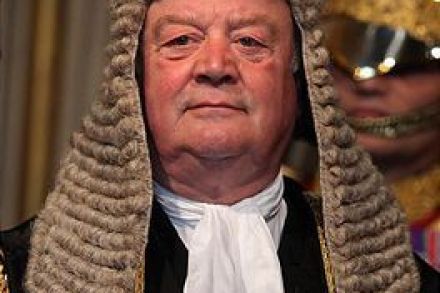
What Ken Clarke should have said

From our UK edition

The Ken Clarke media storm continues. But, talk to lawyers and they complain that the Justice Secretary did not have sufficient command of his brief to redirect Victoria Derbyshire’s line of questioning. There was one particularly illustrative example when she said: “(The starting points) for single offence of rape by a single offender are 10 years’ custody if the victim is under 13, eight years’ custody if the victim is 13 but under 16, and five years’ custody if the victim is 16 or over.” Those numbers look a little light and they create the impression that the justice system is soft on rapists. Clarke should have countered that Derbyshire’s example lies at the very bottom of the CPS’ sentencing guideline scale.

Clarke’s calamity

From our UK edition

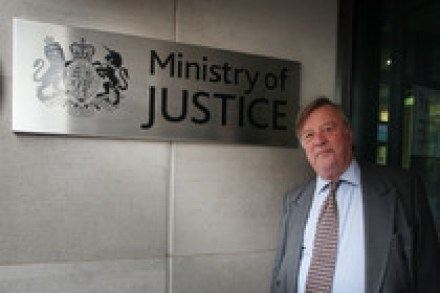
Has Ken Clarke just signed his own political death certificate? Whether you agree with his liberal sentencing reforms or no', there's little doubting that the Justice Secretary has just stumbled quite emphatically on Radio 5. It looked bad enough for him when, discussing an idea to cut the sentences of those who plead guilty to sex attacks, he blustered that, "No, I haven't put this idea to women who've been raped because I haven't met one recently." But then it turned even worse when a rape victim called in to describe her tragic case: she had been dragged through the courts for almost two years in search of justice, only for her attacker to plead guilty, have his sentence cut, and then go on to reoffend. Through tears, she described Clarke's proposal as "a disaster".

The Coffee House A-Z of the Coalition: N-S

From our UK edition

Here are letters N to S in our A-Z guide the coalition's first year. A-F are here. G-M are here. N is for No Nothing has frayed coalition relations quite like the AV referendum has. This was always going to be the case, but the viciousness it inspired has still been fairly shocking. Need we remind you of Chris Huhne's outburst in Cabinet last week? Or of George Osborne's stinging riposte? Even David Cameron seems to have relished taking it out on his coalition stablemates, trashing their pet policies with a vigour that would have been unthinkable only a few months ago. As Tim Montgomerie reveals in his exhaustive guide to the No campaign, Cameron's firmer stance coincided with a realisation of just what he was risking.

Our Drug-Stuffed Prisons

From our UK edition

It's not that I disagree with this post by Blair Gibbs, nor that I don't think he makes a number of reasonable points. There's clearly a problem with drugs in prison even if it it's not, one supposes, on anything like the same level as the Cousins' difficulties in that area. Nevertheless, surely the most obvious point to make is that if we cannot keep illegal drugs out of prison at what point do even prohibitionists recognise that the War on Drugs can't be won*? Ah, they say, sure, perhaps it can't be, you know, won but that doesn't mean it's not worth fighting! Maybe. But at what point is reality allowed to intrude upon this fantastical approach to serious public policy?

The drug infestation in our prisons

From our UK edition

Despite the focus on the government’s controversial plans to reduce the prison population, the troubled Prison Service continues to cause headaches for Ministers in another way — by failing to get on top of the security problems plaguing the estate In the 1990s, when Michael Howard was in Ken Clarke’s position, the concern of ministers was escaping inmates. The Prison Service has made huge strides on this, despite ongoing issues with the open prison estate and day-release of some inmates. But now the ever-present problem is lax internal security and especially drug-infestation. The jailing this week, for two years, of a prison officer based at Feltham Young Offenders Institution is just one example of the problem.

The government has a problem with lawyers

From our UK edition

The government’s strained relationship with the Civil Service is a recurring story at the moment. Much of the disquiet seems to be the normal tit for tat exchanges immortalised in Yes Minister. In the main, ministers and their advisors express high regard for their officials. But there are some resilient bones of contention between the government and its lawyers. Again, this is not unusual. When Gordon Brown was Chancellor, parliamentary counsel were exasperated by his inability to take decisions. Brown’s budgetary machinations were finalised in a predictably mad rush, which incensed those who had to amend the bill hours before it was put to parliament.

Soft on crime, me?

From our UK edition

The name ‘Ken Clarke’ and the word ‘sacking’ are inseparable to the chattering classes at the moment, but so was it ever thus. There are signs though that the normally insouciant Clarke has been shaken on this occasion. He has given an interview in defence of his contentious prison reforms to the Times this morning (£). In a clear message to concerned voters, Tory backbenchers and sceptical government colleagues, he denies that he is ‘soft on crime’. For example, he will tighten community sentences: “I want them to be more punitive, effective and organised. Unpaid work should require offenders to work at a proper pace in a disciplined manner rather than youths just hanging around doing odd bits tidying up derelict sites.

Another fight looms for Cameron over votes for prisoners

From our UK edition

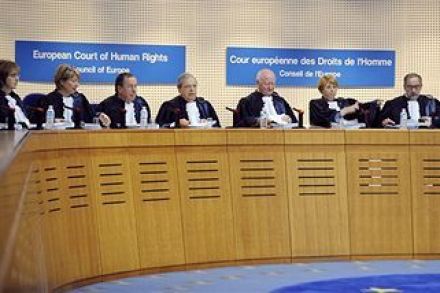
Prisoner voting is back on the agenda. The European Court of Human Rights has rejected the British government’s appeal and declared that the coalition has six months to draw up proposals to change the law.   David Cameron now has to decide whether to ignore the Strasbourg Court or go against the will of his MPs, who voted overwhelmingly to oppose giving prisoners the vote in response to the court’s initial decision. In many ways, ignoring the court is the safer option. Tory MPs aren’t inclined to back down on this issue and if Cameron tried to make them he would create a lot of ill-will and take an awful kicking from the press.

Votes for Ex-Prisoners? Florida will be having none of that.

From our UK edition

I think it perfectly reasonable for the state to deny prisoners the right to vote and that losing the franchise is one of the consequences of incarceration. But as far as I know no-one in this country has suggested denying ex-prisoners their voting rights. They do things differently in the United States. Over to Roger Clegg* at National Review: Florida governor Rick Scott and his cabinet have ended the policy of his predecessor, Charlie Crist, of automatically reenfranchising felons upon their release from prison. The ACLU et al.

Khan comes to Ken Clarke’s support (kinda)

From our UK edition

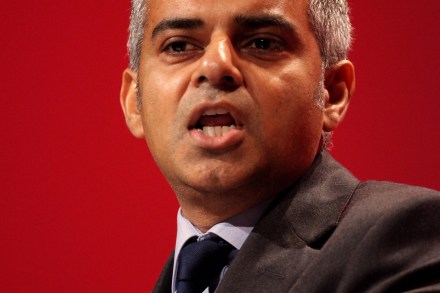
When it comes to the overall sway of British politics, Sadiq Khan's article for the Guardian is probably the most important of the day. We've heard Ed Miliband say before that, "when Ken Clarke says we need to look at short sentences in prison because of high re-offending rates, I'm not going to say he's soft on crime." But Khan's article, a summary of a speech he is giving later today, actually puts that sentiment into practice – and then some. His central argument is straight from the Hush Puppied One's playbook, particularly in its emphasis on the limitations of New Labour's policy: "Some claim crime fell because of the rise in the numbers imprisoned. But the relationship between crime rates and prison population is more complex than that.

Government to appeal on prisoner votes

From our UK edition

PoliticsHome reports that the government is to ask the ECHR to reconsider its verdict in the prisoner voting rights case. The website says: ‘In a response to a parliamentary question from Labour MP Gordon Marsden, Cabinet Office Under-Secretary Mark Harper said: "We believe that the court should look again at the principles in "Hirst" which outlaws a blanket ban on prisoners voting, particularly given the recent debate in the House of Commons."’ This is unsurprising. Last month, the government asked its lawyers to advise on the ramifications of noncompliance. The lawyers were unequivocal: the repercussions of such defiance was diplomatically impossible and extremely expensive.

Clarke in the Sun’s harsh light

From our UK edition

The Sun has launched another sortie against Ken Clarke’s restorative justice programme. The paper reports: ‘SHOPLIFTERS could escape prison by just paying for what they pinch and saying "sorry". Jail sentences and tough fines will be SCRAPPED as the default punishment for nicking from stores under controversial plans soon to be unveiled by Justice Secretary Kenneth Clarke. Instead he wants thieves to make face-to-face apologies to victims and pay compensation.’ The Ministry of Justice has responded by saying that it ‘strongly believe[s] offenders should make more financial and other amends to victims and are in the process of consulting on plans for this.

Cuddly Ken comes out snarling, and sneering

From our UK edition

Another Saturday, another interview with Ken Clarke. This time, the bruised bruiser has been talking to the FT and the remarkable thing is that he has managed to say nothing. Not a sausage. Colleagues were not insulted, Middle England escaped unscathed and the European Court of Human Rights wasn’t even mentioned.  But Clarke conveys his determination to fight. He defends his prison reforms and community sentences, to which the right has now applied the grave term ‘misconceived’. Clarke retorts: ‘We are trying to take 23 per cent out of the budget. I don’t recall any government that’s ever tried to make any spending reductions on law and order – let alone 23 per cent.

The Commons rejects prisoner voting rights

From our UK edition

The Davis Straw motion on keeping the ban on prisoner votes has just passed by 234 votes to 22. It is a crushing victory on what was a very good turnout given that both front benches were not voting. The 22 against the motion were a bunch of Liberal Democrats plus the Ulster MP Lady Hermon, the Plaid MPs Jonathan Edwards, Elfyn Llwyd and Hywel Williams, the Green Caroline Lucas,   Labour MPs Barry Gardiner, Kate Green, Glenda Jackson, Andy Love, Kerry McCarthy, John McDonnell, Yasmin Quereshi  and  one Tory Peter Bottomely, David Cameron now finds himself between a rock and a hard place. His MPs hate the idea of giving prisoners the vote and if he tries to force them to do it, he’ll end up in a very messy fight.

Conservatives and Prisons: A Study in Contradiction?

From our UK edition

Grover Norquist, president of Americans for Tax Reform, asks a good question: When it comes to education, pensions, health care, Social Security, and hundreds of other government functions, conservatives are a beacon for fiscal responsibility, accountability, and limited government — the very principles that have made this country great. However, when it comes to criminal-justice spending, the “lock ’em up and throw away the key” mentality forces conservatives to ignore these fundamental principles. With nearly every state budget strained by the economic crisis, it is critical that conservatives begin to stand up for criminal-justice policies that ensure the public’s safety in a cost-effective manner.

In their own words…

From our UK edition

Parliament will debate a prisoner’s right to vote tonight, to satisfy the ECHR’s now infamous judgement. Jack Straw and David Davis, the progenitors of tonight’s discussion, have taken time to explain why they believe the ECHR does not have the right to dictate to sovereign states on such matters. Writing for Con Home, Davis has constructed an impassioned polemic, decrying the British government’s ‘pusillanimous culture of concession’. Essentially, Jack Straw is making the same argument, albeit with precise procedural insight. He writes (£): ‘But is there some contradiction between my support for the HRA and my criticism of the Strasbourg court’s judgment in this case? Not at all.

Parliament is expected to deny prisoners the right to vote

From our UK edition

These are hard times for the government and there is no respite. Today, parliament will debate a prisoner’s right to vote, in accordance with the wishes of the resented European Court of Human Rights. The Guardian’s Patrick Wintour writes what many suspect: on the back of a free vote, the House will deny prisoners the right to vote in all cases and outlaw compensation claims. Such a result would seem a set-back for the government, which was thought to favour a limited franchise on prisoner voting. If it became law, then the government would apparently be at odds with the ECHR - precipitating an ignominious procession of grasping lags, searching for compensation at Strasbourg.

Bringing rights back home

From our UK edition

Thursday’s debate on the backbench motion on prisoner voting tabled by Jack Straw and David Davis is set to be a real parliamentary event – a rare occasion where the will of the elected legislature might just make a big difference.  The real news will not be how many endorse the ban, but which MPs – aside from those abstaining Government Ministers and Denis MacShane – choose to bow to Strasbourg.   MPs preparing to speak out against Strasbourg are now armed with a powerful academic case.  A new Policy Exchange report authored by the political scientist Michael Pinto-Duschinsky – Bringing Rights Back Home – outlines how the UK can address the growing problem of conflicts between judges and politicians in human rights cases.