Press

Rotherham’s ‘political commissars’ reinforce the need for a free press

From our UK edition

'Clearly she has morphed somewhere in her career from social worker to political commissar.' These are the words of Minette Marrin, writing of the social worker at the centre of the fostering scandal at Rotherham Council in the Sunday Times. Marrin’s article unpicks Rotherham Council’s position, turns it over and concludes that: ‘[The] thoughtless, obstinate political correctness of the Joyce Thacker (Rotherham’s senior social worker) variety is rampant throughout social services. Many of them are highly politicised in plain party-political terms as well. It’s a national disgrace and a national disaster. In adoption, for instance, it is such misguided attitudes that make it so very difficult for a child in need to find adoptive parents.
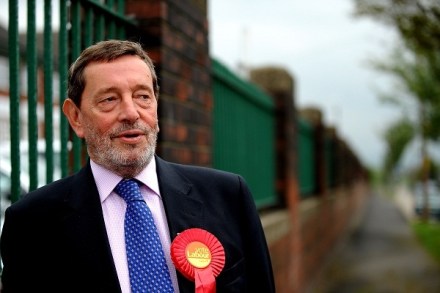
David Blunkett warns MPs against regulating the press

From our UK edition

David Blunkett, the former Home Secretary, has has his private life in the newspapers often enough to yearn, Hugh Grant-style, for a world where the press is not free but obliged to operate within parameters outlined by the government. But I’ve interviewed him for Radio Four’s Week in Westminster (it airs at 11am this morning) ahead of next week's Leveson report and he has come out against the idea state-mandated regulation. It was an unusual discussion: the supposedly illiberal Blunkett, himself a compensated victim of hacking was defending press freedom. A Tory, Nadhim Zahawi, was urging David Cameron to act. As a former Home Secretary, Blunkett’s words carry some weight.

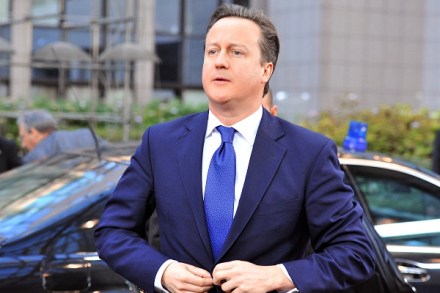
David Cameron’s tricky position on the Leveson Report

From our UK edition

Politics is gearing up for the publication of the Leveson Report next Thursday. It was telling that when Boris Johnson picked up politician of the year at The Spectator Parliamentarian of the Year awards, he didn’t use the occasion to list of his achievements in London or to reminisce about the Olympics but rather took the opportunity to decry the possibility of statutory regulation of the press. On the other side is Ed Miliband, whose party is committed to backing whatever Leveson comes up with. It is unclear yet what Nick Clegg and the Liberal Democrats will do. But there are a large chunk of Tory MPs who appear to have come round to the idea of statutory regulation.

We ask the questions

From our UK edition

The enemies of a free press, also known as the mysteriously funded Hacked Off campaign, are positively salivating at the prospect of new legislation to regulate the press. I hear that their press conference, held after lobbying the three party leaders, at Four Millbank yesterday gave a glimpse of things to come. Professor Brian Cathcart and former Liberal Democrat MP Evan Harris waxed lyrical about their relentless pursuit of justice for their celebrity backers like Hugh Grant, and the lesser known victims of press mistreatment. Despite being promised the chance to quiz the victims, journalists in the room got increasingly irate as the double act hogged the limelight.

Tory MPs vs free press

From our UK edition

How strong is the Conservative commitment to liberty? Today's Guardian front page holds the answer. A long line of Tory MPs have written to the newspaper, calling for the Prime Minister to seize a 'once-in-a-generation' opportunity to regulate the press. It is surprising as it contains several of the names I would had put down as friends of liberty. Jesse Norman, Andrea Leadsom and Nadhim Zahawi are the last people you’d expect to be writing to the Guardian demanding state action against the newspapers. The Guardian says that the signatories hope to make a  'cross-party consensus' is possible. I bet they do.

What next for the gutter press?

From our UK edition

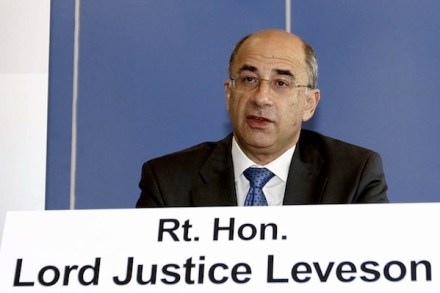
Lord Leveson will be publishing his recommendations for the future of press regulation very soon, and those on both sides of the debate are getting nervous. The Hacked Off campaign has a letter in today's Financial Times opposing plans for continued self-regulation of the industry that is signed by 26 professors in journalism, law and politics. The letter attacks proposals by Lord Hunt and Lord Black for self-regulation which would be underpinned by contracts between the regulator and the publisher which would be enforceable through civil law. It says: 'We do not believe these proposals to be in the best interests of journalists and journalism.

The View from 22 — the fight for press freedom and an EU problem for Cameron

From our UK edition

What effect would any form of statutory regulation have on the press in this country? In this week's cover feature, Nick Cohen writes that if the Leveson Inquiry recommends strong measures to curtail the press, they will not be practical thanks to the constant evolution of the media industry. On this week's View from 22 podcast, Nick explains the problems of defining who exactly is the press and who are journalists: 'You can't say what a newspaper is and you can't say who a journalist is. When I started in journalism, people used to say it was a trade, not a profession...that was true in theory but false in practice — you couldn't be a journalist unless you worked for a state or private media conglomerate.