President xi

A Chinese bailout won’t save Hinkley Point, our latest nuclear disaster

From our UK edition

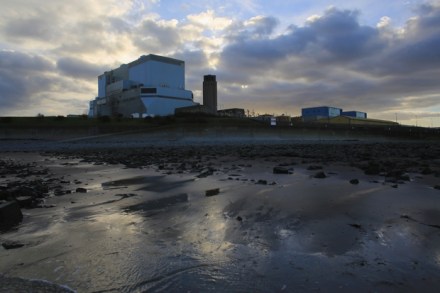
How easy it would be to scorn the environmentalists who are up in arms about George Osborne’s new pet project, the Hinkley Point C nuclear power station. You can understand their anxiety: subsidies for green energy are being slashed, yet the Chancellor will do anything — and pay anything — to get this project up and running. He is happy to force households to pay artificially high prices for a form of energy which brings all kinds of risks — of which the world was reminded this week when Japan found the first cancer case liked to the Fukushima disaster of 2011. ‘Has the Chancellor lost his mind?’ they ask.
Exclusive: Boris declares that Japan is relaxed about Britain leaving the EU

From our UK edition

Boris Johnson has recently returned from a tour of Japan. His diary of the trip appears in this week's issue of The Spectator: Frankly I don’t know why the British media made such a big fat fuss last week when I accidentally flattened a ten-year-old Japanese rugby player called Toki. He got to his feet. He smiled. Everyone applauded. That’s rugby, isn’t it? You get knocked down, you get up again. And yet I have to admit that I offered a silent prayer of thanks that I didn’t actually hurt the little guy. They aren’t making many kids like Toki these days; in fact they aren’t making enough kids at all. If you want proof of the rule that nobody knows anything, look up a 1988 bestseller called Yen!

Listen: BBC’s Laura Kuenssberg confronts President Xi over China’s human rights

From our UK edition

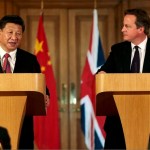
One of the clever things that politicians try to do is to redefine words and concepts that everyone thought they knew the meaning of. Take today’s ‘press conference’ that David Cameron and Chinese President Xi held in Downing Street. That ‘press conference’ consisted of statements followed by two questions, though dozens of journalists had turned up. Fortunately, the question from the British media came from the BBC’s Laura Kuenssberg, who asked the Prime Minister how he thought a British steel worker would feel that the Chinese president was being ‘ferried down Whitehall in a golden carriage’ and whether there is ‘any price that’s worth paying in order to further our business interests with China?

China needs Britain more than Britain needs China

From our UK edition

When King George III sent the diplomat-statesman Lord Macartney to Beijing in 1793 to meet China’s all-powerful Qianlong Emperor, history was in flux. The Celestial Empire had dominated world trade for two millennia, yet it was in a state of protracted decline. Britain in contrast was a rising superpower on whose empire (to use a term coined by Macartney) the sun ‘never set’. The mission’s task was simple: unveil the latest wares from Manchester, Bristol and Edinburgh – globes, telescopes, weaponry – then wait for a dazzled and covetous audience to open trade routes through northern China. Yet despite pausing lovingly over an ornate clock, the 81-year-old Emperor declined the offer.

Is our foreign policy being dreamt up by the James Bond screenwriters?

From our UK edition

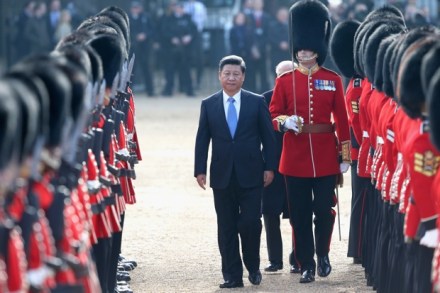
If there's one thing that the James Bond films has taught us it is that the Chinese are not our enemies. We should perhaps remember this as President Xi Jinping polishes his heels on our red carpets this week. Our enemies are cold war Russians, jewel-encrusted North Koreans, ex-Nazi rocket scientists, fat Europeans obsessed with gold, and, of course, bald Polish-Greek crime lords called Ernst with a love of bob sleighs and white cats. The imminent release of the twenty fourth Bond film is a handy reminder that if we're looking for threats, we should really look closer to home.

Britain should not mistake its allies for friends

From our UK edition

It would be hard to dream up a more absurd piece of political satire than an agency of the British government called Just Solutions International winning a contract to train prison officers in a country that has executed 175 people in the past year, many of them in public beheadings for offences such as sorcery, witchcraft, adultery and political activism. That it sought this contract in the first place is a sign of the great void at the heart of our foreign policy. This week, the Justice Secretary, Michael Gove, pulled out of the deal with Saudi Arabia — thereby attracting the ire of the Foreign Secretary, Philip Hammond, who called him ‘naive’ for doing so. That is a word better applied to Mr Hammond.

Portrait of the week | 24 September 2015

From our UK edition

Home In a speech at the Shanghai stock exchange, George Osborne, the Chancellor of the Exchequer, announced a feasibility study into the trading of Chinese and British shares in both countries. At least half of all British banknotes in circulation are held overseas or used in the black market, a Bank of England report suggested. The political impasse in Northern Ireland continued. Sir David Willcocks, the director of choirs, died, aged 95. Brian Sewell, the art critic, died aged 84. Jackie Collins, the author of titillating blockbusters, died aged 77. An outbreak of highly drug-resistant gonorrhoea was detected in the north of England, from Oldham to Scunthorpe.

Monster of misrule

From our UK edition

Mao Zedong, once the Helmsman, Great Teacher and Red Red Sun in Our Hearts, and still the Chairman, died in 1976. Even today his giant portrait gazes down over Tiananmen Square, where in 1989 his successors massacred hundreds of students and workers. After so many years and books and articles, can anything new be said about him? Although Andrew Walder, a Stanford sociologist and leading China scholar, writes that his comprehensive and deadly analysis is primarily for non-specialists, he has made me think. President Xi Jinping, who will make a state visit to London in October, speaks highly of Mao. Such praise, concludes Walder, requires ‘highly selective historical memory and a great deal of forgetting’.

Does Xi Jinping really want reform? If so, he would unravel China

From our UK edition

It is now 35 years since Deng Xiaoping gained mastery of China and launched a process that changed the world. The diminutive, chain-smoking ‘paramount leader’ adopted market economics to make his nation a great power once again and to cement the rule of the Communist party with no room for political liberalisation. The formula he adopted at a Party plenum after winning the power struggle at the end of 1979 that followed the death of Mao Zedong has been amazingly successful by its own lights, but is fast running out of steam.