Political correctness

Letters | 3 September 2015

From our UK edition

Suicide and assisted dying Sir: As a mental health practitioner, I am grateful to Douglas Murray (‘Death watch’, 29 August) for his incisive commentary on the impact of legalised euthanasia on people with psychiatric conditions. Supporters of assisted dying argue that a permissive act would be tightly framed, but the scope would inevitably widen, as has occurred in Holland. Although Lord Falconer and fellow travellers would bar people of unsound mind from the intended provision, this would soon be challenged as discriminatory: because effectively, a person would be punished for losing decision-making capacity. If proponents of euthanasia are really so rational, while their opponents are blinded by emotion or faith, how can this anomaly be justified?

The contagious madness of the new PC

From our UK edition

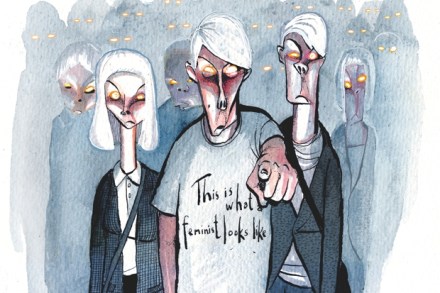
It’s becoming pretty clear, as the year rolls on, that some of our brightest youngsters have gone round the bend. It’s as if they’ve caught a virus, a mental one, a set of thoughts and ideas that might loosely be called political correctness, but seem to me weirder and more damaging than that. Back in the 1990s, PC students would stamp about with placards demanding equal rights for minorities and talking about Foucault. This new PC doesn’t seem to be about protecting minorities so much as everyone, everywhere from ever having their feelings hurt. It came from America, this virus, incubated in the closed minds of the Land of the Free, but it’s here now, and contagious.

Eric Pickles interview: multiculturalism is to blame for Tower Hamlets electoral fraud

From our UK edition

Sir Eric Pickles looks every bit the diamond Tory geezer. As we sit down in a room overlooking Big Ben for his first interview since leaving the Cabinet, the 63-year-old MP for Brentwood and Ongar has dressed for the occasion: purple braces, monogramed shirt cuffs, pocket square and a golden Rolex. Yet his demeanour does not match the bling. Pickles’ laid back Yorkshire conversational style and dry wit are not what you would expect from a politician responsible for slashing millions from the budgets of local councils. But there is nothing relaxed about Sir Eric's attitude towards his new assignment: tackling corruption, both in finance and politics.

‘Shocking is too easy’

From our UK edition

Brace yourself, reader. This is an account of a conversation with the director of the yucky trailer-trash comedy Pink Flamingos. Perhaps you won’t recall the final scene in which the overweight transvestite Divine munches on an actual dog turd. No, it wasn’t faked — this was in 1972 and there was no budget for trickery. ‘Because we were on pot all the time it didn’t seem that strange,’ John Waters recalls. ‘It’s lost today, but it was a political commentary. At the time Deep Throat had just come out; pornography had become legal. What’s left? What can’t you do?’ Waters is celebrated for his pencil moustache and transgressive movies, which shake a (knowingly limp-wristed) fist at the tyranny of good taste.

Is your barbecue racist? The Guardian would like to know

From our UK edition

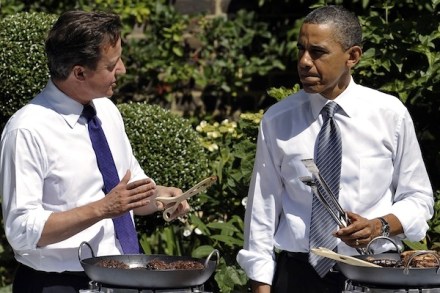
Earlier this year the Guardian vetoed HP sauce for its readers on the grounds that it is the sauce of the establishment. In May, the newspaper then went on to criticise tea drinkers, who exhibit ‘the worst possible English trait, up there with colonialism and the class system’. Now, it's time to step away from the fire lighters, put the skewers down and ignore the impulse to put HP sauce on your charcoal grilled meats, as barbecues are now facing the heat. According to the Guardian, the barbecue 'has its roots in the cooperation between black and indigenous peoples struggling to get or keep their freedom from colonialists'.

You can’t take the Islam out of Islamic State

From our UK edition

At last, British politicians have been galvanised into action by the appalling events last weekend in the Tunisian resort of Sousse, in which 38 people were murdered by an Islamist terrorist. Yes, yes, about time, you might be muttering to yourself — but credit where it’s due, please. They may be a little late to the party but at least they have arrived. A convocation of 120 of our MPs, including Boris Johnson, have demanded strong and forthright action.

Trigger

From our UK edition

A notion is going about that, just as readers of film reviews receive spoiler alerts, so readers of anything should get a trigger warning. Otherwise something nasty in the woodshed might trigger post-traumatic stress disorder or worse. ‘I use the phrase trigger warning myself,’ wrote Kate Maltby in a Spectator blog the other day, ‘to warn Facebook friends that they may not wish to click on a link because it is likely to automatically “trigger” flashbacks for survivors of trauma.’ That’s kind, and luckily I am not triggered by split infinitives. But she and fellow admirers of the classics are shocked by a demand from four students at Columbia University for tutors to issue trigger warnings before asking for certain authors to be studied.

From ambrosia to zabaglione

From our UK edition

Should sugar be taxed? Some of the contributors to The Oxford Companion to Sugar and Sweets seem to think so. Sugar certainly appears less appealing than it used to. Its negative effect on our teeth is undeniable, and it now takes the rap for many of the ills we formerly blamed on fats, such as obesity, high blood pressure and diabetes. But sugar is also now bound up with politics, because of its historical connection with slavery. Our awareness of this we owe to the groundbreaking, imaginative scholarship of Sidney Mintz, whose 1985 Sweetness and Power: The Place of Sugar in Modern History is easily the most frequently referenced work by the 265 contributors to this massive volume.

If comedians can’t take a politically incorrect joke, who can?

From our UK edition

Jerry Seinfeld’s takedown of the political correctness of today’s youth should give us all pause for thought. In an interview on US radio, the sitcom and stand-up star said that college campuses have become a no-go area for comedians. ‘I don’t play colleges, but I hear a lot of people tell me, “Don’t go near colleges. They’re so PC”' he said, before launching into a story about the time his 14-year-old daughter accused his wife of being ‘sexist’ for suggesting that she may soon want to start seeing boys. ‘They just want to use these words. That’s racist. That’s sexist. That’s prejudice. They don’t know what the fuck they’re talking about.

A course in Dangerous Ideas would be the perfect tonic for our dull universities

From our UK edition

There have been a number of articles recently by American liberals warning about the intolerance of academia, in particular pointing to the dangers of a generation who’ve never had their views challenged. The latest is by an academic using the pseudonym Edward Schlosser, who writes in Vox last week: Things have changed since I started teaching. The vibe is different. I wish there were a less blunt way to put this, but my students sometimes scare me — particularly the liberal ones. I once saw an adjunct not get his contract renewed after students complained that he exposed them to 'offensive' texts written by Edward Said and Mark Twain. His response, that the texts were meant to be a little upsetting, only fueled the students' ire and sealed his fate.

High life | 4 June 2015

From our UK edition

The last week in Gotham was exceptional fun. I saw a Broadway play, Finding Neverland, compliments of the producer, my NBF Harvey Weinstein.It had me clapping with one hand due to the operation, and standing with the packed theatre for the ovation. Shows how much the critics who panned it know. The audience loved it, as did I. It’s an uplifting, wonderful play about J.M. Barrie and the children. Then there was the blind black guy in Brooklyn who told me, ‘You’re too pale for this neighbourhood.’ Go figure, as they say in that part of town. I’m always sad to leave the city, especially with the end of spring. I miss its mixture of glitz and grit, of races and colours, of violence and pleasures, of misfits and millionaires.

My part in a masterpiece of political correctness

From our UK edition

Damien Hirst, Grayson Perry, James Delingpole: all winners of major art prizes. I was awarded mine last week by Anglia Ruskin University (formerly Anglia Polytechnic) which I think is a bit like Cambridge (it’s in the same town), though bizarrely its excellence has yet to filter through to the official UK uni rankings, where it’s rated 115th out of a list of 123. Anyway, the point is, I won. Sort of. I ‘won’ this extremely important prize in the way that Michael Mann, the shifty climate scientist, has been known to claim he ‘won’ the Nobel prize when it was awarded to the IPCC. That is, the prize wasn’t handed to me personally but I did play my part. What happened was this.

Call me insane, but I’m voting Labour

From our UK edition

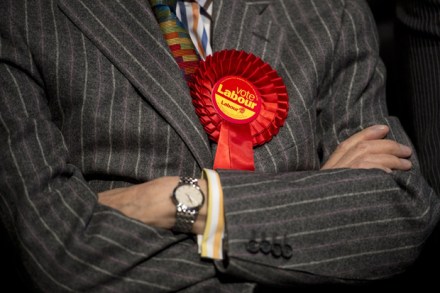
Quite often when I deliver myself of an opinion to a friend or colleague, the reply will come back: ‘Are you out of your mind? I think that is sectionable under the Mental Health Act.’ In fact, I get that kind of reaction rather more often than, ‘Oh, what a wise and sensible idea, Rod, I commend your acuity.’ There is nothing I say, however, which provokes such fervid and splenetic derision, and the subsequent arrival of pacifying nurses, as when I tell people that I intend to vote Labour at the forthcoming general election. When I tell people that, they look at me the way my dog does when I tell her that it is not right to kill cats. It is something quite beyond the parameters of understanding, of comprehension.

Podcast: The new political correctness and how Labour lost Scotland

From our UK edition

Is there something menacing about the march of the new political correctness? On the latest View from 22 podcast, Brendan O’Neill and Tim Squirrell debate this week’s cover feature on the new PC and the implications for freedom of speech. How easy is it to navigate this lexicon? Have we lost our British sense of being ridiculous? And how much does political correctness really help progressive causes? Alex Massie and James Forsyth also discuss Labour’s troubles north of the border and how its problems might also spell trouble for the union. Is Jim Murphy doing a good job as Scottish Labour leader? Will the return of Gordon Brown improve or worsen the situation?

An A-to-Z guide to the new PC

From our UK edition

[audioplayer src="http://traffic.libsyn.com/spectator/TheViewFrom22_5_Feb_2015_v4.mp3" title="Brendan O'Neill and Cambridge Union president Tim Squirrell debate the new political correctness" startat=33] Listen [/audioplayer]Anyone who thought political correctness had croaked, joining neon leg warmers, mullets and MC Hammer in the graveyard of bad ideas from the late 1980s and 1990s, should think again. When even someone as gay-friendly and Guardian-hued as Benedict Cumberbatch can be hounded for incorrectness, you know no one’s safe. So what can you say? Here’s an A-to-Z guide to the new PC. A is for America.

The march of the new political correctness

From our UK edition

[audioplayer src="http://traffic.libsyn.com/spectator/TheViewFrom22_5_Feb_2015_v4.mp3" title="Brendan O'Neill and Cambridge Union president Tim Squirrell debate the new political correctness" startat=33] Listen [/audioplayer]I wonder how many of you know that you’re cis. Not very many, I’m guessing. So let me break this gently. You are almost certainly cis. It is short for ‘cisgendered’, which means that you ‘identify’ with the gender you were assigned at birth. To put it in everyday language, you were born male and are still male, or were born female and are still female. Roughly 99.7 per cent of human beings — including gays, lesbians and bisexuals — are cisgender.

Warning: these books could seriously damage your health

From our UK edition

Welcome to 2015, the year that speaking and writing freely had to stop. Anything that might cause trauma to anyone of any race except the white one will be expunged, and the perpetrators of politically incorrect speech or written word will be airbrushed for ever. The word trauma derives from the Greek and means wound. The literary canon will be the first to bite the dust as it’s one big trauma, especially for feminists. The Great Gatsby, for example, is bonfire material because of a variety of scenes ‘that reference gory, abusive and misogynistic violence’. And let’s not forget The Adventures of Huckleberry Finn, as racist a book as ever there was — worse than Gone with the Wind.

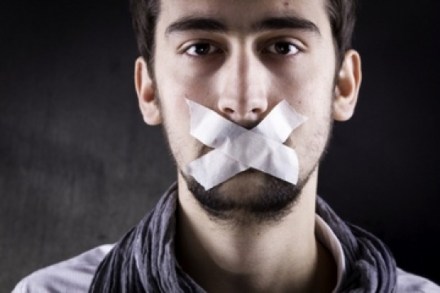
Free speech is so last century. Today’s students want the ‘right to be comfortable’

From our UK edition

[audioplayer src="http://rss.acast.com/viewfrom22/8f1c0b97-698e-45c6-b50a-84e0e4b3773a/media.mp3" title="Brendan O'Neill and Harriet Brown discuss the rise of the Stepford student" startat=41] Listen [/audioplayer] Don't be a Stepford student — subscribe to The Spectator's print and digital bundle for just £22 for 22 weeks.  Have you met the Stepford students? They’re everywhere. On campuses across the land. Sitting stony-eyed in lecture halls or surreptitiously policing beer-fuelled banter in the uni bar. They look like students, dress like students, smell like students. But their student brains have been replaced by brains bereft of critical faculties and programmed to conform.

Spectator letters: Mindfulness, addiction, and dinner with Richard Nixon

From our UK edition

Mind games Sir: I hope that people are not unduly put off by Melanie McDonagh’s misrepresentation of mindfulness as a cop-out for navel-gazers who lack the moral fibre to engage in ‘proper’ religion (‘The cult of mindfulness’, 1 November). She describes it as a ‘practice of self-obsession’, but it is the opposite: it creates a space in which the self can be seen for what it is as it hops around, generating superfluous judgments. You begin to obsess less about what your ‘self’ compulsively comes up with, and to approach life from a more anchored perspective. May I invite those who think that sounds bogus and flaky to engage in a short experiment?

‘Community leader’, ‘call out’, ‘dreamer: The worst words and phrases in the English language

From our UK edition

In this week’s magazine Rod Liddle has a piece on the worst ‘clichés, lies, evasions, obfuscations, PC euphemisms and disingenuous balls words and phrases which, in recent years, have annoyed me the most’. He was inspired by Brook Newmark’s recent shenanigans with a phantom lady and a computer, which were explained as the MP ‘battling his demons’. Rod also includes vulnerable, community, ‘bravely fighting cancer’, vibrant, diversity and, of course, ‘wrong side of history’. For a while I’ve been collecting my own worst words and phrases in the ever-evolving English language, a sort of dictionary of political cant that I work on to keep me sane.