Political correctness

How stupid do the script writers of Sky’s Devils think we are?

From our UK edition

Here’s a worried question I want to plant in your head: when is TV drama going to start depicting the world we actually live in, where almost everyone wears masks, even outdoors? The current state of affairs — watching people on screen in familiar locations interacting closely, as we used to, and not wearing face-coverings — is a bit jarring. But it’s greatly preferable to the alternative: mumbled lines even more unintelligible than they are usually, smiles and teeth and noses and lips hidden behind a rag — and concealed with them not just beauty or character but half the means our faces use to convey emotion. I wonder, though, how long this nostalgic dream state is going to last.

The myth of American freedom

From our UK edition

Gstaad Imagine a beautiful, sexy woman, an Ava Gardner or a Lily James, with a wart on the end of her nose. It stands out, whereas on an ugly mien it would go almost unnoticed. Noise in stunning and peaceful surroundings disturbs more than it would in grating, jarring cities. Last week, on a gorgeous sunny afternoon, after yet another record snowfall, I was cross-country skiing and stopped for a picnic lunch with Lara and Patricia, two married friends of mine who had left me miles behind. They were using the new skating method of cross-country skiing (I remain traditional, gliding on the double track). A cloudless and very blue sky accentuated the beauty of the landscape.

Why should The Strand survive?

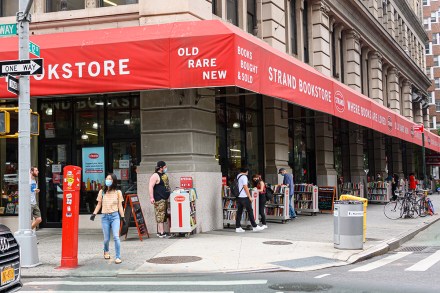
On Friday book-loving New Yorkers got a shock as the city’s largest bookstore — The Strand — announced that it risked going out of business. A post on Twitter from the company said: ‘We need your help. This is the post we hoped to never write, but today marks a huge turning point in The Strand's history. Our revenue has dropped nearly 70% compared to last year, and the loans and cash reserves that have kept us afloat these past months are depleted.’ https://twitter.com/strandbookstore/status/1319686649798905856 What followed included an appeal to the public to return to the store to ensure that the 93-year-old business could keep trading. Prominent writers and pundits rallied around, and in recent days lines have appeared outside.

strand

Sick, puerile, inappropriate and delicious: Amazon Prime’s The Boys reviewed

From our UK edition

There’s a delicious scene in the new season of Amazon’s superheroes-gone-bad series The Boys. The chief superhero Homelander (Antony Starr) is introduced by a minion to a potential new member of his elite superhero group, the Seven. Homelander watches this bright new talent performing wonders in a gym-style training zone: the young man is agile, eager, skilled with weaponry; but perhaps his most valuable features, the minion suggests, are that he is disabled and belongs to an ethnic minority. This could play really well with the youth demographic, who are into that kind of woke stuff, the aide suggests. The potential recruit approaches Homelander, sweet, modest and starstruck.

How to have a happy old age

From our UK edition

Gstaad Birthdays at my age are for the birds, but always a good excuse for a party. Messages of good wishes began early on, with loyal Speccie reader Arnold Taylor ringing from South Africa, and Rosemary and Wafic Saïd texting from the English countryside. (They wished me a happy 39th. I accepted.) My great buddy Michael Mailer, staying with the Kennedys at the family compound in Hyannis Port, had hoped to fly over but the you-know-what prevented it, while Charlie Glass rang from London to announce the end of capitalism as well as yours truly. I asked Charlie to answer me truthfully, because it was my birthday, and he swore he would. ‘Do you have as many children out of wedlock as Boris, or more?’ I said. He hung up on me.

The forgotten victims of communism

From our UK edition

I just read a piece by Scott McConnell in the American Conservative, a magazine we co-founded 18 years ago. He writes about how the victims of communism are less commemorated than those of fascism. The death toll under communism was 100 million (see the Black Book of Communism). And as the mass murders continued, your Cambridge Joseph Needhams and his fellow apologists insisted that Maoism represented mankind’s best hope. Maoism never received the moral obloquy that Nazism did. The United States Holocaust Memorial Museum, which documents the horrific enormity of the Nazi project, has had 40 million visitors since 1993; the victims of communism are marked by a ten-foot statue in a tiny park near Union Station, tended by private donations.

The death of free speech

From our UK edition

Oh, to be in America, where cultural decay and self-destruction compete equally with hyper-feminist and anti-racist agendas. Gone with the Wind is now off limits and Robert E. Lee’s statue in Richmond is unlikely to remain standing (I give it a week at most). And over here poor old Winnie is also in the you-know-what. Why didn’t anyone tell me Churchill was a Nazi? The Cenotaph also has to go; those guys it honours were racists. Two weeks ago in these here pages Douglas Murray said it all about a US import we can do without. Alas, when Uncle Sam sneezes, the British bulldog gets the flu. The scenes may be less dramatic in the UK, but the hypocrisy is the same, if not greater.

Priti Patel and the ugly prejudice of her critics

From our UK edition

Isn’t it amazing how all the woke rules for how to talk about women and people of colour go flying out the window when it comes to Priti Patel? You can say anything you like about Patel and the PC set won’t bat an eyelid. In fact they will cheer you on. Patel is possibly the only female, Asian-heritage public figure in the UK who enjoys absolutely none of the protections of political correctness. It’s always open season on Priti. So for years we have been told that we shouldn’t call successful women ‘bossy’ or ‘bitchy’. Those are sexist insults against women who have simply shown the kind of resolve and determination that men are celebrated for, feminists say. And they have a point.

How to write 2020’s Great American Novel

So I sat down to write the Great American Novel. And like with all improbable tasks, it’s helpful to map out potential issues to spare yourself from a career-ending catastrophe (and to provide excuses to wax poetic to your friends when you ultimately leave a manuscript incomplete). First, it’s helpful to take a cursory survey of the current literary landscape: writing about my time in China, Thailand, or Taiwan will launch the entire Berkeley creative writing class into chants of 'exoticism' and cause a Slate writer to prematurely return from a gulag LARPing weekend to pen a 1,200-word thinkpiece on literature as colonialism. Reading the room, I’m going to stay close to home.

great american novel

Nobody is woke

The word ‘woke’ has quickly degenerated into a meaningless term of abuse. Nobody says ‘I am woke’ these days, at least not seriously.  It‘s like claiming to be a keen nanny-statist or ‘bien-pensant’. At one level, then, wokeness exists only so that journalists like me and social media warriors on the center or right can fight it. It’s not just the word that has become hackneyed. The whole idea of being woke – suddenly alert – to racial or social injustice is not real, and never was, and therefore the movement against it is similarly fake. Right-wingers have the same concept and call it 'redpilling’; in both cases, it means a sort of lobotomized enlightenment for people who enjoy feeling aggrieved.

woke

Prince Andrew and me

From our UK edition

No use piling on where Prince Andrew is concerned. It’s a sorry business, and he’s not among the brightest either. Back in the summer of 2007, in St Tropez, I had a boatload of guests and we all went to a party given by the Rubin family in their villa. It was a very gay night, in the old-fashioned meaning of the word. We were joined by a comely seductress from the Far East and the prince with the highest IQ on the planet, Andrew. He was polite but distant, concentrating on his companion. That’s when I told my friend Debbie Bismarck that Andy had no chance. Just watch me, I said.

High life | 6 June 2019

From our UK edition

They were putting the finishing touches to the giant tent as I drove up to Schloss Wolfsegg after an hour’s flight from Gstaad to a tiny nearby airport. With me were my son and two good friends, and the Pilatus felt like a Messerschmitt 109 cutting through the clouds and landing on a dime. The Pilatus is a great airplane. It can cruise for seven hours at 280 knots, and land at less than 500 metres. It seats six people very comfortably. The only man who has complained about this aircraft is my old friend Charlie Glass, who like a true lefty whined about the lavatory’s headroom. (I told him to try EasyJet next time, but lefties like to fly private and not mix with hoi polloi.

The Spectator Podcast: is Boris the man?

From our UK edition

Cometh the hour, cometh the man. Is that man Boris? And if it is, what still stands in his way? In this week's cover article, James Forsyth writes that Boris is the only one who can save the Tories from Jeremy Corbyn and, more pressingly, Nigel Farage (he's backed up by the latest polling from Friday). But the biggest thing standing in his way is himself. In the aftermath of the 2016 referendum, Boris Johnson found himself unorganised, undisciplined, and crushed by public opinion, unable to recover from the vitriol that went his way following the Leave result, and panicked by Michael Gove's last minute backstabbing. But the 2019 Boris Johnson is different, James argues. He's leaner, has better hair - and looks to have absorbed the lessons from his last go at leadership.

All in the worst possible taste

From our UK edition

‘Unfunny, boring and utterly unrelenting,’ says the Guardian’s one-star review of Chris Lilley’s new sketch series Lunatics (Netflix). And if that’s not incentive enough, our woke critical chum goes on to declare the series ‘problematic’. That’s a weaselly way of saying ‘this triggered all my snowflake sensitivities’ but in such a way as to make it sound like a loftily objective judgment. In truth, Lunatics is only problematic if a) you have no sense of humour and b) you’d prefer all comedy to be politically correct, inoffensive and utterly devoid of satirical edge. Sometimes, Lunatics is so cruel that it’s almost too painful to watch.

High life | 2 May 2019

From our UK edition

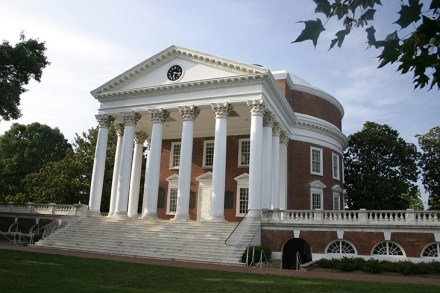
Charlottesville is an enchanting Virginia college town graced by the neoclassical architecture of the university’s founder, Thomas Jefferson. I flew there with two friends, the talented photographer Jonathan Becker and the Vietnam Special Forces Silver Star winner Chuck Pfeifer, all of us close buddies of the deceased. It was the memorial service for Willy von Raab, scourge of drug dealers and illegal immigrants while commissioner of customs for eight years under Reagan. The humorist P.J. O’Rourke and I were the two speakers, and after a rousing ‘America the Beautiful’ we retired for an afternoon of southern hospitality and University of Virginia co-ed watching.

Off the Boyle

From our UK edition

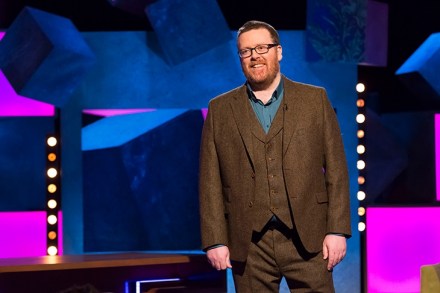
‘I spend a lot of time helping teenagers who’ve been sexually abused…’ — beat — ‘…find their way out of my house.’ You’d scarcely imagine, listening to Frankie Boyle now, that this was the kind of joke he was telling on TV as recently as this decade. I wouldn’t believe it myself if I didn’t have written evidence of it, in the form of a 2011 TV review of his now-forgotten shocker of a Channel 4 show, Tramadol Nights. Boyle was great back then because he went to places few other comics dared to tread. He joked about everything from cancer (‘What is it about people with cancer thinking they’re suddenly going to run a marathon?

The Middlebury mess

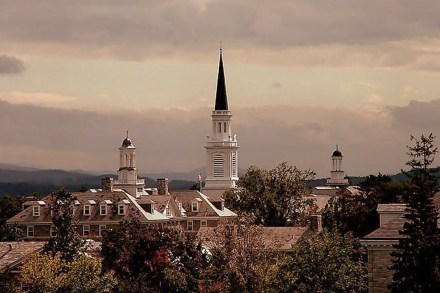
The freedom to debate ideas in our nation’s colleges and universities is under attack. That much is well known. The only group on campus that can push back against the tide of censorship and silencing of speakers on campus are the students themselves. Higher education is supposed to be a place of intellectual discomfort, and students should object when their institutions silence dissenting ideas. The latest round of administrative overreach and censorship in response to unpopular views comes courtest of Middlebury College in Vermont and is instructive. Middlebury’s administration canceled a lecture last week that would have featured Ryszard Legutko, a controversial professor of philosophy at Jagiellonian University in Poland and a member of the European Parliament.

middlebury college

Pyle on: the warped logic of online cancel culture

A while back, a friend in the San Francisco Bay Area confessed to me in a hushed tone that she was thinking of buying a gun. The neighborhood was a safe one. But she and her husband, no-nonsense tech executives with reasonably public profiles – the kind that might draw attention from internet crazies – but far from the means to hire private security, had calculated just how long it would take for police to reach their home in the event of an emergency, and they weren’t satisfied with it. With the Bay Area’s real estate market being what it is, giving up their below-market-value lease seemed more outlandish than exercising their Second Amendment rights.

nathan pyle

The miserable, squalid campaign to stifle Tucker Carlson

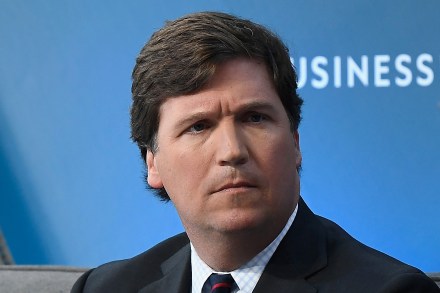
Tucker Carlson Tonight is the best show on American news television. It is not, as Carlson's tedious enemies insist, Trump propaganda. Quite the opposite: it is a rare bright spot of originality in an otherwise arid media landscape. Every night, almost without fail, Carlson introduces his 3.2 million viewers to an interesting thought or a different way of looking at the world. TV news is repetitive; that is its nature. But Carlson’s show manages to cover the talking points in a different key. He also introduces new opinions and ideas into the media bloodstream. That’s why Carlson is popular among young people: he is radical. Which other major anchor would open his show, as Carlson did last week, with a monologue against the vapidity of the news cycle?

tucker carlson

The craziest campus news: universities are still good

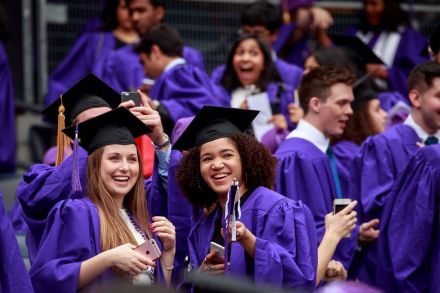
Universities are not the calmest of places just now, what with fights over free speech and the endless claims of harassment and intimidation. Add in the crippling debts from a college education, and many students might be wondering why they bothered at all. But never mind the on-campus animosity and rivalries, a university education ultimately has a beneficial effect on those who go through it – and not just in a financial sense. It make us more trusting and optimistic about the intentions of other people. That is the clear conclusion of the American Enterprise Institute’s Survey on Community and Society, which I co-authored. The survey asked graduates aged 24 and over three questions about interpersonal relations.

universities