Political correctness

Revealed: Politico’s banned words

In my new book, The Snowflakes’ Revolt, I examine how progressive millennials have infiltrated and influenced American media over the past decade, taking ideas from college campuses into the newsroom and pushing the editorial line further to the left than ever before. Among the many prominent organizations where this has happened is Politico. One sign of the shift at this Washington news mainstay came in December 2020, when staff revolted after conservative commentator Ben Shapiro guest-authored the outlet’s flagship newsletter, Playbook. A few months later newsroom activists, unsatisfied by Politico’s response to their concerns, quickly seized on a new culture war battle — transgender issues.

politico
universities

The craziest campus news: universities are still good

Universities are not the calmest of places just now, what with fights over free speech and the endless claims of harassment and intimidation. Add in the crippling debts from a college education, and many students might be wondering why they bothered at all. But never mind the on-campus animosity and rivalries, a university education ultimately has a beneficial effect on those who go through it – and not just in a financial sense. It make us more trusting and optimistic about the intentions of other people. That is the clear conclusion of the American Enterprise Institute’s Survey on Community and Society, which I co-authored. The survey asked graduates aged 24 and over three questions about interpersonal relations.

When America makes Orwell look like an amateur

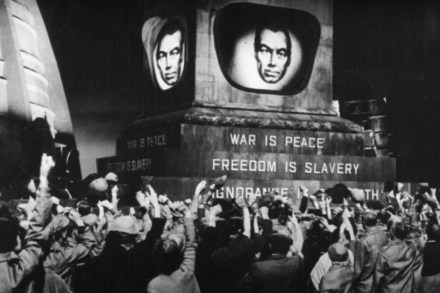
Under today's gathering dark clouds, a reread of Nineteen Eighty-Four shows how the otherwise prescient George Orwell was wrong to think people were going to have to be tortured into submission. Half of America (still psychologically locked down, vexed and vaxed) wouldn't have it any other way. The world of Nineteen Eighty-Four is grim in a way 2022 would understand. The people of Orwell's future want to be controlled. They have come to prefer it. Freedom from choice makes them feel safe. People accept being monitored, and their media being censored. They think of it all with a sense of the inevitable — the only way to stay safe if they think of it at all. The all-seeing telescreens in their homes and the snitches and spies embedded in their lives are for the better, really.

A hazy afternoon with Bill Maher

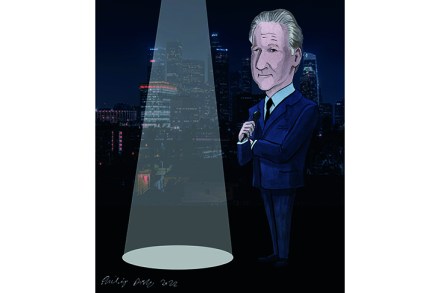
It’s a beautiful Saturday afternoon in Beverly Hills and Bill Maher — stand-up comedian, late-night television host, prophet of the great American silent majority — is ruminating on what the hell has gone wrong with the left: “It all comes, I think, from two terrible sources: bad parenting and insane universities. That’s where the craziness is coming from.” Maher is sitting with me in “Club Random,” the neon-light-festooned, decked-out bungalow he converted into a television studio in 2020, after social distancing requirements forced his weekly HBO show, Real Time with Bill Maher, to shoot remotely.

gillis

Shane Gillis is going places

It is a hot summer night at the truck warehouse that is home to Magooby’s Joke House, and 2014’s Baltimore New Comedian of the Year is in need of another cold Bud Light. Shane Gillis, the Pennsylvania man who was nowhere close to a household name until he had the misfortune to be fired by Saturday Night Live in 2019, and then the follow-on great fortune to become famous for being incredibly funny, does not love the impression he gives as the apex predator of beer-drinking. But he is a week removed from leaving fellow comic Ari Shaffir, no lightweight himself, passed out in intense liver pain on the studio floor of The Joe Rogan Experience because he dared come at the T. rex. “So who is your trainer? Your trainer has to be incredible.” “My dad. He’s an alcoholic.

Netflix

How Netflix saved comedy

Comedy has been absorbed into Twitter’s zeitgeist tornado: a whirling panopticon inhabited by 23 percent of the most humorless and opinionated denizens of the internet (and the top 25 percent of them produce almost all the tweets, according to a study by Pew Research Center). Twitter’s superusers are journalists who have never left the eye of the storm; Twitter has become their “ultimate editor.” It has what the New York Times calls an “outsized role in shaping narratives around the world.” But what kind of comedy clicks for these dopamine-addicted trend chasers?

Who needs therapy?

If you pull up Twitter and search for “men will therapy,” you’ll find an endless scroll of jokes, many quite funny, about the things men will do before they go to therapy. There’s one for every current event: “men will buy twitter before going to therapy.” And after Samuel Alito’s draft Supreme Court decision was leaked: “Men will overturn roe v wade before going to therapy.” As with any ironic internet utterance, there are multiple layers here. The (genuinely useful!) website KnowYourMeme.com believes that Tweeter Zero for this meme is someone named @SpencerKlavan, who wrote “Men will literally defend an entire civilization from ruin in two world wars, start and provide for a family, produce masterworks of art and culture, and then just NOT go to therapy smdh.

therapy

I am woman. Watch me push

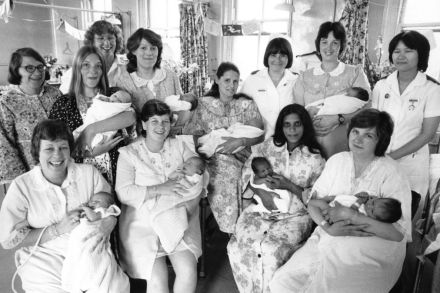
My husband and I recently attended the virtual childbirth classes offered by the hospital where I am registered to deliver our first child. We are classic first-time parents. We have no idea what to expect. Excited and terrified, we’re aware that no matter how much we prepare, there is really no way to. So we signed up for the six-hour class on a Saturday, hoping to get some sense of what labor would be like and the standard procedures at the hospital. The three nurses who taught the class had been bringing babies into the world for well over a decade. They seemed funny and capable. However, it wasn’t long into the training before they started referring to us as variations on a theme of pregnant: “pregnant people,” “pregnant persons,” “birthing persons.

women
good

Ain’t that good news

A few Fridays ago, I met Tablet magazine’s incomparable Liel Leibovitz for breakfast. Over inedible gluten-free banana bread, we caught up on everything from Covid to religion, politics and pop culture. The conversation took a depressing turn, as so many seem to these days. I asked Liel if he had seen some recent ridiculous news — now too distant and unremarkable to even remember — but which highlighted the extreme hypocrisy and self-defeating brokenness of our society. He said that he had, and added: “Isn’t it great?” “Great?” I asked. “Great,” he said. “Just terrific. Things like this make me giddily optimistic.” Liel shared his philosophy with me while we walked to the Upper East Side’s premier kosher butcher — Park East.

Cancel culture gets its comeuppance

Cancel culture has struck again, but this time its would-be victims aren’t apologizing. The Daily Mail — a publication notorious for being “free” with its own speech — is leading the anti-cancel culture charge this month with a series of stories that point to an encouraging trend. A handful of prominent creatives are standing up to woke bullies and noting the dangers (and impracticalities) of their demands, which essentially amount to writers and entertainers forsaking their imaginative talents by only addressing things they’ve personally experienced. Except they aren’t supposed to be candid about those things, either, as they might offend someone if they’re too honest.

The doctor is mad

I have been writing a lot about the politically inspired perversion of language. The name “Orwell” crops up in any such discussion, as does the word “Newspeak,” that twisted mode of language that Orwell outlined in the appendix to Nineteen Eighty-Four. The goal of Newspeak, Orwell said, was to replace standard English with a sharply diminished patois whose linguistic poverty was its prime political advantage. By reducing the suppleness of language, the elites who controlled society hoped also to reduce dissent — not only the activity of dissent, but also the thoughts and emotions that guided it. This has been a perennial dream of budding totalitarians, from the French Revolution to the varieties of communist tyranny.

medical
white supremacy

Wokeness is the return of white supremacy

There are white people in this country and elsewhere who rank human beings by race, with the whites at the top, blacks at the bottom and everyone else in between. They are convinced that whites have a divine or natural right to rule, and they abhor racial intermarriage. They are a minuscule minority, here and elsewhere. White supremacists hold no government power. Their resources are negligible. They gather in obscure places, online as in person, and their conventions are ridiculous spectacles in which the costumes are as odious as the fantasies are pathetic. It wasn’t always like this. From about the sixteenth century to the middle of the twentieth century, the world was theirs to exploit. Western politicians, thinkers and scientists theorized freely about racial hierarchy.

Racism has become a kind of theory of everything

‘If you hate wokeness, you should vote for Joe Biden.’ So said writer and academic Yascha Mounk in the Atlantic in the run-up to last November’s elections. It was a sentiment that echoed across what we might call the respectable anti-woke world: that Trump is to identity politics what kerosene is to a dumpster fire, so a win for the moderate Joe Biden would calm everyone down. As predictions go, it’s right up there with Trump saying the pandemic would be over with by Easter 2020: it’s been proven spectacularly wrong, remarkably quickly. Trump may well have been the perfect foil for the identitarian movement, but the even older, whiter guy who beat him makes an unlikely tribune. Biden’s presidency has done nothing to abate racial paranoia.

Racism

Why should The Strand survive?

On Friday book-loving New Yorkers got a shock as the city’s largest bookstore — The Strand — announced that it risked going out of business. A post on Twitter from the company said: ‘We need your help. This is the post we hoped to never write, but today marks a huge turning point in The Strand's history. Our revenue has dropped nearly 70% compared to last year, and the loans and cash reserves that have kept us afloat these past months are depleted.’ https://twitter.com/strandbookstore/status/1319686649798905856 What followed included an appeal to the public to return to the store to ensure that the 93-year-old business could keep trading. Prominent writers and pundits rallied around, and in recent days lines have appeared outside.

strand

How to write 2020’s Great American Novel

So I sat down to write the Great American Novel. And like with all improbable tasks, it’s helpful to map out potential issues to spare yourself from a career-ending catastrophe (and to provide excuses to wax poetic to your friends when you ultimately leave a manuscript incomplete). First, it’s helpful to take a cursory survey of the current literary landscape: writing about my time in China, Thailand, or Taiwan will launch the entire Berkeley creative writing class into chants of 'exoticism' and cause a Slate writer to prematurely return from a gulag LARPing weekend to pen a 1,200-word thinkpiece on literature as colonialism. Reading the room, I’m going to stay close to home.

great american novel

Nobody is woke

The word ‘woke’ has quickly degenerated into a meaningless term of abuse. Nobody says ‘I am woke’ these days, at least not seriously.  It‘s like claiming to be a keen nanny-statist or ‘bien-pensant’. At one level, then, wokeness exists only so that journalists like me and social media warriors on the center or right can fight it. It’s not just the word that has become hackneyed. The whole idea of being woke – suddenly alert – to racial or social injustice is not real, and never was, and therefore the movement against it is similarly fake. Right-wingers have the same concept and call it 'redpilling’; in both cases, it means a sort of lobotomized enlightenment for people who enjoy feeling aggrieved.

woke

The Middlebury mess

The freedom to debate ideas in our nation’s colleges and universities is under attack. That much is well known. The only group on campus that can push back against the tide of censorship and silencing of speakers on campus are the students themselves. Higher education is supposed to be a place of intellectual discomfort, and students should object when their institutions silence dissenting ideas. The latest round of administrative overreach and censorship in response to unpopular views comes courtest of Middlebury College in Vermont and is instructive. Middlebury’s administration canceled a lecture last week that would have featured Ryszard Legutko, a controversial professor of philosophy at Jagiellonian University in Poland and a member of the European Parliament.

middlebury college

Pyle on: the warped logic of online cancel culture

A while back, a friend in the San Francisco Bay Area confessed to me in a hushed tone that she was thinking of buying a gun. The neighborhood was a safe one. But she and her husband, no-nonsense tech executives with reasonably public profiles – the kind that might draw attention from internet crazies – but far from the means to hire private security, had calculated just how long it would take for police to reach their home in the event of an emergency, and they weren’t satisfied with it. With the Bay Area’s real estate market being what it is, giving up their below-market-value lease seemed more outlandish than exercising their Second Amendment rights.

nathan pyle

The miserable, squalid campaign to stifle Tucker Carlson

Tucker Carlson Tonight is the best show on American news television. It is not, as Carlson's tedious enemies insist, Trump propaganda. Quite the opposite: it is a rare bright spot of originality in an otherwise arid media landscape. Every night, almost without fail, Carlson introduces his 3.2 million viewers to an interesting thought or a different way of looking at the world. TV news is repetitive; that is its nature. But Carlson’s show manages to cover the talking points in a different key. He also introduces new opinions and ideas into the media bloodstream. That’s why Carlson is popular among young people: he is radical. Which other major anchor would open his show, as Carlson did last week, with a monologue against the vapidity of the news cycle?

tucker carlson

The digital age hasn’t made society more forgiving

In the fall of 2018, 31-year-old Lee Carter – a member of Virginia’s House of Delegates and a self-described socialist – took to Twitter to expose just about all the proverbial skeletons in his closet. His rationale: he wanted to air it before it showed up in opposition research. Some of it, such as his custody battle over his kid and an arrest for assault at Marine boot camp that was ‘quickly ruled self defense’ was the sort of thing that could have been used against any politician going back for generations. But other admissions were very specific to his having grown up in a world where everything is digitized – possibly permanently.

lee carter forgiving