Podcasts

Ill-disciplined and self-indulgent: The Guilty Feminist podcast reviewed

From our UK edition

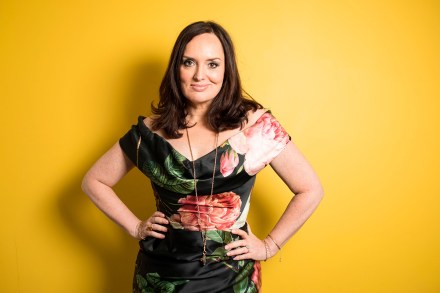
With theatres shut, radio must lighten the darkness. The Guilty Feminist is a wildly popular podcast performed by Deborah Frances-White and guests. In the episode of 23 March, the presenter hoped the superbug would cure our mania for business trips to ‘Philadelphia for a meeting about key performance indicators… Don’t fly to see people you hate. Fly to see people you love.’ She was probably unwise to dabble in medical predictions. ‘I hope Boris catches coronavirus so badly he needs to be sequestered on a desert island with no loo roll.’ Her co-presenter, Sindhu Vee, mocked her children’s frailties and her own. One of her young daughters announced her intention to become a feminist lawyer while the other said she wanted to be a mermaid.

You’ll keep saying ‘I’m sorry, did I hear that correctly?’: Fiasco reviewed

From our UK edition

Kevin Katke was quite a man. He had no military training, no political background and no espionage experience. Nonetheless, his hatred of communists and can-do attitude made him the pre-eminent idiot savant of private American intelligence throughout the Reagan administration. It was a peripatetic career that culminated with him spearheading a bungled plot to oust a leftist regime in Grenada while holding down a full-time job at Macy’s. Call it the American dream. I learnt this — along with dozens of other things to make you say, ‘I’m sorry, did I hear that correctly?’ — listening to Fiasco (Luminary), a political-history podcast whose second season retells the bizarre and shambolic story of the Iran-Contra scandal.

Conscious coupling

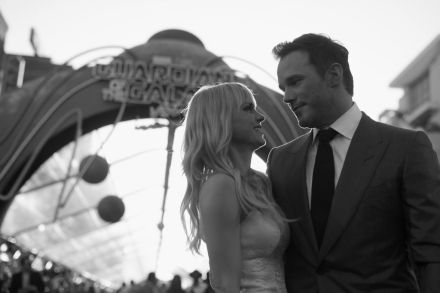
Most of the podcasts that sell relationship advice imply that romance is synonymous with sex. The theory of that equivalency has been a theme in the arts for centuries: Shakespeare, Flaubert, Thackeray and Tolstoy all exposed its follies and truths. Unsurprisingly, the podcast hosts have a less poetic, nuanced note than the classic writers, such as giving the advice: ‘If you’re having a dry spell, listen to us or break up.’ Tony and Alisa DiLorenzo are a Christian couple who have married for 23 years. Perhaps surprisingly, their podcast, ONE Extraordinary Marriage, depicts sex and romance as interchangeable. Tony and Alisa, who couple on the page in their co-authored book 7 Days of Sex Challenge, start each episode with a ‘hug’.

anna faris coupling podcasts

Oracles, perverts and the Dirtbag Left

From our UK edition

For 500 years the State Oracle of Tibet has worked as a kind of angry immortal advisor to the Dalai Lama, a Tibetan hybrid of Dominic Cummings and John Dee. The current incumbent, like all previous ones, alternates between his human incarnation and his spirit version. ‘In Tibetan Buddhism, the unseen parallel world of spirits is not to be taken lightly,’ explains anthropologist David Sneath on Heart and Soul (BBC World Service). ‘There are so many other living species,’ the Minister of Religion and Culture tells Sneath, ‘many of which we don’t even see.

The call of the wild

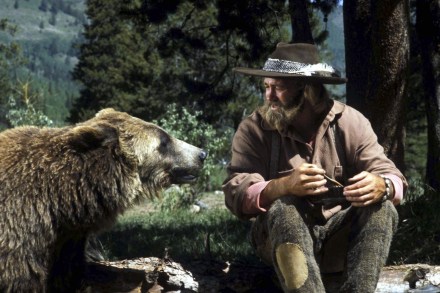
This article is in The Spectator’s December 2019 US edition. Subscribe here. People who go into the wild looking to meet bloodthirsty predators are either a living Xanax pill or some sort of dominatrix version of Jane Goodall. Especially when it’s winter. Save yourself a mauling by a hungry puma, swap your earmuffs for earphones and get wild with The Wild, in which ecologist and award-winning filmmaker Chris Morgan leaps sure-footedly from one wildlife topic to another like a mountain goat. Like Nature itself, The Wild is pretty random but always red in tooth and claw. Morgan focuses on the overlap between animals and humans: something people tend not to consider when they move into areas where the neighbors are bears or cougars.

wild

Why everyone loves Dolly Parton

From our UK edition

When her musical 9 to 5 opened at the Savoy Theatre earlier this year, Dolly Parton stayed at the Savoy hotel itself. Very convenient, you might think: the walk between the two takes about ten seconds. But to ensure she arrived at the far end of the red carpet like everyone else, Dolly had to be collected from the back entrance of the hotel, and driven in a black SUV around to the front. Such are the lunacies of stardom. We learned about this in Dolly Parton’s America, a nine-episode podcast from WNYC radio. ‘In this intensely divided moment,’ they claim, ‘one of the few things everyone still seems to agree on is Dolly Parton — but why?’ A clue came in the episode focusing on the star’s approach to politics.

The pod delusion

This article is in The Spectator’s December 2019 US edition. Subscribe here. At a recent party, a mortgage-banker friend approached, asking me to come on his podcast. I politely declined. ‘What do I know about mortgage banking?’ I protested. ‘I don’t know my ARM from my Fannie Mae.’ I’ve never made my amigo for the sensitive type. His hobbies include drinking tequila like he’s in a worm-eating contest and getting in fistfights at professional sporting events. But he seemed wounded. ‘My podcast isn’t just about mortgage banking,’ he said, ‘it’s about spirituality.’ Here, I was briefly tempted, as I’m more in touch with spirituality than loan originations.

podcasts podcast pod

Back to work with Dave Rubin

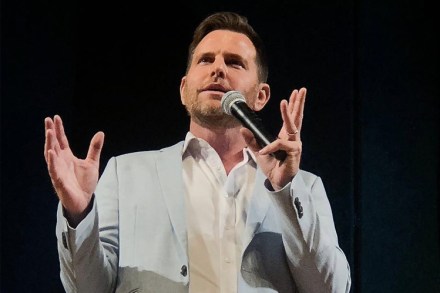
It’s a normal hot day in Los Angeles somewhere east of the 405 freeway. It’s also the day after Labor Day, so talk show host Dave Rubin, like most Americans, is back at work. For him, though, it was more than a long weekend. He’d been off the grid for 33 days straight, the whole of August and then some. No news, no phone, no nothing. So the first thing he says to me when I walk in the door is ‘Don’t tell me anything about current events! That’s part of the deal on the show today. The guest host is going to tell me what I’ve missed.

dave rubin

The perfect crime

This article is in The Spectator’s November 2019 US edition. Subscribe here. Everyone loves a good murder. Tales of cold-blooded killing were bringing in audiences even before Truman Capote elevated the telling. Now, as if tales of real-life slaughter aren’t enough, podcasters color the horrors and hook the listeners with spooky music, awkward cliffhangers and a dubious sociological moral. The typical true-crime podcast has hosts who seem to be chugging wine from the box and narratives ruined by contrived social implications. A cynic or a detective would link this style to the appearance of listicles of the best true-crime podcasts in Good Housekeeping, Oprah Magazine, Town and Country and Women’s Health.

true crime

How did Richard Herring become the comedy podcast king?

From our UK edition

What does it mean to be a successful comic? Richard Herring isn’t sure. He’s been a ‘professional funnyman’ for nearly 30 years, yet — as he’s the first to admit — he’s largely unknown beyond the circuit. Even then he has doubts. ‘I’m never in those top-100 stand-up lists,’ he says, when we meet in Soho ahead of his new tour. He admits his old shows have largely been forgotten and he hasn’t been to an awards ceremony for decades. As promo strategies go, it’s a curious one. But then Herring is an odd one. In the late 1990s, he was part of a new wave of Oxbridge-educated fame-hungry young comics who exploded on to television.

Can giving voice to the horrors of the past re-traumatise?

From our UK edition

It is 50 years since Ronald Blythe published Akenfield, his melancholy portrait of a Suffolk village on the cusp of dramatic change. Akenfield was actually a composite of two real villages, Charsfield and Debach, and Blythe’s oral history was a patchwork created from about 50 conversations — with figures including a pig-farming colonel, the over-stretched blacksmith and a rural dean who reported residents being ‘blunted and crushed by toil’. It was an unsparing vision of rural poverty, yet also a homage to disappearing ways of life and the virtues of small communities. Last Saturday’s Akenfield Now, on Radio 4, followed local sixth-former Anna Davies as she surveyed the landscape afresh.

I was born to be on this Bob Dylan podcast, says Geoff Dyer

From our UK edition

Podcasts will soon be like porn. Every interest, desire or idle flicker of curiosity will have been anticipated and catered for. Whatever you’re into there’ll be a podcast devoted to it, waiting to make itself heard. That’s easy for me to say because I’ve already found my perfect match: Is It Rolling, Bob? in which ‘Actors Kerry Shale and Lucas Hare talk to interesting people about Dylan’. Since nothing is more interesting than Dylan it follows that there is nothing more interesting than this podcast. I was alerted to it by my friend the writer Rob Doyle who had heard about it from his dad. (My friends, increasingly, are the children of my contemporaries; is this what Bob meant by staying for ever young?

Did Radio 2 really need to give us four days of the Beatles to celebrate Abbey Road?

From our UK edition

This Changeling Self, Radio 4’s lead drama this week, clearly ought to have gone out in August. It’s set — and was recorded — at the Edinburgh Festival and would have been a gift to marketing. ‘I love the festival!’ coos She. ‘All these millions of conversations, listen, listen, oh and stories, lots of stories, the different ways of telling…!’ No one in the real world speaks like this. But it’s just about OK, because she isn’t quite real either. She is a Fairy Queen, come to Edinburgh to spirit away a young pianist named Tam, as in Tamlin, who is a bit wet but really rather nice. The story is a modern retelling by Linda Marshall Griffiths of an old Scottish ballad that couldn’t be better suited to radio.

Let’s talk about sex | 25 July 2019

From our UK edition

Every so often an idea for a show will come along that is perfect, and therefore should never be made. A sitcom based on Julian Assange’s time in the Ecuadorian embassy. Or a gender-flipped version of What Women Want. These are concepts to treasure, to return to, to discuss with friends. Once made flesh though, they disappoint. And this is what happened with the podcast My Dad Wrote A Porno. Here’s the concept. One Christmas Jamie Morton is asked to review a self-penned manuscript by his dad, which turns out to be astonishingly bad erotica written under the pen-name Rocky Flintstone. Morton recruits two old friends — BBC Radio 1 presenter Alice Levine and producer James Cooper — to read it out and talk about just how bad it is, a chapter an episode.

A matter of life and death | 11 July 2019

From our UK edition

One of the advantages that podcasts have over the scheduled array of programmes is the space that can be given to a subject, turning what would have been a one-off into a whole series sometimes three or four hours long. This can be offputting. Who has the time to give so much to one programme? Even more so now when there’s so much else on offer to distract and entertain. But in the case of the new podcast ‘dropped’ this week by the Beyond Today team those three hours (in six half-hour episodes) have been used to best effect, allowing the story to build, the voices to become clearer, the families and the horror of what they have experienced to become more real.

Out of control | 3 January 2019

From our UK edition

You may have noticed the flood of podcasts that’s been pouring out of the BBC since the launch of its BBC Sounds app. This is supposed to give us easier access to the programme archive but actually has been an excuse to show off the podcasts now made by the corporation, from the specially made How to be a Muslim Woman to Turbulence, a clever series of linked short stories by David Szalay, which was commissioned by Radio 4 and released as a podcast at the same time as being broadcast on the network. Podcasts are not bound by time and the demands of a schedule. They can last for ten, 20, 50, 100 minutes, taking as long as the story, the conversation, the facts require.

Sounds investment

From our UK edition

You may have noticed that BBC iPlayer (for radio programmes) has been replaced this week with the new BBC Sounds platform. Instead of simply finding your favourite programmes on playback, BBC Sounds will offer you the chance to personalise your listening, discover programmes recommended ‘just for you’, catch up with the latest podcasts. On Monday, James Purnell, director of radio and education at the BBC, talked up the new venture with Martha Kearney on the Today programme. ‘All of BBC audio will be at your fingertips,’ he promised. ‘We will do the hard work of getting the right programmes to you at the right time.’ ‘Won’t this involve taking money away from existing budgets?

On the double

From our UK edition

How very odd of Radio 4 not only to release The Ratline as a podcast before broadcasting it on the schedule in the conventional manner, but also to give its network listeners an edited-down version. It’s as if the podcast of Philippe Sands’s programme, which investigates war crimes by the Nazis, fuelled by his own family history and what he discovered while writing his book East West Street, has been given priority, and anyone who listens in the old-fashioned, switch-of-a-button way is somehow second-best and doesn’t deserve the full monty. The first episode of the ten-part series was six minutes longer online than on-air. What’s in those missing minutes, I wondered? Not much. A bit of filling. Some extraneous detail.

Listening habits

From our UK edition

Here’s a thought. Matthew Bannister, former Radio 1 controller turned presenter of programmes such as Outlook on the World Service and Radio 4’s The Last Word, has just announced that he’s leaving Outlook, which goes out several times a week, to ‘join the world of podcasting’. In fact, he’s already launched his own podcast, Folk on Foot. It’s as if he now believes that podcasting is where the exciting new challenges in audio (note, not broadcasting) can be found. We wireless-lovers should pay attention. Bannister is a radio man through and through. Does he really believe that podcasting is the future? We’re still waiting for the podcast that truly challenges the best of conventional radio.

Faulty connection | 24 May 2018

From our UK edition

‘Do you ever imagine your audience?’ was a question thrown at James Ward, creator and presenter of The Boring Talks podcast, at a recent seminar on podcasting organised by the BBC. ‘I try not to,’ Ward replied.‘I wouldn’t want to meet them.’ Such antipathy is all part of Ward’s alternative persona. The Boring Talks’s USP is to explore those topics usually considered too dull to explore, let alone talk about for half an hour. It’s become very popular, emerging from the Boring Talks conferences that have been held annually now for eight years. But his comment was very revealing. You can really tell when listening to his show that he doesn’t care about us.