Place

In awe of Fuji-san

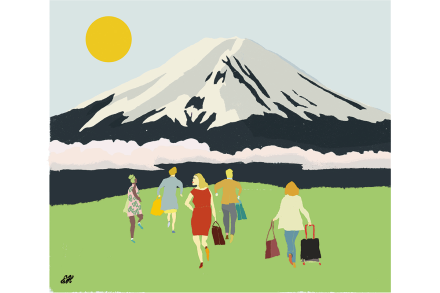
My personal version of hell? Shibuya station, Tokyo. Shibuya Scramble is one thing: the busiest pedestrian intersection on the planet, it sees two million people elbow each other, every day. But the train station that thousands of them are trying to get to? That’s where my hopes go to die. A place where you’ll find me near tears, wondering if I’ll ever see my loved ones again. It’s almost impossible to navigate, spread across a dizzying number of floors and stuffed with throngs of human beings speaking a dozen languages. New platforms spring up all the time, often at the top of an unassuming escalator, or via a tiny hidden exit of the Hikarie shopping mall. There are (one or two) signposts, sure, but my Japanese leaves much to be desired.

Fuji

The theater of the Galápagos Islands

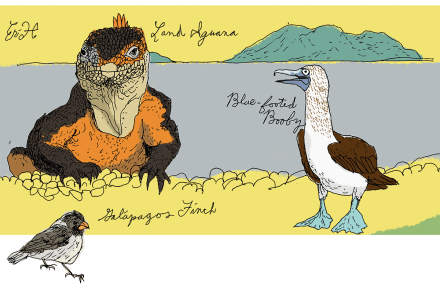
It was stiflingly hot in the middle of the Pacific Ocean. I was exploring the eastern Galápagos Islands, living cheek-by-jowl on a former casino ship with a cast of characters plucked straight from a murder mystery novel: a former British supermodel, an Ecuadorian presidential candidate, the ex-drummer of a band who once supported the Who and an influencer couple who looked like they had stumbled off the set of Triangle of Sadness. The stars of the show – and boy did they know it –were the sea lions While the trip had all the ingredients to cook up an irresistible whodunit, I was not just there to inspect the wildlife on board but to observe the wildlife off it.

Is this America’s most racist town?

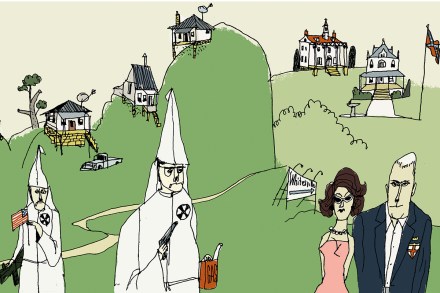
On a suffocatingly humid Friday morning in August, I sat in a rental car parked outside the home of Thom Robb, the leader of the Ku Klux Klan, wondering if I should knock on his door. A shirtless, muscle-bound, heavily tattooed carpenter who lived down the road – and swore he wasn’t racist or a Klansman – said Robb was “a really nice guy” who wouldn’t mind my turning up at his house without an appointment. Klansmen, I reckon, aren’t “nice” guys by definition, and as Robb’s mean-sounding dog barked at me from the other side of his fence, I feared the neighbor was setting me up to get my head blown off.

racist

Confessions of a bear hunter

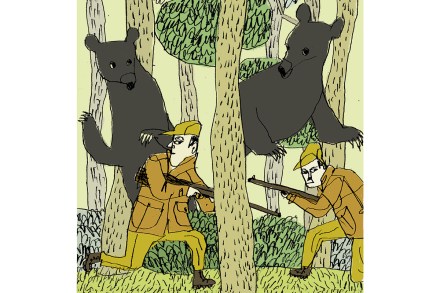
Southwest Virginia, October. Gravel groaned under my creek-numbed feet. I looked up at a mountain laid out like a fist and I climbed toward the most violent knuckle. But before I got there, the world turned on its side. I don’t know for sure why I collapsed. Maybe it was food poisoning, maybe a heart attack. I felt my face resting on cold stone and gripped the dark walnut of my rifle stock as I passed out. Eleven hours later, a new day started. A distant pickup truck with glass-pack mufflers fired up, then idled in a deep rumble. I stood – before the sun came up – and did squats for warmth, surprised I felt as good as I did, but I had a decision to make: walk off the mountain or hunt my way out. May as well hunt.

bear

An epic journey on horseback through Kyrgyzstan’s mountains

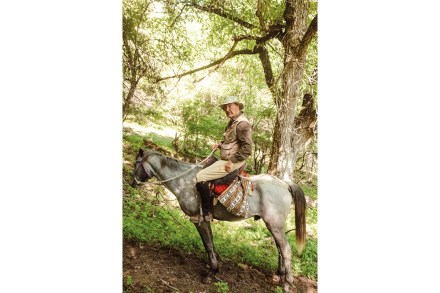
If you tell friends you are going to Kyrgyzstan, they look blank, or think you are talking about Kurdistan, although the two are 2,000 miles apart. If you get the choice, choose Kyrgyzstan. Like so many, I first learned of the place because of Alexandra Tolstoy: writer, adventurer, horsewoman and cousin of the author of War and Peace. She discovered the romance and beauty of the place for herself when she rode 5,000 miles of the Silk Road by horse and camel in 1999. Since then, she has ridden in Kyrgyzstan most years, taking parties of 12 or so into the lower slopes of the vast Tian Shan mountains, the highest range west of the Himalayas. Blonde, fearless and always elegantly turned out, she leads. We follow.

Kyrgyzstan

Why western Canada should join the US

I was born in Saskatchewan and have no intention of returning. It’s the Siberia of Canada, an area bigger than France – where I now live – with the population of Buffalo, New York. It’s sucked dry by Ottawa. Elon Musk was here, and left. And it has winter temperatures of -40 degrees. Alberta has slightly more going for it: skiing, bears. But Albertans aren’t gruntled, either. The last time I was in Calgary I had lunch at the elite Ranchmen’s Club and the chatter was seditious. The talk was of Wexit – the separation of western Canada from the bloodsucking east. Then there’s Plan B. While it’s possible that western Canada could go it alone – seceding from the dominion and declaring independence – it’s hardly the only option.

Canada
Edinburgh

A journey through Edinburgh’s gothic past

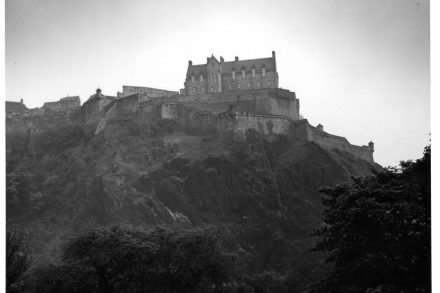
When Guillermo del Toro’s new film adaptation of Frankenstein makes its bloody advent on Netflix later this year, the backdrop for 19th-century body snatching and resurrection may look familiar to many viewers. It was shot last year on Edinburgh’s Royal Mile and images from the set suggest that, as ever with del Toro, this will be a hallucinatory and haunting exercise in Gothic extravagance. If so, he has picked the perfect city on which to unleash Frankenstein’s monster. Edinburgh is a place that wears its long and often violent history like a velvet cloak.

Taking the fast train back to imperialism

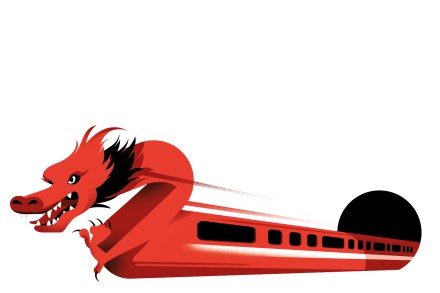
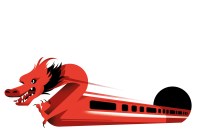
I’m on a high-speed train. Forty years ago, such a statement would have been notable and specific: essentially, it meant you were in Japan or France. Nowadays, being on a high-speed train is barely a geographical indicator at all. Most of Europe has them, from Spain to Italy to Poland. Morocco has high-speed trains. Uzbekistan has high-speed trains. Even Egypt, Vietnam, Turkey, Thailand and the USA either have high-speed railways, or will have them in the next year or two. Just about the only country not powering ahead with high-speed rail is the birthplace of the railway — the United Kingdom — a fact that can either make you sob, or despair, or perform a kind of double sob etched with despair. What makes my experience unusual is that my high-speed journey is happening in Laos.

train
Swiss

Breakfasts, massages and reinvigorating Swiss thermal waters

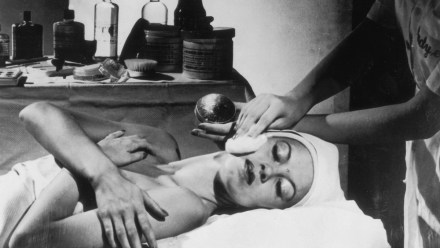
Last January, one of the first things my son-in-law wanted to know was if I’d found a “boy toy” after spending a week at Lavey-les-Bains, following our Christmas holiday in Burgundy, where half of us now live. The other half lives in Australia. The renowned Swiss thermal waters lie under the Dents du Midi that rise above Lac Léman in the Swiss canton of Valais like four, glistening white, enamel incisors. Applicants for Swiss nationality must name Les Dents if applying for a Swiss passport in le Valais or le Vaud where we lived for sixteen years, from 1968 to l984. My answer was “no.

karoo

The Karoo has seen so much, but changed so little

It’s an incongruous name for a wilderness, “the Karoo.” The nursery-like sound belies the harshness of a vast, arid hinterland separating South Africa’s littoral from its grassland interior. For South Africans, the name is synonymous with bone-dry air, scented heathers, great rock formations, vast skies and even vaster sunsets. The scrubland here is so inhospitable that for centuries it insulated the southern tip of Africa from the rest of the continent. A single people — the Khoi bushmen — were adapted to its desicated conditions: Karoo is their word for “waterless land” that has come down to us as its modern name. In the nineteenth century, the pressures of the outside world began to weigh on this hardy time capsule.

An escape from Venice

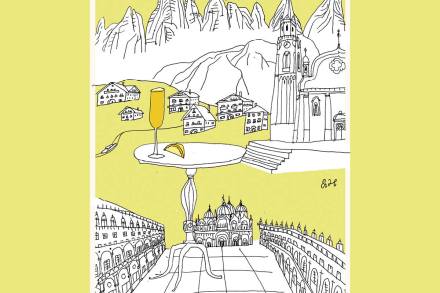
Those who have visited Venice in the summertime will have witnessed the masses who descend into the heart of the labyrinthine islands, clogging their historic stone arteries and beautiful atria in a gormless and sclerotic trance. Meandering along the canals can always lead to some duomo or piazza that merits a standstill and an upward gawp. If you’re at all like me, after sweating through those tight streets with other tourists, one day certainly feels like enough. So it went on my recent visit. After popping my head in for as much of the Biennale that was still on display, a Bellini at Harry’s, lunch at Staffa and an inspiring visit to the Fondazione Querini Stampalia, I decided to get in the car and leave.

Venice
bimini

Bimini the beautiful

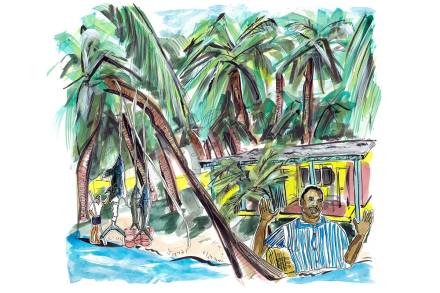
Give me a golf cart on an obscure small island and I am ecstatic. That’s how I felt on Christmas Eve rumbling around North Bimini, one of thirty inhabited islands in the Bahamas, with my wife and teenage sons on a balmy day full of benign clouds and serendipitous discoveries. I’m a traveler who is blessed and cursed with hyper-curiosity. Places with too much to see frustrate me because no matter how long I stay, I’m inevitably nagged by a sense that I missed something. I love cruises but port days are a particular tease because you’re always racing against the clock to get back to the ship. So for me, Bimini, with zero stop lights, no fast food and nearly as many golf carts as its 2,000 inhabitants is almost perfect.

elephants

The elephants I’ll never forget

"No lions?” “No lions. It’s fast-flowing water, so there shouldn’t be any leeches. We do have slender-snouted crocodiles, but they’re quite shy.” “Hippos?” “One we see every now and again.” Swamp-walking hadn’t been on the year’s bingo card, but I’d found myself wading through clusters of floating dung and algae in the largest tropical rainforest on the African continent. Rubber slip-ons heavy with silt, sulfurous foam collecting in my shirt pockets, I felt strangely calm. As a day, this was turning out to be exceptional. It had been the invitation of a lifetime: to add my name to the list of a few hundred outsiders who have stamped a boot in the Congo Basin, one of the wildest and most remote places on Earth.

Pure shores: a Scottish sea safari

In the narrow strait between Jura and Scarba, the sea does strange things. Standing waves barrel over phantom surf breaks. Steely waters seethe and swirl, as if stirred by invisible hands. No wonder the gulf’s name, Corryvreckan, means “cauldron of the speckled seas” in Gaelic; this is the world’s third largest whirlpool, classified as “unnavigable” by the Royal Navy. Yet here I am, aboard a thirty-seven-foot rigid inflatable boat (RIB), riding the rapids. Skipper Sandy Campbell cuts the engine so we can try “boat surfing,” the swell dragging us apace past Scarba’s looming quartzite cliffs. Islanders of old dreamt up mystical explanations for this phenomenon.

Hebrides
balloon

In a balloon over Burgundy

I said I’d never go up in a hot air balloon again. But that was a terrified me forty-five years ago. And here I was, relaxed and enjoying the views of the French Côte d’Or with my family and a handful of French people at 1,500 meters, hovering over vineyards, pastures and fields. In 1979 I was contacted by Hans Büker, a thirty-nine-year-old German balloonist who was hoping for some free publicity in the International Herald Tribune, for which I was the Swiss correspondent. Büker was trying to launch a ballooning festival in Château d’Oex in the Bernese Oberland, known for its cheese and rolling pastures pierced by imposing alps.

Skiing Hokkaido’s powder triangle

"Insane, isn’t it?!” Kyle yelled from thirty feet below, leaning back on his snowboard to watch me struggle. I summoned every ounce of strength in my jet-lagged body to prize my legs, still attached to skis, from several feet of fresh snow. Wedged sideways, I pulled myself up by a tree root, alternating between hysterical laughter and acute panic as little progress was made in five minutes. I’d come to Japan for the powder — and I’d sure found it on my first morning in Furano, Hokkaidō. Fighting to stand up, I steeled myself to tackle the impossibly light powder reaching my armpits, on the widest skis I’d ever clipped into. It really did feel different to snow in the US or Europe. This would take some getting used to. “You said you wanted ‘Japow’!

Hokkaido

Tokyo drift: Japan’s once-pricey capital is now cost-effective… for Americans

I spent my last afternoon in Tokyo stocking up on snacks and feasting on cheap and delicious conveyor belt sushi, in anticipation of characteristically criminal airport concession prices. But when I made my way past Haneda Airport’s Rodeo Drive-esque esplanade of luxury shops — does anyone really buy a $10,000 Omega watch on their way to their gate? — I was in for a surprise. Bottles of water, iced tea and other soft drinks were less than $1 in airport vending machines, just like everywhere else in the country. I wasn’t hungry, but when I realized that I could buy a plate of yakisoba with shrimp, pork and squid for the yen equivalent of $6 and six takoyaki (essentially balls of fried octopus) for $4.75, I ordered both.

Tokyo

Is Paris the world’s most bookish city?

After I ventured to New York in May 2024, bound for a discerning literary journey round the city’s bookshops, libraries and hotels, I received some lively and constructive feedback from Spectator readers. Many, thankfully, agreed with my arguments about its bookish charms, but a consistent theme in the comments I received was, “How can you claim that New York is the quintessential literary city? Have you forgotten Paris?” To which my reply was reasonably simple: “What about Oxford, London, Rome, Edinburgh, Dublin, Santiago or San Francisco?” All of them hugely distinguished citadels of the written word, both present and historic alike. Yet I felt uneasy at my response.

Paris

Off-season fun in Montauk

At the very end of Long Island you’ll find Montauk, the end of the line on the Long Island Rail Road; the train station might be familiar if you’re a fan of Eternal Sunshine of the Spotless Mind. In recent years, Montauk’s popularity has boomed, becoming an extension of the Hamptons in the summer. But in the off-season, it remains a secluded and mysterious town. I have come here every year for the last five years — Montauk is famed for its incredible striped bass and largely untouched natural beauty.

Montauk

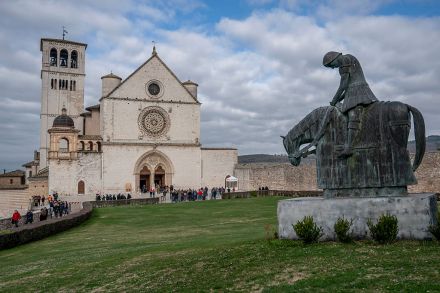
A pilgrimage to St. Francis’s holy sanctuary at La Verna

Beneath a stunning Della Robbia Crucifixion a lone candle burns on the floor of the Holy Stigmata Chapel in the sanctuary of La Verna. The immense tranquility belies the astonishing events that occurred in 1224 on this rocky outcrop in central Italy’s Umbrian hills. The chapel marks the spot where, two years before his death, Saint Francis, retreated to fast and pray with two of his brother friars. After some weeks, Francis saw a six-winged Seraphim, apparently crucified, who appeared and imposed the five wounds of Christ’s Passion on his body — in paintings the angel appears to be “lasering” St. Francis, who is often depicted as a sort of Franciscan version of Willem Dafoe getting it at the end of the film Platoon — including the nails protruding. Heady stuff.

la varna