Peace deal

Only Iran is happy with Trump’s peace deal

President Trump might have thought that negotiating an interim diplomatic understanding with Iran was going to be the hard part. But selling the 14-point Memorandum of Understanding to the public is proving to be just as laborious.  Trump deserves blame not because he negotiated a poor peace deal but rather because he decided to go to war in the first place Less than 24 hours after the document was released, virtually nobody is particularly satisfied with it. Republican lawmakers on Capitol Hill, normally deferential or wholly supportive of Trump’s agenda across-the-board, are already expressing nervousness at the terms and demanding a full briefing from the administration about how the White House plans on executing them.
iran

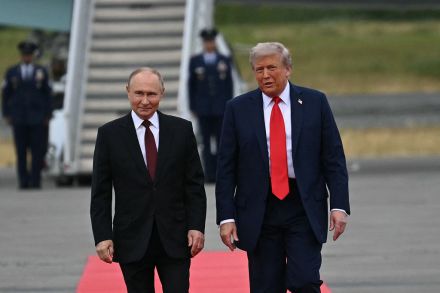
Why would Putin sign Trump’s peace deal?

It was summer 2022. Ukraine had just taken back Kyiv, people were returning to the city, and the mood was one of euphoria, triumph and success. I was having dinner with a Ukrainian official in a neon-lit seafood restaurant in the center of the city, the curfew nearing. "If this ends like the West Germany or Korea scenario, that would be the best outcome," I said to him. He snapped at me: "You want me to tell my relatives in Kherson that they will never live in Ukraine?" Three years later, and even that unwelcome outcome is now far from what Kyiv is being offered by the Trump administration.

trump putin

Has Ukraine called Putin’s bluff?

From our UK edition

12 min listen

Last night there was a huge breakthrough in Ukraine peace talks, with Zelensky accepting a US proposal for a ceasefire and placing ‘the ball in Putin’s court’, according to Marco Rubio. While getting Zelensky to accept is a huge diplomatic win, the proposal hinges on Putin agree to the terms of the ceasefire – which will last for 30 days but can be extended by mutual agreement. ‘I’ll talk to Vladimir Putin. It takes two to tango,’ said Donald Trump. Can Putin afford to reject the deal? And could this be the basis for a lasting peace? Meanwhile, Keir Starmer has been getting a lot of credit for his role in the Ukraine peace process and the perception that he has stepped up to meet the crisis.

Ukraine war, three years on

From our UK edition

13 min listen

Today marks three years since the start of Russia's full-scale invasion of Ukraine. From early fears of a swift Russian victory to the Kharkiv offensive and the slow war of attrition that has played out since, each stage of this war has been hard to predict. None more so than this stage, with the USA drastically changing tack and tearing up the transatlantic alliance by pursuing back-channel peace talks with Putin. Europe has been left scrambling. Where do we go from here? And with an isolationist USA, the breakdown of the European consensus on Ukraine and the UK's armed forces being hollowed out, who is left to defend Europe? James Heale speaks to Katy Balls and Keir Giles, a senior consulting fellow at Chatham House. Produced by Oscar Edmondson.

How Europe’s consensus on Ukraine broke down

From our UK edition

14 min listen

The future of Ukraine is being decided in a meeting between US and Russian diplomats in Saudi Arabia today. So far, we understand that America will insist that Ukraine is recognised as a sovereign nation, but NATO membership remains off the table. Meanwhile, European leaders have been cut out of the conversations. In response, they held their own summit yesterday, but it didn’t seem like they were all singing from the same hymn sheet. While the UK is pushing for higher defence spending and is willing to commit troops, other European nations seem more dovish, especially Germany and Italy. This is reflected in opinion polls as well. What's going on?  Oscar Edmondson speaks to James Heale and James Johnson, director at JL Partners. Produced by Oscar Edmondson.

Can Starmer be the bridge between Europe and the US?

From our UK edition

14 min listen

There is lots to make sense of today in a huge week for European and world politics, with the fallout of the Munich Conference and today’s emergency summit in Paris. European powers are trying to navigate peace in Ukraine in the face of a belligerently isolationist Trump administration. The UK is caught between preserving its privileged position with the US and the desire for a European reset, as well as the need for an end to the war in Ukraine without giving in to Russia. Can Starmer bridge the transatlantic chasm that has opened up? Do the Europeans want us, and do the Americans need us?  Events in Europe will be incredibly consequential here in the UK.

China is playing the long game over peace in Ukraine

From our UK edition

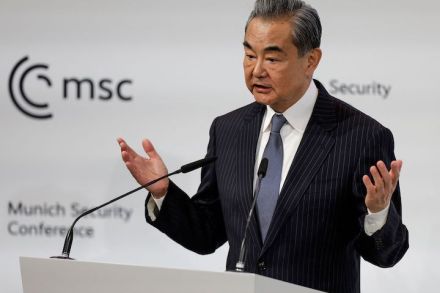
At the Munich Security Conference over the weekend, China’s foreign minister Wang Yi announced that his country was currently in consultations with ‘our friends in Europe’ over the framework of a peace proposal for Ukraine. It is to be laid out in full by President Xi Jinping on the first anniversary of Vladimir Putin’s invasion – 24 February. Beijing’s peace initiative would, said Wang, underscore the ‘need to uphold the principles of sovereignty, territorial integrity and the UN Charter’ but at the same time ‘respect [the] legitimate security interests of Russia’. On the face of it, it appears that Beijing is not saying anything new.

The fantasy of an Israeli-Palestinian ‘peace’

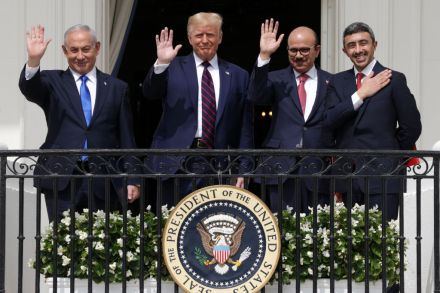
Long-time readers of this site may be aware that yours truly has not only applauded the Trump administration’s successful efforts to normalize Israel’s relationship with several Arab countries but has also proposed awarding the Nobel Peace Prize to Jared Kushner, the architect of the Abraham Accords. There were many reasons for my bullish sentiments regarding the Trump administration’s Middle East policy. First and foremost, as I pointed out, it disrupted the old American paradigm that held that any effort towards rapprochement between Arabs and Israelis hostage to the ultimatums of the radical Palestinian leadership.

peace palestinian