Paywall

End of empire

The end of World War Two inaugurated the era of American dominion, with the United States politically, economically and militarily the most powerful nation on the planet. Yet throughout the subsequent period of American global ascendency, the American people endured a seemingly endless sequence of domestic crises, upheavals and disasters. Primacy abroad did not insulate them, convinced of their unique place in human history, from the trials and tribulations routinely befalling other, more ‘ordinary’ nations. Yet neither did trials at home undermine the deep-seated belief that history had summoned the United States — and no one else — to lead the world.

empire
patriot

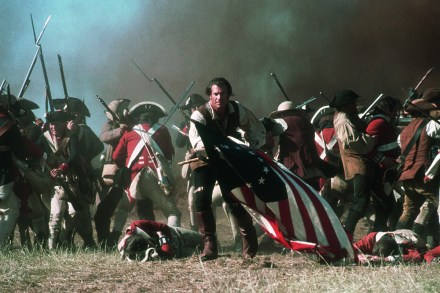
Revolution then: The Patriot stands alone

You’re the director of one of the biggest blockbusters in recent memory. Your latest project premiers Fourth of July weekend: an American Revolution epic, headlined by one of Hollywood’s most bankable stars. What could go wrong? In 2000, Roland Emmerich did everything right with The Patriot. Robert Rodat, a veteran of Saving Private Ryan, wrote the script. The Smithsonian Institute consulted on historical accuracy. Mel Gibson, who had led the charge in Braveheart, was the star. He was also People’s ‘Sexiest Man Alive’. ‘The problem I have is people love me so much, they never criticize me,’ Gibson lamented in a cameo on The Simpsons in 1999. ‘It’s hell being Mel.’ Cinematic hell is where The Patriot remains.

Is this the end of history?

Midway through Hemingway’s The Sun Also Rises, there occurs this exchange between two characters: ‘“How did you go bankrupt?” Bill asked. “Two ways,” Mike said. “Gradually, then suddenly.”’ The process of civilizational bankruptcy takes a similar course. Casual, seemingly isolated attacks on the fabric of civilization feel at first like so many harmless insect bites. A speaker is shouted down. A statue is vandalized or removed. A college course once deemed essential is rebaptized as offensive: first it is pilloried, then it is canceled. People start quoting Tocqueville’s warning that in a democracy, as large inequalities dissolve, small inequalities are magnified, growing both rancid and rancorous.

end history

No smokes without buyer

In late March I left New York, fleeing the mayor more than the virus. Sunlight being the best disinfectant and I having parents to see, I grabbed a tube of disinfecting wipes and flew to Palm Beach, Florida. After seven weeks of sunny inanition, I prepared to leave and return home. Among my objectives was the fulfillment of a request by a New York friend to pick up a carton of cigarettes for him at Florida prices. Though not a smoker, I sympathize with the tax-burdened as a rule. Entering the Palm Beach Publix supermarket, surely the only Publix with valet parking, I made straight for the tobacco counter, having been advised by my nicotine-addict friend that the store was known to carry his off-piste brand, Carlton 100s.

i-95

Bright lights, abandoned city

Joan Didion wrote that New York is a city only for the very rich, the very poor and the very young. That was in her cult classic 1967 essay ‘Goodbye To All That’, in which she created the farewell-to-New York genre. It’s a quote I carried with me through my twenties, from one grim apartment to the next, each smaller, farther out and more expensive than the last. This is simply the nature of the place, I told myself. If you don’t like it, move somewhere else. Many of us emerged from Mayor Mike Bloomberg’s luxury dictatorship in the aughts with a sense of battle fatigue.

city

No justice, no peace

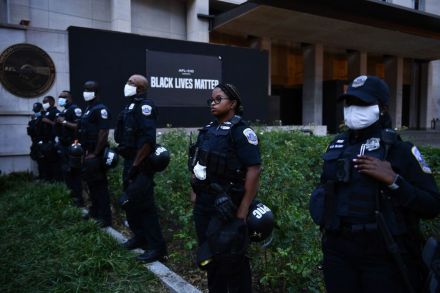
Who would want to be a policeman in America in 2020? It’s badly paid and dangerous. You might get to be a hero. You are more likely to be despised as a racist. Every day, in crime-ridden urban areas, officers of different ethnicities must make intensely stressful life-and-death decisions as they engage with other people of different ethnicities. That’s the job. It should go without saying that the vast majority of law enforcement officers carry out their duties with admirable professionalism and skill. Watching the news, however, or listening to certain Democratic politicians, we might easily reach a very different conclusion: that cops are vile bigots who target and kill black people for sport.

justice

The rioters and the rentiers

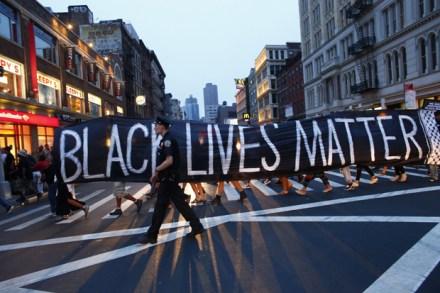
It was inevitable that the wave of destructive rioting and looting that has swept through cities that are almost all governed by progressive Democrats, triggered initially by outrage over the sickening death in police custody of George Floyd, would be compared to the American urban riots of earlier generations. But the parallels miss profound differences in the underlying economic and social dynamics. The Detroit and Newark riots of 1967 and the Los Angeles riot of 1992, for example, took place in cities suffering from the effects of deindustrialization. Los Angeles is not often thought of as a major manufacturing center, but Southern California had a flourishing aerospace industry that went into decline following the Cold War.

rentiers
protest

Can COVID-19 tell whether a protest is progressive?

New York City This past month shattered all my sense of stability and permanence in New York, the city I’ve called home since 2012 (though I’ve spent some of those years in London). The looting mobs that rampaged through Gotham’s streets put me in mind of my native Middle East, a phenomenon I thought I’d left behind ‘over there’, not to be encountered except on the occasional reporting trip to Iraq or Egypt. But no. An unjust police killing in Minneapolis — combined, no doubt, with the effects of a prolonged lockdown — Arab Spring’d the United States, if you will. Or rather, the riots revealed that America’s advanced liberal society isn’t all that different from the Arab client states Washington likes to lecture.

The new inequality

It is a strange habit, the American one of making talk-show hosts into preachers. There is no good reason, after all, why a comedian should be any kind of arbiter of morality or anything much else. Yet in America the court of public opinion accepts the right of the jester to preach the homily too. So it was that, in a period not short on ‘personal takes’ and celebrity messaging, one night in early June on his Late Late Show, James Corden delivered a teary monologue about race relations in America. Lots of people thought he did well, and praised Corden’s talk of ‘white guilt’ and all manner of other sins. But one phrase stood out for being especially bogus. It was a phrase that was widely quoted.

race

Self-righteous vandals

Violent left-wing activists have taken to styling themselves as antifa, short for ‘anti-fascists’, though their street-fighting tactics resemble nothing so much as the Brownshirt thuggery practiced by fascists themselves. This did not stop NPR national political correspondent Mara Liasson from likening these hooligans to the heroes of World War Two. On the anniversary of D-Day, June 6, while America’s cities still smoldered after days of riots and looting, Liasson took to Twitter to call the Normandy invasion the ‘biggest antifa rally in history’. Dumb jokes are nothing new on Twitter. For many liberals today, however, it’s no laughing matter.

statues vandals history
louis c.k.

Louis C.K. pulls it off

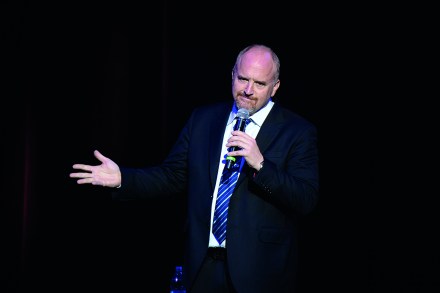
‘You are so lucky that I don’t know your thing. Do you understand how lucky you are?’ comic Louis C.K. tells his comeback show audience. ‘Everybody knows my fucking thing, now. Obama knows my thing. Do you understand how that feels? To know that Obama was like “Good Lord!”’ It’s a good point well made. Everyone who knows anything about the world of comedy does indeed know Louis C.K.’s thing. In 2017, when #MeToo exploded, C.K. was ranked by Rolling Stone number four among the 50 best stand-up comics of all time. His sexual proclivity was publicly exposed, he lost numerous television deals and movie contracts and he suddenly found himself cast into outer darkness. All in all, it cost him an estimated $35 million in lost income.

Something woke this way comes

Man’s refusal to accept reality can take entertainingly paradoxical form. One of the more enjoyable is the New Atheists’ crusade (I use the term advisedly) against God — a battle with human nature which, like most battles with human nature, can never be won. God may never have appeared in a burning bush, but, he, she or they came to life in the brains of some ancient hominids, probably as a bug in a new pattern-recognition app. It was a bug with benefits, and as evolution is an opportunist, God has never gone away since. Tara Isabella Burton, who has a doctorate in theology, does not deal with the sources of religious belief in Strange Rites, Instead, she focuses ‘primarily on what a religion does’.

rites
tori amos

Tori rebel

In her new book, the singer-songwriter Tori Amos advises aspiring artists to be wary of those who would lead them astray. ‘Most people cannot raise their hand and say, “Your expression, your piece, your song, your art, is not to my taste; in fact I have an aversion to it, but I think it’s brilliant.” And that means that... some people judge something to be good or not good by what they personally like. Beware of this, I say to all artists.’ The simple sentiment encapsulates why so much creative potential is stifled before it can flourish. An artist whose principal goal is to please an imagined audience, or to adapt his or her work to critical trends, is no kind of artist at all.

I hate the Nineties

I’m a Nineties kid. You know what that means: Tamagotchis, Super Mario, Sega, primitive cell phones, slap bracelets, skateboarding, The Simpsons, Seinfeld, David Koresh, scooters, Britney Spears, the Backstreet Boys, the Spice Girls, the first bombing of the World Trade Center, the Nato bombing of Sarajevo, Pokémon!, Blink-182, Bill Clinton, Friends and the friends of Bill Clinton. What a decade! Only Nineties kids will understand it. And as even Nineties kids grow up, Nineties nostalgia is now big business. Everyone from the Spice Girls to Smashing Pumpkins has launched comeback tours on a rising tide of misty-eyed affection. McDonald’s brought back Tamagotchis and Furbys and other veteran Happy Meal toys. Friends is set to make a highly profitable return.

nineties
strawberry

Strawberry yields forever

Looking to impress your girl in NYC? Order her some Omakase berries from Oishii. Although they’ll probably be the most expensive strawberries you’ll ever buy in the States, a pack of eight, hand-delivered to you at a secret rendezvous in the Oculus at the World Trade Center, will still only set you back $50. That, as you’ll know if you’re inclined towards thrift in courtship, is significantly less than a dinner date within the same city precincts. Word on the street is that these berries are so good (a subtle hint is provided in the company name, Oishii, which means ‘delicious’ in Japanese) that you can be served a single one as dessert at a Michelin-starred joint in Manhattan and not feel gypped.

Professing virtues

Laramie, Wyoming For a good part of the 20th century, the college professor was an object of fun in American popular culture: a long-hair in the 1920s, an egghead in the Thirties, and in the Fifties an absent-minded intellectual at best, at worst a Comsimp suspected of being a sworn agent of Comrade Stalin and the Politburo. In the revolutionary Sixties, he was publicly imagined as a hirsute hippy in jeans and sandals waving the Cuban or Chinese flag, indistinguishable from students made up like Che Guevara. Americans have always been ambivalent about the pedagogue and his intellectual and social contribution to the Republic.

professors
cupcake

Arise, the cupcake

Do you know the milquetoast muffin man? His name is Charlie Brooker, he’s the co-creator of the hit television series Black Mirror and he thinks cupcakes are ‘bullshit’. ‘A cupcake is just a muffin with clown puke topping,’ Brooker wrote in 2012. ’Once you’ve got through the clown puke there’s nothing but a fistful of quotidian sponge nestling in a depressing, soggy “cup” that feels like a pair of paper knickers a fat man has been sitting in throughout a long, hot coach journey between two disappointing market towns.’ I’m usually quite skeptical of gastronomic fads — the rainbow bagel and matcha ice creams can go pound sand — but I’m here to defend the cupcake.

Feed it to the Marines

Between my parents, my six brothers, my sister and I, we were always gathering for something special in normal times: a graduation, a baptism, a cookout, even just pastries after Sunday Mass. But then the days and weeks of quarantine stretched darkly before us with nothing to celebrate, minor or major. The days all run together, differentiated by nothing except my parents’ choice of detective procedural for binge-watching. Until this week, when we got the news: L. is coming home. My younger brother L. is a second lieutenant in the Marines, the second of my brothers to become an officer.

marines
neocons

Neocons come home to roost

Dolphins returned to the canals of Venice during the COVID-19 lockdown, and neoconservatives are returning to the Democratic party. Bill Kristol and his colleagues at the Bulwark support Joe Biden for president, even though an anti-Trump Republican of sorts briefly jumped into the race. Michigan congressman Justin Amash earned the esteem of the Kristol crew when he collaborated with Democrats to impeach Donald Trump last year. But the Bulwark feared that if Amash was on the ballot as the Libertarian party’s presidential nominee, he’d take votes away from Biden.

Count my blessings

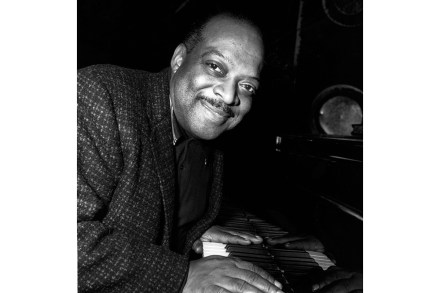
I have to laugh when I read about my Baby Boom cohort’s memories of savoring rock ’n’ roll behind the backs of disapproving elders. I had no such problem. I wasn’t especially taken with the new sounds of the Fifties: I was six years old when Elvis Presley debuted on the Ed Sullivan Show. I thought he was vaguely comical. In any case, my parents had resolutely high-minded middlebrow taste in such things, wavering somewhere between Dvorak, Lawrence Welk and Mozart. Rock ’n’ roll was simply out of the question. Everything else heard in the household — country and folk music, in particular, which my elder siblings’ favored — was tolerated to some degree, but my own secret musical vice was not.

count basie