Paywall

Human after all

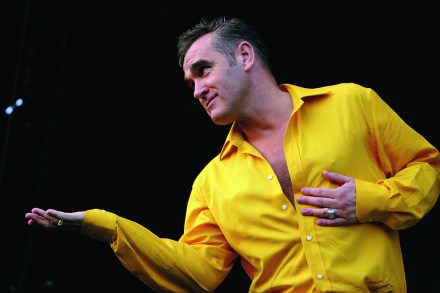
As the weird world of lockdown winds down, we might pause to consider what we’ve learned. I am hardly alone in my heightened hankering to unravel, synthesize, undo and discard. In this mission a voice from the past is helping me piece things together anew as the strange tyranny begins to dissolve. It began when Google started throwing videos of the Smiths in my daily cyberpath, prompting a non-essential trip down Memory Lane. Back in the day, I was, as David Cameron used to boast, a ‘huge fan’ of the Smiths. Precisely, I was a fan of Johnny Marr’s guitar literacy and the persona of Morrissey, the enchanting singer who had jettisoned his given names.
morrissey

A rosé by any other name

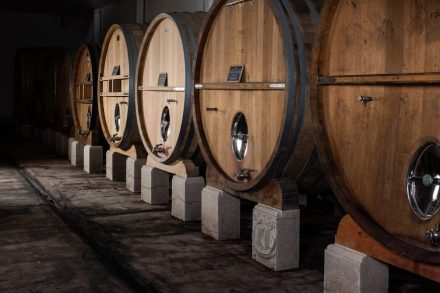
According to the Book of Genesis, Man was not made to be alone. No, nor is wine. Just as man is (as Aristotle reminds us) essentially a social animal, incomplete without the society of his fellows, so wine requires food to flourish. There are exceptions to these rules, no doubt, but they remain exceptions. Untangling this truth is one of the primary tasks that the distinguished wine importer and writer Kermit Lynch has pursued since he set up shop in the 1970s. One of the most delightful books about wine that you will ever read is Lynch’s Adventures on the Wine Route, first published in 1988 and spruced up for its 25th anniversary a few years ago.

bandol
civility

How to restore civility in politics

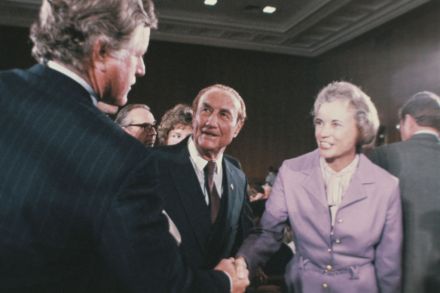
Batavia, New York When I toiled in the world’s greatest deliberative body back in those carefree days before 9/11 and COVID-19 had given the state an excuse to try to make Every Man a Caitiff, an old US Senate hand told me a story about the crone who ran a little newsstand perhaps a punted football’s distance from the Russell Senate Office Building. It seems that the aged proprietress had been the paramour of James Eastland, the law-and-order worshipping, segregation-championing Democratic senator from Mississippi who never met a civil liberties violation he didn’t like. Eastland, chairman of the Senate Judiciary Committee, was well regarded within the Senate, however, and considered a fair dealer by his colleagues. One of them was Sen.

Guerra goes to war

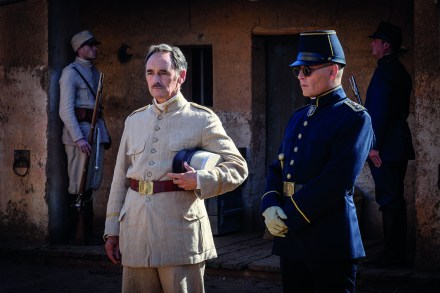
Every civilization needs its barbarians. Lazy, filthy, dumb and dangerous, the barbarian, real or imagined, is the eternal grindstone on which the civilized sharpen their prejudices. They are, as the Greek Alexandrian poet Constantine Cavafy wrote, ‘a solution of a sort’ — but to what? In Cavafy’s poem ‘Waiting for the Barbarians’ (1898), an unnamed city is gripped by cultural torpor and political sloth. The gridlocked citizens, weakened by indolence and luxury, dream of a bloody release from their troubles. Disaster, a visit from the barbarians, becomes their last hope for rebirth. You don’t need to be a specialist to see the parallels between the poem and the illicit undercurrents of politics in the 2010s.

barbarians guerra

The spy’s spy

Sitting beneath the pergola of the historic Roycroft Inn, J.R. Seeger looks the part of a successful thriller writer. He is wearing an immaculate white shirt, blue jeans and boat shoes, his blue-green eyes peering over a camouflage-style face mask. The western New York hotel, some 20 miles from the city of Buffalo and the Peace Bridge crossing into Canada, was a centerpiece of the American Arts and Crafts movement when it opened in 1905. It is also the setting for one of the most gripping scenes in Seeger’s debut novel, Mike 4, in which a Russian double agent tries to lure an American protégé into a life of treason. The rendezvous involves a splintered oak door, a Colt Python .

seeger
john giorno great demon kings

Last of the red-hot lovers

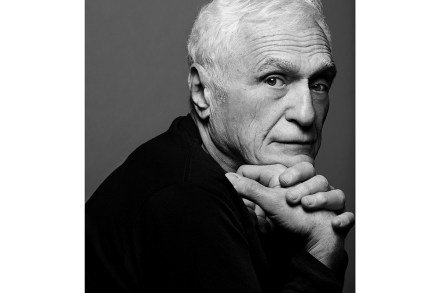
John Giorno’s breakthrough work, he explains in his richly salacious telltale memoir of the Sixties New York art scene, was ‘Pornographic Poem’. In 1964, Giorno took phrases from mimeographed erotica and reconstituted them as homosexual lyric poetry: ‘I shivered/ looking up / at these erect pricks/ all different/ lengths/ and widths/ and knowing/ that each one/ was going up/ my ass hole.’ ‘Pornographic Poem’ is a ‘readymade’ or ‘cut-up’ that follows Andy Warhol, Robert Rauschenberg, Jasper Johns and William S. Burroughs — all of them artistic appropriators, and all of them Giorno’s lovers. These revolutionary artists are Giorno’s ‘great demon kings’.

Cardinal virtues

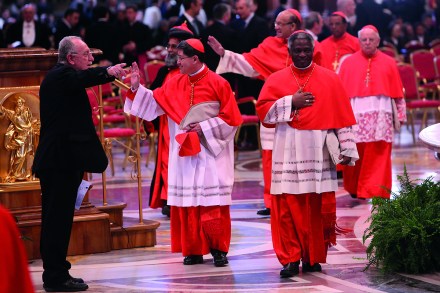
Once upon a time, in the days when you could round a corner in Rome without accidentally tripping over the snoozing spirit of Vatican II and setting it off into a shrieking fit, popes weren’t inaugurated: they were crowned. A magnificent procession accompanied the new pontiff as he was carried into St Peter’s Basilica on the throne-like sedia gestatoria to receive the papal tiara, a triple crown symbolizing the threefold mission of St Peter’s successors: to teach, govern and sanctify. A sobering dose of reality was built into the ceremony. Three times a master of ceremonies would halt the procession in its tracks. Stepping before the pope, he would ignite a bundle of highly flammable flax, issuing a solemn warning as it crumbled into ashes: Sic transit gloria mundi.

pope
kassabova

Mountain heir

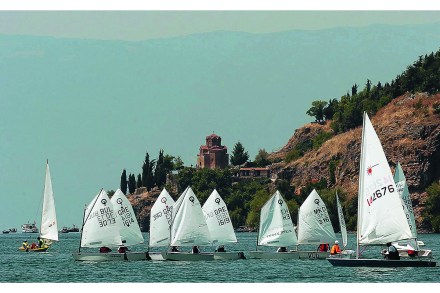
Kapka Kassabova’s previous travel book, Border, was rightly acclaimed and won several prizes. The author traveled to the edge of Europe, between Greece, Bulgaria and Turkey, and teased out ‘where something like Europe begins and something else ends, which isn’t quite Asia’. This is a sequel of sorts. She now travels to another border, that between Macedonia, Albania and Greece, where the vast and beautiful Lake Ohrid remains one of the Balkans’ surviving religious melting pots, despite considerable nationalist pressure. It is where her mother was originally from, so her journey is partly a rediscovery of her own roots.

A ticket to Rye

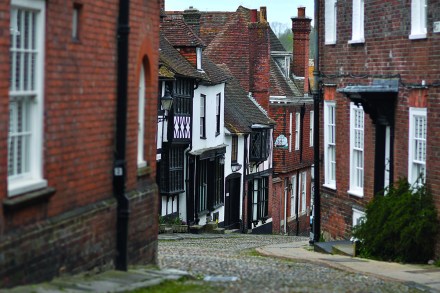
Earlier this year, before we went into lockdown, my wife and I set off on our final, farewell trip to Rye. I may go again, one day, but I know she never will. This quaint, archaic seaside town where we’d spent so many happy holidays had become a painful place for her. She was glad to say goodbye. I wanted to make a weekend of it, like we always used to, but she didn’t want to stick around. Her dad had died and her mom was in a nursing home. We’d come to clear out their house before the new owners moved in. It was her parents who had introduced me to Rye, 24 years ago. They’d just retired and needed a new adventure. The National Trust needed some new tenants for Lamb House, a grand old house in Rye where Henry James used to live.

rye
joe biden

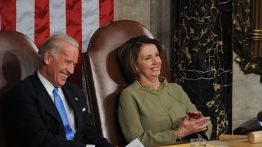
Biden is not the president America needs

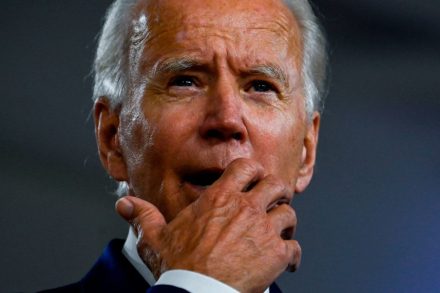
In a 2008 essay in the American Conservative, I encouraged my fellow conservatives to vote for Sen. Barack Obama in the upcoming presidential election rather than his Republican opponent, Senator John McCain. I have zero regrets about writing that essay. The editor of this magazine wonders if I would venture a similar endorsement of Joe Biden, certain to become the Democratic nominee in this year’s race. The answer is no. Whether I end up casting a grudging vote for Biden remains to be seen. Certainly nothing could persuade me to vote for Donald Trump. Yet, as was the case in 2016, the ballot will offer other choices. And there is always the option of staying home. By any conceivable measure, Trump deserves to lose his bid for reelection.

Avocado angst: is there anything safe to eat?

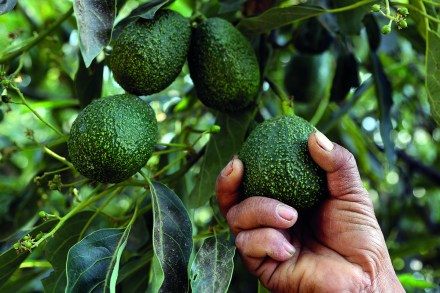
Your morning coffee is now an ethical minefield. Sure, you’ve remembered your reusable cup and are smugly avoiding adding to the 2.5 billion disposable cups dumped each year. But, ma’am, which milk would you like in your latte? Asked this question in my local coffee shop, I panic. Obviously not dairy, thanks to the methane-burping cows that produce it. Coconut is imported and food-mile heavy. Aren’t almonds causing drought in California? And isn’t the Amazon being razed to make way for soya plantations? Oat milk then, except I don’t like the taste. And isn’t coffee a pretty unethical product all told anyway? I recently stood at the counter for a full 20 seconds, lost in a moral milk maze.

avocado angst

Trekking towards the future

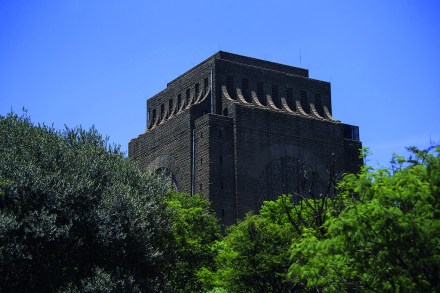
The Voortrekker Monument sits on a hill on the outskirts of Pretoria, South Africa’s administrative capital. During apartheid (‘apartness’) this brooding tower symbolized the Afrikaners’ belief in their manifest destiny and journey to self-empowerment. The place, whose name means ‘Great Trekker’, was popular with school groups, politicians and the armed services. Today it is well maintained but feels forlorn. It is an embarrassing reminder of the past. To get there is a short drive along the highway from Sandton, the northern suburban city which has largely replaced Johannesburg’s decaying central business district.

voortrekker

Twitter has stolen my life

Recently I had one of those dreams. I woke up wanting to forget it immediately, like most dreams. But it reached out from the depths of my subconscious with a message that rippled and reverberated through my waking day. You know those dreams? They’re sticky. In my dream, I’m sitting at the bedside of an older woman. She looks familiar. I can’t place how I know her — she isn’t my mother or an aunt — but I can’t shake the feeling that we are related. The woman holds my hand. She is dying. ‘Bridget,’ she asks, ‘how do you feel about the time you spend on Twitter?’ What a weird question for a woman on her deathbed to be asking, I think. Nonetheless, her question makes me defensive.

twitter internet

Same old same old

American politics is getting senile. Donald Trump and Barack Obama were both elected as agents of change, repudiations of an ancien régime represented by the Bush and Clinton dynasties. But after eight years of Obama, Hillary Clinton inherited the Democratic party anyway. Frustrated with just how little had changed, voters clutched for a more radical alternative in 2016 — and they found it in Trump. Now, if polls and betting markets are to be believed, the country is on the verge of turning its back on Trump. But if he does lose in November, his defeat does not promise to be a source of renewal — not when the alternative is a 77-year-old former vice president.

oligarchy

Meet the Mozarts

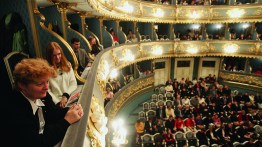
It’s 1771, you’re in Milan, and your 14-year-old genius son has just premiered his new opera. How do you reward him? What would be a fun family excursion in an era before multiplexes or theme parks? Leopold Mozart knew just the ticket. ‘I saw four rascals hanged here on the Piazza del Duomo,’ wrote young Wolfgang back to his sister Maria Anna (‘Nannerl’), excitedly. ‘They hang them just as they do in Lyons.’ He was already something of a connoisseur of public executions. The Mozarts had spent four weeks in Lyons in 1766, and, as the music historian Stanley Sadie points out, Leopold had clearly taken his son (10) and daughter (15) along to a hanging ‘for a jolly treat one free afternoon’.

mozart

Cormac McCarthy, brutal but brilliant

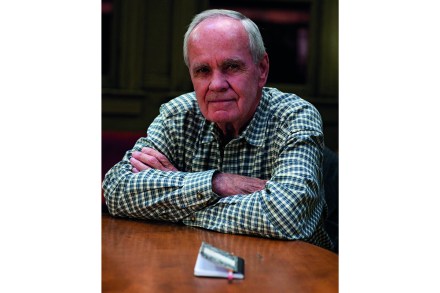
Cormac McCarthy of all living American novelists has realized most fully the potential grandeur of his métier by revealing the spiritual condition of our time in the old epic language. In this sense, he is the most serious American novelist of the post-war era. McCarthy’s work is magnificently oblivious to modern industrial and technological society and to the post-urban and suburban culture of consumerism, triviality and superficiality that are its fruits: the penalty a decadent civilization pays for its self-alienation from nature, humanity and metaphysical reality, and its embrace of an artificial world in which what is real and human withers and dries up, and art becomes well-nigh impossible.

cormac mccarthy

Purple podcasters

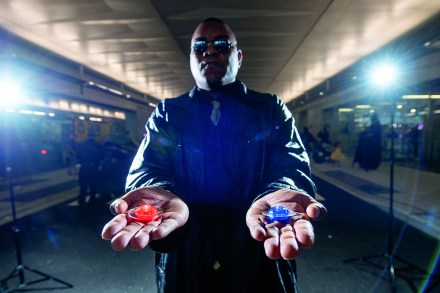
You’re familiar, no doubt, with the term ‘red pill’, the Matrix-inspired metaphor that’s become a catch-all for the type of right-wing thinking that thrives in the dark corners of the internet. Now the journalist Katie Herzog, in an admittedly tongue-in-cheek comment, might well have given us a new term: the purple pill. To take the purple pill, inferring from Herzog’s outlook, is to oppose the dangerous excesses of identity politics, but also the reactionary extremes of the red-pillers. This is, simply, a compromise — or the kind of terminally sensible position that shouldn’t need corny movie metaphors in the first place. But you see her point.

purple pill katie herzog
obama

Obama’s disappearing legacy

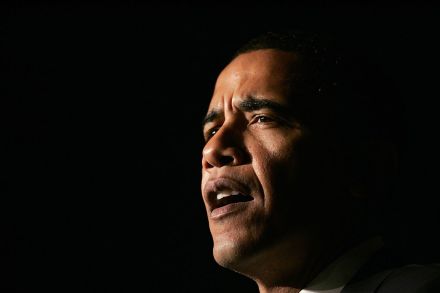
The presidency of Barack Obama was heralded as a transformative event in American racial history. So why did it seem to do so little to advance racial equality or alter long-standing patterns of African American subjugation? We hear that, if he wins in November, Joe Biden, the former vice president, will restore the essence of the Obama-Biden administration and put America back on a path to racial justice. But over eight years, what did Obama achieve? Long before Obama ran for president, a wide range of black voices questioned whether he was ‘black enough’ to represent African Americans. At Harvard Law, Obama’s election as the first black president of the prestigious Harvard Law Review drew national news coverage.

Yard envy

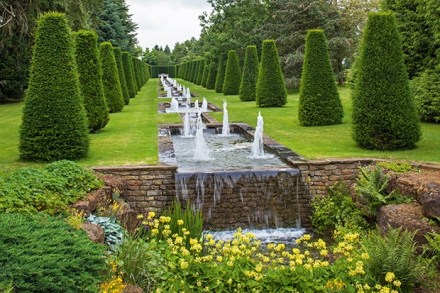
It is never easy to live next door to a retired Department of Agriculture employee. Quarantine has made it intolerable. I had always reassured the missus that our yard would look just like Mr Ray’s if I too spent all day at home. Coronavirus has exposed me as a liar. For four years I enjoyed my coffee and cigarette on the porch, digesting the New York Post’s reports of the calamities that had befallen the Mets in the previous 24 hours. Without baseball I spend my mornings staring out into the yard, reckoning with the fact that I am the New York Mets of landscaping. My wife has worked from home since 2011 and must have known all along. There’s a reason her office overlooks the front yard.

garden yard
china

How liberal globalism went bankrupt

When future historians chronicle the period after the Cold War, the rise of China will dominate their accounts. Beginning in the 2000s, China unleashed a flood of state-sponsored manufactures, many of them produced by western multinational corporations using Chinese labor on Chinese soil. This impoverished much of the already pressured industrial working class in the US and Europe, triggering populist revolts in rustbelts like the American Midwest, the north of England and eastern Germany. The recycling of profits from China’s chronic trade surpluses through the global financial system enriched western financial interests and helped to inflate bubbles in the real estate and stock markets. These burst in 2008, causing the Great Recession.