Paywall

It’s different for girls

‘Buy pink baby clothes,’ Kim Jiyoung, the protagonist of this best-selling South Korean novel is told at the obstetrician’s office. Jiyoung’s mother responds: ‘It’s OK, the next one will be a boy.’ There are numerous births in this book. Births of girls are met with disappointment. The births of sons are celebrated. When Jiyoung is born in 1982, ‘abortion for medical problems had been legal for 10 years...aborting females was common practice as if “daughter” was a medical problem’. Her younger sister is ‘erased’.

jiyoung
warhol

Magus of mass production

‘If you want to know all about Andy Warhol,’ the artist said in the East Village Other in 1966, ‘just look at the surface: of my paintings and films and me, and there I am. There’s nothing behind it.’ This quotation re-appeared in 2002 on the US Post Office’s commemorative Warhol stamp. It’s fabulously fitting for a stamp that reproduced a self-portrait, but when scholars recently compared the audiotapes of the interview with the printed version, the passage wasn’t on the tapes. Warhol sometimes invented interviews from whole cloth. He answered questions with a gnomic ‘yes’ or ‘no’ or, refusing to speak at all, allowed proxies like his ‘superstar’ Edie Sedgwick to answer for him.

fatwa twitter

Giving up Twitter for Lent went well

It’s Lent and the good Catholic schoolgirl in me loves this season of fasting and rending the heart and not my garments and all that jazz, so I dug deep and asked myself the hard question: what would be the most challenging thing in my life to give up? Since I’ve already given up heroin, cocaine, alcohol, weed, cigarettes and toxic men, two primary substance addictions remain: coffee and Twitter. If I’m honest with myself, Twitter is the most hardcore addiction I have and it’s also the one that robs me of the most productivity. So. Into the media desert I go...I rip the Band-Aid off around 5 p.m. PST on Tuesday, logging out from my account and removing the app from my phone. Goodbye, my love. Day 1: Holy Moly. I have a problem. 6 a.m. PST: Ash Wednesday.

Right on: Boris Johnson’s Britain and the new political reality

Political realignments occur when large groups of voters desert one party for one or more other parties, shattering old coalitions and forming new ones. In America and northern Europe, working-class voters — mostly, but not exclusively, native and white — have been leaving established left-of-center parties. On their way out, they have met college-educated metropolitan professionals and managers migrating the other way. Center-left parties have exchanged the industrial workers who were once their core constituency for a new upscale clientele. The emerging center-left is supported by the college-credentialed middle classes, native minorities and immigrant diasporas.

boris johnson right neoliberalism
foreign policy

Foreign policy is in a straitjacket

Before the world went into quarantine, I had the chance to take part in a small way in some interesting discussions about the present and future of US foreign policy. Some of these involved Trump administration officials and think-tank honchos; others brought together US and European diplomats and scholars. Chatham House rules were in effect, but identifying who said what is less important than giving a sense of how hard it is for conversations on these topics to break out of old habits of thought and ideological preconceptions. The academics and policy minds of America’s most respectable think tanks, for example, still assume that the most morally edifying solution to a world problem is also the most practically effective one.

Cosmopolis

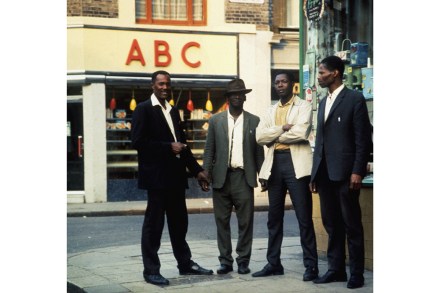
Every history of London, and there have been many, has looked at the importance of migration to the city. Failing to mention that would be as inconceivable as not mentioning the River Thames. Both, after all — one literally, the other metaphorically — flow directly through the city’s heart. In this new and scholarly study, the difference is that London’s history of migration — its patchwork of settlement, its Irish ‘rookery’, its ‘colored quarter’, Huguenot silk-weavers, Jewish street-sellers, German bakers, Italian waiters, Chinatown, Banglatown — is put center-stage. The movement of all these people to London, the city’s extraordinary national, then continental, then international pull, is the story.

migrant
langkawi

Lure of the jungle

A short flight from the Malaysian capital of Kuala Lumpur, the island of Langkawi is a wise choice for anyone seeking to shake off the woes of city life. Apart from the odd bit of tourist tackiness on roadside billboards, there’s no escaping the sheer, virtually unspoiled natural beauty of the place. Even my hotel, the Datai — which recently underwent a year-long, $60 million refurbishment — feels like a traditional rainforest villa. When I step out on to the veranda, I revel in the ancient jungle just beyond the sun loungers.

marriages dog

A tale of three dogs

Florida Hullo, readers. I’m down Florida way for a bit of warm weather. The Bermuda Race Organizing Committee has been commandeered by a coterie of crapulous ingrates, leaving your correspondent on the outs. Nothing a little R&R can’t cure, but I’m sour. I hate trekking up to Newport for nothing. I’m in no mood for correspondence, but an interested reader inquired some days ago how I fell into journalism. I shall endeavor to answer. Stick me on a psychiatrist’s sofa and I’ll happily discuss my lifelong love of loquacity. It maddened Mother, who labeled me an ‘ecstatic’ child. She would be equal parts unsurprised and appalled by this hobby. Fortunately she doesn’t read this magazine.

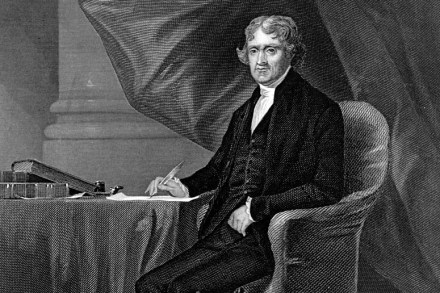
No one in Jefferson’s day suspected the contradiction between commerce and education

Laramie, Wyoming Historians of democracy know that the phenomenon was built upon two principal social structures: bourgeois commerce and popular education. The first developed during the Middle Ages and grew until eventually it replaced war as the means by which states and individuals acquired wealth; the feudal class gave way to the bourgeoisie. The second developed in the late 18th and early 19th centuries in North America, the United States in particular. The two institutions were widely regarded as socially, morally, economically and politically complementary; necessary to the growth of a solid middle class, of capitalism and of republican government.

jefferson education

Constrained by freedom: what do post-liberals want?

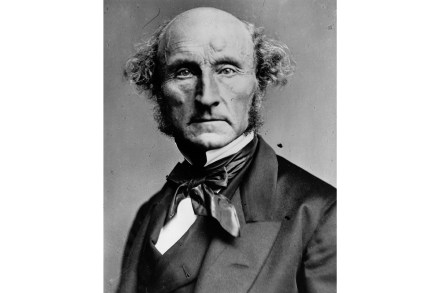
Any attempt to expound post-liberalism must begin by taking a view of what liberalism is. And liberalism can be viewed as a philosophy that enshrines freedom as its foundational principle. Freedom from what, though? That is a moving target. The pioneers of liberalism, whether they be John Locke or the Founding Fathers, wanted to be free from the tyranny of the minority, that is, from power exercised arbitrarily by a political sovereign. Two hundred years later, following J.S. Mill’s disdain for the craven conformism of late-Victorian social mores, liberals realized they wanted to be free from an empowered majority. That is, even if a majority want democratically to decide gambling should be made illegal, for liberals the practice should remain legal as long as one gambler remains.

post-liberals

After liberalism

We’re entering the post-liberal moment. From Trump to Brexit, Ireland to Brazil, we’ve seen a number of revolts at the ballot box that point to a mass vote of no-confidence in the economic and cultural status quo — in other words, in 21st-century liberalism. The liberals aren’t taking it lying down. They’re doing their best to define post-liberalism in language they are most comfortable with, calling it ‘fascist’ or ‘communist’ — and sometimes the criticism is spot-on. But other times it is wholly inaccurate. One of the glaring paradoxes of the post-liberal moment is that many of the people involved in it want to rescue liberalism from itself.

liberalism post-liberal
LA celia walden piers morgan

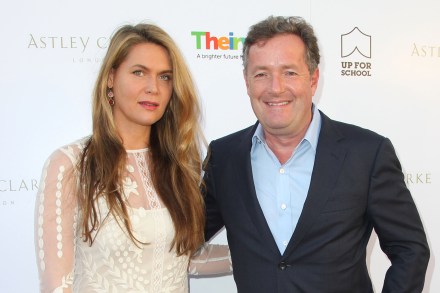
Celia Walden: the birth of ‘corona kissing’ in LA

Los Angeles If you want to know the general consensus on any given topic in LA, it’s not the cabbies you listen to, but the nail salon buzz. Everything from Michael Bloomberg’s failure in the presidential race and Russian collusion claims to coronavirus conspiracy theories gets thrashed out while women and men have their cuticles trimmed — because, unlike back home in the UK, bankers, bricklayers and Larry David will all come in for regular mani-pedis. As in a chamber of Congress — one offering $1-a-minute shoulder massages — there’s always a dominant topic, and right now it’s Meghan Markle. I’ve lost count of the number of times I’ve been apologized to ‘for Meghan’ in LA nail salons over the past year.

Save French food!

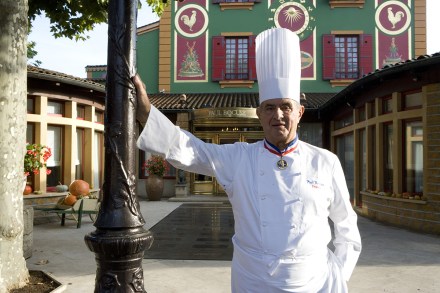
The annual publication of the century-old Michelin restaurant guides creates an excitement in France akin to the Oscars, but the 2020 Guide Michelin is provoking dyspepsia. This is the first time since 1965 that the restaurant founded by Paul Bocuse — the pope, the Napoleon, of French cuisine — no longer figures among the 27-strong group of French restaurants receiving the ultimate culinary accolade: three-star status. Two years after the maestro’s death, the black truffle soup and volaille de Bresse en vessie Mère Fillioux no longer seduce Michelin inspectors. What Bocuse called la sainte trilogie, butter, cream, wine, has lost its infallibility. And Monsieur Paul is not the first to go.

french food

Conscious coupling

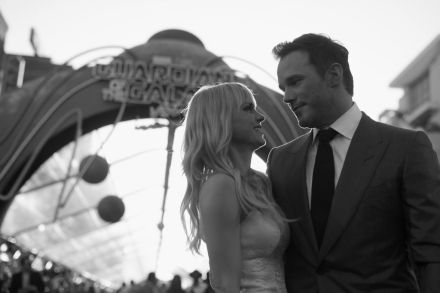
Most of the podcasts that sell relationship advice imply that romance is synonymous with sex. The theory of that equivalency has been a theme in the arts for centuries: Shakespeare, Flaubert, Thackeray and Tolstoy all exposed its follies and truths. Unsurprisingly, the podcast hosts have a less poetic, nuanced note than the classic writers, such as giving the advice: ‘If you’re having a dry spell, listen to us or break up.’ Tony and Alisa DiLorenzo are a Christian couple who have married for 23 years. Perhaps surprisingly, their podcast, ONE Extraordinary Marriage, depicts sex and romance as interchangeable. Tony and Alisa, who couple on the page in their co-authored book 7 Days of Sex Challenge, start each episode with a ‘hug’.

anna faris coupling podcasts
benny golson

Tenor badness

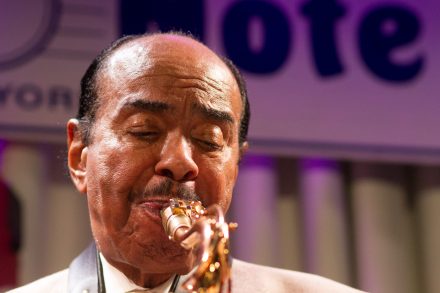
In Stephen Spielberg’s 2004 comedy The Terminal, Viktor Navorski (Tom Hanks) is a native of Krakozhia, a small eastern European country engulfed in civil war. When Navorski lands at JFK, he discovers that his passport is invalid as America does not recognize Krakozhia’s new regime. He’s stuck in the airport for months and unable to accomplish his mission: completing his father’s quest to obtain the autographs of all 57 musicians in Art Kane’s 1958 photograph ‘A Great Day in Harlem’, a who’s who of jazz greats (including Count Basie, Coleman Hawkins, Dizzy Gillespie and Thelonious Monk), captured on East 126th Street in daylight without their instruments.

The carnivore confessions: I’ve never felt better than on my meat-only diet

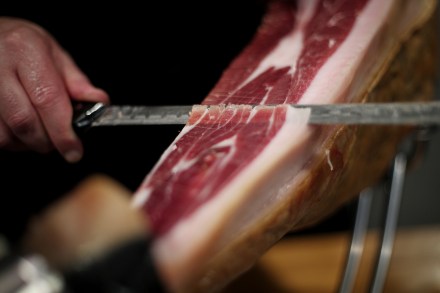
Since late last summer, I’ve been experimenting with something pretty crazy. It’s not drugs. Nor is it a trendy celebrity religion. It’s meat. Like Jordan Peterson and other great apes, I’m on the carnivore diet. The carnivore diet is a lot simpler than keto, for example, which involves counting macronutrients. On carnivore, you merely refrain from eating anything that isn’t an animal product. Beef, lamb, chicken, pork and seafood are all in, but vegetables, fruit and grains are out. It’s reverse veganism, or the hunter-gatherer diet, but with more hunting and no gathering. Apart from those who work at a zoo, most people know of the carnivore diet because of Peterson and his daughter Mikhaila.

meat-only
paris

Epicenes and epicures

The last time I saw Paris, it was the early spring of 2017. A pallor hung over the city, the grands boulevards had lost their charm and downcast Parisians hurried about the streets with uncharacteristic alacrity. The day I arrived, a letter bomb exploded at the IMF’s headquarters on the Avenue d’Iéna, blocks away from where I was sitting on the terrace of a café on the Avenue Kléber. That the bomb turned out to be from Greek anarchists and not the usual Islamist suspects was little comfort; it had already ruined my café express. Two days later, a French-born Muslim took a female soldier hostage at Orly airport. A standoff ensued, with him holding a pistol to her head while her comrades aimed at his. ‘Put down your weapons!

socialist

America is socialist, dummy

It’s widely agreed that Bernie Sanders fell short in the Democratic primary because he described himself as a socialist. As a movement, socialism has never had mass appeal in America. Even at its strongest, in 1912, it garnered fewer than one million votes for presidential candidate Eugene Debs, who was trounced by Woodrow Wilson. More often, Americans have used the word ‘socialism’ as a synonym for communism, to signify everything America doesn’t stand for. Pundits put Sanders’s failure down to his attempts to give the word a positive spin. On the other hand, a dispassionate glance at American history shows that Uncle Sam has already gone a long way down the road of democratic socialism.

The refreshing darkness of Netflix’s Locke & Key

Don’t be put off by the slow first episode, which makes you fear it’s just going to be another of those so-so emo magical-fantasy adolescent dramas in which Netflix abounds: Locke & Key is superior, addictive and bingeworthy stuff in the league of, or possibly even better than, Stranger Things. It begins with an achingly clichéd scenario — family driving across America to seek new life in exotic location, kids bickering in the back, awkward high-school experiences awaiting them, etc. — and the familiarity never lets up.

locke & key
decadence douthat

Apocalypse soon

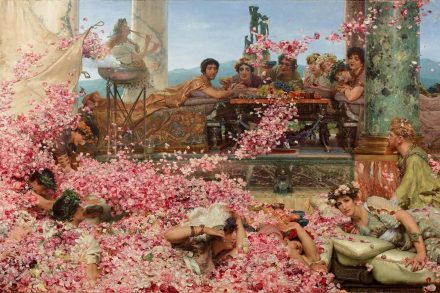
An age demands a name when it’s an age of upheaval. The name should describe the ills of society and even suggest their cure. Ross Douthat’s The Decadent Society aims to do exactly that — and succeeds in ways that he might not have intended. Douthat rejects the common view of decadence as Caligula-inspired orgies or Marquis de Sade-style perversion, or even excessive consumption of chocolate cake by women. For him, decadence is ‘neither empty of any judgment nor excessively deterministic’. He finds this sweet spot in the work of Jacques Barzun, who defined decadent times by their ‘deep concerns’ and ‘peculiarly restless’ mood.