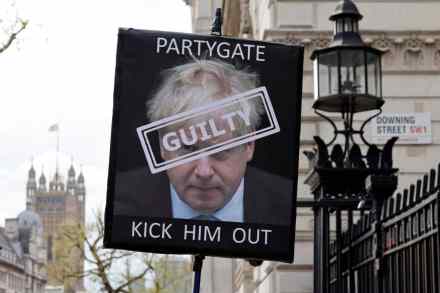
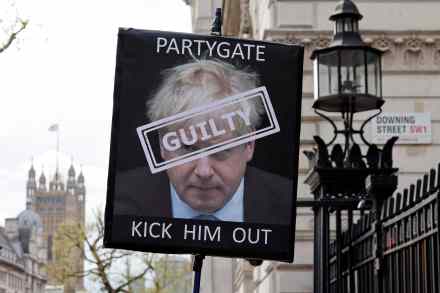
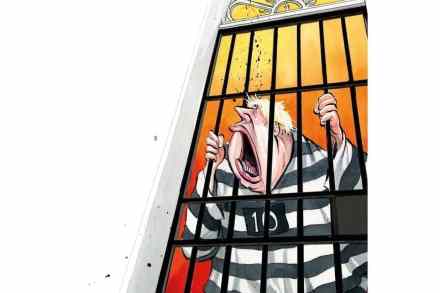
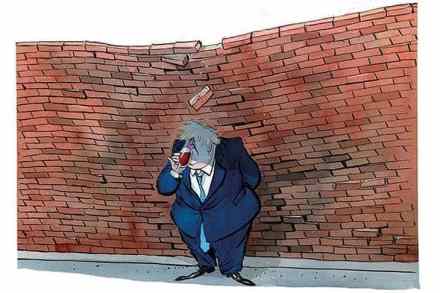
Partygate

Boris’s grumpy grilling

From our UK edition

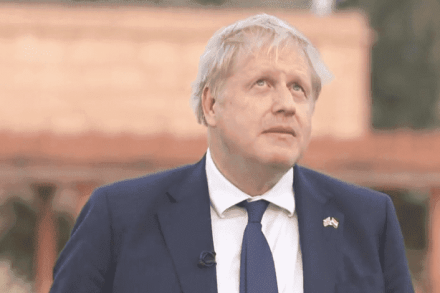
Boris Johnson's India trip hasn't got off to the best of starts. Seeking to escape domestic woes, the Prime Minister jetted off to the subcontinent yesterday, only to face a fresh row about the Commons U-turn on the parliamentary investigation into Partygate. And Johnson's irritation at the prospect of yet another inquiry was palpable in an interview he gave to Sky's Beth Rigby earlier today. Throughout the ten-minute long grilling, the PM sighed exaggeratedly, rolled his eyes, looked at his watch and barely concealed his disdain at his interrogator's questions. He asked Rigby 'how many' times she would ask him about Covid parties, claiming that: 'You promised to get on, you did promise to get onto the substance of this trip?
Mark Harper is an honourable politician

From our UK edition

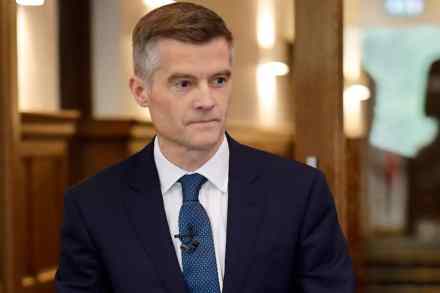
This is a short story about Mark Harper MP, who is making headlines. These days Harper is probably best known as a backbench critic of Covid restrictions, but he once had a promising career as a minister, including a spell in David Cameron’s cabinet between 2015 to 2016. But that career hit a bump in early 2014 when he quit his post as immigration minister. I was running the Telegraph’s political team at the time. Many ministerial resignations are unmemorable, but Harper’s sticks in the memory. He quit because he learned that a cleaner he paid to look after his London flat did not have legal permission to live and work in the UK.

What did Boris tell his MPs about partygate?

From our UK edition

After Boris Johnson faced a hostile response in the chamber from opposition MPs over his partygate fine, on Tuesday evening the Prime Minister addressed his own MPs in a meeting organised by the government whips. Ahead of the meeting, Johnson had been dealt a blow when former chief whip Mark Harper said he no longer had confidence in his ability to lead the government. Johnson’s meeting was notable for what it missed: no mention of partygate. ‘It was more like an election rally speech,’ says an attendee. The Prime Minister embarked on a call and command as he asked MPs who they would trust more with the economy – Rishi Sunak or Rachel Reeves – and who would best control the borders – Priti Patel or Yvette Cooper.

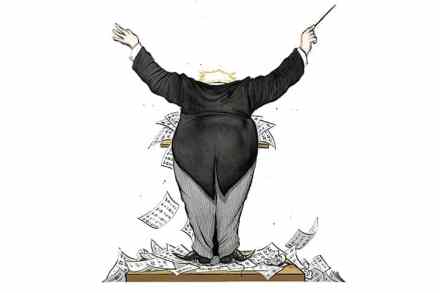
Will Boris be forced to face the music over partygate?

From our UK edition

Boris Johnson will face his party today for the first time since he was issued with a fixed penalty notice by the police for breaching Covid rules during lockdown. As MPs return to parliament following the Easter recess, the Prime Minister is due to give a statement this afternoon updating the House in which he will acknowledge the fine he has received. Those around Johnson say that he will make a ‘plea for perspective’ in his address – referencing the fact he spoke to President Biden the same day he received a fine and emphasising his positive relationship with President Zelensky in relation to Ukraine.

Boris isn’t safe yet

From our UK edition

It is worth thinking back to late January when Boris Johnson’s premiership seemed in the greatest danger. As I say in the Times today, back then those Tories trying to remove Johnson were split into two camps. One group thought that they should go hell for leather to get the letters to force a no-confidence ballot. They worried that if they waited, Johnson might escape a police fine. He could then use that as a shield against the criticisms that the Gray report would contain. The other faction, which contained several former cabinet ministers, argued that the danger in going early was that Johnson could survive the no-confidence ballot. Better, they argued, to wait for the police to fine him and then move at a point when they could be sure he would lose.

What are the Tories for?

From our UK edition

It’s an odd accusation to levy at Boris Johnson’s government, but the Conservative party feels grey. Flights of fancy suggesting a bridge to Northern Ireland or – a thought to make 19th century Royal Navy strategists shudder – to France have given way to a carousel of scandals and disappointments. The former is cheap or cruel; the latter marked mostly by their predictability. This week confirmed a suspicion I’ve held for a while; the Conservative party, being neither meaningfully socially conservative nor particularly interested in using an 80 seat majority, exists for the sole purpose of keeping Labour out of office.

Partygate cuts through with voters

From our UK edition

The Tory task at the next election is enormous. No party in the democratic age has ever won a fifth consecutive term in office and bruising battles over Brexit and Covid mean the Conservatives will have a tough ask next time out. Boris Johnson's team still have two years left in office but inside No. 10 minds are already turning to the looming clash with the Starmer army. On what fertile ground can the forthcoming general election be fought and won by the Tories? Unfortunately for the bright young things of CCHQ, it looks like Labour's traditional weak spot on 'law and order' has now been nullified. There were hopes that Sir Keir's record as a QC – defending all kinds of unseemly sorts – might make him susceptible to jibes of being soft on crime or terror.

Why I resigned over partygate

From our UK edition

This is an edited version of Lord Wolfson's resignation letter, following the Met's decision to fine Boris Johnson and Rishi Sunak over Downing Street parties which broke Covid restrictions in 2020. Dear Prime Minister, Everyone in a state, and indeed the state itself, is subject to the law It was a great honour to be invited to join your government as a justice minister. In my maiden speech, I twice used the phrase 'justice and the rule of law'. Justice may often be a matter of courts and procedure, but the rule of law is something else – a constitutional principle which, at its root, means that everyone in a state, and indeed the state itself, is subject to the law.

The first ministerial resignation over partygate – could more follow?

From our UK edition

We have just had the first ministerial resignation over partygate. David Wolfson, the justice minister in the Lords, has quit over the matter saying that he doesn’t believe that continuing to serve is inconsistent with his ‘ministerial and professional obligation to uphold the rule of law’. Wolfson, who was a highly successful QC before becoming a peer and a minister in 2020, writes: I regret that recent disclosures lead to the inevitable conclusion that there was repeated rule-breaking, and breaches of the criminal law in Downing Street.

Douglas Ross has become Boris Johnson’s human shield

From our UK edition

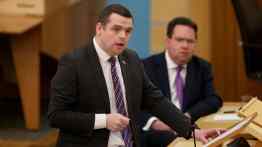
If Boris Johnson has a superpower, it is the ability to make others pay the price for his wrongdoing. Today the whipping boy is Scottish Conservative leader Douglas Ross, though it must be said Ross walked clear-eyed into the path of the scourge. That’s another of the Prime Minister’s skills: he can convince people that it would be in everyone’s interest if they maximised their exposure to political risk so that he may minimise his. In the run-up to the Iraq War, a bunch of peace-mongering oddballs flew to Baghdad to offer themselves as human shields and Tories who volunteer to take flak for Boris give off much the same energy.

Has Boris got away with it?

From our UK edition

Boris Johnson has had a surprisingly positive 24 hours since receiving a police fine. While not exactly positive, today's front pages are far from a nightmare selection. A number of Tory-leaning papers call for a sense of perspective with the Daily Mail asking of the PM’s critics ‘don't they know there's a war on?’.  On hearing the news that Johnson, his wife Carrie Johnson and Chancellor Rishi Sunak had each received a fixed penalty notice, most Tory MPs came out to defend rather than attack the Prime Minister (see The Spectator’s updated list here). Notably, Roger Gale who had previously put in a no-confidence letter said that now was not the time to oust a Prime Minister and that he backed Johnson.

Boris’s crazy defence

From our UK edition

‘I was very busy. The party was crap. I’m sorry you’re angry. Now leave me alone.’ That was the gist of Boris’s statement about being fined for attending an event in Downing Street to celebrate his birthday.  A flustered-looking Prime Minister delivered the Partygate Declaration in a small, wood-panelled room with a nicely-lit painting behind him. Not a bad setting. It looked homely, low-key, reassuringly domestic. If he’d sat at a varnished desk flanked by a Union Jack and a Nato flag he’d have sent the wrong signal. And he delivered his mea culpa in a standing position, as if he were dealing with a minor office problem while hurrying to more important meetings elsewhere. This was not a great performance.

Boris thinks he can ride this scandal out

From our UK edition

Boris Johnson has now apologised for receiving a fixed penalty notice for attending a lockdown-busting party. In a clearly very carefully scripted statement read to camera, the Prime Minister also made it clear he hadn't thought he was breaking the rules by attending the gathering in the Cabinet Room, which lasted 'less than ten minutes'. 'I have to say it did not occur to me that this might have been a breach of the rules, he said. But, he added, 'of course the police have found otherwise and I fully accept the outcome of their investigation'. He said he had 'paid the fine and I once again offer a full apology'. Johnson clearly thinks that his defence of inadvertently breaking the rules is sufficient for his party (though not good enough for the police).

Is Rishi politically naive?

From our UK edition

Before the war in Ukraine, ministers and Tory MPs believed a fixed penalty notice for the Prime Minister would mean the end of Boris Johnson. It would result in enough no-confidence letters from Tory MPs to trigger a leadership contest which would run into the summer. There would be a new Prime Minister in time for the party conference in the autumn. But now the Prime Minister has been told he will be fined by Scotland Yard for attending parties during lockdown, no one is quite so sure. The reason? The circumstances around Johnson are changing. Until now, stories about lockdown parties in No. 10 had been overshadowed by the Ukrainian crisis. Johnson has also impressed MPs and the party membership with his response.

Partygate is shameful – but Boris shouldn’t resign

From our UK edition

I feel torn on partygate. Like most other people, I have flashes of rage over the vision of government ministers living it up with booze and birthday cakes while the rest of us risked arrest if we so much as popped round to our mum’s for a cup of tea. But there is something in the pushback against partygate that grates, too. It feels opportunistic, possibly even anti-democratic, with Boris’s legion of loathers among the media elites clearly hoping that this scandal will do what they so spectacularly failed to do at the ballot box – get those pesky Brexity Tories out of Downing Street. This is not to downplay the seriousness of what has happened.

What Rishi should do next

From our UK edition

How tempting it must be for Rishi Sunak to chuck in his job as Chancellor. ‘My chances of ever becoming PM have plummeted to next to nothing,’ he must be thinking, ‘so why not go off and earn some serious money instead, away from the spotlight?’  I have no insight into the state of the Sunak marriage but I wouldn't be surprised if he was also tempted to resign for his wife's sake. ‘Let's get out of the public eye,’ he might well be tempted to say, ‘and enjoy being rich again.’ But if Rishi had hired me for some advice on reputation management I would give him a better idea. You have obviously wanted to be PM for a long time, so why give up now? Your political reputation is not beyond repair.

Zelensky has saved Boris

From our UK edition

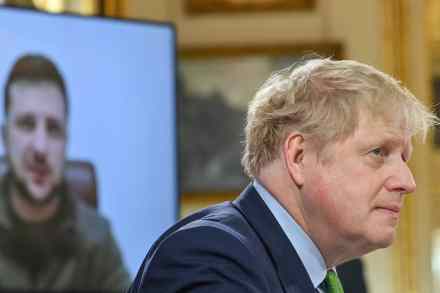
Labour will try all it can to bring up the subject at every opportunity; as will a few backbench MPs. But partygate just doesn’t feel likely to prove fatal to Boris Johnson anymore. War in Ukraine has changed the dynamic: fussing over lockdown parties seems trivial and out of date. Keir Starmer’s continued plugging away on the matter makes him look even duller than normal. Rishi Sunak’s stock has plummeted after what many saw as a bungled spring statement. But if Boris Johnson does stage a revival, the figure he will have most to thank is Volodymyr Zelensky. The Ukrainian President has made it quite clear on more than one occasion that he regards the British PM as a more helpful, more reliable ally than other European leaders.

Why Boris Johnson should not resign over partygate

From our UK edition

Afew weeks ago it seemed that the issue of Downing Street parties over lockdown had been usurped by a more serious matter: what to do about the invasion by a nuclear power of a neighbouring European state. But now partygate is back, fuelled by the news that the Metropolitan Police has issued 20 fixed penalty notices and may announce another tranche of fines at a later date. Some of the heat has left the whole affair. Several of the letters written to Sir Graham Brady, chairman of the 1922 Committee, demanding a Conservative leadership election were withdrawn at the beginning of the war in Ukraine. The leader of the Scottish Conservatives has withdrawn his own call for the Prime Minister to resign. Nevertheless, partygate continues to present an acute difficulty for Boris Johnson.