Parliament

A full separation of powers could reinvigorate parliament

From our UK edition

Last summer, parliament was recalled after President Assad’s forces used chemical weapons in Syria. David Cameron wanted the Commons to support air strikes against the Syrian regime in response. But the Commons refused, defeating the government motion. Whatever you thought of the decision, it was a bold move by MPs. They had demonstrated that even on matters of war and peace, the traditional preserves of the executive, they were prepared to stand athwart the Prime Minister. The decision changed Western foreign policy, but not perceptions of parliament. Almost a year on, the public are still cynical about the institution and MPs remain deeply unsure of the worth of what they are doing.
Which party has the most MPs’ children in Parliament?

From our UK edition

Commons inheritance Emily Benn, granddaughter of Tony and niece of Hilary, has won the right to stand for Labour in Croydon South. Which party produces the most political dynasties? Current MPs who had a parent in the Commons: CONSERVATIVE James Arbuthnot, Richard Benyon, Dominic Grieve, Ben Gummer, Nick Hurd, Andrew Mitchell, Nicholas Soames, Mark Pawsey, Laura Sandys, Robin Walker, Bill Wiggin LABOUR Hilary Benn, John Cryer, Lindsay Hoyle, Anas Sawar, Andy Sawford, Alison Seabeck d.u.p. Ian Paisley Jnr Air scares The loss of a second Malaysian Airways airliner means that the number of worldwide casualties in civilian air disasters — 827 so far this year — has already exceeded that of last year, when 459 died. But it does little to disturb the steady downwards trend.

Boulton and Co

From our UK edition

Journalists do, occasionally, say something nice about politicians. It does not happen very often; but, when it does, it’s usually heartfelt. Adam Boulton hosted a party at the Savoy last night to celebrate his 25 years at Sky News. Boulton heaped praise on those politicians with whom he has worked while covering the life and times of ‘5 Prime Ministers, 5 US Presidents, 5 Labour leaders, 6 Tory leaders and 4 Lib Dems – and counting’. He said: ‘As journalists, we need people who are prepared to engage our profession with their arguments and accountability. And you do. And often. And properly, which is vital to the democratic process.

We get few answers from the Work and Pensions grudge match

From our UK edition

Departmental questions have, by this stage of the parliament, all developed their own characters. There is the colourful combat of Treasury questions, often involving one Tory minister deploying a lengthy analogy involving handing over the keys to a car or arson to describe Ed Balls. Then there's Michael Gove and Tristram Hunt's lesson in rhetoric at Education questions. And then there's the hour-long grudge match that enlightens no-one at Work and Pensions questions. Today's session was a typical example. Labour had plenty to attack on, from the implementation of universal credit to the cost of the employment and support allowance. And the party did attack.

MP recall is a populist gesture that cheapens our democracy

From our UK edition

Anger is a bad counsellor. A lot of voters are angry with MPs and want to punish them. They believe that during the recent economic crisis, many MPs had only one priority: to fatten their expenses claims. Such voters have only one complaint about the proposed recall bill. They would like it to be tougher. All this is unfair, inaccurate and damaging. The vast majority of MPs - in all parties - are dedicated and diligent. They came into politics to do good. At least on the Tory side, many of them are making financial sacrifices in order to stay in Parliament. MPs are not well-paid. Moreover, if your conditions of employment require you to live in two places, one of which is London, a £2000 per month subsidy is hardly excessive.

Rory Stewart elected Chairman of the Defence Select Committee

From our UK edition

Rory Stewart, the colourful and interesting Tory MP, has been elected as chairman of the Defence Select Committee. Stewart is a formidable appointment. He is knowledgeable on defence and foreign policy matters: having served as a diplomat in Iraq and Afghanistan. He has written widely of his experience and insights, and has taught related subjects at Harvard University. He is well-regarded by serving soldiers, many of whom speak highly of his views on counter-insurgency and the work of his charity Turquoise Mountain Foundation. He has, however, taken his head ‘out of the mountains’ of Afghanistan – and sees that security threats have taken new forms, such as cyber security, human rights abuses and the economically unstable, densely populated coastal regions of the world.

When is a party not a celebration?

From our UK edition

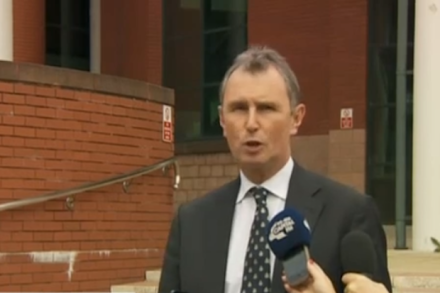
Former Deputy Speaker Nigel Evans stood on the steps of Preston Crown Court last week and said: 'This isn't a time for celebration or euphoria. Bill Roache just a few weeks ago from this very spot said there are no winners in these cases and that's absolutely right. There are no winners. So no celebrations.’ No celebrations. Except for a drinks party hosted by David Davis as soon as parliament returns from the Easter recess. Writing to MPs and chums, Davis said: ‘As you all know Nigel Evans has had the most miserable of years and has suffered what can only be described as the most hideous of injustices. I would like to make his return to the House one in which he is made to feel welcome by as many people as possible.

Keith Vaz on the smarm offensive

From our UK edition

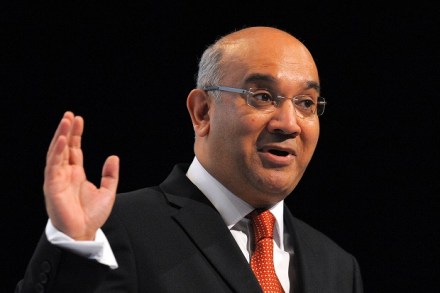
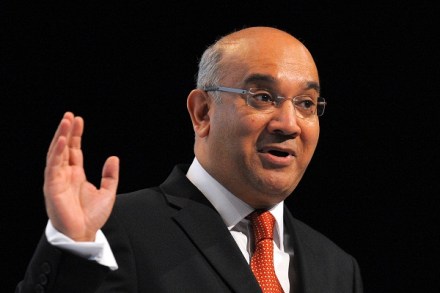
Keith Vaz was in full oil slick mode on Friday night when he found himself as the only Labour MP at the Asian Business Awards in Waterloo. Surrounded by dozens of Tories, including Priti Patel, Alok Sharma and Shailesh Vara, Vaz laid it on thick, telling the audience 'that was the best speech I've ever heard from a politician to Asian audience.' Who was worthy of such high praise? Why, none other than Labour's favourite bogeyman Michael Gove. Vaz continued: 'I was almost tempted to defect; but I'll wait until next year'. Well, creeping around the enemy never did John Bercow's campaign to become the Speaker any harm.

Why Maria Miller should not have resigned

From our UK edition

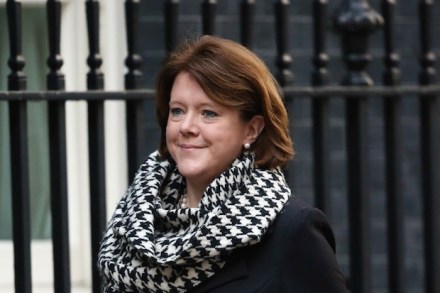
Maria Miller’s forced resignation is a disgrace. No iniquity was proved against her. Over her expenses, I suspect her motive was innocent: she was trying to work out childcare with her parents in a way compatible with the weird rules, rather than plotting larceny. The parliamentary committee probably understood the circumstances fairly. The press anger was confected because of our (justified) dislike of the post-Leveson Royal Charter. We keep complaining that MPs are ‘marking their own homework’, forgetting that this is exactly what we have done ourselves — incredibly indulgently — for all these years, whenever people have complained about our behaviour. Besides, it is constitutionally wrong for MPs not to mark their own homework. We elect them.

Crimean notebook: ‘They’ll have to break all my bones to make me a Russian citizen’

From our UK edition

Vladimir Putin still swears that there are no Russian troops in Crimea, so their mission is to say as little as possible as they invade this holiday region in their unmarked uniforms and vehicles. It is remarkable how soon you get used to shouting questions at these heavily armed special forces soldiers while they pretend not to be Russians. They tend not to take the bait: the most you’ll get out of them is a curt ‘Nyet’. I wandered up to an officer who seemed to be in charge of seizing a Ukrainian naval base in the old Tartar capital of Bakhchisaray. He wore all black, his face hidden by a balaclava and his vest stuffed with nasty-looking weapons. ‘Can we talk?’ I asked.

PMQs needs reforming but it shouldn’t be toned down

From our UK edition

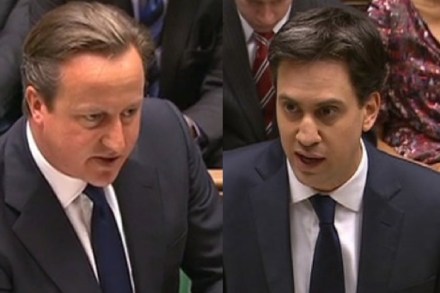
To anyone in Westminster, Prime Minister’s Questions is terrific fun and a good measurement of how the leaders are doing every week. But what does the rest of the country think of this rip roaring event? The Hansard Society has released a new report Tuned in or Turned off? Public attitudes to Prime Minister’s Questions to find out whether the nation enjoys the session as much as the keen political watchers do. The report suggests that PMQs are seen a ‘cue’ for wider perceptions of Parliament, most of which are negative. The public dislikes the pantomime atmosphere, the political point scoring and general behaviour of MPs — which is likened to a school playground.

Vaz and Ellis Pt. II

From our UK edition

Mr S has been keeping a beady eye on the Home Affairs Select Committee, after tensions between Chairman Vaz and Tory committeeman Michael Ellis boiled over at the end of last year. Readers may recall that, in the wake of a public disagreement with Ellis, Vaz told Mr S that his colleague ‘just needs more sex’. Now Mr S has learned that the select committee meets in private before important evidence sessions to discuss tactics and lines of questioning. It is said that Ellis, who is blessed with a forensic mind and legal training, often gets to the crux of the issue first. A source familiar with the inner workings of the group tells me that Vaz pinches Ellis’s questions when, as chairman, he opens the inquiry session. Cheeky!

Parliament itself shouldn’t drag MPs down

From our UK edition

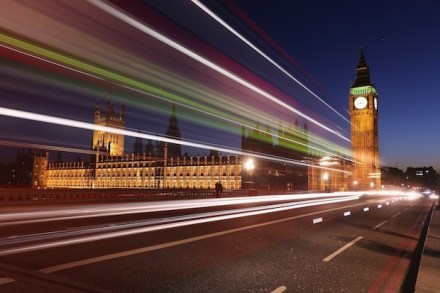
The conventional image of Parliament is of a grand, imposing building packed with ancient traditions. The reality for those who work in it isn't quite so glamorous: mouse-infested offices, administrative chaos, and weeks of camping in committee rooms when you first arrive as an MP. Even though Parliament has been around for much longer than modern companies, it still has the internal feel of a start-up that just accidentally spiralled into something much bigger, with MPs fending for themselves when it comes to employing and managing their staff, for instance. I write about the way that this chaos makes the job of an MP just that bit less attractive to continue doing in my Telegraph column today.

A successful obesity campaign? Fat chance

From our UK edition

Fat chances The National Obesity Forum said that Britain is reaching a ‘doomsday scenario’ where half the population is obese. What happened to previous government campaigns to tackle obesity? — Between 1997 and 2008 the percentage of men getting the government’s recommended level of physical exercise grew from 32 per cent to 39 per cent, and women from 21 per cent to 29 per cent. And yet over the same period the proportion of men who are overweight or obese grew from 62.2 per cent to 65.9 per cent and women from 52.5 per cent to 56.9 per cent. — In 2006 28 per cent of men and 32 per cent of women were eating the recommended five portions of fruit and vegetables a day.

John Bercow is his own worst enemy

From our UK edition

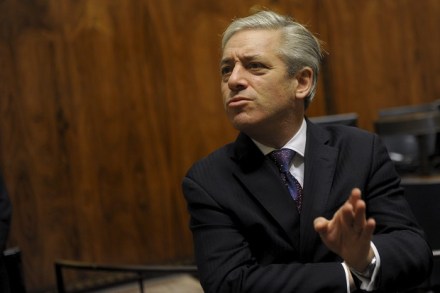
John Bercow has done many good things as Speaker. But he’s in danger of being the second Speaker in a row to be turfed out. Why? Because he can’t let go of his dislike of the Tory hierarchy. The Speaker needs to be above the hurly burly of politics. But Bercow’s increasingly confrontational and personal chairing is threatening his position, as I say in this week’s magazine. As even one of his defenders concedes, ‘You can’t be so dismissive of so many people so much of the time.’ I hope that Bercow can rein himself in. In many respects, he’s been a good thing. That the House of Commons chamber once more seems like the cockpit of the nation is largely down to him.

Are Parliament’s select committees working? – I say no

From our UK edition

Our parliamentary select committees need to be taken seriously. Yet, for them to be so, we need to clarify their legal powers, use wider expertise and practice what we preach. Select committees have recently been in the spotlight, and Parliament’s liaison committee — made up of the chairs of all the select committees — has announced a detailed review as doubts over effectiveness have grown. Last week the Energy and Climate Change Committee examined the spiralling cost of energy; but, despite the fact that price hikes for millions of homes is a top political priority, only one of the big six energy companies thought the occasion worthy of sending their CEO.

Farewell Jack Straw

From our UK edition

It is a shame that we will be losing Jack Straw at the next election. He has just announced his attention to stand down from a seat he has occupied for more than 30 years. I always rather liked him. He seemed – you know – sort of human, and his instincts were usually right, certainly over Iraq, even if he did cave in. So, we might add, did the majority of the country cave, at the time, under that welter of disinformation. He was misled as everybody was. He once came into the Today prog when I was still editor and, in the Green Room, I mentioned to him a disadvantageous story which had just broken and which we intended to ask him about. 'Yeah fine,' he replied, 'I shall respond with meaningless career-enhancing waffle.' And so he did.

Toby Young: I’m too posh for the Tories. I should try Labour

From our UK edition

I’m still weighing up whether to run for Parliament, but after this week’s reshuffle I’ve concluded I’m in the wrong party. If you’re a middle-aged white male, particularly one who’s been to Oxford, your chances of becoming a Conservative minister are negligible. Unless you’re a pal of George Osborne’s, obviously, in which case it doesn’t matter if you have B-U-L-L-E-R tattooed on your knuckles, you’ll still get promoted. In the Labour party, by contrast, coming from a privileged background actually seems to help. I’m not just talking about the usual suspects, like Lord Longford’s niece Harriet Harman and ex-public schoolboy Ed Balls. I’m thinking of the new shadow education secretary.

You can’t demand democracy in Syria but ignore it at home

From our UK edition

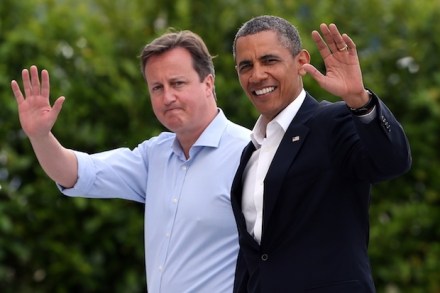
After David Cameron’s decision to seek parliamentary approval for air strikes against Syria, two lobbies came charging in, banners aloft. Now their attention has moved to Barack Obama’s decision to seek approval from the US Congress. Though on opposite sides of the argument, these two groups have something in common, and it depresses me. Both see democracy as capable of securing a right decision. Neither sees democracy as capable of making a decision right. Let me explain. The anti-interventionists are of course delighted (as was I) that our Prime Minister sought a Commons mandate for military action. They’re even more delighted now that Parliament has said no.

Parliament has finally woken up – because voters are keeping their MPs in line

From our UK edition

They should have seen it coming. A government defeat on an issue of war may be unprecedented, but defeat on the Syria vote did not come out of the blue. You can certainly blame poor party management, failure to prepare the ground, underestimating the poisonous legacy of Iraq — but such failings are common enough. The biggest single factor is one that ministers, the media and MPs themselves have failed to understand: Parliament has changed. The consensus has long been that Parliament no longer matters. It is assumed to be the docile creature of the government, full of spineless or ambitious MPs who are the slaves of the party whips. In fact, unnoticed and under our noses, that has been becoming progressively less and less true throughout my 30 years in Parliament.