Pakistan

Welcome to Obamastan

From our UK edition

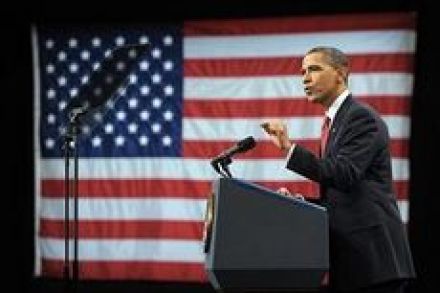
After months of deliberation, endless consultation and reams of paper, President Obama came to the same conclusion that he himself had reached only a few months ago, and that which his handpicked commander, General McChrystal, had arrived at more recently: the US-led intervention is just, right and demands more resources. As usual, Obama's oratory was impressive - though without the personal anecdotes he normally works in. He rejected comparisons with Vietnam and evoked World War II with a reference to President Roosevelt. The West Point cadets added a kind of battle-evoking gravitas that Obama, who has never worn a uniform or been in war, often struggles to evoke.

Why are the Pakistani Taliban being given another opening?

From our UK edition

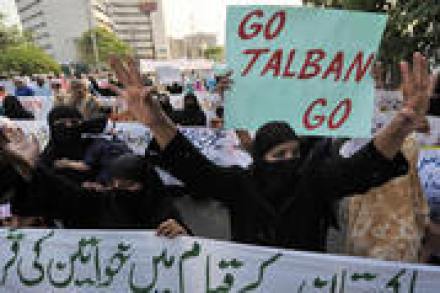
There is a depressingly predictable story in The New York Times today about reconstruction in the Swat Valley. Here’s the key section: “the real test of Pakistan’s fight against the Taliban in Swat will take place here, in the impoverished villages where the militant movement began. But more than two months after the end of active combat, with winter fast approaching, reconstruction has yet to begin, and little has been accomplished on the ground to win back people’s trust, villagers and local officials say. The lag, they argue, is risky: It was a sense of near-total abandonment by the government that opened people to the Taliban to begin with, they say, and the longer people are left to fend for themselves, the greater the chance of a relapse.

Petraeus’ lonely fight

From our UK edition

At last night’s Policy Exchange lecture, General David Petraeus said he had known the former CDS, Lord Guthrie of Craigiebank, since “he was simply Sir Charles.” I met Petraeus for the first time when he was simply a colonel, serving with NATO forces in Bosnia-Herzegovina. Even then he was thought of as a rising star. His leadership in Iraq, first in Mosul and then in Baghdad has only cemented his reputation. Now, however, the scholar-warrior faces his probably greatest task – helping to defeat Taliban insurgents on both sides of the Durand Line. An effort, he said upon assuming command of CENTCOM in 2008, which might turn out to be “the longest campaign of the long war.

Splits emerging in Pakistani Taliban

From our UK edition

Splits appear to be emerging in the Pakistani Taliban after a US drone-strike reportedly killed its leader. The New York Times says that a ‘Pakistani government official and an intelligence official said Hakimullah Mehsud, a young and aggressive aide to the former Taliban leader, had been shot dead in a fight with Waliur Rehman, another commander who was seeking to become the leader.’ As a US official tells the paper, splits within the group can be exploited by the US and the Pakistanis. Also anything that limits the Pakistani Taliban’s effectiveness is to be welcomed—the Pakistani state fully collapsing under jihadi pressure is the nightmare scenario. However, a split within the movement could give more power and influence to al Qaeda.

Mehsud’s death is a massive blow to the TalibanĀ 

From our UK edition

If Baitullah Mehsud, the leader of the Pakistani Taliban, has been killed that is a major success which should help both in the fight against the Taliban in Pakistan and Afghanistan; Mehsud had up to 20,000 fighters under his command. It appears that a drone hit his father in law’s house while he was there receiving medical treatment. One of his wives is reported to have also been killed in the strike. Drones are a controversial part of the US arsenal, some argue that the collateral damage they inflict turns the population against the coalition and so make them not worth using. But for this kind of operation they are invaluable.

Pakistan Edges Closer to the Abyss

From our UK edition

Sometimes it's the seemingly minor events - minor, that is, in the grand scheme of matters, not necessarily small or insignificant at the moment they occur - that can carry more weight than more obviously important or telling developments. Lord knows, there's been no end of troubling news from Pakistan in recent years. But, silly as it may seem, there's something especially terrible about today's attack on the Sri Lankan cricket team which killed at least six policemen and injured five members of the Sri Lankan team. (See Cricinfo's rolling updates for the latest news.) Political assassinations, for instance, are hardly unknown in Pakistan (or elsewhere on the subcontinent) and so it's easy - perhaps too easy - to file them in a drawer marked Terrible Stuff That Sometimes Happens.

Division and misrule

From our UK edition

‘The 20th century was not kind to Pakistan’, Tariq Ali says in the first sentence of his latest book on his native land. ‘The 20th century was not kind to Pakistan’, Tariq Ali says in the first sentence of his latest book on his native land. The glib opener is a taste of what’s to come. It is both annoying and accurate. The 20th century created Pakistan, after all, and — apart from eight most difficult years since the turn of the millennium — the country has known no other.