Ottoman empire

The remarkable Princess Gulbadan, flower of the Mughal court

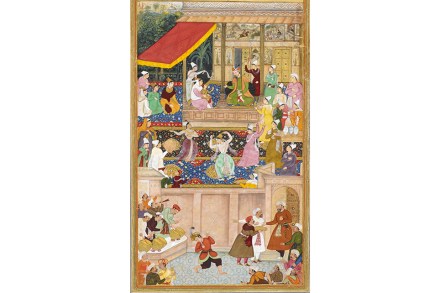
In 1587, the Mughal Emperor Akbar, himself illiterate but with grand vision and even greater ambition, commanded his courtier Abu’l-Fazl to write an official history of his reign and dynasty. An order went around Akbar’s court that anyone who was ‘gifted with the talent for writing history’ should put pen to paper and record the events that had shaped their times. Unusually for a male-dominated society, this included the emperor’s aunt. The 64-year-old Princess Gulbadan was well placed to provide a first-hand description of the creation and consolidation of the Mughal empire, for she was the beloved daughter of the Emperor Babur, who founded the dynasty, and the half-sister of Akbar’s father, Humayun.
Radetzky marches on

From our US edition

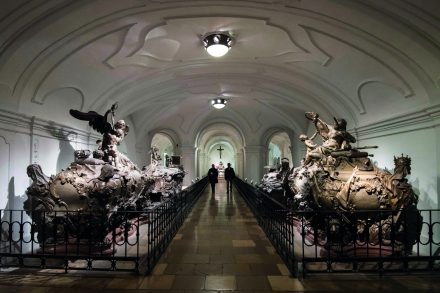
‘The Radetzky March’ was composed by Johann Strauss the Elder as a tribute to Field Marshal Joseph Radetzky von Radetz. An aristocrat of Czech origin, he was one of the fiercely conservative soldiers who gave the Habsburg Empire its bad name. First performed in 1848, the year of revolt in Europe, the ‘March’ was an immediate success. Austrian bands men were playing it at the battle of Königgraetz in 1866, fought against the Prussian Kaiser. For the first time, the Prussians had machine guns, and their rapid fire bloodied the white uniforms of the Austrians. Prussian victory condemned Austria to be the lesser of the two German-speaking nations, and on the losing side in the two world wars.

habsburg

The moment the modern world went wrong

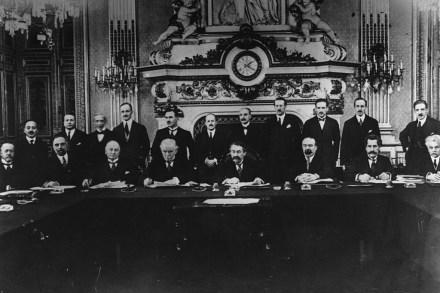
Spectator contributors were asked: Which moment from history seems most significant or interesting? Here is Jonathan Sumption's answer: The Paris Peace Conference of 1919-20 was where the modern world went wrong. The consequences of France’s vindictive determination to marginalise Germany are well known, and were denounced at the time by John Maynard Keynes in one of the most biting political pamphlets ever written. It took 30 years to undo its effects. The dismantling of the Ottoman Empire in the Near East by comparison was an authentically British mess, less well known, whose consequences are still with us. At the end of the Great War, Britain dominated the region, militarily and politically. It could do more or less what it wanted. What did it do?