Opera

Springtime for Putin: Grange Park’s The Life and Death of Alexander Litvinenko reviewed

From our UK edition

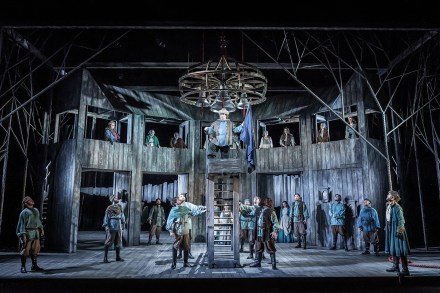
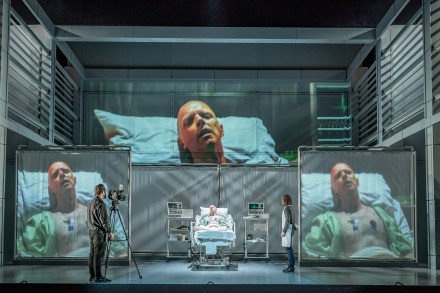
Alexander Litvinenko lies in a London hospital, dying of polonium poisoning. That photograph from 2006 haunts the memory: the medical robe, the electronic monitors, Litvinenko’s accusing gaze and bald, ravaged head. But in case we needed reminding, Grange Park Opera handed out copies of Death of a Dissident, the account of the crime by Litvinenko’s widow Marina, and the principal source for Anthony Bolton and Kit Hesketh-Harvey’s new opera The Life and Death of Alexander Litvinenko. Minutes later, a hospital bed rolled on stage replicating that exact image. And then Litvinenko — the tenor Adrian Dwyer — opened his mouth and started to sing. Opera plays a high-stakes game with dramatic realism at the best of times, but this was startlingly upfront.
Zips along with enormous vim: Malcolm Arnold’s The Dancing Master reviewed

From our UK edition

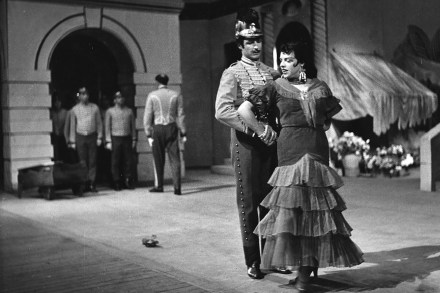
Malcolm Arnold composed his opera The Dancing Master in 1952 for BBC television. It never appeared, the problem being the source material — William Wycherley’s 1671 farce The Gentleman Dancing Master. Jokes about wedding nights and ‘scarlet foppery’ might have flown in the reign of Charles II but the New Elizabethans at Broadcasting House were altogether more shockable. ‘Too bawdy for family audiences,’ was Auntie’s official verdict, leaving The Dancing Master largely forgotten until a premiere recording late last year, and now — conducted by John Andrews and using almost the same cast — its first ever professional production, at the Buxton International Festival.

A short history of millionaire composers

From our UK edition

Let me tell you about the very rich. They are different from you and me, though if you’ve spent much time in the world of classical music, and you hadn’t realised just how different, you could do worse than attend an opening night at Grange Park Opera. True, Grange Park’s founder, Wasfi Kani, is famously adept at cultivating donors: you don’t build an opera house on the late Duchess of Roxburghe’s Surrey estate without a certain fundraising flair. It was when Joanna Lumley shimmered on stage in a midnight-blue ball gown and suggested that we might each like to leave the company at least £25,000 in our wills that I really choked on my prosecco.

Comedy genius: Garsington Opera’s Le Comte Ory reviewed

From our UK edition

Melons. An absolutely cracking pair of melons, right there on a platter: the centrepiece of the banquet that the chaste, all-female inhabitants of the castle of Formoutiers have provided for their surprise guests, a band of nuns. Except these sisters all seem to be singing well below the stave, and judging from the way she adjusts her crotch, Mother Superior has something more than a chastity belt beneath her habit. We all know where this is going. You can’t get your melons out on stage unless, sooner or later, some great hairy bloke in a wimple is going to shove them down his front. It’s the law.

The finest Falstaff you’ll see this summer

From our UK edition

Comedy’s a funny thing. No, seriously, the business of making people laugh is as fragile, as mercurial as cryptocurrency — a constellation of shifting risk factors, many beyond control, any of which can kill a joke deader than Dogecoin. Opera is already at a disadvantage. Timing — comedy’s accelerant of choice — is predetermined, dictated by the demands of unwieldy choruses and slow-moving sets, pinned down to the second by a score whose creator may be anything but a natural comedian. Just ask Verdi, whose early farce Un Giorno di Regno was such a comprehensive flop that he gave up the genre altogether for almost an entire career. But at 75, all but retired after a sequence of bloody tragedies, the composer returned for one last shot at comic victory.

You’ll shrug where you should marvel: Garsington’s Amadigi reviewed

From our UK edition

When you think of Handel’s Amadigi (in so far as anyone thinks about the composer’s rarely staged, also-ran London score at all) it’s as a magic-opera. Sorcerers and sorceresses do battle in a fantasy land not found on any map. The stage directions alone are enough to stir the commercial loins of any 18th-century impresario. Enchanted palaces are ‘split asunder’, caves transformed into ‘beautiful palaces’, monsters ‘ascend from the bowels of the Earth’ and a chariot ‘descends covered in clouds’.

Wow, this is good: Grange Park Opera’s Ivan the Terrible reviewed

From our UK edition

There are worse inconveniences than having to wear a face mask to the opera. But there’s one consequence that hadn’t really struck home until an hour into Rimsky-Korsakov’s Ivan the Terrible. The citizens of Pskov are massing in the streets. The Tsar’s army is approaching, and Rimsky is building one of those surging Russian crowd scenes: bass-heavy chorus blazing away while ominous bell sounds — basses, horns and rasping gong — shake the orchestra to its bones. Suddenly a bloodstained figure staggers in and collapses; a refugee from nearby Novgorod. ‘Your brother-city sends its greetings, and asks you to arrange its funeral,’ he gasps.

No success like failure

It is a standard narrative in all showbiz reporting — and one that arts hacks seem to be duty bound to abide by. It is the fairy tale of ‘Making It’: the story of a star whose career took time to get off the ground but, thanks to perseverance and self-belief, went stratospheric. It goes like this: ‘I was a nobody, and I was turned down from everything. And I nearly didn’t go to that final audition, but whaddya know? I turned up and... Shazam! Oscars raining down and a mini-series on Netflix.’ There is an encyclopedia of stars who toughed it out before making it big.

failure

Lush, elegant and vivid: Der Rosenkavalier at Garsington reviewed

From our UK edition

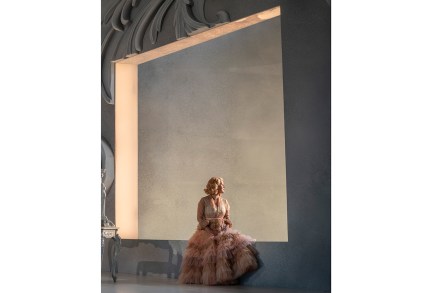
At the turning point of Richard Strauss and Hugo von Hofmannsthal’s Der Rosenkavalier, all the clocks stop. Octavian has arrived at the house of the teenage bride-to-be Sophie von Faninal as bearer of the silver rose — the symbol of a love that is simultaneously as artificial and as eternal as any human creation can be. Sophie smells real roses; yes, says Octavian, there is a drop of Persian fragrance amid the silver petals. ‘Like a heavenly, not an earthly rose’, sings Sophie: and her voice soars higher and purer than anything we’ve heard so far, suspended in stillness while Strauss’s orchestra shimmers around her. The thing is, in Bruno Ravella’s new staging for Garsington Opera we already know the rose’s secret.

World-class music, heavily symbolic staging: Glyndebourne’s Katya Kabanova reviewed

From our UK edition

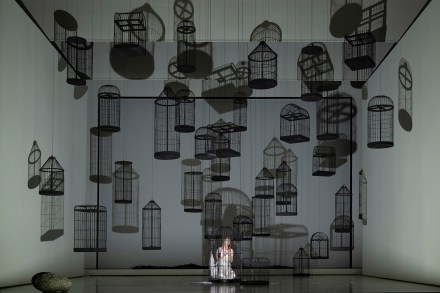
At the first night of Glyndebourne Festival 2021 there was relief and joyful expectation as Gus Christie made his speech of welcome. Never mind the hit to takings from the closed bar and the necessarily half-empty auditorium; never mind the scaled-back orchestra and abridged score. The new production of Katya Kabanova provided the thirsty opera-goer with a long cool drink of world-class music and heavily symbolic staging. Janacek’s exploration of a yearning female psyche has parallels with Anna Karenina and Madame Bovary. It lives or dies by its lead, and the Czech soprano Katerina Knezikova excelled as Katya.

Where to start with the music of Ethel Smyth

From our UK edition

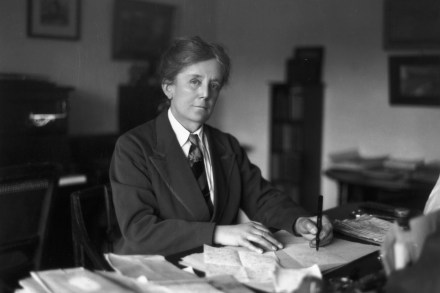
I’m reminded of an old Irish joke. A tourist approaches a local for directions to Dublin. The local, after much teeth-sucking and head-scratching, eventually replies: ‘Well, I wouldn’t start from here…’. The news that, 75 years after her death, English composer Ethel Smyth has won a Grammy Award for her last large-scale work The Prison is as excellent as it is unexpected. But it’s also frustrating because, well, if I were setting out into Smyth for the first time, I really wouldn’t start from there.

Astonishing, relentlessly pleasurable rediscovery – tantric opera: Luigi Rossi’s Il Palazzo incantato reviewed

From our UK edition

I don’t say this lightly, but after 20 years of opera-going, Luigi Rossi’s Il Palazzo incantato might just be the most baffling opera I’ve ever seen. And I’ve seen Stockhausen’s Licht. It starts with 27 named roles and originally featured no fewer than ten castrati among its cross-dressing, all-male cast. This operatic game of Twister was premièred in Rome in 1642, where it originally played out over seven scintillating hours and nearly 3,000 verses of poetry written, incidentally, by the man who would go on to become Pope Clement IX.

The two composers who defined British cinema also wrote inspired operas

From our UK edition

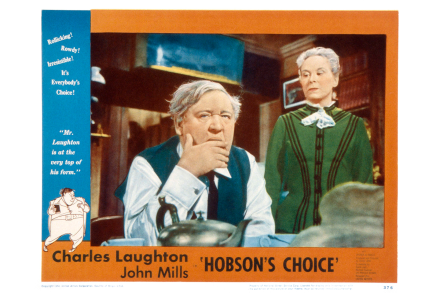
It’s my new lockdown ritual. Switch on the telly, cue up the menu and scroll down to where the vintage movies gather — Film 4, or the excellent Talking Pictures TV. Then search through their early-hours offerings, and press ‘record’ more or less at random. Gainsborough costume flicks; Rattigan adaptations; anything with John Mills in a submarine — it’s all good. Then, next day, trawl through the catch to see what’s surfaced, and who wrote the music. On a good night you might get Vaughan Williams in 49th Parallel, Richard Rodney Bennett in Billy Liar or — bewilderingly — the fire-breathing serialist Elisabeth Lutyens, keeping herself in cigarettes and brandy with scores for The Skull or Dr Terror’s House of Horror.

Another cracking take on the opera film: Marquee TV’s Turn of the Screw reviewed

From our UK edition

I’m still waiting for the Royal Opera to step up. Nearly a year into the Covid crisis and what do they have to show for it? One stonking concert staging of Ariodante, a couple of gala-ish performances and some operatic scraps. Where’s the creativity? Where’s digital ingenuity, the willingness to experiment, reinvent, adapt? Where, frankly, is opera? When companies with a far greater reliance on box office than the heavily subsidised Royal Opera can do their bit — look at Grange Park’s tireless stream of content, ENO and Scottish Opera’s various car-park Bohèmes, English Touring Opera’s monodramas and song cycles, Glyndebourne’s Offenbach-in-the-garden — it’s hard not to feel frustrated.

British opera companies and orchestras must start investing in native talent

From our UK edition

Early in 1946, two men boarded a train at Euston and went trawling for talent. Audition notices were posted at town halls up and down the land: singers wanted, no experience required. Two thousand applied. One town after another, they lined up for Karl Rankl, Covent Garden’s music director, and David Webster, its general manager. Those who sang in tune were hired, £8 a week for chorus, £40 for soloists. An organist in a Harrogate church was appointed chorusmaster. ‘At Carmen rehearsals,’ recalled Constance Shacklock, a farm girl from Nottinghamshire and future star, ‘none of us had ever seen a Carmen before, let alone sung one.’ By mid-year, Covent Garden had a credible opera company.

Most artistic careers end in failure. Why does no one talk about this?

From our UK edition

It is a standard narrative in all showbiz reporting, and one that arts hacks seem to be duty-bound to abide by. It is the fairy tale of ‘Making It’; the story of a star whose career took time to get off the ground but, thanks to perseverance and self-belief, went stratospheric. It goes like this: ‘I was a nobody, and I was turned down from everything. And I nearly didn’t go to that final audition, but whaddya know? I turned up and… Shazam! Oscars raining down and a mini-series on Netflix.’ There is an encyclopaedia of stars who toughed it out before making it big.

There’s no better sonic hangover cure: New Year’s Day Concert reviewed

From our UK edition

The best moment in the Vienna Philharmonic’s annual New Year’s Day Concert comes after the end of the advertised programme. The conductor gives a tiny gesture, the violins start a shimmer of tremolando, and a ripple of applause spreads through the hall. At this point, if you’re watching with first-timers, they’ll look at you, surprised. Why have they stopped? And you smile, because you know what the conductor knows, what the orchestra knows and what even the audience in the Musikverein — those bejewelled Eurostiffs in their £1,000 seats — knows. We’re about to hear The Blue Danube, and music doesn’t get any better than that. Well, that’s how it feels to me, anyway.

The wonder of Wagner

Laramie, Wyoming Nearly all the famous artistic controversies in the aesthetic history of the western world — the Battle of the Ancients and the Moderns in France and the contest between the rococo and neoclassical schools across Europe in the middle of the 18th century; the subsequent rivalry between the Classicists and the Romantics and the contretemps in the late-19th century between the Realists and the Impressionists — are as dead, irrelevant and forgotten today as the wars between the Guelphs and the Ghibellines.

wagner

Hear the greatest Parsifal of our time sing like a Muppet: Jonas Kaufmann’s Christmas album reviewed

From our UK edition

In classical music circles, Christmas arrives with the overture to Handel’s Messiah. Or so they’ll tell you. In truth, festivities kick off when you hear a ping from your phone and glance down at your inbox: OMG — you have to hear this! There follows, as tonic follows dominant, a link to YouTube and the 2014 Christmas in Vienna Medley — the occasion, still barely fathomable to anyone who believes that we share a common European culture, when a quartet of opera singers in full evening dress, and shimmying on the spot like a vicar at a Sunday School disco, attempted to cover George Michael’s ‘Last Christmas’. But not this year. Oh no.

The grotesque unevenness of Mozart’s Requiem

From our UK edition

It is amazing what fine performances you can get beamed to your computer these days. Slightly less amazing is the packaging these events come in, when they do. ENO relayed free a concert of Mozart’s Requiem, but it was preceded by a snatch of Strictly, with a row of muscular young guys ripping off their shirts, before we entered the Coliseum for a heavily pregnant Danielle de Niese hyping the event we were about to see and hear. She is delightful, but I wish she hadn’t been compelled to tell us that, despite his hard life, Mozart was sending us a message of hope that everyone, however ignorant of classical music, can be moved by. It’s just not true.