Opera

The joy of going to a real concert: OHP’s Heart of Delight reviewed

From our UK edition

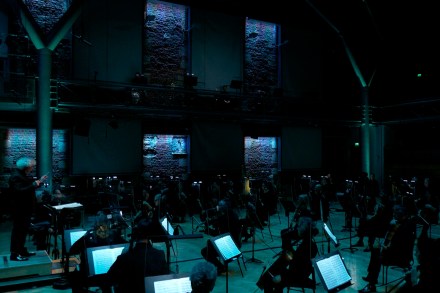
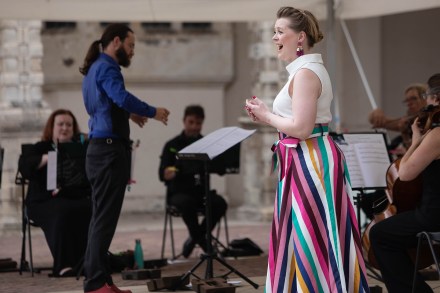
I went to a concert! Not a livestream or download: a real concert, with real musicians, a real conductor, a real audience, and the real sound of Waitrose cava bottles popping open in the late afternoon. In some ways, this open-air gala from Opera Holland Park made it feel as if the summer season were back on. There were floral-print dresses and canary-coloured chinos; I swear I even saw a tartan picnic rug. And here in a corner were the critics, released back into society for the first time since March. When the correspondent of the Mail on Sunday ostentatiously upgraded himself to a better seat mid-show, it was like we’d never been away. In truth, it only resembled normality if you ignored the total absence of Opera Holland Park’s huge tented theatre.

‘Where I grew up, classical music was diversity’: an interview with conductor Alpesh Chauhan

From our UK edition

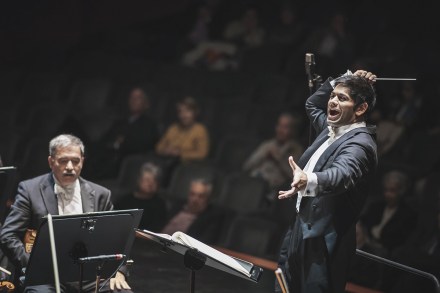
The first time Alpesh Chauhan conducted Birmingham Opera Company, he was surrounded by rats: six-foot tall rats, singing Shostakovich at the top of their voices. There were singing cops, too, and a marching band wearing bloodstained wedding dresses, and this was all happening in a derelict Edgbaston dance hall best known as a location for the 1980s Central TV drama Boon. Well, of course it was. BOC is the company that staged Mussorgsky in a circus tent and Stockhausen in an abandoned chemical warehouse; its whole point is to upend traditional assumptions about opera. The big difference in its production last year of Lady Macbeth of Mtsensk came from the orchestra.

Why imperfect operas like Don Carlo are more interesting than perfect ones

From our UK edition

In the 62 years since I first heard and saw Don Carlo, in the famous and long-lasting production by Visconti at the Royal Opera, my feelings about it have grown ever stronger, both in passionate attachment and in critique. Imperfect operas, like other imperfect phenomena, can be more interesting than perfect ones, because they’re more thought-provoking, more enticing. The libretto, very freely based on Schiller’s play, was by two Frenchmen, and Verdi, eager to make a bigger splash than he had so far in Paris, made too much of one. The first performance, in 1867, ran so late that the members who lived outside central Paris missed their last trains, which were at 12.35 a.m. (Royal Opera and ENO: please take note).

After weeks of silence, Royal Opera reopened with a whimper

From our UK edition

It was the fourth time, or maybe the fifth, that I found myself reaching for the tissues that I began to feel suspicious. Somewhere between the poignant gaiety of A.E. Housman’s ‘…lads that will never be old’, Shakespeare’s tender valediction ‘Fear no more the heat o’ the sun’ and Strauss’s ‘Morgen!’, with its rapturous vision of a never-reached tomorrow, emotion turned to manipulation. You can’t engineer catharsis (though you can score it to music), and this attempt felt like something a visit to the Royal Opera House has rarely felt like before — cheap. It wasn’t that there was anything wrong with the performances at this first in a series of live-streamed concerts.

The best recordings of Ravel’s L’enfant et les sortilèges

From our UK edition

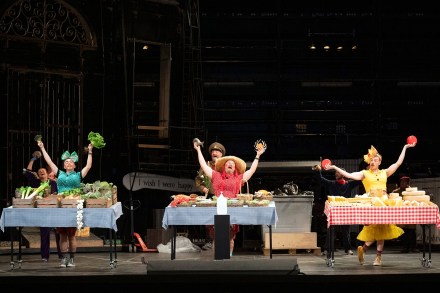
‘I don’t want to do my work. I want to go for a walk. I want to eat all the cakes… to shout at everybody!’ Which of us hasn’t felt like this at some point during the past ten weeks? The small child at the centre of Ravel’s L’enfant et les sortilèges speaks for us all as he rages against the restrictions of his suddenly enclosed and joyless world. Shut in the schoolroom until he finishes his homework, the little boy lashes out, spilling ink on the carpet, smashing the crockery, snapping the pendulum off the clock, tearing the wallpaper and terrorising the cat. But just as his tantrum is exhausted he finds that the tables have turned as the furniture, objects and animals that surround him come to life and scold him for his behaviour.

Theatre closures are not necessarily a disaster – they offer a chance to remake culture

From our UK edition

Theatre stands on the brink of ruin, says Sonia Friedman. And if you believe Twitter, so is my career. I'm apparently 'a disgrace to my profession'. 'Not fit to do my job'. I wear 'grubby' oversized T-shirts, dare to have 'an anagram for a name' (sorry for being foreign) and possess the face of an 'etiolated ferret' and, naturally, for all this, I should be fired.  Leaving aside for a moment my funny name, ferrety face and baggy clothes (all criticisms not without some merit), what was my crime? To suggest that theatre being on the brink of ruin might not be such a disaster. That tongue was firmly lodged in cheek was of course wilfully overlooked. Hey-ho. This is Twitter. Leaping on the most uncharitable interpretation of a tweet is the default setting.

Swanky, stale and sullen, the summer music festival has had its day

From our UK edition

‘Festival?’ said Nathan Milstein. ‘What is festival?’ I had naively asked the most immaculate of violinists where he used to play in the summer and he looked at me as if I had proposed an unnatural act. ‘Before the war,’ said Nathan, offering a glimpse of paradise lost, ‘Volodya and I would stay at Senar for six weeks with Rachmaninov.’ Volodya was Horowitz, his best friend. ‘In those days,’ he continued, ‘we liked to spend time with composers. A composer was someone you could talk to. He knew philosophy, literature, lepidoptery. Rachmaninov could name all the butterflies around Lake Lucerne. He liked me better than Volodya, maybe because I was not pianist.

Drunk singers, Ravel on film and prime Viennese operetta: the addictive joys of classical YouTube

From our UK edition

The full addictive potential of classical YouTube needs to be experienced to be understood. And let’s be honest, there are only so many lockdown videos the human spirit can take. Which is why, on a sunny spring afternoon, in the prime of life and health, I find myself watching the late John Cage stroking bits of wire with a feather. The haircuts suggest that we’re in the early 1980s, and a Ron Burgundy type is floating across the screen in a little box. ‘It’s been said that listening to John Cage’s music is like chewing sand,’ he explains, unhelpfully. It seems that we’ve also been watching a live performance by the German artist Joseph Beuys. And that we’re now going over to a firework display at the Pompidou Centre.

No one understood the ennui of lockdown better than Louis XIV and his courtiers

From our UK edition

A few years ago I interviewed an eminent baroque conductor. Prickly and professorial, tired after a day of rehearsals, he batted question after question away until we landed on the subject of French baroque opera. No longer disinterested, now he was furious. He’d recently had a conversation with a major UK opera house, who had decided never again to stage anything by Lully, Rameau or Charpentier. Why? ‘It doesn’t sell.’ Since then we’ve had precisely one professional production of this repertoire in this country. It’s not the first time that English audiences have been suspicious of foreign imports. Back in the 18th century, when the cultural invasion came from Italy, feelings on this subject ran high.

It costs a lot of money to look this cheap: Metropolitan Opera’s At-Home Gala reviewed

From our UK edition

Desperate times call for desperate measures. With the world’s opera houses currently dark, the New York Metropolitan Opera tackled the crisis the way it knows best — by assembling the most glamorous possible list of vocal megastars and presenting them at astronomical expense. But dollars can’t get around social distancing, and in lockdown even the greatest voice is only as good as the mic on a smartphone. Cue four hours of free-to-view party pieces from 43 of the world’s greatest singers, broadcast live from their homes without orchestra, without editing and without excuses.

Michael Tanner remembers the greatest musical experience of his life

From our UK edition

No surprise: the greatest musical experience of my life was Parsifal at Bayreuth in 1962. I thought at the time that I would never again be so moved by a performance of anything. I have kept an open mind ever since, and still it takes me no time or effort to answer the question. Obviously I can’t discuss here why I regard Parsifal as a supreme work, but even if I thought that Wagner had written greater ones, or that some other master composer had — in fact, I do think there are several works by four composers that are as great as Parsifal, though at that altitude rankings and comparisons become absurd — what I experienced in Bayreuth that year was unique and unpredictable.

Bleak humour, resourcefulness and wit: Budapest Festival Orchestra’s Quarantine Soirées reviewed

From our UK edition

There’s a certain merit in bluntness. ‘Quarantine Soirées’ was what the Budapest Festival Orchestra called its response to the crisis, and if the name conveyed a certain bleak Magyar humour, the resourcefulness couldn’t be faulted. Elsewhere, orchestras were still talking optimistically about broadcasting concerts from empty halls, and (even more optimistically) about persuading online viewers to pay for them. Realising that any activity that brings 90 musicians into close proximity was probably running out of road, the BFO’s music director Ivan Fischer announced that ‘this is not the time for orchestral music’ and launched a programme of chamber recitals by the orchestra’s players, livestreamed from their rehearsal hall.

Bigamists, lunatics and adventurers: the raucous world of 19th century British music

From our UK edition

For a patriotic German in the decades before Bismarck, Britain’s power was an object of envy. But there was one thing, at least, that you could always hold over the Anglo-Saxons on their foggy little island. On 1 January 1837, Robert Schumann sat down in Leipzig to hear a new piano concerto by the 20-year-old William Sterndale Bennett. ‘An English composer; no composer,’ commented his neighbour, smugly, before the music started. Few 19th-century German music-lovers failed to point out that the land of Shakespeare had somehow failed to produce a single really significant composer since the late 17th century. We know how that story ended; and if you want to explore the flowering of the British musical renaissance, it’s never been easier.

Letters: We need career detectives, not fast-tracked officers

From our UK edition

We need career detectives Sir: Your lead article (Trial and error, 29 February) rightly condemns Tom Watson for pressurising police into investigating the spurious allegations of Carl Beech. What should urgently be abandoned is the fast-tracking of police officers into senior positions, and the promotion of uniformed inspectors into detective ranks without them having the necessary experience and training to be effective investigators. It was well known in junior police circles that Operation Midland was a non-runner virtually from the start, but pressure from on high demanded that the investigation continued.

If your instinct is to undermine Beethoven, you’re directing the wrong opera: Fidelio reviewed

From our UK edition

‘People may say I can’t sing,’ said the soprano Florence Foster Jenkins, ‘but no one can ever say I didn’t sing.’ There were groans of dismay as an official walked out before the start of the Royal Opera’s new Fidelio: Jonas Kaufmann was not feeling on top form, but he was going to perform the role of Florestan regardless, and begged our indulgence. The mind plays tricks and after an announcement like that it’s hard to be entirely sure whether you’re hearing a skilfully proportioned interpretation or a singer dialling it down. But let the record show that Kaufmann did sing, and if you’ve booked for this production on the strength of that magic name alone, you can breathe easy.

Weill’s Broadway opera is made for telly: Opera North’s Street Scene reviewed

From our UK edition

It’s a sweltering night in Manhattan, circa 1947, and on the doorstep of a brownstone tenement three women are waiting for their menfolk to return. There’s plenty to gossip about. The Hildebrands upstairs are being evicted tomorrow, and the Buchanans are expecting a baby. And what’s the deal with Mrs Maurrant and Steve the milkman? Old Mr Kaplan reads the newspaper and denounces the bourgeoisie. A kid cadges a dime and big, kind Lippo Fiorentino arrives home from work with ice creams for everyone. At which point it becomes fairly safe to conclude that the America of Kurt Weill’s Street Scene is not the America of his Mahagonny. Forget the acid harmonies and hard-left caricatures of his Berlin collaborations with Bertolt Brecht.

Sadistic and repellent and thrilling: Mascagni’s Iris reviewed

From our UK edition

If you’ve ever felt that poor Madama Butterfly had a bit of a raw deal, then you really, really don’t want to know what happens in Mascagni’s Iris. Take that as a spoiler alert: our Japanese heroine is so young that as the opera opens, she’s playing with a doll. She’s abducted, installed in a brothel and offered up for the delectation of a noble client, whose advances she is too innocent to comprehend. Disowned by her blind father, by the beginning of Act Three she’s literally lying in a sewer listening to disembodied voices telling her that nothing could have prevented this outcome. Obviously, it sounds exquisite. You don’t have to be a social justice warrior to find Iris a bit much.

Handsome and revivable but I wasn’t moved: Royal Opera’s Death in Venice reviewed

From our UK edition

Premièred within two years of each other, Luchino Visconti’s film and Benjamin Britten’s opera Death in Venice both take Thomas Mann’s novella as their starting point. But from shared beginnings the two works diverge dramatically. The cloying visual beauty of the film, its pink-and-grey vision of Venice swaddled in Mahler strings, couldn’t be further from the stern, self-loathing austerity of Britten’s last opera, whose beauty is much harder won. The sea that pounds and dashes the Suffolk coast in Peter Grimes is lulled in Death in Venice into the queasy, syncopated swell of the lagoon, a miasma of heat and sickness rising from its waters.

Meet the unrivalled Sun King of early music, William Christie

From our UK edition

It’s morning in the garden of William Christie, and he’s talking about home improvements. ‘I planted three pines up there actually,’ he says, pointing. ‘One blew over in a storm in ’99. But I was able to plant on both sides and create a vista. It’s getting there.’ He gestures across topiary and lawns and away towards the opposite hillside, where an avenue of trees and classical pillars sweeps up towards the skyline. Hang on: he created that too? It’s not unknown for famous conductors to act like Bourbon princes.

Ravishing and poignant: ENO’s Orphée reviewed

From our UK edition

Billy Wilder, asked for his opinion of Andrew Lloyd Webber’s musical version of his movie Sunset Boulevard, famously replied: ‘Those boys hit on a great idea. They didn’t change a thing.’ I don’t think you could say exactly that about Netia Jones’s new staging of Philip Glass’s Orphée, a piece that takes the script of Jean Cocteau’s 1950 film and turns it into — well, into an opera by Philip Glass. Cocteau’s shimmering cinematic imagery (think Man Ray come to life) defies physical realisation, so Jones and her designers Lizzie Clachan (sets) and Lucy Carter (lighting) have found poetic, often blindingly beautiful theatrical equivalents.