Oil

Revealed: five British royals who definitely slept with underage girls

From our UK edition

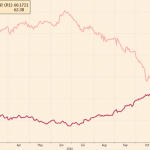
Teen queens The Duke of York denied allegations in court papers that he had had sexual relations with a girl in Florida aged 17, below the age of consent there. Some of his ancestors who might now be in trouble: — King John, who married Isabella of Angoulême in 1200 when she was 12. — Henry VI, who married Margaret of Anjou in 1445 when she was 15. — James I, who married Anne of Denmark in 1589 when she was 14. — Charles I, who married Henrietta Maria of France in 1624 when she was 15. — William III, who married his cousin Mary in 1677 when she was 15.   Crude estimates The price of oil fell below $60 a barrel. There is nothing new about volatile oil prices.
What’s better than a tax cut?

From our UK edition

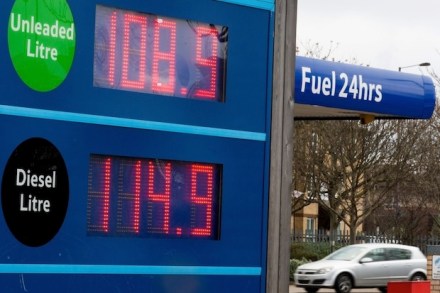
What’s the most important political development this year? The falling oil price. As of 2.30pm, Brent Crude was trading at $50.80 dollars a barrel—massively down on the $115 dollars a barrel it was trading at back in the middle of June. If the plunging price of crude is passed on to consumers, it’ll be the equivalent of a mega tax-cut and might just produce the feel-good factor that has been so lacking in this recovery so far. The Tory leadership is acutely aware of this. As Cameron did the rounds before Christmas, the falling oil price was often the first thing that he brought up. While Tory Ministers now are spending substantial amounts of time trying to pressure energy and petrol companies in to passing this price cut onto customers.

Portrait of the week | 4 December 2014

From our UK edition

Home The government spent days announcing how the Autumn Statement would allocate funds. ‘Frontline’ parts of the National Health Service would get an extra £2 billion for the time being, £750 million of it diverted from elsewhere in the Department of Health budget. Another £1.1 billion from bankers’ fines would go to support GPs. Labour said it would give the NHS twice as much. Out of the £15 billion already set aside by the government for roads, a tunnel would be built for the A303 past Stonehenge. Of £2.3 billion (over six years) earmarked for flood prevention, only £4.3 million was set aside for the Somerset Levels, but £196 million for the Thames estuary.

The crash of the ruble — and what’s next for Russia

From our UK edition

Since the Russian invasion of Crimea last February, many different phrases have been used to describe the tactics of the Russian President, Vladimir Putin. Some have spoken of a ‘new Cold War’. Others have described him as ‘anti-western’ or ‘anti-American’. But there is another adjective one could also use to describe his behaviour: ‘experimental’. For apart from everything else he has said and done, Putin has, in effect, launched a vast experiment into whether it is possible to extract a large and relatively well-integrated country from the global mainstream, and to reject the rules by which that mainstream runs. In truth, the experiment began long before Crimea.

Cheap oil has finally arrived – and it looks like being a disaster

From our UK edition

This oil price slump is turning into a ‘black swan’: one of those economic events that seem to come from nowhere with strange and unforeseen effects. As Brent Crude dips below $70 a barrel and Opec sits on its hands, major banks face losses on financings for US energy companies that must have looked like the safest borrowers in the field in an earlier phase of the shale gas boom. As the rouble plunges and the Russian economy implodes, anyone holding debt paper issued by a Siberian oil giant or a contract to build an oligarch’s superyacht may end up lighting the fire with it. The only thing that has barely flickered is the price of petrol at the pump, so consumers are feeling scant benefit.

How the US shale gas industry has changed the global economy

From our UK edition

The year 2014 will be remembered for an unprecedented juxtaposition of events. Two oil-producing countries in the Middle East were in a state of crisis. Relations between the West and Russia slumped to a new Cold War low. And oil prices have slumped, to $66 a barrel for Brent Crude this morning, half its recent peak. This didn’t used to happen. The modern history of oil prices is characterised by a series of spikes, each one coinciding with a crisis in the Middle East. It is a mark of how US shale gas and oil production has changed the oil market – and thus the prospects for the global economy. Never has a theory collapsed so quickly as Peak Oil, the idea that fossil fuel prices would rise inexorably as supply failed to keep track of demand.

Portrait of the week | 2 October 2014

From our UK edition

Home The Commons, having been specially recalled, passed, by 524 votes to 43, a motion supporting ‘the use of UK air strikes to support Iraqi, including Kurdish, security forces’ efforts against Isil in Iraq’. Only after four days did RAF Tornados from Akrotiri in Cyprus find some targets in Iraq to bomb. In support of her contention that Isil’s ‘hateful ideology has nothing to do with Islam’, Theresa May, the Home Secretary, in a well-received speech at the Conservative party conference, quoted the Qu’ran: ‘Let there be no compulsion in religion’ (Sura 2:256).

Santander’s secret: to conquer the world, stay like a small-town bank

From our UK edition

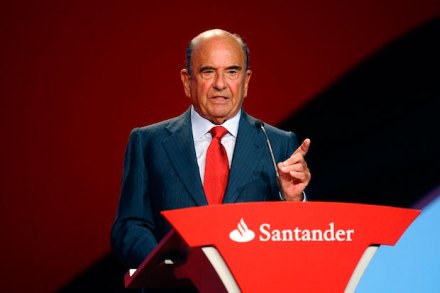
Four years ago, I wrote that I knew no dark rumours about Santander, the rising force in UK high street banking, but that history taught me banks which expand rapidly and globally ‘always come unstuck in the end… partly because the challenge of risk control across such vast portfolios becomes impossible… Banks that have been driven by one powerful personality also tend to lose management grip, and start finding skeletons in cupboards, as the big man comes to the end of his tenure.’ The big man in question was third-generation chairman Emilio Botín — who died in post last week, aged 79.

The wars that really are about the oil

From our UK edition

Is international conflict really just a fight over oil? It sometimes seems that way. In Syria and Iraq, the militants of the so-called ‘Islamic State’ sell captured oil while battling to establish a puritanical Sunni theo-cracy. From Central Asia to Ukraine, Russia is contesting attempts (backed by the US) to minimise Europe’s dependence on Russian oil and natural gas. Meanwhile, Obama’s ‘pivot to Asia’ allows the US to threaten the choke points through which most of China’s oil imports must pass. Conspiracy-mongering petrodeterminists who try to reduce world politics to nothing but a clash for oil are too crude (pun intended). No shadowy cabal of oil company executives pulls the strings of world politics.

George Osborne’s grey-haired gamble

From our UK edition

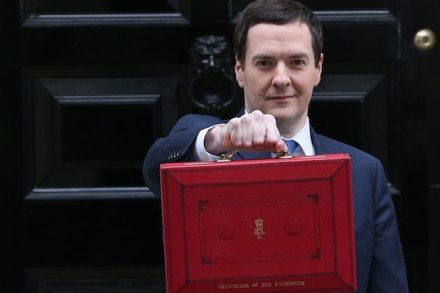
George Osborne has been in retail mode this morning, selling his pension reforms and explaining how pensioners can unlock their life’s savings. The Chancellor has said that the Treasury will work with the Citizen’s Advice Bureau, Age UK and other organisations to provide pensioners with the best possible impartial guidance to transform their retirement. Interested parties can consult the Treasury for more details. listen to ‘Osborne: Russia sanctions would be an 'economic hit' for the UK’ on Audioboo Osborne went on to add that this was what the pension reforms are ‘all about’.

The return of oil price anxiety is a timely reminder to get fracking

From our UK edition

‘Iraq turmoil sends crude oil prices to nine-month high’ is the sort of headline that used to send shivers down economists’ spines, especially if it appeared on the same page as ‘Europe faces gas shortage as Russia cuts Ukraine supply’. How worried should we be at the current turn of events in the energy world? Since Iraq’s new insurgency kicked off, the price of a barrel of Brent Crude has blipped from $105 to $115 — nothing to panic about — but the more pessimistic analysts are talking of a further $30 rise if Iraqi oil flows of 3.6 million barrels a day (representing about 4 per cent of global demand) are seriously disrupted.