Obscenity

All the gossip about Lady Chatterley’s Lover

Lady Chatterley’s Lover was written in a villa outside Florence during the winter of 1927-28, two years after D.H. Lawrence was diagnosed with TB. Described by him as ‘a phallic novel, but good and sun-wards, truly sun-wards’, the tale is set in his native Nottinghamshire, which he left in 1912 when he eloped with his aristocratic wife Frieda von Richthofen, who was then married to his tutor. Frieda, who valued her freedom, was enjoying an affair with the Italian officer Angelo Ravagli, who became her third husband after Lawrence’s death in 1930. It is believed that Lawrence was impotent for the last years of his life. In the evenings he would read aloud his finished pages, in which the Lawrentian philosophy is expressed by Oliver Mellors, gamekeeper to Sir Clifford Chatterley.
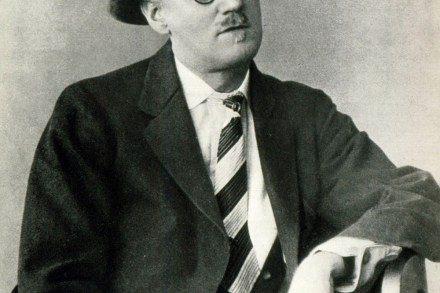
How Ulysses horrified the stuffed shirts of New York’s literary establishment

The word ‘obscene’, according to the dictionary, refers to anything ‘offensively or grossly indecent, lewd’. By the standards of the day, the Little Review was a borderline obscene, certainly at times salacious, literary journal. For the crime of serialising Ulysses – James Joyce’s then unpublished steamy masterwork – it was made to face obscenity charges. Operating out of Chicago and New York from 1914 to 1929, the journal introduced American readers to such modernist heavyweights as Ezra Pound, Wyndham Lewis and Gertrude Stein. It was not just a platform for bookish shock effects; it altered the course of American literary culture. James Joyce, who relished litigation, dreamed of a trial of Ulysses as clamorous as that of Madame Bovary Margaret C.