Novelist

The final act of Thomas Pynchon

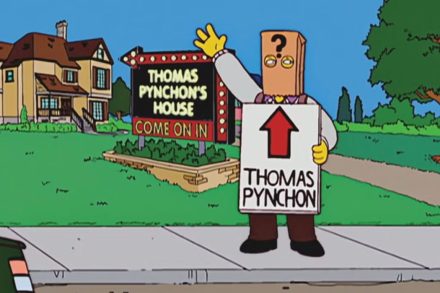
Whisper it, very quietly, but the now 87-year-old author Thomas Pynchon is having something of a moment in 2025. Not only has his 1990 novel Vineland supposedly served as the loose inspiration for the eagerly awaited new Paul Thomas Anderson-Leonardo DiCaprio collaboration One Battle After Another, but the near-impossible has been announced: Pynchon will publish a new novel, entitled Shadow Ticket, around the time of the movie’s release. It will be his first book in more than a decade, his ninth novel and his third consecutive noir-influenced story.

thomas pynchon

Evie Wyld’s latest novel is unsettling yet hopeful

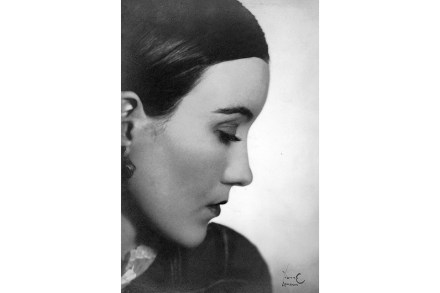
Evie Wyld’s powerful fourth novel opens from the perspective of Max, a ghost who haunts the south London apartment where he lived with his girlfriend Hannah. A ghost story is new ground for Wyld, the multi-award-winning Anglo-Australian writer, but her signature traits are immediately evident — poetic observations of unusual details; a pervasive sense of grief and palpable trauma, leavened with a wry sense of humor (Max notes his "strong urge to file a complaint" about being a ghost); and an intricate plot that compels readers to delve into complex past events.

Wyld

Christopher Priest was a grievously underrated novelist

There really ought to be a word to describe the dispiriting realization that a great writer has slipped through our fingers without the culture at large ever quite appreciating what’s been lost. The novelist Christopher Priest, who died earlier this year of cancer at the age of eighty, was one such figure. It would be glib to describe him as the nearly-man of English fiction, for this wasn’t quite the case — instead his career represented a sequence of missed opportunities for the world beyond his chosen genre to recognize his skill and quiet profundity. In some ways, the early part of his publication history closely resembles that of J.G. Ballard without the mid-career renaissance Ballard enjoyed.

Priest

The talented Evan S. Connell

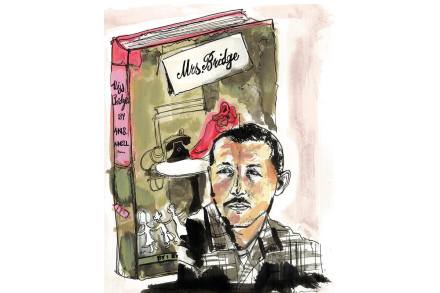
When the journalist Steve Paul began his biography of the writer Evan S. Connell, a young librarian was helping him access research material. She happened across a photograph, and remarked, “What a suave-looking dude.” Connell had movie-star good looks. Of his eight novels, two are now packaged as classics of American literature. This on top of a biography of Goya; a 2009 Man Booker International nomination for lifetime achievement; and a bestselling history of a battle in the Great Sioux War of 1876. Acolytes recommend his greatest book, Mrs. Bridge, with the confident smile that looks forward to welcoming another member to the exclusive band of Connellites.

Connell

Milan Kundera’s ‘transcendental buffoonery’

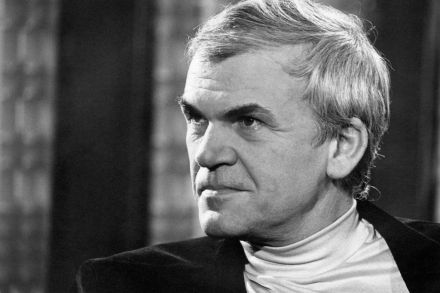
I was just leaving France when I got the news that that the Czech novelist Milan Kundera had died, aged ninety-four. He had emigrated to Paris in 1975, when he was forty-six, a refugee from the crackdown in Prague following the Russian obliteration of the Prague Spring in 1968. He died in his adopted city on July 11, full of honors but also, or so it seems to me, largely forgotten.  I had not been following Kundera’s work for many years. But there was a moment, in the 1980s, when he was the talk of the posh, intellectual literary town. I wrote a longish essay about him for the New Criterion in 1986. I draw on that work here.  Kundera was in his late thirties when he published his first novel, The Joke, in Prague in 1967.

milan kundera