Norway

What’s it like to talk at length to a serial killer?

From our UK edition

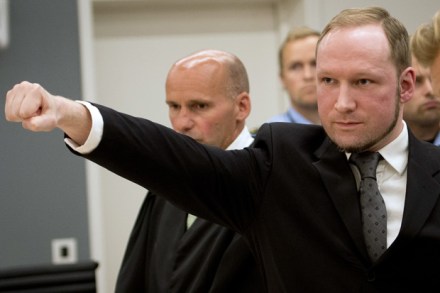
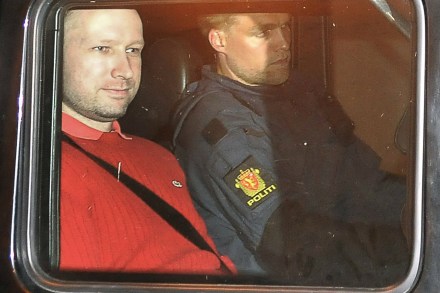
‘I’ve never met a human being who doesn’t appreciate being listened to, being taken seriously,’ said Asbjorn Rachlew, the Norwegian homicide detective who one afternoon in the summer of 2011 found himself listening to Anders Breivik, who had just killed 77 people in a shoot-out on an island near Oslo. His job, Rachlew explained, was to get Breivik to talk, but not ‘by faking it, through manipulation etc.’. You have to show real concern, he said, to get the information you need, because you have to remember that suspects, too, like Breivik, are also traumatised. ‘Banging the table and screaming etc. doesn’t help communication...

Europe’s ever-looser union

From our UK edition

Europhiles have warned us for years of the dangers of Britain leaving the EU. But all the while a different spectre has crept up on their other flank: which is that even if the UK votes to stay in the EU in 2017, we might be one of the only countries left. It’s a radical thought, but if they’d like to consider it, the Europhiles should look at what is happening across the continent. Pro-EU countries are proving harder and harder to find. The eastern European countries may still be financial net receivers, but they are now having to weigh up their honey pot against the demands that come with it. A project which was meant to bring free movement of labour for themselves is now forcing them to take in thousands of migrants they do not want from across Africa and the Middle East.

Yvette Cooper needs to do more than just talk about Nordic models

From our UK edition

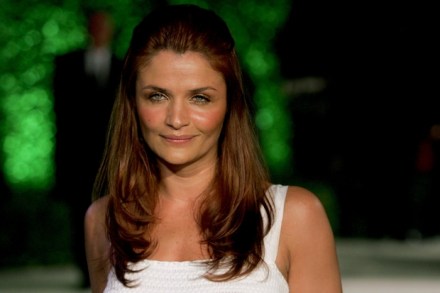
Britain's Left has been indulging in worship of Scandinavian social democracy ever since the tide started ebbing on the New Labour project, most recently on prostitution reform and the SNP's vision for an independent Scotland. Thinking wistfully of Borgen beats the hard work of actually reinventing socialism, but I haven't heard so much excited talk about the 'Nordic Model' since I was at school and Helena Christensen was practically everywhere. Happy memories indeed. Last month Yvette Cooper announced that one of the pillars of her leadership bid would be childcare: campaign[ing] for universal childcare – as other countries, including Scandinavia, have.

Norway hasn’t given in to Islamophobia – but it has reacted

From our UK edition

Under the headline ‘Norway didn’t give into Islamophobia, nor should France’, Owen Jones writes on the Guardian’s Comment is free website that Norway’s response to the Anders Breivik massacre in 2011 ‘was not retribution, revenge, clampdowns’, and that ‘the backlash [Breivik] surely craved never came’. Norway, he writes, 'stood strong'. But did it really? I’m half Norwegian. I adore the country, and I would – and do – fight its corner any day of the week (even against our Swede-loving editor). Norway certainly hasn’t given in to Islamophobia, but it has reacted. No matter what Owen Jones says, there have been some changes in the Norwegian public’s general attitudes.

Cognac and the Viking connection in la France profonde

From our UK edition

The chestnut trees were still resplendent in yellow leaf along the banks of a misty autumn river on its glide through woodlands, pasture, comfortable towns — and vineyards. This was the Charente. Eighty years ago, before the lorry became dominant, it would not have been so peaceful. In those days, barges laden with barrels of Cognac made their way along this river to the coast to be shipped all over the world. Wine has been grown in Cognac for centuries and exported since the Middle Ages. But it was always inferior to the products of Bordeaux, to the south-west. Even so, its acidity and low alcohol content made it ideal for distillation once the Dutch discovered the technique. They called the result brandwejn: burnt wine, hence brandy.

We must never again let this 19th century Norwegian master slip into oblivion

From our UK edition

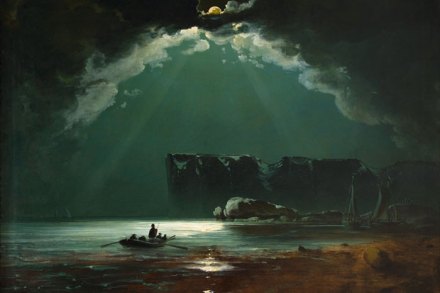
You won’t have heard of Peder Balke. Yet this long-neglected painter from 19th-century Norway is now the subject of a solo show at the National Gallery. And it’s an absolute revelation. Walking around, I marvelled at the intensity of a man obsessed with revealing the frozen grandeur and elemental drama dominating his country’s northernmost shores. Like Turner, he was driven by a restless urge to travel, discovering landscapes that enlarged and transformed his vision of the world. In 1832 he took an arduous sea journey to the far north of Norway, ceaselessly sketching the rugged coast and mountains along the way. His excitement grew as he passed the primal North Cape, and the onset of a hurricane only increased Balke’s avid involvement.

Radek Sikorski’s diary: Show Putin what you think of him – eat a Polish apple

From our UK edition

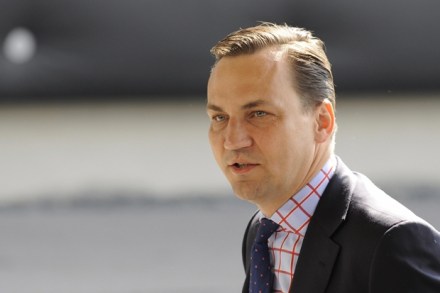
I made a welcome escape from sweltering Warsaw to the cloudy cool of Bodø, halfway up the coast of Norway, north of Iceland. Bodø’s harbour stays ice-free all year round only thanks to the Gulf Stream. The fjords bubble with whirlpools and offer some of the best cold-water scuba diving in the world. When the mist clears, the air in this visibly prosperous place has an Alpine, colour-enhancing quality. It’s my first time beyond the Arctic circle and the dusk through the night makes it hard to sleep. ‘Now imagine,’ says the wife over the phone from Washington, ‘what it was like to try to go to sleep in a Soviet-era hotel in Vorkuta, in late June, without curtains.

The making of a novelist

From our UK edition

Karl Ove Knausgaard was eight months old when his family moved to the island of Tromøya; he left it aged 13, because of his father’s higher-grade teaching appointment on the mainland. As they drove over the bridge linking the island with the southern Norwegian port of Arendal, ‘it struck me with a huge sense of relief that I would never be returning, that… the houses and the places that disappeared behind me were also disappearing out of my life, for good.’ Only in a literal sense did they disappear. And the six-volume autobiographical novel sequence, My Struggle, on which Knausgaard embarked after the success of his first two books, demanded his coming to terms with his formative early milieu.

Why are Scandinavians so happy when they should be so sad? 

From our UK edition

As I sit here in my Sarah Lund Fair Isle sweater, polishing my boxed sets of Borgen and nibbling on a small piece of herring, it briefly occurs to me that perhaps I too have fallen victim to the prevailing mania for all things Scandinavian. Just about the only person who’s stayed resistant, it seems, is Michael Booth, the author of this book. At home in Copenhagen — he’s married to a Dane — watching the incessant drizzle falling through the perpetual twilight, Booth begins to think he’s losing his mind. How come every survey ever commissioned into human happiness puts the Scandinavians at the top of the list?, he wonders.

The grandson of Scott’s deputy makes music in Antarctica

From our UK edition

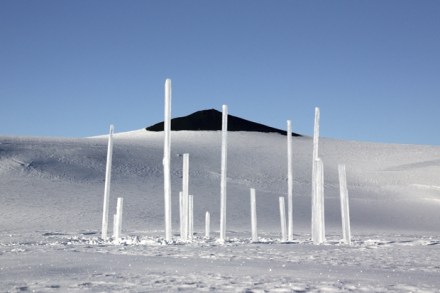
As his father lay dying some six years ago, Julian Broke-Evans promised him that he would ‘keep telling the story’, the story being that of Scott’s ill-fated but heroic 1910–13 Terra Nova expedition to the South Pole. Julian’s grandfather was Teddy Evans (later Admiral Lord Mountevans), Scott’s second-in-command, who was to win fame in 1917 as ‘Evans of the Broke’ when he took on six German destroyers in the Dover Straits. Marrying a Norwegian, he embraced the land of Scott’s rival, Amundsen, with an enthusiasm that has passed down the generations and which is now inspiring an Anglo–Norwegian collaboration of rare beauty, set on a mountain-top above Gudbrandsdalen.

Crime fiction at Easter? Look no further than our Scandinavian neighbours

From our UK edition

If you thought that winter in Britain had gone on long enough this year, then spare a thought for the Norwegians. Winters in Norway are famously long, dark and bitter, and – for those who experience them year upon year – can be incredibly boring. During one such winter, in February 1923, two Norwegians called Nordahl Grieg and Nils Lie decided to alleviate their boredom by writing a book. The theme? A train robbery; or more specifically, a looting of the train to Bergen. The title of the book? The Bergen train was robbed in the night (or, in its original Norwegian: Bergenstoget plyndret i natt). Having written the book, the next step was to convince people to buy it, and here the authors came up with a very cunning plan indeed.

Britain, Scotland, Norway and Europe: lands of magical Sovereignty-Unicorns – Spectator Blogs

From our UK edition

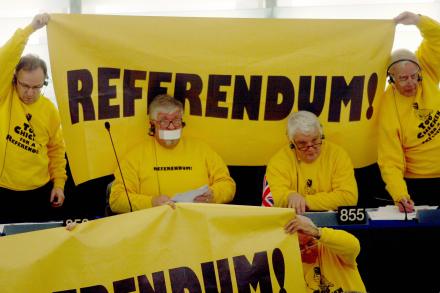
Even the cheapest, Poundland crystal ball will tell even a blind observer that Europe is pretty soon going to be a pretty hefty problem for almost all of Britain's political parties. Almost all, I say, because that includes the SNP* whose europhilia is, in some respects, a product of a time that no longer exists. Anyway, the odds of manifesto pledges promising an in-or-out referendum in the next parliament seem to be shortening all the time. I have no idea what this is supposed to achieve since, as best I understand the matter, neither the Conservative nor Labour parties wish Britain to leave the European Union. Asking the question necessarily increases the chances of receiving an answer you do not think sensible or in the national interest.

The EU wins the Nobel Peace Prize

From our UK edition

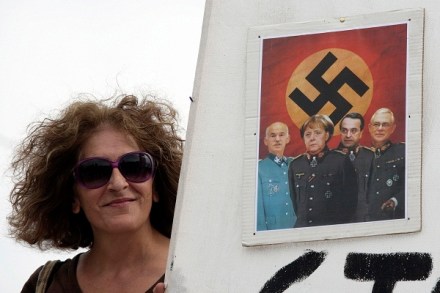
Today is not April the first; but the European Union has indeed won the Nobel Peace Prize. It is a bizarre decision given what is going on in Europe right now. Watching the reaction of the Greek crowd to Angela Merkel on her visit there this week, it was hard not to worry that the European project was now a threat to peace and stability on the continent. To be sure, France and Germany have not gone to war again since 1945. But to chalk that up solely to the European Union is a profound misreading of history. I suspect that the decision to award the prize to the European Union was a product of the desire of the Norwegian elite to rebuke the people there for not wanting to join the European Union. They are raging against the dying of the light.

Want to know what tax transparency looks like? Look at Norway

From our UK edition

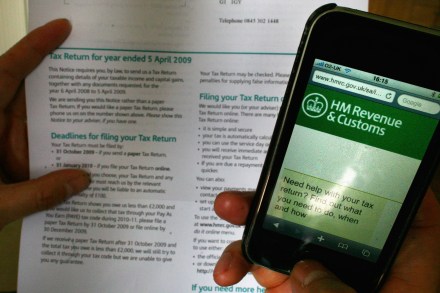
If you take George Osborne’s plan for tax transparency to its natural conclusion, where do you end up? The answer is Norway, where details of every taxpayer’s annual income, wealth and annual tax return are publicly available — and it’s not a new thing. Norwegian tax returns have been publicly available since the 1800s, the idea being that financial transparency is seen a vital part of social democracy. Figures were traditionally released every October in a Yellow Pages-style book, available for anyone to read at the local town hall or tax office. As the internet evolved, they decided to take things online.

Rudd’s straw man argument about our EU membership

From our UK edition

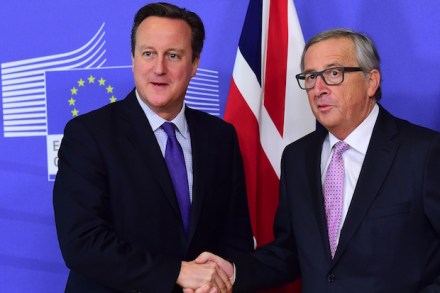
As the isolation hysteria over Cameron’s EU veto starts to fade, attention is now shifting to the more existential question of what kind of relationship the UK should have with Europe. In a piece for today's Times (£), the chairman of Business for New Europe, Roland Rudd — who, incidentally, used to argue passionately in favour of the UK joining the euro — takes aim at those who want Britain to replicate a Norway-style model of European cooperation. Arguing that Norway endures so-called ‘fax machine diplomacy’ — no influence over EU laws that it must nonetheless accept — Rudd says that ‘the choice now is to do what Norway does, or remain in the EU.

Is Scotland a Nordic Country?

From our UK edition

This is a question that meets the classic definition of John Rentoul's famous-to-them-that-ken series of Questions To Which The Answer Is No. That is, the people asking the question think the answer is Yes when in fact it is No. This question, like many of the SNP's other witticisms, is the brainchild of Angus Robertson, the MP for Moray who might be thought Alex Salmond's answer to Karl Rove. Like Rove, Angus sometimes gets carried away and this suggestion that Scotland is some long-lost Nordic appendage is one of those occasions. Not that he's alone in wishing Scotland could be redefined in this fashion. Lesley Riddoch had a piece in the Guardian recently making just this argument.

Breivik and the right | 28 July 2011

From our UK edition

There's plenty to sate your thirst for politics in this week's issue of The Spectator (out today, you can buy it here, etc.), not least Tim Montgomerie's forceful cover article on how the Tory leadership has become detached from the wisdom of ordinary Conservatives. Here, though, is Douglas Murray's essay on the psychosis of Anders Behring Breivik, and whether the right has a case to answer for his crimes: Anders Behring Breivik believed himself a Knight Templar and awarded himself various military ranks accordingly. He also believed that he and other self-described racists had common cause with jihadis and that the USA has a Jewish problem.

Bomb blast near the Norwegian Prime Minister’s office

From our UK edition

  A reportedly enormous bomb blast has shaken the PM's office and the oil ministry in Oslo, the Norwegian police confirm. Reports have confirmed that the Norwegian Prime Minister is safe, but it's not clear if he's un-injured. Early reports suggested that this might be a gas explosion, but those were discounted because there is no mains gas supply in Oslo. Norway's state broadcaster has confirmed that one person has died, with more than 8 injured. Fortunately, it is the height of Norway's holiday season and there were few people about. The Norwegian police, however, warn that there are other casualties being treated. Details remain vague.

Serbia’s Nobel U-turn

From our UK edition

Yesterday, I blogged that Serbia's decision not to attend the Nobel Prize ceremony because of Chinese pressure was a shameful stance for the Balkan would-be EU member to take. Many others felt the same. Now, feeling the international pressure, it seems that Serbia's government has decided that the country's Ombudsman, Sasa Jankovic, will attend the event as special representative of Prime Minister Mirko Cvetkovic. A good outcome, and a sensible decision, which will hopefully be followed by a reprimand to Serbia's calculating Foreign Minister, Vuk Jeremić, who originally decided that Serbia would not attend the ceremony.

China’s new BFF: Serbia

From our UK edition

China is doing what it can do to scupper the forthcoming Nobel Peace Prize ceremony in Oslo. Their Foreign Ministry has now said that countries who decided to attend event would be showing disrespect to China: "We hope those countries that have received the invitation can tell right from wrong," the ministry's spokeswoman told journalists. Many of the world's human-rights abusers have been only too happy to oblige, including Pakistan, Iran and so on. They want to keep friendly with China and share Beijing's anti-democratic agenda. But, oddly enough, Serbia, a would-be EU member, is said to have chosen to boycott the Norwegian event. Keen to get Chinese financial assistance and help in its Kosovo policy, Belgrade's thinking is clear.