Norway

The ideology of madness

From our UK edition

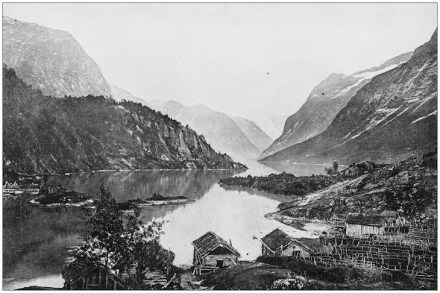
On the wooden jetty from which the ferry used to depart for the little island of Utoya, there stood for a while a small obelisk around which people deposited flowers. ‘If one man can show this much hate, imagine how much love we can show together’ was the marvellously trite inscription on the obelisk: vapid and close to meaningless, in either Norwegian or English. Utoya lies in the Tyrifjorden Lake about 45 minutes north of Oslo and it is where the Labour party’s ‘Workers’ Youth League’ once held its summer camps — until one afternoon in July 2011 when a man called Anders Breivik turned up, heavily armed. Breivik murdered 69 people on Utoya, 33 of them under the age of 18.

Unkindly light: The Morning Star, by Karl Ove Knausgaard, reviewed

From our UK edition

Karl Ove Knausgaard’s My Struggle sequence is one of this century’s great projects: an intimate epic in which the overriding obsessions of our times — identity, gender, the meaning of truth — play out through six maddeningly detailed, curiously compelling autofictions. It’s the kind of work that casts a long shadow; any fiction that follows, the author knows, is in communion, and competition, with that momentous work. Which is why The Morning Star, Knausgaard’s return to the novel after an almost decade-long break, is both fascinating and frustrating.

Whiny, polite and beautiful: Kings of Convenience’s Peace or Love reviewed

From our UK edition

Grade: A– The problem with Norwegians is that they are so relentlessly, mind-numbingly pleasant. Well, OK, not Knut Hamsun or Vidkun Quisling. And probably not the deranged fascist murderer Anders Breivik either. But then maybe that’s what unrestrained, suffocating niceness does to a certain kind of person: they end up strapping on a machine gun, or yearning for Hitler. Or both. Kings of Convenience are two earnest and very pleasant youngish men who often wear nice jumpers. They come from Bergen, which is as pristine and congenial a city as you could wish for: sharp, clear northern air and wooden-framed houses filled with agreeably plain furniture. Oh, and fish everywhere.

Our Struggle is the worst idea ever for a podcast — and it’s great

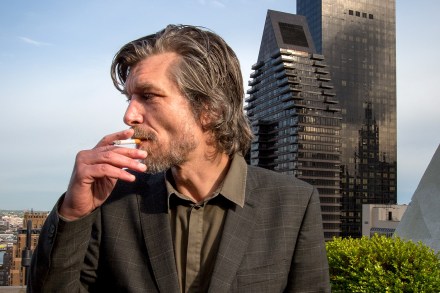
Our hosts are Lauren and Drew and they want to talk about Karl Ove Knausgaard. Or rather, they want to talk around Knausgaard. Or to talk through Knausgaard, towards the sense of what the Knausgaard phenomenon means. Or, it sometimes seems, they want to talk about everything but Knausgaard — cigarettes, Constance Garnett, the history of literary criticism, to what extent hotness is a function of tallness, Clarice Lispector, media hype, backlash, cancel culture, sneakers, Gen X, how Geoff Dyer got where he did — until the only territory left uncovered by the conversation is Knausgaard himself, described only through omission, in negative outline, raising yet another cigarette to his smoldering, craggy face.

knausgaard struggle

Does the SNP really want to copy Norway’s gender revolution?

From our UK edition

Five years ago, in June 2016, Norway allowed anyone to change their legal gender. Legislative Decree 71 was everything that the gender identity brigade would like to introduce in the UK: no diagnosis, no medical reports, pure self-identification. The age limit was set at six years old, providing the child has at least one parent's consent. This matters to the UK. Self-identification may be off the table at Westminster but it remains a live issue at Holyrood where Nicola Sturgeon’s government seems determined to force it through.

How border closures halted Covid-19 in Finland

From our UK edition

Back in April, I listed five measures governments can take to prevent the spread of Covid in order to prevent any need for economically devastating lockdowns, drawing on the experience of some Asian nations. Four of the measures (test and trace, healthcare capacity, facemasks, and good communication about distancing) have all proven their worth, but the fifth may be the most important of all: imposing border checks in time. That’s exactly what Taiwan did well. It has managed to keep its number of Covid cases down to just 842, with a population of nearly 24 million, by halting flights from China early on and implementing strict quarantine rules.

The farce of the Nobel Peace Prize

From our UK edition

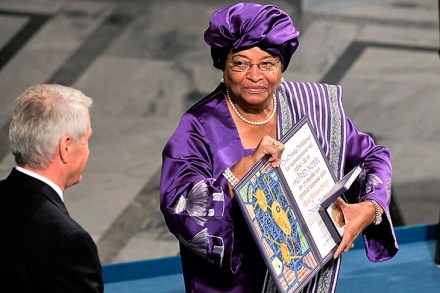
Betraying the Nobel opens with a detonation from Michael Nobel, Alfred’s great-grandnephew. The vice-chairman and then chairman of the Nobel Family Society for 15 years, Michael believes that the Nobel Peace Institute has betrayed the ‘original conditions of Alfred Nobel’s will and intentions’. Its selection process is ‘very sketchy’ and its committee of Norwegian parliamentarians reflects the balance of power in their parliament. Its awards follow ‘personal interests’, ‘political and national considerations’ and ‘human rights or global warming’, all of which have ‘little or nothing’ to do with Alfred Nobel’s bequest. The Prize was a dynamite idea when it was founded in 1900.

Was the EU ever going to offer Britain a good deal?

From our UK edition

The announcement that Brexit negotiations are set to continue will no doubt alarm Brexiteers who fear compromise, sell-out and fudge. In fairness to Brussels however, they set out their stall early on and stuck to the script. The EU is unwilling – as they see it – to let Britain have its cake and eat it, by having large access to the EU’s market while not being a member or leaving the club and not ‘paying a price’. This might explain what could otherwise be seen as an unduly recalcitrant attitude. It also explains why any deal which the EU agrees to is likely to be on its terms. The level playing field has proved a major source of disagreement.

Time to crush China’s Arctic influence

Eyes are opening to the evil of the authoritarian Chinese regime that represses its people, genocides entire cultures, and influences investments and policy all over the globe. As most of the world is under coronavirus lockdown, the Chinese Communist party detains hundreds of thousands (if not millions) of Uighur Muslims in concentration camps in east China. Not to mention the brutal occupation of Tibet, where China is also allegedly responsible for the massacre of hundreds of thousands of Tibetans over the last 70 years due to its brutal occupation.The CCP’s mishandling of the viral contagion from Wuhan may have exposed its obsession with power at all costs, but its next, greater threat is still developing in the shadows: imperialism.

arctic

Outsider art | 21 February 2019

From our UK edition

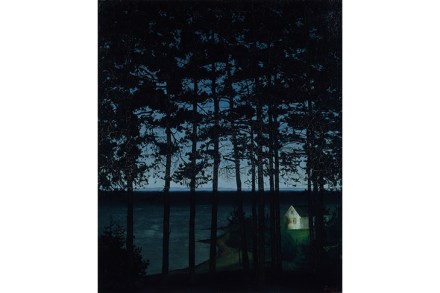
If you’re tired of hygge then you’ll like Harald Sohlberg. The Norwegian painter  eschewed the cosy fireside for the great outdoors, eager to see what view might greet him as he wandered the woods and country roads of Norway in the failing light. While his contemporary Nikolai Astrup filled his landscapes with people, Sohlberg preferred to bring nature to the fore, at once unnerved and mesmerised by its power. He excelled at depicting the scene just stumbled upon or left behind. In ‘Summer Night’ (1899), a table is set for two on a veranda overlooking the Kristiania Fjord off what is now Oslo. The glasses are half full, the fruit sliced but abandoned, the door of the house ajar. Have the diners slipped inside? Then look at the sunset they are missing.

Echoes of The Tempest…

From our UK edition

‘I should not have gone back to the island but I did it all the same.’ So begins the Swedish author Steve Sem-Sandberg’s brief, dark and wonderfully atmospheric 12th novel, The Tempest. Islands play a special role in our literary imagination. They are crucibles, havens, prisons and escapes, places of magic and mysterious transformation, worlds that can be shaped and owned. There is a rich history of island-writing, from D.H. Lawrence to J.M. Barrie, Compton Mackenzie to Aldous Huxley, William Golding to John Fowles. Behind them all sits Shakespeare’s late, troublesome, self-reflexive play of creativity and destruction, forgiveness and retribution. Sem-Sandberg’s island is one of a small archipelago sitting in a fjord on the Norwegian coast.

Why the Norway model wouldn’t work for Britain

From our UK edition

In the corridors of Westminster and the salons of some remainers, there is a lot of excited chatter about the “Norway option”. This would involve being a member of the EEA and single market, but not of the EU. Depending on who is pushing, Norway is presented as either a temporary or permanent alternative to Theresa May's troubled deal. But there are problems with this quick fix. The well discussed issue that being in the EEA doesn’t end freedom of movement is one; another is the fact that the Norway option doesn't end EU budget contributions. But more fundamentally, few appreciate just how a regime that (sort of) suits Norway is completely unsuitable for the UK.

The faulty logic of a ‘Norway for Now’ Brexit

From our UK edition

The campaign ‘Norway for Now’, an idea promoted by Nick Boles, is that Britain should join the European Economic Area and EFTA, until such time as we can move further out of the EU, for example with a Canada-style free-trade deal. This is what Norway and Iceland and Liechtenstein do. The idea sounds nice as a friendly and temporary compromise. But in fact the psychology is wrong. Such arrangements were devised more as an entry chamber to full membership (which is what Norwegian elites still want) than as part of an exit strategy. The Norwegian Prime Minister is now making this point. The point of Leave is to escape the gravitational pull of Brussels. Why make self-contradictory efforts to stay in the orbit and leave it at the same time?

The Spectator’s Notes | 1 November 2018

From our UK edition

At the Brexit-related cabinet last week — as revealed by James Forsyth in these pages — David Lidington made an intervention in support of the Prime Minister’s approach to the negotiations. He was, he said, the only person present who had been an MP at the time of ‘Black Wednesday’, when the pound fell out of the ERM on 16 September 1992. It had been so disastrous and divisive, he went on, that the government must at all costs avoid a repeat over Brexit. Many heads nodded sagely. Mr Lidington, a moderate and public-spirited man, was quite right about the pain caused to his party 26 years ago; but the interests of the Tories and of the nation are not necessarily the same thing.

The lady vanishes | 15 March 2018

From our UK edition

‘Close your eyes and be absorbed by the storytelling,’ urged Jon Manel (the new head of podcasting at BBC World Service) as we settled into our chairs. We were just about to hear the ‘world première’ of the latest podcast from the BBC World Service, launched dramatically in the Radio Theatre at Broadcasting House in front of a packed, expectant audience, with full surround sound, every raindrop magnified (and there was a lot of it). It was odd to realise quite how far podcasting has already transformed radio.

The Norway model: a new approach to immigration and asylum

From our UK edition

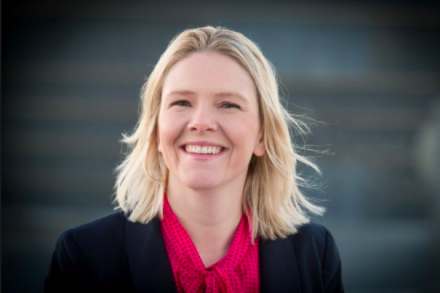
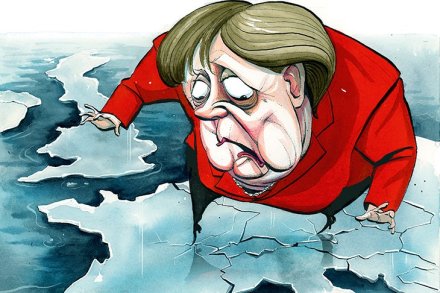
Germany is this weekend seeing whether or not Angela Merkel will be able to form a government as she deals with the political fallout from her immigration policy. Quite a contrast from Norway, whose Conservative-led coalition recently entered its second term after taking a very different approach to refugees. Last week I met Sylvi Listhaug, who holds a recently-created position: Norway's Minister for Immigration & Integration. She’s with the Progress Party, the junior partner in coalition. You often read about her being 'outspoken' or 'controversial' and I was interested to see what kind of radical views she holds. At the end of the interview, I was left wondering if her take on refugee policy is actually further-sighted and more morally defensible than the Merkel approach.

Tough love | 23 November 2017

From our UK edition

When Angela Merkel invited refugees to Germany in 2015, tearing up the rules obliging migrants to seek asylum in the first country they arrive in, the consequences were pretty immediate. Over 160,000 went to Sweden, leading to well-publicised disruption. Next door, things were different. Norway took in just 30,000; this year it has accepted just 2,000 so far. To Sylvi Listhaug, the country’s young immigration minister, this might still be a bit too much. ‘We have a big challenge now to integrate those with permission to stay in Norway to make sure they respect Norwegian values,’ she says. ‘Freedom to speak, to write, to believe or not to believe in a god, how to raise your children.’ Also, she says, what not to do.

The Spectator Podcast: Merkel’s crack-up

From our UK edition

On this week’s episode, we look at the situation in Germany, and whether Angela Merkel can hold things together. We also speak to Norway’s immigration minister, and discuss the dying art of cottaging. After 12 years as Germany’s chancellor, Angela Merkel is this week facing the worst crisis of her premiership. Coalition talks collapsed after the Free Democrats walked away from negotiations with Merkel’s Christian Democrats. So where does this leave Germany? In the magazine this week, William Cook calls the situation ‘uniquely damaging’, whilst James Forsyth outlines the implications for Brexit. James joined the podcast, along with Thomas Kielinger, London correspondent for Die Welt.

Speech therapy

From our UK edition

Oslo opened in the spring of 2016 at a modest venue in New York. It moved to Broadway and this imported version has arrived at the National on its way to a prebooked run at the Harold Pinter Theatre. It’s bound to be a hit because it’s good fun, it gives a knotty political theme a thorough examination, and it’s aimed squarely at the ignorant. In the early 1990s Norwegian diplomats set up ‘back-channel’ talks between the PLO and Israel. The play follows that process and it treats geopolitics like a flat-share comedy. The bickering partners are hauled in by the lordly Norwegians and forced to hammer out their differences around the table. Play-goers need have no prior knowledge of Israel and its fraught relationship with the Palestinians.

Norway’s noir

From our UK edition

Valkyrien (C4, Sunday) is the hot new Scandi-noir series, which is being billed as Norway’s answer to Breaking Bad. In this case, the anti-hero having his mid-life crisis is a brilliant surgeon called Ravn (Sven Nordin). He has become disenchanted with The System because the fancy hospital where he works won’t let him use the potentially life-saving treatment he has devised on his dying wife. (It might kill her, they say — which Ravn, quite understandably, considers a ridiculous, faux-ethical excuse.) So off he goes to sulk in his Batcave — a disused nuclear bomb shelter, accessible via an underground station — for what will no doubt be a series of clandestine medical adventures, using equipment he has nicked from his old lab.