Northern ireland

Portrait of the week: More Brexit chaos, royal complaints and Syrian fighting

From our UK edition

Home The Commons voted by 329 to 299 for a Brexit Withdrawal Bill but then stymied progress by defeating a timetable for enacting it by 31 October. Donald Tusk, the President of the European Council, immediately favoured a delay for Brexit. Downing Street called for a general election. Sir Oliver Letwin had torpedoed the government’s Brexit endeavours by amending a motion that had been intended to secure the Commons’ ‘meaningful vote’ for the withdrawal agreement triumphantly secured from the EU by Boris Johnson, the Prime Minister, only three days earlier.

Can giving voice to the horrors of the past re-traumatise?

From our UK edition

It is 50 years since Ronald Blythe published Akenfield, his melancholy portrait of a Suffolk village on the cusp of dramatic change. Akenfield was actually a composite of two real villages, Charsfield and Debach, and Blythe’s oral history was a patchwork created from about 50 conversations — with figures including a pig-farming colonel, the over-stretched blacksmith and a rural dean who reported residents being ‘blunted and crushed by toil’. It was an unsparing vision of rural poverty, yet also a homage to disappearing ways of life and the virtues of small communities. Last Saturday’s Akenfield Now, on Radio 4, followed local sixth-former Anna Davies as she surveyed the landscape afresh.

Boris has compromised, not conquered on Brexit

From our UK edition

Reflecting on Boris Johnson’s Brexit deal, I have many questions. Why are people who rejected the possibility of Northern Ireland being subject to EU rules and regulation via a contingent backstop now embracing the certainty of that happening? How could anyone reasonably expect the DUP to sign up to something that really does make Northern Ireland a very, very different part of the Union? Something they were repeatedly promised would never be conceded. Why are none of the people who used to be furious about the '£39 billion' (actually less now but never mind) objecting to paying it now? Why shouldn’t MPs have at least a superficial analysis of the economic trade-offs made in this deal?

The Yellowhammer report is nothing like a real contingency plan

From our UK edition

The latest Operation Yellowhammer disclosures put me in mind of a book I read a few years ago describing an unsettlingly plausible zombie outbreak in Britain. When the streets were too full of undead shamblers for the government to ignore, the Home Secretary asked officials who were barricaded in his office for the contingency plan to deal with this apocalypse. He was handed one sheet of A4 on which was simply written, ‘run away screaming.’ I wonder whether Michael Gove had anything much more coherent to rely on when he took up the reins at the Cabinet Office at the back end of July and asked for the latest no-deal arrangements?

The false equivalence between victims and perpetrators of the Troubles

From our UK edition

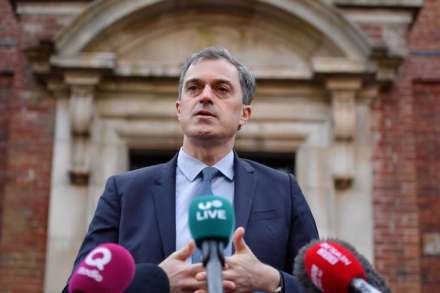
Julian Smith used to have the unenviable task of being Theresa May's chief whip. As the newly-appointed Secretary of State for Northern Ireland, he now has an even harder job. Wrangling unbiddable MPs pales into insignificance when arbitrating the causes and consequences of a brutalised polity. Members of Northern Ireland’s devolved government still refuse to sit with each other and the legislative assembly is defunct. The police service is chased off Northern Irish housing estates by teenagers and regularly targeted for murder by dissident republicans. Putrid commemoration of dead terrorists saluted by gunfire and sinister paramilitary parades barely raises an eyebrow.

Northern Ireland, gay marriage and the great liberal power-grab

From our UK edition

Yesterday, the Welsh government announced new guidelines to make school uniforms gender-neutral, which would mean an end to trousers being advertised for boys and skirts for girls. You can imagine the outrage if the UK government now tried to over-ride that decision, saying it was a load of silly nonsense. The rumblings in Cardiff would bring down a building or two: how dare you interfere with the decisions of Wales’ democratically-elected government, would come the cries. And they would have a point. When the Welsh voted – very narrowly – for devolution in 1997 that was that.

A deadly romance

From our UK edition

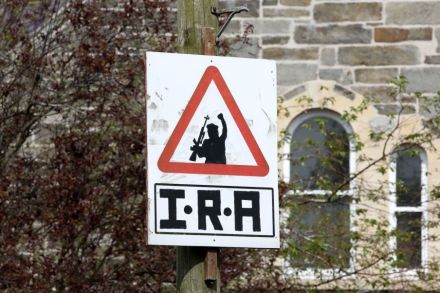
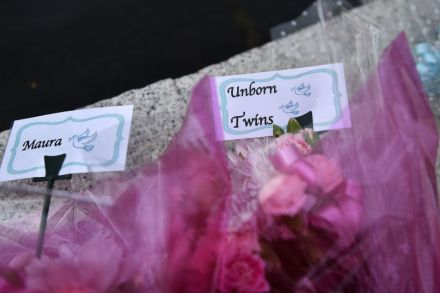
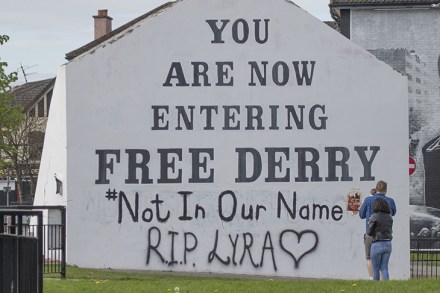
For those of us who grew up in Northern Ireland during the Troubles, there is a pungent but negative sense of time travel around New IRA statements. The New IRA spokesman is a ‘T. O’Neill’ — which, you might notice, is just a consonant and some bad blood away from the old Provisional IRA spokesman ‘P. O’Neill’ — and his sonorous words, like those of his predecessor, are carefully crafted to mask a sad, nasty reality. The most recent one, in the aftermath of the New IRA murder of the journalist Lyra McKee, offered an ‘apology’ which stated that ‘in the course of attacking the enemy Lyra McKee was tragically killed while standing beside enemy forces’.

Forget the backstop. Business is doing what it does best: making decisions and investing

From our UK edition

With 31 working days until negotiations time out, Theresa May has been selling her vision for post-Brexit Britain to businesses in Northern Ireland. The Prime Minister is hoping her visit will reaffirm the government’s commitment to thwarting any chance of a hard border and sell an agreement that Northern Ireland can get behind, all the while searching for the key to unlock the Westminster stalemate. Those addressed by May – a business community in Northern Ireland that has endured years of uncertainty on the future of trade with their neighbours – has thus far been drowned out by the political noise. Yet while our politicians talk, businesses in Ireland have been quietly doing what they do best: making decisions and going for growth.

Brexit is making Tories unforgivably careless about the union

From our UK edition

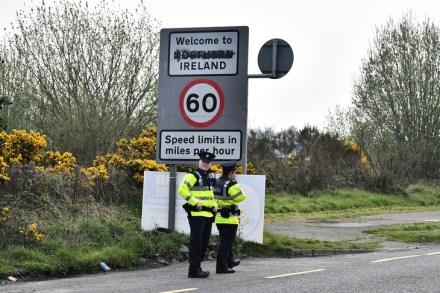
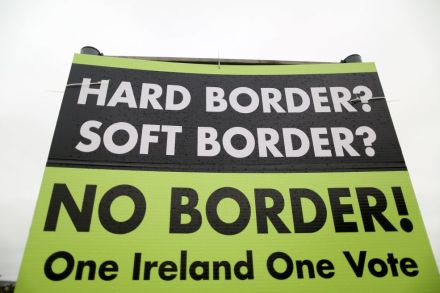
On Saturday, a car bomb went off in the UK. In Londonderry, Northern Ireland, to be exact. It was the latest in a long, long list of terrorist-related incidents in Northern Ireland, many of them carried out by men who wish to unite the island of Ireland in one state. Today, the European Commission stated, more bluntly than it ever has before, that Britain leaving the EU without a deal will mean a hard border between the EU (Ireland) and the UK (Northern Ireland). That means checkpoints and men in uniform policing the physical division of the island of Ireland. Let us, if such a thing is possible, set aside questions of whether that hard border is truly inevitable in a no-deal exit. Let us also set aside any questions of blame for the prospect of that hard border.

It makes sense to keep Northern Ireland inside the customs union

From our UK edition

Sir: What James Forsyth calls ‘the EU plan’ to keep Northern Ireland in the customs union after Brexit (‘The Irish problem’, 20 October) would no more ‘ease Northern Ireland away from the UK and push it more towards Dublin’s orbit’ than it has already done itself through numerous legislative differences. With regard to social issues such as abortion and same-sex marriage, Northern Ireland is far closer to the Republic (as it once was) than to the rest of the UK. It would therefore be no great stretch to avoid awkwardness of land border checks (and respect the spirit of the Good Friday Agreement) by having such checks at the sea ports.

The Spectator’s Notes | 25 October 2018

From our UK edition

Mrs May says she is taking her stand on the issue of Northern Ireland and the integrity of the United Kingdom. If so, good; but it cannot be the whole truth. After all, she surrendered on the Irish border issue in negotiations last December until, at the very last minute, the DUP forced her to row back. I think the irreducible core of her position is something which she does not fully disclose: that she is determined to keep Britain in the customs union, though perhaps only approximately and certainly by another name. This cannot work, surely, because to the EU it is ‘cherry-picking’ and to the Brexiteers it is BRINO, but there must be a reason why she revives it each time it is stamped on.

The greatest obstacle to a Brexit deal

From our UK edition

The UK and the EU are playing a dangerous game of chicken over the Irish border, I say in The Sun this morning. There has been almost no progress on this issue over the summer and without a deal on it, there can’t be a withdrawal agreement. One of those involved in the negotiations on the British side tells me, the EU ‘believe we will blink first’. But that won’t happen. One Brexit red line that Theresa May is adamant she’ll never cross is her insistence that no British PM could sign the EU’s proposed text on the Irish border, which would see Northern Ireland become part of the customs territory of the EU. Michel Barnier, the EU’s chief negotiator, is prepared to produce a de-dramatised version of the backstop.

Karen Bradley’s bid to break Stormont’s deadlock could pay off

From our UK edition

Karen Bradley, Secretary of State for Northern Ireland, would not, perhaps, win prizes for her in depth knowledge of sectarian politics in her patch – in an interview for the House magazine she said she had never realised that nationalists don’t vote for unionists, and vice versa (though that, actually, may change, given how Sinn Fein’s pro abortion, pro gay marriage gives Catholic voters the creeps) – but she’s on the ball in one respect.

Dumb and dumber | 12 July 2018

From our UK edition

The Lieutenant of Inishmore is a knockabout farce set during the Troubles. Like Monty Python’s dead parrot sketch it uses the expiry of a pet to examine human obsessiveness and self-delusion. But it takes two hours rather than three minutes to make its point. We meet a handsome terrorist, Padraic (Aidan Turner), whose adoration of his black cat symbolises his crazed devotion to republicanism. The cat is accidentally run over by Davey, an amiable twerp on a bike, who must find a new cat or face reprisals from the insanely brutal Padraic. Donny, Padraic’s dad, offers to help Davey and they borrow a ginger cat, which they blacken with boot polish. That’s the level of narrative ingenuity here: children’s television.

Life matters

From our UK edition

Predictably enough, there have been no calls this week for the Irish referendum on abortion to be re-run, no complaint from Ken Clarke about the ‘-tyranny of the majority’, no moaning that the campaign had been in any way unfair. Neither should there have been. The Irish people have made a fair and democratic choice and the result should be respected. Less respect seems to have been forthcoming, however, for the views of the Northern Irish on abortion. On the contrary, no sooner was the result from south of the border announced than the calls began for the government in Westminster to impose its will on Northern Ireland and liberalise the province’s abortion laws.

Why is Corbyn cosying up to Northern Ireland’s unionists?

From our UK edition

How serious are Jeremy Corbyn and the Corbynites about winning power? Deadly serious, if the remarkable tactical flexibility he displayed on his first official visit to Belfast as leader of the Labour Party is anything to go by. Corbyn took care to genuflect not just to nationalist idols such as Gerry Adams, Martin McGuinness and John Hume, but also to three Unionist big beasts – Arlene Foster, Ian Paisley Sr and David Trimble. The Labour leader has not suddenly become a “revisionist” in the affairs of Northern Ireland, which to this day remains one of his longest-lasting and deepest ideological commitments.

Shami Chakrabarti can’t have it both ways on Northern Ireland

From our UK edition

Never one to shy away from a platitude, the shadow attorney general, Shami Chakrabarti, has declared that the PM must reform abortion law in Northern Ireland on the basis that women there “have been let down by privileged women and men for too long” and that, so far as Theresa May is concerned, “the test of  feminists is whether they stick up for all women”. So far as this woman is concerned, I’ve been trying to work out the logic of these observations in terms of the abortion question and failing, so let’s just give up and cut to the chase.

Could direct rule solve Northern Ireland’s political crisis?

From our UK edition

Power-sharing talks at Stormont have dramatically collapsed again. This is a shock to many in Northern Ireland, where an apparent thawing in the relationship between the DUP and Sinn Fein led to speculation that the announcement of a deal was imminent. Instead, the stasis continues. Northern Ireland has now been without a functioning government for just over 13 months, since Sinn Fein first plunged Northern Irish politics into limbo by pulling out of their pact with the DUP in January 2017. The reason for their decision to back out of the power sharing agreement was Arlene Foster's apparent complicity – which she has denied – in the botched 'cash for ash' scandal.

Old hat | 25 January 2018

From our UK edition

These days, when it comes to people who used to be on the telly, the answer to the classic newspaper question ‘Where are they now?’ tends to be a fairly predictable one: they’re still on the telly — if, that is, you look carefully enough. They’re also quite likely to be travelling abroad with a few of their peers while wearing a large hat. The BBC started the trend — possibly even the genre — with The Real Marigold Hotel. ITV has provided the weirdest example so far, with Gone to Pot, in which the likes of Christopher Biggins and Pat Butcher from EastEnders investigated the legalisation of marijuana in California by smoking bongs and giggling a lot.

The Spectator’s Notes | 7 December 2017

From our UK edition

I’m afraid I have a deep faith in the Democratic Unionist Party’s capacity to cede an issue of principle in return for more gold, baubles, Renewable Heat Incentives etc. It may well give in, after receiving some bung, in a few days. But its resistance, at the time of writing, to the idea of ‘regulatory alignment’ with the Republic, seems wholly justified. This is not a pernickety matter solely for the province — it should apply just as much to the entire United Kingdom. If we agree to align trade rules with EU ones (as opposed to each recognising the other’s rules), we are sacrificing the economic point of Brexit, which is competitive advantage.