Northern ireland

Northern Ireland isn’t impressed with Theresa May

From our UK edition

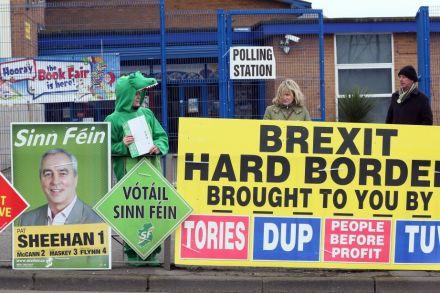
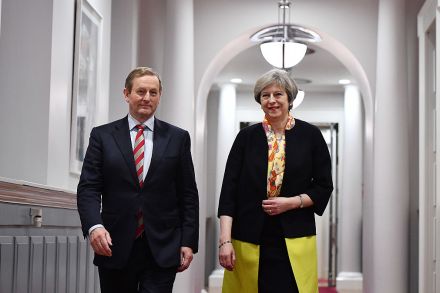
Theresa May has been continuing her UK-wide tour to convince voters in all corners of the country to back the Conservatives. This weekend saw the Tory campaign machine make a whistle stop tour in Belfast. The Prime Minister attended a local agricultural show and talked to farmers and families about why they must support the party. So far, so uncontroversial. All Prime Ministerial candidates seeking election or re-election make the customary stop on the far side of the Irish Sea to make a pitch to Northern Irish voters. This time, however, Theresa May's trip has unleashed anger among both voters and politicians in Northern Ireland. Her attempt to charm locals has backfired spectacularly.

Letters | 4 May 2017

From our UK edition

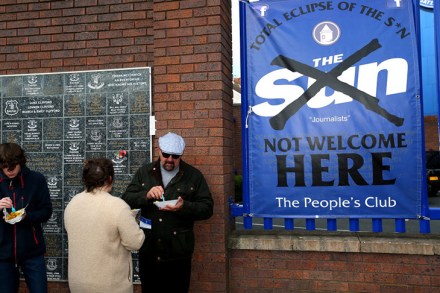
Liverpudlian censorship Sir: I enjoyed Kelvin MacKenzie’s Diary (29 April). The obloquy thrown at him after his criticism of Everton footballer Ross Barkley would be laughable if it were not for the unpleasant undercurrent on Merseyside now. His remark was football banter, not a racist slur as the mayor of Liverpool, Joe Anderson, has alleged. What the mayor (or ‘Fat Joe’, as he is known) has failed to do is speak up for free speech. It is — and I deeply regret to say this about my home town — a scandal that newsagents in Liverpool are threatened by violent thugs if they stock the Sun. There was a ‘Ban the Sun’ campaign in Liverpool before Hillsborough, run by trade unions which opposed Wapping. For a long time the campaign was in decline.

The EU has gifted the Republican cause a blueprint for a united Ireland

From our UK edition

Theresa May's awkward dinner date with Jean-Claude Juncker stole the headlines, but there was another Brexit development that passed with much-less fuss: the European Union's plan for Ireland to reunite after Brexit, which it inserted quietly into its negotiating guidelines. Few in Britain paid much attention to it. Across the Irish Sea, it was a different story. Among Catholic communities, there is growing hope that Brexit could be the issue which finally sees partition end on the island. Yet within Protestant communities, there is a growing fear that the EU is using Brexit as a tool to sneak through Irish reunification. The British government appears to be doing precious little to stop it.

The Irish problem | 20 April 2017

From our UK edition

When David Cameron called his Brexit referendum, the potential difficulty of Northern Ireland was not uppermost in his mind. Nor does it seem to have worried Theresa May greatly when she announced a snap general election this week. Even before this fresh electoral battle, Northern Ireland’s politics were already — to paraphrase Sean O’Casey — in ‘a terrible state of chassis’. Perhaps May thought the existing chassis in Belfast couldn’t get any worse. On reflection, I’m not so sure. The last Assembly election in March left the DUP and Sinn Fein, the two tribal behemoths, delicately balanced on 28 and 27 seats respectively. Unionists lost their overall majority.

The general election is a disaster for Northern Ireland

From our UK edition

There's little enthusiasm just about anywhere for this summer's snap general election, and no more so than in Northern Ireland where voters' growing apathy is mixed with a feeling of dread. Saying that politics in Northern Ireland is rarely straightforward or smooth is something of an understatement. But the timing of this summer's election could not be worse for the country: the peace process is currently navigating its way perilously through one of its most difficult periods since 1998's Good Friday Agreement. While the stasis which is paralysing Stormont shows no signs of ending: four months on since power-sharing collapsed in the region, the parties are yet to resolve their issues and agree to return to government. Attempts at resolution have had next to no success.

Theresa May is right to be troubled about the prospect of Irish reunification

From our UK edition

Amidst the apparent chaos in the days after the Brexit vote, one important story largely slipped under the radar. Now, the demand issued by Sinn Féin for a border poll on reunification of Ireland is resurfacing. Admittedly, back in June, it was difficult to know how much attention to pay to such a demand. Irish reunification is, after all, the entire purpose of the Irish Republican party. However, in the months since the referendum, the peripheral possibility of Irish reunification is starting to move centre stage. And the old platitude from Sinn Féin is morphing into a growing and credible movement on both sides of the Irish border. But it's not only Sinn Féin who are pushing for Irish reunification in the wake of Brexit.

James Brokenshire is out of his depth as Northern Ireland Secretary

From our UK edition

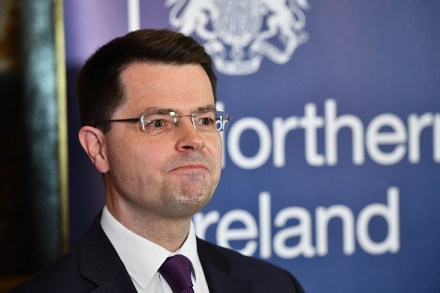
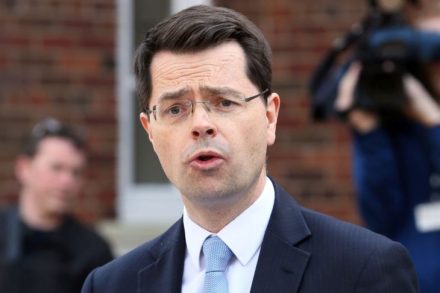
There is a saying that whoever the Prime Minister hates, they appoint as Northern Ireland Secretary. James Brokenshire, Theresa May's unlucky pick for the job, had three options yesterday: a new election, direct rule, or a fudge. When the clock struck 4pm, three weeks after Northern Ireland's election, there was only one option: it was always going to be the Irish fudge.  James Brokenshire had tried valiantly to maintain the fiction, which no one believed, that at 4:01pm yesterday he was prepared to fire the starting pistol of Northern Ireland's third assembly election in a year. It wasn't a credible threat, and people in Northern Ireland have a way of telling the one from the other.

What the papers say: The perks – and pitfalls – of Brexit

From our UK edition

The clock is ticking. At 12.30pm tomorrow, Theresa May will be on her feet in the Commons declaring that Article 50 has been triggered. Finally, nine months after the referendum, Britain will be heading out of the EU. The moment itself is likely to be underwhelming and we’re unlikely to find out much more of the Government’s actual Brexit plan. But already the Daily Telegraph has some suggestions. This is the perfect moment for asking: ‘What type of country do we wish to be at the end of that journey?’, the paper says. Yes, Brexit is about ‘reclaiming sovereignty’.

James Brokenshire plays for time in Northern Ireland. Will it work?

From our UK edition

The Northern Ireland Secretary James Brokenshire is playing for time. In a statement made after the 4pm deadline for forming an executive in Northern Ireland was missed, Brokenshire said that he was giving the parties a few more weeks to try and reach a deal. He justified this on the basis that there is no enthusiasm for either early elections or direct rule from Westminster. But even with more time, it is hard to see how an agreement can be reached. Sinn Fein, post Martin McGuinness, is far more determined to cause mischief and senses a Brexit moment of opportunity. This means that it is not keen on joining a power sharing executive. For their part, the DUP are not prepared to drop their leader Arlene Foster after the ‘cash for ash’ scandal.

The Spectator’s notes | 23 March 2017

From our UK edition

We keep being incited to find it heartwarming that Martin McGuinness and Ian Paisley were known as the Chuckle Brothers. But what were they chuckling about? Their shared success at outwitting the British state. Both, though for opposite reasons, had made their careers out of harassing Britain, and both, in their later years, had acquired money, power and status by doing so. In the case of McGuinness and his gang, Britain greatly underplayed its hand. Having militarily beaten the IRA, successive British governments could have marginalised them, but instead they accepted them as authentic representatives of the Irish people who had to be included in any settlement. The process for doing this systematically disadvantaged the moderates and bigged up the thugs.

What’s That Thing? Award for bad public art 2017

From our UK edition

Imagine climbing the hills that surround Belfast and stumbling upon this 11-metre-high steel bollock. ‘It will be visible from a number of different points throughout the city,’ coos the Arts Council. Haven’t the people of Northern Ireland suffered enough? ‘Origin’ is the winner of our second What’s That Thing? Award for the worst new public art of the past year. The creators claim the six-metre ‘raindrop’ stuck on top of a five-metre pole represents the ‘elegant flow’ of the Farset River and ‘appears to hover’. Hover? Do you think they know what the word means? Clumsy, aggressive, cheap-looking (despite costing £100,000), it’s the very opposite of a raindrop.

Lest we forget | 23 March 2017

From our UK edition

I never met Martin McGuinness, but I was certainly affected by him from an early age. His decisions, and those of his colleagues on the IRA Army Council, indelibly coloured my childhood. Belfast in the 1970s and ’80s was a grey, fortified city, compelling in many ways, but permanently charged with the unpredictable electricity of violence. Our local news steadily chronicled the shattering of families, in city streets and down winding border lanes that were full of birdsong before the bullets rang out. There were regular, respectful interviews with pallid widows and dazed widowers, and funerals attended by red-eyed, snuffling children tugged into stiff, smart clothes to pay formal respects to the end of family life as they had known it.

What Martin McGuinness’s eulogisers would like to forget

From our UK edition

I never met Martin McGuinness, but I was certainly affected by him from an early age. His decisions, and those of his colleagues on the IRA Army Council, indelibly coloured my childhood. Belfast in the 1970s and ’80s was a grey, fortified city, compelling in many ways, but permanently charged with the unpredictable electricity of violence. Our local news steadily chronicled the shattering of families, in city streets and down winding border lanes that were full of birdsong before the bullets rang out. There were regular, respectful interviews with pallid widows and dazed widowers, and funerals attended by red-eyed, snuffling children tugged into stiff, smart clothes to pay formal respects to the end of family life as they had known it.

What the papers say: Why we shouldn’t mourn Martin McGuinness

From our UK edition

Martin McGuinness’s death has sparked a wave of fawning and fury in the obituaries. So: ‘man of war’, peacemaker or something in between? The Sun’s verdict is clear: the ‘pious praise’ for McGuinness is nothing short of ‘revolting’. It’s true, the paper says, that the ‘second part’ of his life differed from his early days. And it’s also the case that McGuinness ‘risked his own neck’ to help bring peace in the end. But to hear the likes of Tony Blair play down McGuinness's role as an IRA commander ‘turns the stomach’. McGuinness might have fancied himself as a ‘folk hero’, but there was ‘nothing noble about this “struggle’, says the Sun.

The morally illiterate obituaries to Martin McGuinness are just what he would have wanted

From our UK edition

Well the obituaries for Martin McGuinness are in. And many are as morally illiterate as the man himself could have wished for. For instance, various obituarists have noted that the young McGuinness’s failure as a young man to get an apprenticeship as a mechanic started him off on the road to terror. Few of these eulogists have noted the many people across continents and generations who also failed to get apprenticeships (often for even more sectarian reasons) and yet strangely refused as a consequence to pick up some pliers and an Armalite and torture and kill their way to political power. Other obsequies have been even stranger. Alex Salmond, for instance – perhaps recognising a fellow nationalist – praised Martin McGuinness as ‘a friend of Scotland’.

‘Cash for ash’ is one green scam among many

From our UK edition

Toffs are like jackals: always quick to sniff out new carrion. I remember a few years back one florid aristo boasting what obscene amounts of money he was saving on his heating bills thanks to a brilliant new government scheme to incentivise wood-burning. ‘Probably no use to you —your house isn’t big enough,’ he said, pityingly. Then he went on to tell me about the solar array on his estate. ‘Makes perfect sense if you’ve got a few acres spare.’ But I haven’t told you the worst of it. The worst was that my friend felt really virtuous. Some might say that here was another well-heeled scrounger with a massive sense of entitlement raking in tens of thousands in subsidies for sitting on his fat arse.

What the papers say: Why ‘Spreadsheet Phil’ is the Chancellor Brexit Britain needs

From our UK edition

You don't earn a nickname like 'Spreadsheet Phil' for being a showman. But is Philip Hammond's powder-dry demeanour and unwavering focus on the numbers actually his strong point? Yes, says the Sun, which suggests the chancellor’s cautious approach is exactly what Britain needs right now. The paper says that whereas Hammond's predecessors would use their Budget announcements to reach for ‘popularity-boosting giveaways’, not so the current incumbent at No.11 who takes a more sensible approach in saying ‘now is not the time for a spending spree’. ‘We couldn’t agree more,’ says the Sun, which warns of ‘greater challenges’ ahead.

Why Northern Ireland’s boiler scandal overheated

From our UK edition

Visiting Northern Ireland last autumn, I met a very prosperous man who enthused to me about the Renewable Heat Incentive in the province. It paid him to install wood-pellet boilers and heat his rural business. After the political scandal broke, I understood why he was so happy. The RHI, as managed in Northern Ireland, had no upper limit, so there was no cheating involved in getting as many non-domestic boilers as you could manage. If you installed the boiler you got paid £1.60 for every £1 of pellets you burned, without limit. I gather there was particularly massive take-up by members of the Democratic Unionist Party, and their Free Presbyterian churches glow red day and night in consequence.

The Spectator’s Notes | 26 January 2017

From our UK edition

The English tradition of dissenting judgments in important civil cases is a good one. They are often better than the majority view, because they tend to be advanced by judges who resist the self-aggrandisement of their profession. In the Miller case on triggering Article 50, before the Supreme Court, Lords Reed, Carnwath and Hughes dissented from the other eight. This is what Lord Reed says: ‘…the argument that withdrawal from the EU would alter domestic law and destroy statutory rights, and therefore cannot be undertaken without a further Act of Parliament, has to be rejected even if one accepts that the 1972 Act creates statutory rights and that withdrawal will alter the law of the land.