Northern ireland

The protocol is hurting Northern Ireland

From our UK edition

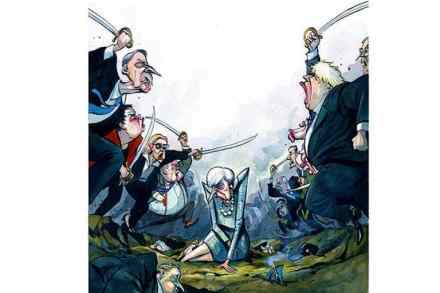
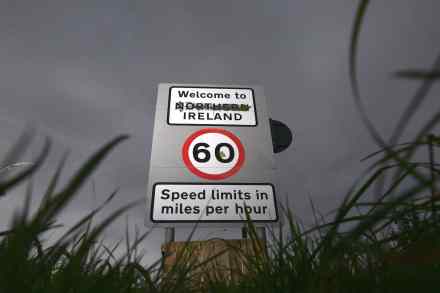
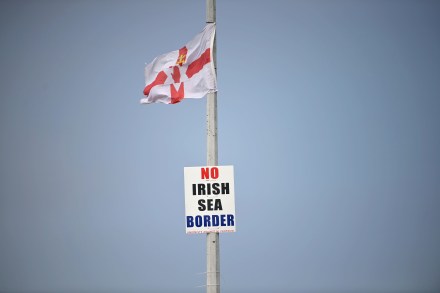
With every sausage war or fish fight over the past 18 months, the chances of survival for the Northern Ireland protocol have narrowed. But the fallout from the NI Assembly elections, which saw Sinn Féin become the largest single party, has made it increasingly likely that the UK will take unilateral action to override parts of the Brexit deal. The protocol has few supporters. Arguably its only redeeming feature was that it allowed Boris Johnson to break the deadlock and conclude the withdrawal agreement. Because a porous land border between the UK and the Republic would have threatened the single market – and a hard border between Northern Ireland and the Republic was unacceptable on political grounds – the Prime Minister compromised.

Portrait of the week: The Queen’s Speech, Sinn Fein surge and an £184m lottery win

From our UK edition

Home The Prince of Wales delivered the Queen’s Speech at the State Opening of Parliament sitting on a throne next to the crown put on a table by Lord Cholmondeley. Prince Charles acted with the Duke of Cambridge as counsellors of state under the Regency Act 1937, since the Queen cannot walk easily; the other two counsellors, the Duke of York and Duke of Sussex, are not seen as fit to act in the role. The Speech mentioned 38 laws to level up, regenerate, bring safety online, secure ‘Brexit freedoms’ in the amending of legislation, regulate railways and ferries, promote heat pumps, prohibit protestors glueing themselves to buildings, deter puppy smuggling and enforce school registers, but nothing to stop the import of fur or foie gras.

Letters: What happened to hymns in schools?

From our UK edition

Disarming by default Sir: Underpinning Rod Liddle’s amusing article on use of nuclear weapons last week is the reassurance provided by our deterrent (‘Will Putin go nuclear?’, 7 May). It is not difficult to imagine Putin’s behaviour if Russia alone possessed nuclear weapons. Our nation has embarked on refreshing the deterrent; and replacement of the four ballistic missile submarines, modifications to missiles and production of a new warhead are at the very limit of our nation’s industrial capability. Despite the US being extremely helpful, the performance of the Atomic Weapons Establishment (AWE) does not inspire confidence. It is crucial that there is sufficient funding, particularly at AWE, over the next ten years.

Sinn Fein’s victory doesn’t mean the end of the Union

From our UK edition

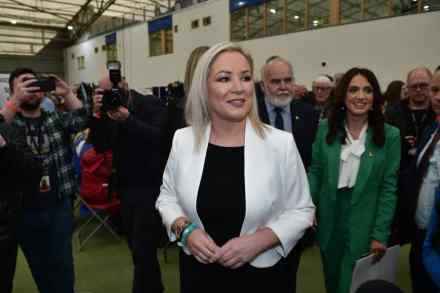
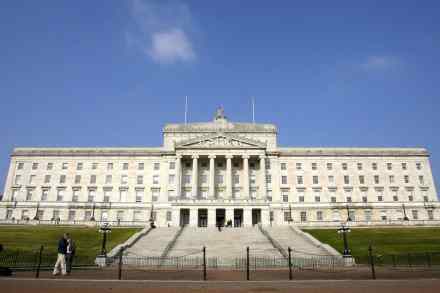
No amount of extra counting later today can undo the seismic shift that has taken place in Northern Ireland’s politics. The first preference votes in Northern Ireland’s devolved assembly elections are in and Sinn Fein are the clear winners on 29 per cent. Sinn Fein – once the political appendage of a terrorist organisation that wrought 30 years of havoc and misery – is set to win the most seats in Stormont. It will then be able to nominate the first ever Republican First Minister. Before Unionists panic though, it’s worth examining the facts. On total votes cast, there will likely be a Unionist majority hidden by the byzantine calculus of the Single Transferrable Vote system which benefits smaller parties.

Miss Brexit? Another bust-up is looming

From our UK edition

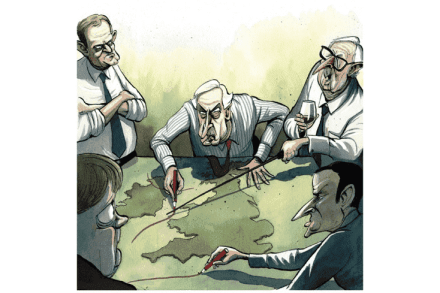
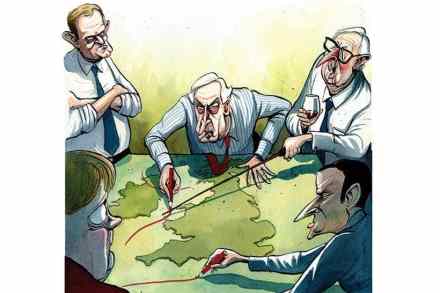
In the past few months, relations between the UK and the EU have been the best they have been since Brexit. Vladimir Putin’s assault on Ukraine reminded the two sides of the need for the world’s democracies to co-operate. It is tempting to hope that relations could continue to improve, especially now that the French presidential election is out of the way. But, as I say in the magazine this week, this is unlikely to happen. The Northern Ireland protocol is about to return to the agenda. The EU thinks that the UK must be made to abide by what was signed, and that allowing London to wriggle out of the letter of its commitments would set a terrible precedent. The British view is that the protocol is causing a crisis for Northern Ireland’s devolved institutions.

Brexit’s potential is beginning to be realised

From our UK edition

The purpose of Brexit was to strengthen Britain’s ties with both the world beyond Europe and with Europe itself, but in a more democratic way that carries popular support. It was clear to Boris Johnson and to the Leave campaign that the EU ideal of free movement of people, an idea forged in the 1990s, had become difficult to reconcile with the reality of the contemporary world. High-skilled immigration made more sense than low-skilled, they thought, and a new system was needed to deal with 21st-century challenges while strengthening national cohesion. Johnson’s critics, naturally, portrayed the supporters of Brexit as xenophobes and knuckle-draggers who were afraid of the modern world and sought to return the country to the 1950s.

EU: normal disservice resumes

From our UK edition

In the past few months, relations between the UK and the EU have been the best they have been since Brexit. Vladimir Putin’s assault on Ukraine reminded the two sides of the need for the world’s democracies to co-operate. Disputes over fishing rights could wait. It is tempting to hope that relations could continue to improve, especially now that the French presidential election is out of the way. But this is unlikely to happen. This week Bruno Le Maire, France’s economy minister, dismissed the suggestion that fixing relations with Britain will be a priority for Emmanuel Macron’s second term.

The Northern Ireland elections could break the Union

From our UK edition

Belfast, Northern Ireland Phillip Brett was just nine years old the night a neighbour called to say his brother, Gavin, had been shot. Their father raced through the streets of their Belfast estate, arriving just in time to cradle his eldest son as he died. The teenager had been celebrating a friend’s birthday at the local Gaelic football club when he was gunned down by a loyalist gang looking for a Catholic to kill. But they got it wrong – Gavin had been raised Protestant, their parents having married across the sectarian lines that once divided Northern Ireland, with friends from all sides of the mixed community they lived in.

Don’t prosecute Soldier F

From our UK edition

Sometimes old grievances are best laid to rest. That was certainly the view of Tony Blair when his government issued nearly 200 ‘comfort letters’ to Irish nationalist gunmen in the wake of the Good Friday Agreement. But a decision by the Northern Ireland High Court on Wednesday will upend that principle, setting back years of compromise and reconciliation. For some time it has been all but impossible to prosecute IRA men for murders committed during the Troubles. British security forces, however, remain vulnerable, although most are now in their seventies and long retired.

Sunak highlights the problem with the Northern Ireland protocol

From our UK edition

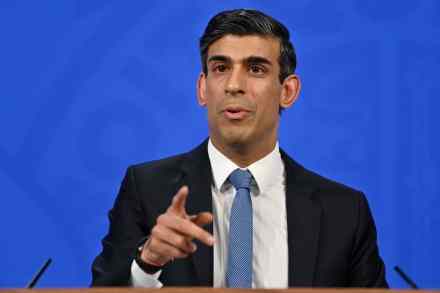
What did we learn from the Chancellor’s spring statement? As James reports on Coffee House, Rishi Sunak’s promise of an income tax cut by 2024 offered a strong indicator of how – and when – the Tories plan to fight the next election. Meanwhile, the OBR’s finding that rising inflation will lead to the biggest fall in living standards since records began in 1950 highlights how even with the new immediate cost of living policies – including a 5p cut on fuel duty – the coming months will be painful for many households. However, aside from cost of living, there was another problem Sunak’s statement highlighted: the Northern Ireland protocol.

Will Westminster ever fix the Northern Ireland protocol?

From our UK edition

Last night’s spat between the Foreign Office and the Treasury was hardly reassuring for Unionists. If you missed it, a Treasury amendment proposed a change to customs regulations where ‘UK’ was replaced with ‘Great Britain’. What’s so bad about that, you might ask. The answer is that it would have codified the carving-out of Northern Ireland as a separate legal entity. This is something that the protocol establishes: Northern Ireland continues to follow EU customs rules while Great Britain is able to diverge. But this breaking off of Northern Ireland is something the government was supposed to be trying to prevent.

Tory unease builds over the Northern Ireland protocol

From our UK edition

Will Boris Johnson ever trigger Article 16 of the Northern Ireland protocol? The Prime Minister has been under increasing pressure to do so from the right flank of his MPs – particularly in the wake of partygate. Conservative MPs have been going into No. 10 with a list of demands in return for their continuing support. However, the situation in Ukraine has moved the dial for many in government.  Foreign Secretary Liz Truss has reportedly backed a delay in triggering Article 16 Foreign Secretary Liz Truss has reportedly backed a delay in triggering Article 16 and instead wants to help Northern Irish businesses with an 'economic stimulus' package, including tax cuts.

Suchet makes Poirot sound like craft beer: Poirot and More, at Harold Pinter Theatre, reviewed

From our UK edition

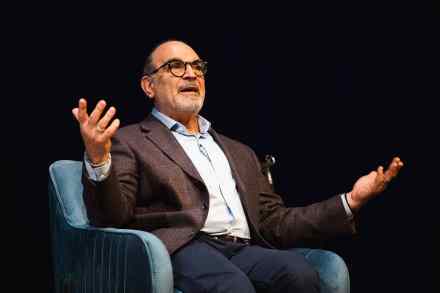
Producers are getting jittery again. Large-scale shows look risky when a single infection can postpone an entire show. Hence Poirot and More in the West End. This is a conversation piece in which David Suchet talks about his career as Agatha Christie’s most celebrated nosy parker. Not much technical rehearsal is needed and Suchet relies on the support of a single performer, Geoffrey Wansell, who feeds him easy-peasy questions. Scrapping the production would hardly cost the earth. The pair are old friends but they seem to be at war in the costume department. Suchet looks like a Blair clone in a dark blue blazer and a white, open-necked shirt. Wansell’s richer plumage stretches to a spotted bow tie and a pair of pink-rimmed John Birt spectacles.

Is this the real reason Lord Frost resigned?

From our UK edition

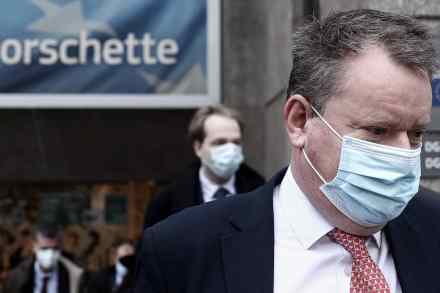
In his resignation letter, the Brexit minister Lord Frost justified his decision to quit by pointing to tax rises and Covid restrictions. But there is another potential reason given the timing. Late last week, the UK conceded that the European Court of Justice could have the final say over the Brexit settlement in Northern Ireland. Frost is a negotiator. It might be that he didn't want to undermine his successor by over-emphasising the scale of the British retreat. Or it could be that he is holding back dissatisfaction with the negotiations for a second broadside at the Prime Minister. But it is a critical development. ECJ oversight was always a red line for Brexiteers. Sovereignty demands that the final arbiter of British law resides in the United Kingdom.

Richard Needham takes a businesslike attitude to the Troubles

From our UK edition

This memoir from Sir Richard Needham, 6th Earl of Kilmorey, businessman and former Northern Ireland minister, has a frank opening: ‘I came from a family of barely solvent aristocrats, who distrusted trade and despised politics. For some inexplicable reason, however, I had always been fascinated by both.’ Although generations of Needhams before him had ‘uneventful’ military careers, at 15 Richard decided upon an alternative plan: ‘I would first make some money, and then enter politics and change the world.’ What follows is the tale of how that scheme played out. The literary quality of political diaries can be hit and miss; but Needham is a skilled storyteller, who can deftly sketch a character or situation in a few pithy phrases.

Could the rise of Sinn Fein lead to a united Ireland?

From our UK edition

The possibility of a political wing of a terrorist organisation becoming a party of government in an EU member state would normally be headline news. But that's precisely what's happening in Ireland.  Sinn Fein is currently enjoying a consistent lead at the top of the polls in the Republic; a recent example from the Irish edition of the Sunday Times shows it had surged by six points to 37 per cent, some distance ahead of Fine Gael and Fianna Fail, currently coalition partners. Public approval of the Sinn Fein leader Mary Lou McDonald — the middle-class Dubliner who described the IRA campaign as 'justified' and mused that there was 'every chance' she would have joined in if she had the chance — is at 50 per cent.

Ripping up the Northern Ireland protocol is diplomacy in action

From our UK edition

Lord Frost’s Lisbon speech represents the most cogent argument yet for replacing the Northern Ireland protocol. So naturally it has been buried under a slurry of snark, solemn head-shaking and breathless indignation. It is worth stepping back from the noise. Switch off the shouty man on LBC, mute the ‘this is not normal’ people on Twitter, and avoid at all costs the catastrophist-analysis of the academic-activists. You will miss nothing. In fact, read Frost's speech for yourself. It was meant to send a message about the protocol and it does so directly. The Irish are our neighbours. It is in both our countries’ interests that we maintain and enhance the ties between us..

David Frost’s protocol diplomacy

From our UK edition

As a general rule in post-Brexit politics, when David Frost makes a public intervention on the Northern Ireland protocol, it tends to dampen rather than soothe UK-EU relations. Frost, charged with improving the protocol, is a divisive figure in Brussels who is seen to catch flies with vinegar rather than honey. His speech was expected to be an escalation in the current war of words between the two sides. In the end, the talk itself was slightly less confrontational than expected. Frost effectively declared the Northern Ireland protocol dead and called on the EU to work with the UK Frost effectively declared the Northern Ireland protocol dead and called on the EU to work with the UK to come up with a new protocol to prevent a hard border on the island of Ireland.

When will the DUP realise the truth about the Tory Brexit strategy?

From our UK edition

Are the Tories serious about getting rid of the troublesome Northern Ireland Protocol? The latest extension to the so-called grace period – the third in recent months – means that plans for post-Brexit checks on some goods entering Northern Ireland have been suspended again. But this isn't the good news you might think it is for unionists in Northern Ireland. In the short term, of course, it avoids a repeat of 'sausage wars' and megaphone diplomacy around the Protocol's Article 16 (which allows Britain or the EU to take unilateral action in certain circumstances). This can only be good news. Yet for nervous unionists there is a disturbing lack of security about what might happen when this grace period does eventually come to an end.

Why are armed men still able to parade around Northern Ireland?

From our UK edition

Is the Police Service of Northern Ireland equal to the task of dealing with the sour, indigestible remnants of Troubles paramilitarism? Events this weekend in an estate on the outskirts of Derry, showing yet more glorification of a terrorist by armed men firing weapons, suggests otherwise. Michael Devine, the man who was venerated by half a dozen goons dressed in black this weekend, starved himself to death in Northern Ireland’s notorious Maze prison in 1981 along with nine other republican prisoners in pursuit of political status. He was also a founder of the Irish National Liberation Army (INLA), one of the most viciously and overtly sectarian paramilitary death squads produced by the Troubles.