Nord Stream

Who believes the latest version of the Nord Stream saga?

If you want to start a myth, make it a good one. Look at Odysseus. Imagine if the old liar had come home stony broke, a decade late, and told his wife: "Sorry, Penny, I got drunk, the ship was repossessed and the crew deserted, I gambled away all my money and I’ve spent the last ten years working in bars to pay my passage home." The tale would not have endured. Penelope would probably have kicked him out and married one of the suitors. It’s more or less the same with the unmysterious sabotage of Russia’s Nord Stream pipeline in September 2022. There’s a perfectly good, prosaic, obvious explanation. The giant undersea tube was able to supply cheap Russian gas to Germany, something the US government has disliked for decades.

Will US businesses profit from a return to the Russian market?

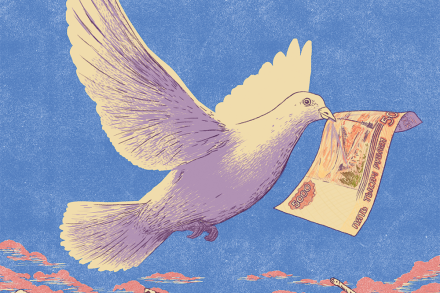
Rome Will peace in Ukraine also prove to be a great deal for US business? Vladimir Putin would certainly like Donald Trump to think so. Within days of Trump’s election victory last November, the Kremlin ordered major Russian corporations to prepare detailed proposals for economic cooperation with Washington. Coordinating these efforts were Maxim Oreshkin, deputy head of Putin’s presidential administration, and Kirill Dmitriev, the US-educated Harvard, Stanford and Goldman Sachs alumnus who heads Russia’s sovereign investment fund.

Should the Nord Stream saboteurs be extradited to Germany?

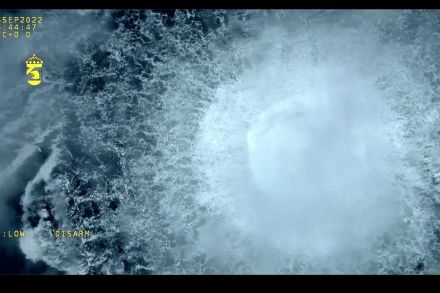
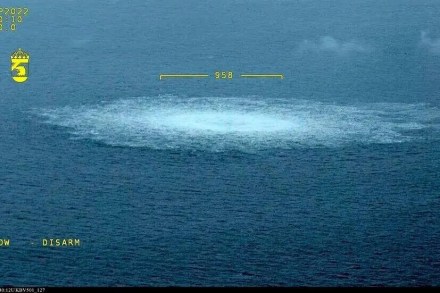
The identity of the saboteurs who blew up the Nord Stream pipelines in September 2022 was for years the western security establishment’s worst-kept secret. Just two weeks after a series of explosions within the economic zones of Sweden and Denmark crippled three of the four undersea natural-gas pipelines linking Russia to Germany, Scandinavian diplomats in Brussels were already being quietly briefed that the most likely culprits were Ukrainian. By January 2023, a forensic investigation by German police had discovered traces of the explosives on board the charter yacht Andromeda and found that the vessel’s movements aligned exactly with the location of the blasts.

Nord Stream

The lesson of 2022: energy is our lifeblood

This has, so far, been a year of hard lessons. Spiraling inflation has given households an expensive economic refresher course. A land war in Europe has offered an unwelcome reminder of old geopolitical and military truths. But arguably the most important lesson of 2022 concerns the point at which these economic, military and geopolitical considerations converge: energy. On this vital issue, the West has suffered from an epidemic of amnesia in recent years. Too often energy security has either been taken for granted by policymakers and voters, for whom the last energy crisis had become a distant memory, or actively disparaged by an environmental movement whose hardline hostility to fossil fuels has become received wisdom in polite circles.

Who REALLY blew up the Nord Stream pipelines?

Four days have passed since the Nord Stream pipelines mysteriously ruptured in the Baltic Sea, just outside of NATO territory. Sabotage is suspected. Many in the West blame Vladimir Putin; others, such as Tucker Carlson, Radek Sikorski and, er, Vladimir Putin, blame America. But to truly solve this mystery, Cockburn thinks circumstances require us to cast the net a little wider. Here are some potential saboteurs deserving of further scrutiny. Greta Thunberg How dare we! The gray Swedish doom-gremlin has dedicated much of the last years to warning us of the looming Armageddon, traipsing from the UN to Davos to COP26. Is it farfetched to suggest that Thunberg might take dramatic steps to ensure her cause is the only option on the table?

nord stream

Why Putin might have attacked Nord Stream

As the world wonders what happened to the Nord Stream 1 and 2 pipelines, many suspect that Russian President Vladimir Putin is behind the sabotage. At first glance, it appears strange that Russia would damage pipelines that its own companies run. But Putin has several possible reasons for carrying out the attack. One reason could be that Gazprom (the Russian state-owned gas giant) wants to avoid paying penalties for failing to fulfill its contractual obligations. Since August 31, Russia has halted gas exports via both Nord Stream pipelines, which follows a similar move in July where the Kremlin cited erroneous maintenance issues as the cause of the short shutdown that month.