Nigel farage

Could Farage’s autocratic streak wreck Reform?

From our UK edition

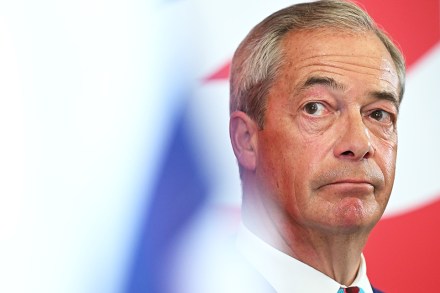
Ten Reform party councillors in Derbyshire have resigned in protest at Nigel Farage’s ‘autocratic’ control of the rising party and its direction of travel. Farage has dismissed the revolt as the action of what he calls a ‘rogue branch’ of Reform, but there are stirrings of discontent in the grassroots of the fast-growing party that may signal more than minor teething troubles. There are legitimate questions to be asked both about Reform’s structure and the way that Farage’s robust personality impacts upon it During the Reform UK East Midlands conference, a former Tory MP for the Dudley seat – Mario Longhi – defected to Reform and was introduced by Nigel Farage as, 'a loyal member of the Conservative Party for the last goodness knows how many years'.
The West’s right turn, Michael Gove interviews Jordan Peterson & the ADHD trap

From our UK edition

45 min listen

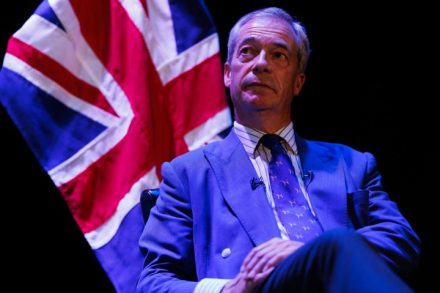
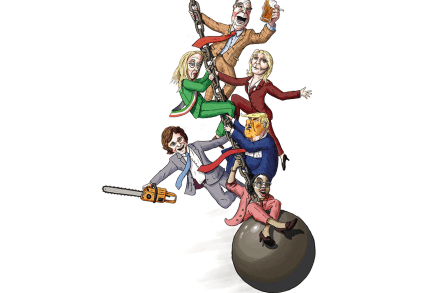
This week: the fight for the future of the right From Milei in Argentina to Trump in the US, Meloni in Italy to the rise of the AfD in Germany, the world appears to be turning to the right, say James Kanagasooriam and Patrick Flynn. One country, however, seems to be the exception to this rule: our own. Britain under Keir Starmer appears to be putting on a revival of the old classic Socialism in One Country. However, beyond Westminster, the data show that Britain is not moving to the left in line with its government. While the Conservatives and Reform are locked in a near-constant struggle for supremacy, polling shows that the public are moving to the right.

Is Reform unstoppable?

From our UK edition

Lying in bed pissed on Boxing Day night, I was visited by the ghost of Christmas Future, dressed in a grey jacket with a velvet collar, hovering over my pit cackling and in a similar state, alcohol-wise, to myself. It seemed very happy, this ghost. It led me to a graveyard where it pointed, in jubilation, at a headstone which had the words ‘Kemi Badenoch 2024-2026’ on it. ‘You shouldn’t joke about people passing away, Nigel,’ I told this phantom a little sententiously. ‘She’s not actually dead, you idiot,’ replied the wraith, lighting a fag. ‘It’s a metaphor.’ When I awoke 12 hours later, my mobile phone flashed a message inviting me to join Reform UK, Europe’s fastest-growing political party.

Why 2025 could redefine politics

From our UK edition

22 min listen

Santa will have had a tricky time this year fulfilling all the Christmas wish lists in Westminster. Keir Starmer is desperately hoping for a change in the political weather, and Kemi Badenoch would like an in with Donald Trump. Ed Davey dreams that Labour’s electoral troubles will get so bad that proportional representation starts to look appealing. Nigel Farage, meanwhile, wants to avoid what usually happens with him and keep his party from falling out – or perhaps Elon Musk will give him a Christmas bonus in the form of a generous donation.

Year in Review 2024 with Michael Gove, Quentin Letts and Katy Balls

From our UK edition

28 min listen

It’s been a historic year in British politics. At the start of 2024, the UK had a different Prime Minister, the Tories had a different leader, and The Spectator had a different editor! Michael Gove, Katy Balls, and Quentin Letts join Cindy Yu to review the biggest political stories of 2024. On the podcast, the panel discuss the rise of Reform UK and Nigel Farage as a political force, Labour’s adjustment to government, and Michael reveals his reaction to Rishi telling Cabinet that he was going for a summer election. Produced by Oscar Edmondson and Megan McElroy.

Christmas I: Katy Balls, Craig Brown, Kate Weinberg, Craig Raine, Lisa Haseldine and Melissa Kite

From our UK edition

37 min listen

On this week’s Christmas Out Loud - part one: Katy Balls runs through the Westminster wishlists for 2025 (1:26); Craig Brown reads his satirist’s notebook (7:06); Kate Weinberg explains the healing power of a father’s bedtime reading (13:47); Craig Raine reviews a new four volume edition of the prose of T.S. Eliot (19:10); Lisa Haseldine provides her notes on hymnals (28:15); and Melissa Kite explains why she shouldn’t be allowed to go to church (31:19).  Produced and presented by Patrick Gibbons.

Why 2025 could redefine politics

From our UK edition

Santa will have a tricky time this year fulfilling all the Christmas wish lists in Westminster. Keir Starmer is desperately hoping for a change in the political weather and Kemi Badenoch would like an in with Donald Trump. Ed Davey dreams that Labour’s electoral troubles will get so bad that proportional representation starts to look appealing. Nigel Farage, meanwhile, wants to avoid what usually happens with him and keep his party from falling out. Come the new year, all four leaders will have their eyes on May’s local elections. The 21 county councils, ten unitary authorities and one metropolitan district are up for grabs for the first time since 2021. Back then Boris Johnson was riding a wave of popularity after the vaccine rollout and the Tories won Hartlepool from Labour.

Labour’s Nigel Farage nightmare

From our UK edition

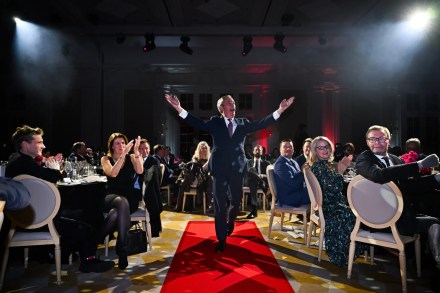
Arriving on stage to accept ‘Newcomer of the Year’ at The Spectator’s Parliamentarian of the Year awards, Nigel Farage gave a warning to the Westminster establishment. ‘I’ve got a bit of a shock for you,’ he said. ‘If you think that I and four other people – the newcomers into parliament this year in the general election – were a shock, I’m very sorry but at the next election in 2029 or before, there will be hundreds of newcomers under the Reform UK label.’ He added: ‘We are about to witness a political revolution the likes of which we have not seen since Labour after the first world war. Politics is about to change in the most astonishing way. Newcomers will win the next election. Thank you very much.

Spectator Awards: Nigel Farage promises a ‘political revolution’

From our UK edition

12 min listen

Last night was The Spectator’s Parliamentarian of the Year Awards. Politicians of every stripe were in attendance, with Wes Streeting, Robert Jenrick and Stephen Flynn among those present. There were a number of notable speeches – including a fiery opening monologue from the Health Secretary – but none caused as much of a stir as Nigel Farage’s acceptance speech for Newcomer of the Year. He warned of a ‘political revolution the likes of which we’ve not seen since Labour after the First World War’. How did that go down in the room? Also on the podcast, at PMQs today Kemi Badenoch and Keir Starmer seemed to have settled into a rhythm. Has the Wednesday ding dong become stale and predictable? Oscar Edmondson speaks to Katy Balls and Isabel Hardman.

Why Reform has Wales in its sights

From our UK edition

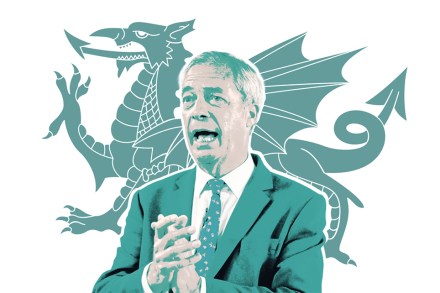
A spectre is haunting Wales. Fresh from Reform’s election victories in Westminster, Nigel Farage is turning his attention westwards, to Cardiff Bay. He wants Reform to replace the Tories there as the main challenge to Labour in May 2026, creating a major platform for his party ahead of the 2029 general election. The man plotting the Tories’ downfall in Wales is someone who knows their leader well. Oliver Lewis, Reform’s chief spokesman, worked with Kemi Badenoch at Coutts. ‘She was very aware of the importance of fulfilling duties she felt were important to her,’ he says, carefully, when we speak.

Nigel told me he’s the new Boris

From our UK edition

Last week I arrived in London from the Cotswolds just in time to witness the collective meltdown from everyone around me as it was announced that Donald Trump was the President-elect. I was delighted. Who are we to complain? The American people knew exactly what they were doing. I had been booked on to ITV’s This Morning where we were to discuss Kamala Harris’s resignation speech, a story so feeble it wouldn’t last until the 6 p.m. news. The tone in the studio was ‘poor Kamala’. I was having none of it. She fully deserved to lose. She had no coherent policies on immigration or the economy and banged on endlessly about women’s reproductive rights as though that were all women cared about.

How many Tories will defect to Reform?

From our UK edition

11 min listen

After Nigel Farage's overture to Tory councillors to 'defect', one already has. Farage has also been on manoeuvres, piling on the criticism against Labour for its volunteers campaigning for the Democrats in the US. James Heale talks to Katy Balls and Freddy Gray about the latest. Tickets are still available to join Freddy Gray and Nigel Farage on Thursday 24 October for their analysis on the US election. Get your tickets here.Produced by Cindy Yu.

Farage’s next move

From our UK edition

14 min listen

Party conference season continues as Reform UK’s kicks off today in Birmingham. Katy Balls has been at the NEC hearing from Richard Tice, Lee Anderson and leader Nigel Farage, amongst others. What’s been the mood? And, after a remarkable few months, what could be next for the party? With Labour conference starting at the weekend, how worried will Starmer be about Farage? Also, what's been the latest on the PM's 'donations for clothes' row? Patrick Gibbons speaks to Katy Balls and James Heale. Produced by Patrick Gibbons.

Nigel’s next target: Reform has Labour in its sights

From our UK edition

At this weekend’s Reform conference in Birmingham, the opening speech will be given by a man who wasn’t even a member of the party until four months ago. James McMurdock stood in what was once a Tory safe seat. Against the odds and after three recounts, he won, and is now Reform’s accidental member of parliament.  The day after the general election, Reform leader Nigel Farage held his celebratory press conference alongside fellow seat-winners Lee Anderson, Richard Tice and Rupert Lowe, announcing their new gang of four. Half an hour later, from a Westminster pub, they learned that they would be five – after McMurdock, a supposed ‘paper candidate’, was declared the MP for South Basildon and East Thurrock.

The ‘British Muslim patriot’ on a mission to get Farage into No. 10

From our UK edition

Few people had heard of Zia Yusuf before he spoke at Reform’s final campaign rally in Birmingham. But after a stirring speech to 4,000 supporters, he became one of the election’s overnight stars. ‘This boy’s got real talent,’ admitted Nigel Farage afterwards. He is now emerging as one of the more intriguing figures in the landscape of the right: a self-described ‘British Muslim patriot’, a 37-year-old multimillionaire, who says his mission in politics is to take Farage to No. 10. Farage is clearly Yusuf’s political lodestar: his name features dozens of times in our hour-long exchange When we meet at The Spectator office (his £100,000 Range Rover parked outside), Yusuf says that a Reform UK government is quite conceivable.

Six politicians who shaped modern Britain

From our UK edition

‘All political careers end in failure,’ said Enoch Powell. Maybe. But just occasionally our imperfect political system throws up someone whose impact on our way of life, for good or ill, outlives them. In a series of elegant essays, Vernon Bogdanor, professor of government at King’s College London, examines the careers of six politicians – three from left of centre, three from the right – who, in his view, changed the political weather of modern Britain. Only one, Nigel Farage, is still alive.  First up is Aneurin Bevan, the left-wing firebrand who, in the teeth of fierce opposition from the mighty, vested-interested British Medical Association, presided over the creation of the National Health Service.

Is the fate of democracy truly at stake?

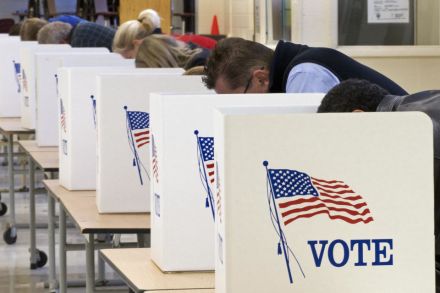
In a few months, the stolen election narratives will start in earnest. There was one in 2020, of course, but there had been another in 2016, a liberal myth about Russian interference stealing victory from Hillary Clinton. Disgruntled Democrats similarly said the Republican president before Trump was “selected, not elected” — put in office by the Supreme Court, not voters. Claiming that Barack Obama wasn’t a natural-born citizen of the United States, as “birther” Republicans did in 2008 and 2012, was another variation on the stolen-election theme. Even when elections run smoothly, ideologues easily find cause for complaint. Discontents can even apply to foreign elections.

democracy

Why Britain riots

From our UK edition

Riotous summers seem to occur in Britain with about the same frequency as sunny ones: roughly every decade. Sometimes it’s Afro-Caribbeans protesting (Brixton in 1981), sometimes Asians (Oldham in 2001). The white working classes rioted over the poll tax in 1990 and in Southport this year. The riot in Harehills, Leeds, last month was precipitated by social services removing children from a Roma couple. Whatever sparks the unrest, what all riots have in common is that they involve mindless destruction. Rioters smash and burn their own communities and opportunists descend, trying to exploit the situation for political ends. Fake news and misinformation abound.

Why you shouldn’t bet on elections

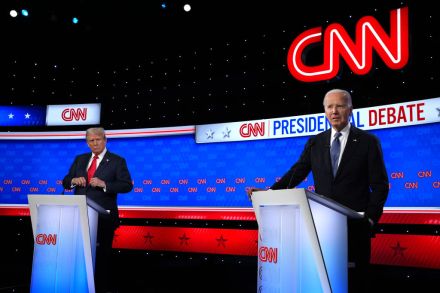
The skies above Europe On a human level, I probably should have felt some sadness watching Sleepy Joe chew his way through the first debate like he had been on Hunter’s pipe. But professionally I was full of burning rage. Two weeks previously I broke a story about the precarious president horrifying allied powers with a somewhat avant-garde performance at the G7 summit in Italy. In fifteen years as a hack, I’ve never dealt with a ruder or more dishonest press operation than the Biden White House; they went public with their criticism of the story and privately ranted at me like Joe on a particularly bad evening. Yet now their lies were coming home to roost on the podium.

elections

Letters: why I’m voting Reform

From our UK edition

Back to 1976? Sir: Your leading article perfectly reflects the public’s attitude to the manifestos of the major parties (‘Challenging democracy’, 29 June). No one has a plan that can remotely be seen as likely to work. Each party promises goodies they have no idea how to pay for; the only question is who will bankrupt us first. As ever, it is easy to distribute largesse, but no one has a clue how to remove it. We are heading towards a rerun of 1976 when the Labour government had to go cap in hand to the IMF. Those old enough can remember inflation of 25 per cent and a Bank base rate of 17 per cent. If you think rates now are excessive, just wait.