The importance of the rise of Europe
In this morning’s Wall Street Journal (Europe) I have a piece on the rise of UKIP. It is about hedgehogs, foxes and Nigel Farage. And it suggests that something important is happening in our politics. Finally.
The dust is settling from the County Council elections and, crucially, the Tory party seems to have stayed steady. Yes, David Davis has had a pop at the number of Old Etonians surrounding the PM and 20 MPs have called for a mandate referendum. But there is no sense of mass panic or revolt. Partly this is because David Cameron had already started doing the things he was going to be told to do after this result. As one Downing Street source remarks, ‘the shift is already well under way.’ He points to the tougher measures on immigration and welfare coming up in the Queen’s Speech and Number 10’s new
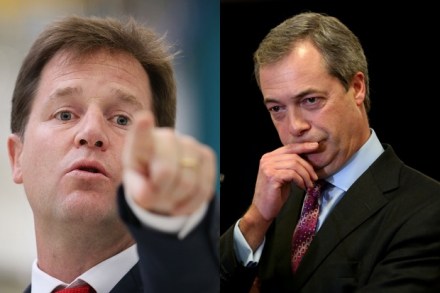
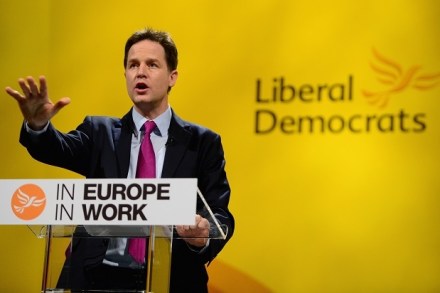
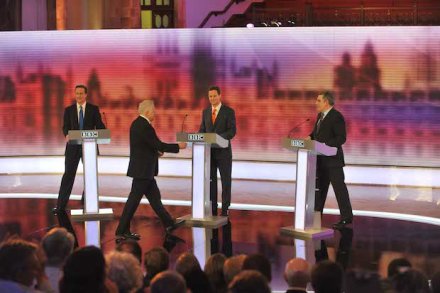
Today’s results for UKIP have re-opened the question of whether Nigel Farage should join the three political leaders in the live TV election debates in 2015. David Cameron’s allies are clear they don’t want that, and Nick Clegg was very dismissive when asked about this on the BBC. He said: ‘I’m not going to start making up the minds of the broadcasters. I think the next general election will be all about who are the parties who can actually govern this country in Westminster. We’ve been here before where UKIP has done well and then not done well in subsequent general elections.’ If Clegg doesn’t fancy being savaged live on
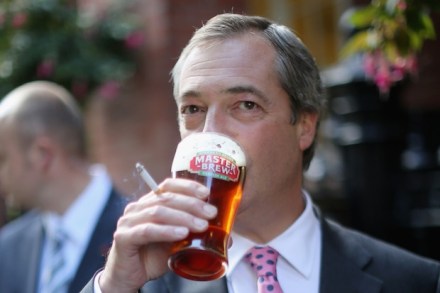
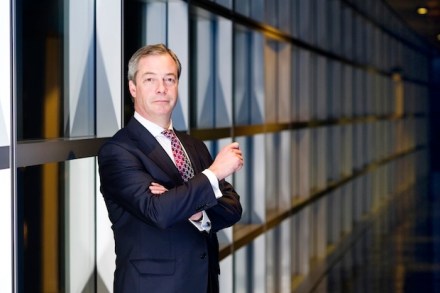
Ukip is the big story of the day, clearing out councils across the country in yesterday’s local elections. Mr Steerpike was interested to see the above picture on the wires as Nigel Farage took his victory lap around Westminster this morning. Behind every election victory is a copy of the Spectator. To find out more about why Ukip are winning subscribe from just £1 a week here.
‘Where do you expect to do well in these local elections?’ I asked the Ukip spokesman. ‘England!’ he boomed down the phone. On Wednesday afternoon, this seemed typical of Ukip’s bullish exuberance but judging by their predicted ‘phenomenal performance’ parts of Britain (like Boston) have become Ukipland overnight. Yesterday, I went to find some real Ukip voters in the Home Counties and discover why they have abandoned the three main parties. Nigel Farage stood in Buckingham at the 2010 general election and received just 17 per cent of the vote against Commons speaker John Bercow. The county of Buckinghamshire was once solid blue territory, but this green and pleasant corner of
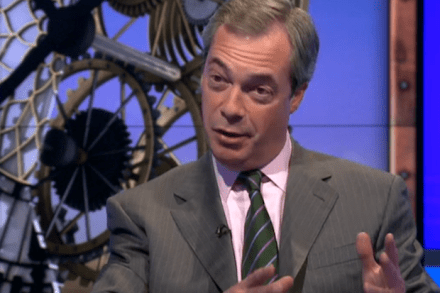
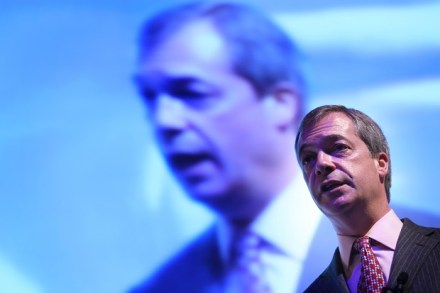
Nigel Farage was in full anti-politics mode this morning on the Today programme. He railed against ‘three frontbenches that look and sound the same’ and ‘haven’t done a proper day’s work in their lives.’ Farage is determined that Ukip be can both a protest party and a party with policies. He wants to offer himself to anyone who is fed up with the established order and wants to stick two fingers up at the main political parties. But he also wants to advance a radical policy prospectus. Interestingly, he said he wasn’t a Tory but he had been a supporter of eighties radicalism. So far, the Farage approach appears to
What few results there have been so far suggest that UKIP has scored about a quarter of the vote and gained more seats than Labour. A ‘phenomenal performance’ says Prof John Curtice. Nigel Farage now looks like the main winner, suggesting that his party is mutating from an EU protest party into a being broader party of the working class. The local elections have nothing to do with the European Union so there’s no rational reason that one-in-four voters would chose UKIP — unless they believed the party was addressing their concerns on wider issues. The reason that David Cameron’s referendum pledge did not shoot the UKIP fox is that
We might this week have seen some scrutiny of UKIP candidates, but so far we’ve seen little scrutiny of their policies. But the better the party does, the more policy scrutiny it will start to come under. This is what makes UKIP’s changing tax policy so interesting. It tells us a lot about where Nigel Farage is trying to take his party. At the last election, UKIP was committed to a flat tax. There is an intellectual purity to this idea – see Allister Heath’s book on the subject – but it is hard to sell to voters as it would result in ‘the rich’ paying a lower rate. After
UKIP are buoyant and, all of a sudden, everyone’s favourite protest-group. In a curious way, the confirmation that many of their candidates really are boggle-minded, eyes-popped extremists of one stamp or another almost helps UKIP. It confirms that they’re not like the other political parties and encourages people to adopt them as the Sod it, I’m just mad as hell and I’m not going to take it any more party. (These people tend not to be attracted to libertarian parties; just as well UKIP is not a libertarian party.) But UKIP should enjoy this moment while they can. They will remain a presence on the political scene and they will
Dirty tricks against UKIP by the establishment are not a new phenomenon. Though in recent days the Conservative party have been found engaging in them, there are far more striking examples from the recent past. On 25 May 2001 the Spectator published a piece by Norman Tebbit that deserves to be far better known. Tebbit recounts the tale of two serving or former British intelligence agents who infiltrated first Jimmy Goldsmith’s Referendum Party and then UKIP. Tebbit gives examples of how UKIP’s efforts were derailed during the period in which these agents were inside the party. It is important to stress before directing you to the Tebbit piece below that
How do the Tories deal with UKIP? The party likes to split on most issues, and it has got a nice little fault line running across it at the moment on whether to squash the party as ‘fruitcakes’, or, as Conor Burns eloquently argued on Coffee House this morning, engage with the problems and anxieties that are driving Tory voters towards Nigel Farage. If UKIP does have a good showing in the local elections later this week, one side will blame the other for taking the wrong course. MPs like Burns will worry that colleagues such as Ken Clarke will have insulted their own voters, or that the party’s obsession
Some of the coverage of the background and views of UKIP local election candidates has been met with a glee born of a belief that it might be the silver bullet to puncture the party’s recent rise in support. I have an intrinsic suspicion that this will prove not to be so. Last night I was away from news and twitter. Before reading the papers in any detail I sent a tweet saying: ‘Attacking UKIP over policy or people won’t work. Genuinely responding to legitimate concerns of people tempted by them may well do.’ I later read Lord Ashcroft’s perceptive observations that sum up my own views precisely. To try to tackle
Nigel Farage was on Question Time again last night. This was hardly unusual, but what was interesting was that the UKIP leader U-turned on one of his flagship policies. When he spoke at a press lunch on Tuesday, Farage accepted that UKIP’s flat tax policy was ‘incomplete’, but that UKIP’s aspiration was to have taxes as low as possible. Last night, asked whether he still wanted a flat tax, he said: ‘It was in 2010, but it isn’t now, and don’t tell me about manifestos: you haven’t even got one!’ Simon Hughes pressed him on what his tax policy was, to which he replied: ‘We will have no tax on
Talk of a by-election in Portsmouth South has been growing, fuelled by allegations against MP Mike Hancock. And, in a speech to the parliamentary press gallery lunch yesterday, Nigel Farage claimed Ukip could win it. The reasoning is simple: Ukip are on the up, and they came within 2,000 votes and 5 percentage points of a win in Eastleigh, so surely they can go over the top in another Hampshire by-election where the Lib Dem incumbent has had to step down amidst a scandal. Of course Ukip could win — but its chances may not be as high as that reasoning suggests. Indeed, Farage himself seems to think his party
Nigel Farage joined lobby journalists in Parliament for lunch today. Like many of his hustings, it was a box office event, and indeed like many of those campaign trail appearances, he made plenty of the same jokes that those who follow him about have heard many times before such as the one about being married to a foreigner, and about the problem with the Westminster bubble: ‘They look the same, they sound the same, God! They’re dull! I mean, they are not much fun to be with.’ Farage, of course, is fun to be with. He was sporting a red rose for St George’s Day, and decided to regale journalists
How seriously should we take Nigel Farage? He’s an exceptional politician but when UKIP did so well at Eastleigh I suspected they may have peaked. I went along to test my theory at a UKIP rally in Worcester last week, expecting to find a few hardline Eurosceptics huddled together in a room and I wondered how the audience would compare with that of the old BNP rallies. What I found was quite different: it was mobbed, Farage spoke very well – speaking about housing, unemployment, school places – essentially, UKIP is trying to reposition as a patriotic party of the working class. I write about this in my Telegraph column
A couple of reflections upon Eastleigh. Firstly it was indeed an appalling night for Labour; midterm the party came second in this constituency in the early 90s. It received the votes a joke candidate might expect this time around. Maybe that’s because they put a comedian in the seat. I have no objection to John O’Farrell’s writing at all; but maybe one reason for Labour’s failure – and probably not the most important – was his candidature. He is the sort of thing London Labour loves; metropolitan, cool, ever so witty. Ever so PC. Does any of that play outside the M25? I don’t think so. And the result would
David Cameron’s Europe speech already had a Tutankhamun-style curse on it before events forced him to postpone it, with the much longer delay from its original date of mid-autumn causing a feeding frenzy in the media, in his own party, his coalition partners, and in the opposition. By the end of last week, it was difficult to find an opposition MP or columnist who hadn’t written a whimsical piece imagining they were Cameron giving the speech (or indeed twisting readers into an even greater willing suspension of disbelief by imagining they were John Major talking to Cameron about the as-yet undelivered speech as David Miliband managed to do). James reports
Is a group of MPs preparing to leave the Tory party’s benches and defect to UKIP? Christopher Hope has a good scoop in today’s Telegraph that UKIP’s Treasurer Stuart Wheeler has had secret talks with eight MPs about a possible defection. Wheeler told the paper that he had held ‘completely confidential’ meetings with MPs. Apparently unaware of the irony of spilling the beans to a journalist about these ‘completely confidential’ meetings, even if he doesn’t name any of those involved, the Treasurer said: ‘I have had lunch secretly if you like, in a completely confidential way, with eight different Tory MPs.’ He added: ‘Each was promised by me that I
I’m sure, as James says, that the idea of some kind of Tory-UKIP non-aggression pact will not go away. But that’s because many Tory backbenchers are remarkably stupid. Proponents of a Tory-UKIP alliance ignore the stubborn fact that many voters – voters the Tories need if they are to win a majority – aren’t too keen on UKIP. There is no point adding one vote from the right if it costs you two from the middle, mainstream ground of British politics. Besides, the Tories are not every UKIP voter’s second-choice and, anyway, the real battle is for the Liberal Democrat vote. Be that as it may, it is UKIP’s insistence