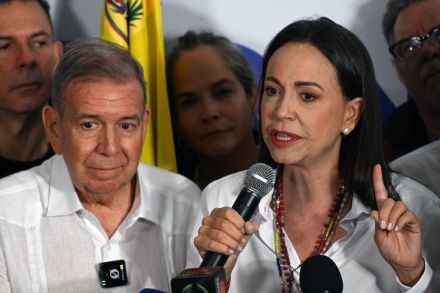
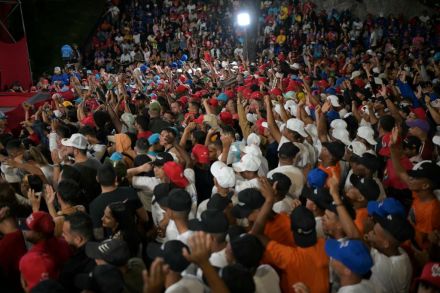
Nicolás Maduro

The Maduro raid was a triumph of American innovation

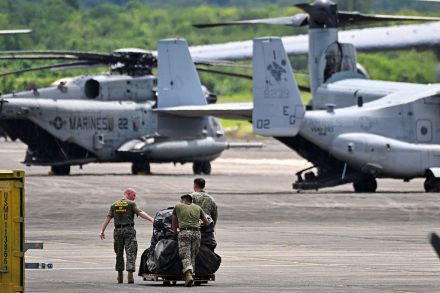
In the early hours of Saturday, January 3, Caracas went dark. Power failed across much of the city as strikes and cyber-attacks disabled critical systems. What followed was not a conventional invasion, but one of the most audacious special forces operations in modern history. Within hours, Nicolás Maduro and his wife, Cilia Flores, had been seized from the heart of Venezuela’s largest military complex. No tanks rolled through the streets. No territory was occupied. The operation succeeded not through brute force alone, but because of something far more decisive: overwhelming American dominance of intelligence, networks, surveillance and infrastructure. Power rests less on the capacity to destroy than on the capacity
maduro american

Maduro’s capture is mixed news for the Kremlin

For the Kremlin, the US’s snatching of Venezuela’s President Nicolás Maduro is a humiliation with a silver lining. True, little more than a year after the precipitous fall of Syria’s Bashar al-Assad, Russia has been shown to be completely hopeless when it comes to keeping its allies in power. In Caracas, US airborne forces breezed past Russian-supplied S-300 air defense systems, which were part of a $20 billion package of maybe not-so-great Russian military equipment that Moscow sold the Venezuelans. The Kremlin has lost a strategic bridgehead in South America which it could, potentially, have used to disrupt and challenge Washington’s regional hegemony – if Moscow weren’t so committed financially

Immigration is foreign policy now

Invade the world, invite the world. That pithy phrase was invented in the 2000s by Steve Sailer, the right-wing writer, to mock the then bipartisan consensus which supported George W. Bush’s war on terror abroad while pushing open borders at home. Or, as Sailer also put it: “Bomb them over there and indulge them over here.” Back then, such analysis was generally dismissed as the preserve of white supremacist cranks. Now, it’s fair to say that Sailerite thinking animates the spirit of the second Donald Trump administration. Disrupt the world, deport the world. That’s the order of the day. Since America’s stunning attack on Venezuela last weekend, almost everybody has

immigration

Nicolás Maduro’s How to Win Friends and Influence People

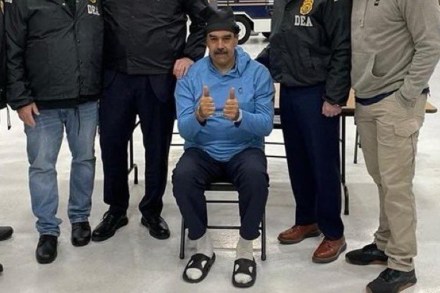
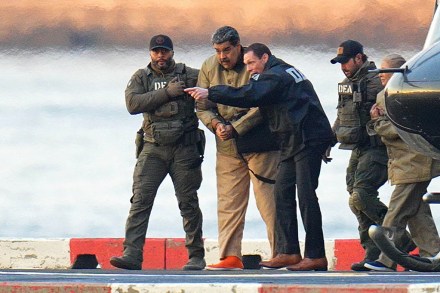
Cockburn stumbled into The Spectator’s New York office this morning afflicted with that annual January woe: the post-holiday blues. He was having a serious pout at his desk before he was chastened out of this gloom by his northern colleagues’ new neighbor: Nicolás Maduro. No one had a worse Christmas season than the deposed Venezuelan presidente. First, he and his wife were woken in the middle of the night by American soldiers knocking on their door; then they were forced to move into the worst borough in New York: Brooklyn. But despite all this, Nick is holding onto a positive mental attitude. Just look at this post-capture image: Here we

maduro

Can the ‘Donroe doctrine’ really change Venezuela?

During the early hours of Saturday January 3, an official statement from the White House, signed by President Trump, confirmed that the US had captured both President Nicolás Maduro and his wife, Cilia Flores, and taken them out of Venezuela. At 2 a.m. sharp, thunderous sounds echoed through the capital city, part of what Trump called today “an assault not seen since World War Two… one of the most stunning displays of military might and competence in American history.” It was certainly an attack unlike anything ever seen in Venezuela. Within two hours, all of Caracas looked like a massive fireball, communications were down and areas were without power. The

donroe doctrine