Nhs

Lansley's letter pours fuel on Labour's bonfire

Just when everyone is all afroth about the murky connections between the political class and the media, a letter by Andrew Lansley to Danny Alexander has mysteriously leaked to the Telegraph. It was sent two months ago, and it concerns the government’s public sector pension proposals. For five pages, Lansley riffs on about why the reforms may not be such a good idea, particularly when it comes to NHS workers. “We face a real risk, if we push too hard,” he says, “of industrial action involving staff groups delivering key public services.” He suggests that lower and higher paid staff may just opt-out of the pensions scheme altogether, leaving the
Gove goes forwards, while other reforms stall

The good, the bad and the ugly of the coalition’s reform agenda are all on display this morning. The good is the quickening of the pace in education. As Michael Gove tells this week’s Spectator, the 200 worst primary schools will now be taken over by new management, 88 failing secondary schools are to be converted into academies and any school where half the pupils are not reaching the basic standard of five good GCSEs including English and Maths will be earmarked for a takeover. Gove’s aim is remarkably simple: he wants good schools to take over bad ones.   The bad is yet another delay to the public service

Milburn withdraws the Blairite seal of approval

Alan Milburn’s article for the Telegraph this morning is a rhetorical blitzkreig against the coalition and their NHS reforms. From its opening shot that “The Government health reforms are the biggest car crash in NHS history,” to its closing call for Labour to “restake its claim to be the party of progressive, radical reform,” it is searing stuff. And no-one is spared, least of all Andrew Lansley and his “foolish bout of policy-wonking”. Such fierce language is unusual, even by the standards of cross-party rough ‘n’ tumble. What makes it extraordinary is that Milburn is employed by the government to work on their social mobility agenda. The coalition’s last report

Cameron on a charm defensive

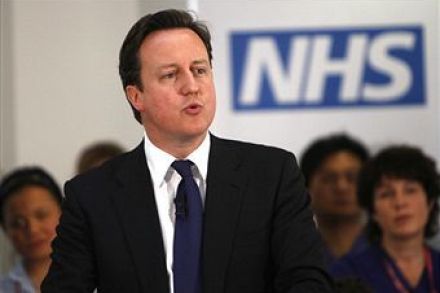
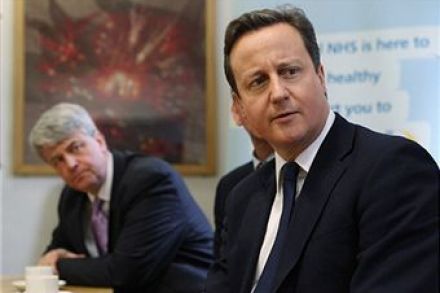
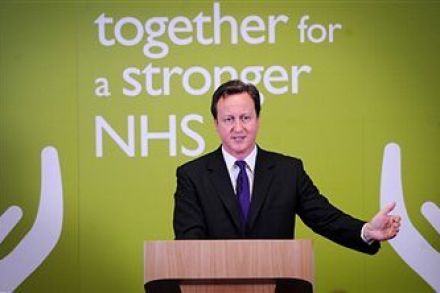
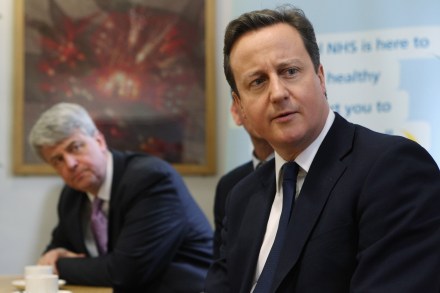
David Cameron is at his best when his back is to the wall. His speech on the NHS was largely as expected – a charm offensive designed to appease his warring coalition and reassure a fevered public. I’ll wager that he has succeeded; but reservations and pitfalls remain. Cameron recognises that competition is the stiking point for most Liberal Democrats, while the Tories insist on it. Competition will stay. He said, “New providers, more choice and competition raises standards and delivers value for money.” However, competition will not be unbridled. Cameron reassured doubters, “But let me clear, no: we will not be selling off the NHS, we will not be

Controlling NHS Costs Will Be A Radical Achievement

I don’t care to delve too deeply into the clump of giant hogweed that is health policy but if Andrew Lasley succeeds in freezing health spending in real terms then he will have been one of the more successful cabinet ministers even if his ambitious reforms go nowhere or achieve nothing. It is annoying, as Pete says, that this will have to be a secret triumph since it has become an article of faith, apparently, that spending more money on the NHS is always the virtuous thing to do. Nevertheless, a secret triumph that cannot be proclaimed is better than failure. Every developed country must confront the horror of sharply-increasing

Lansley's inflated sense of his own department's spending

The listening is over, now for the legislating. But if you’re keen to find out how Andrew Lansley’s health reforms will look in the end, then don’t expect many clues in his article for the Telegraph today. Aside from some sustained hints about involving “town halls” and “nurses” in the process, this is really just another explanation of why the NHS needs to change — not how it will change. Lansley’s central justification is one that he has deployed with greater frequency over the last few weeks: that, without change, the NHS will become too cumbersome and costly a beast. Thanks to the pressures of an ageing population, more expensive

Testing the health of the coalition

Listening is seriously damaging the coalition’s health. The Sunday Mirror carries a report that chimes with a week of rumours in Westminster: the NHS reforms are going to be significantly diluted to appease warring Liberal Democrats. The Mirror adds that Lansley is likely to quit in protest. Matt d’Ancona argues, in his essential column this morning, that this is not a listening exercise but a ‘full blown carefully orchestrated retreat’. It is, if you will, a political version of the battle of Arnhem: the NHS reforms were a reform too far in this parliament, so tactical withdrawal is now imperative. Clegg and Cameron’s signatures are on the original White Paper.

NHS Reform: In praise of ‘cherry-picking’

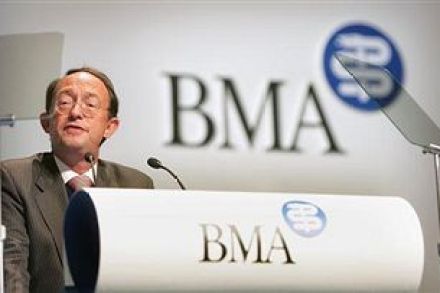
The British Medical Association (BMA) has always been a trade union with elements of professionalism on the edges. Its report this week on the NHS reforms was the work of unadulterated, self-serving trade unionism. Our modern trade union leaders would have been embarrassed to publish it, even Bob Crow. It tries to portray competition as the opposite of co-operation, when competition is the opposite of monopoly, in this case a public sector medical monopoly. Competition describes an arrangement under which teams of people co-operate with each other to find better ways of serving customers than rival teams of collaborators. The co-operation of which the BMA speaks is a weasel word

Less listening, more talking

There was an exchange on Question Time last night that may go some way to explaining why the government’s health plans are so mired. One panellist, media lawyer Charlotte Harris, said that she was very worried by the substantial cuts being made to the NHS’ budget. Large sections of audience greeted this with rapture. (From 44 mins.) Immediately, Tory Louise Bagshawe and Lib Dem Jeremy Browne tried to grab David Dimbleby’s attention. It fell to Bagshawe to correct Harris, pointing out that the government has increased spending on the NHS when Labour would cut. The audience responded with boos – more in disbelief than disagreement, incredulous that the Tories would

Lansley's original reforms are off the table

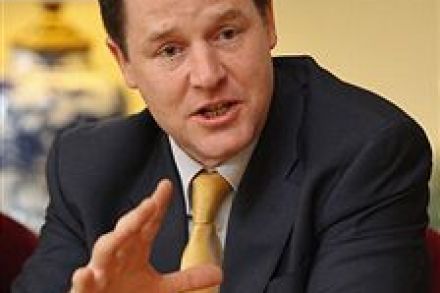
Nick Clegg’s speech on the NHS this morning was not as bad as many feared it would be. It recognised that there is a role for competition in the NHS, something that the Lib Dems were questioning last weekend, and that the NHS needs to be opened up to any qualified provider. But, on the other hand, the idea that any willing provider should be able to deliver NHS services — an idea which was in the manifesto of all three parties — will now only be introduced at a glacial pace. There’ll also be a two-tier NHS for the foreseeable future with some areas having GP-led commissioning, while NHS

The state of the NHS

I know most CoffeeHousers aren’t particularly enamoured of paywalls, but the Times has given you a persuasive reason (£) to dive behind theirs today. (Or least to borrow a copy of the paper.) It’s the first of three reports by Camilla Cavendish on the NHS, this one concentrating on the Way Things Are Now. It is both a disheartening read and a powerful reminder of how taxpayers’ cash is being funnelled into a system that is dysfunctional in the extreme. Here is one snippet for your displeasure: “Care in Britain ranges from world-class to shocking. Between 1998 and 2006, 1.6 per cent of bowel cancer sufferers died within a month

Clegg: No MP is above the law

The sun shone on the deputy prime minister at DPMQs earlier today. Nick Clegg usually wears a grimace at the despatch box; but he was assured this morning, successfully defending a Labour onslaught on the NHS reforms. There were even flashes of, well, Flashman. He replied to a question from Chris Bryant by quipping, “Every time the Honourable member asks a question, I wonder why anyone bugged his phone.” Clegg also rebuked John Hemming for breaking the Giggs super-injunction yesterday; a popular move among those MPs who think Hemming degraded parliamentary privilege. Clegg said: “I don’t think anyone should be above the rule of law. And if we don’t like

Cameron must defeat Clegg and break the NHS' monopoly

‘NHS good, private health bad’. ‘State good, market bad’. ‘Four legs good, two legs bad’. Whenever political leaders get into a tight corner they have to find allies fast. There is no time for reasoning to work its gentle magic. Basic sentiments need to be stirred and the popular favourite is usually hate. Yesterday Mr Clegg used this classic strategy to rebuild his support base. The cold-hearted Tories were at it again, dismantling that icon of compassion the NHS. In public they were declaring their undying love for it but out of sight they were promising fat profits for ‘health care corporations’ once the new law was passed. Mr Clegg

Coalition's NHS battle turns personal

David Cameron’s ‘love for the NHS’ is a critical part of his political persona. It is, his advisers believe, what proves that he is a different kind of Tory. So it is remarkable that Nick Clegg is questioning it in semi-public. In a speech to Lib Dem MPs and peers last night — that Clegg would have known was bound to leak, he criticised politicians — eg, the Prime Minister — who express their love for the NHS but take advice from people who see NHS reform as a chance for private companies to make big profits. What makes this intervention all the more remarkable is that Downing Street has

Lansley stands up for his reforms

If there’s anything that stands out from Andrew Lansley’s interview with the Sunday Times (£) it is his air of quiet defiance. Of course, the Health Secretary sounds some of the conciliatory notes that have crept in to the government’s rhetoric since they decided to pause, listen and engage on NHS reform. But he also stands up for the original reforms as he conceived them. “From my point of view,” he says, “the White Paper was setting out what sensible, intelligent people inside the NHS were saying.” For him, the concerns that remain are not with the general thrust of his reforms, but with “implementation, the nuts and bolts of

Another blow to the Lansley plan

Number 10 has now taken charge of coalition health policy to such an extent that the Department of Health press office was caught unawares by the news that the Prime Minister was to deliver a major speech on health next week. David Cameron is determined to present the coming substantial changes to the Lansley reform plan as the changes he wants, not the ones forced on him by the Lib Dems. To that end, the head of the NHS future forum, a body Cameron has set up to oversee the NHS listening exercise, Steve Field telling The Guardian that he thinks all competition should be removed from the bill is

Can Lansley stay?

The Prime Minister, it seems, is now finally accepting what everyone else has been saying for a long time: that the NHS reforms were dangerous and would hurt the government. If Nick Clegg forced a re-think — even one that is supported by many Tories — then he may, in the end, play a greater part in delivering the next election for Cameron’s party than many triumphalist right-wingers now realise. For CameronCare was badly-timed, poorly-delivered and strikes at the heart of the PM’s message that the Conservative Party can be trusted. Large-scale reforms need time. Time for people to accept a problem. Time for people to accept the solution.  Where

The Tories' intellectual dishonesty over the NHS

Why should Cameron ditch the Lib Dems? Coalition has made his party more radical, more electorally successful – and the worst ideas in the Cabinet come from men with blue lapels. Take Andrew Lansley. His press release today would have been shocking had it come from a Lib Dem, and denounced as dangerous leftist nonsense that renders the government’s overall message incoherent. Ed Balls’ arguments against cuts have routinely been challenged in Coffee House. So we can hardly be expected to applaud when his arguments are plagiarised by a Tory. The hapless Lansley, whose needless and complex heath reform bill has stalled, is today trying to win back the initiative

Why Clegg will get his way on NHS reform

On Andrew Marr this morning, Nick Clegg made clear that changes to the NHS bill are his new priority. He said that there would be ‘substantial’ changes to it and declared that ‘no bill is better than a bad bill.’ I suspect that Clegg will get what he wants on the NHS bill. When I spoke to one senior Clegg ally after the AV vote, I was told that Number 10 is ‘conceding everything to us in that area.’ My source went on to say that because of the Tories’ traditional weakness on the the NHS, the Tories ‘are mortally afraid of a row over the NHS with us on