Nhs

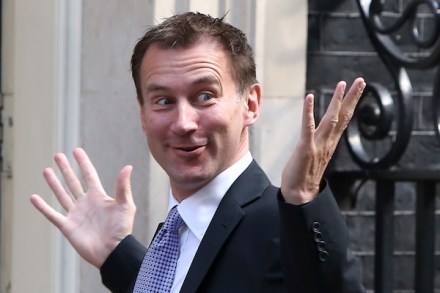
Jeremy Hunt’s NHS Mandate will make the service even more cumbersome

Earlier this week my wife called to make a GP appointment for our daughter, who has been experiencing some worrying tummy pains.  Middle of next week she was told, earliest. ‘It’s a pity you didn’t call at 8 o’clock,’ the receptionist chided. ‘We had several slots then, but now they’ve all gone.’ Silly us for prioritising getting the children to school at that time of the morning. I expect that Jeremy Hunt would say that it is precisely this kind of thing – not a scandal, not a crisis, but just one of a million similar tiny rebuffs people experience at the hands of the NHS every week – that

Circle’s tough mission for Hinchingbrooke Hospital

Her Majesty’s Comptroller and Auditor General seems to have been nicking ideas from Private Eye. National Audit Office reports these days arrive with a frontispiece of ‘key facts’, reminiscent of the Eye’s ‘number crunching’ feature, plucking a handful of noteworthy numerals from the deluge of auditry that follows, and designed presumably to make the reader go ‘gosh’. In the NAO’s latest report, on the awarding two years ago of a franchise to run a hospital in Cambridgeshire, one ‘key fact’ leaps out. ‘£0’, it says, ‘is the amount Circle will earn over the ten-year life of the franchise, unless the Trust achieves a surplus under its management’. Yes, that’s right.

Liverpool Care Pathway: what went wrong?

The recent media storm over the Liverpool Care Pathway has obscured the progress doctors and nurses have made over the past decades in the UK in improving care for patients who are near death. Since the LCP was developed, patients in busy hospitals and other institutions are  less likely to be left to die in pain and discomfort. The Pathway itself is simply a framework which reminds professionals to consider, and document, the process of care for people in the last days of life. Without it, some professionals may struggle to shift their focus to important aspects of care such as comfort measures, pain control, communicating with, and supporting, the

Why the government should clamp down on health tourism

One of the problems with the welfare state is that the contributory principle too often gets lost. People’s faith in the whole system is undermined when they see those who haven’t put it, or even tried to, taking out. A classic example of this is ‘health tourists’, those who come here from abroad with the deliberate aim of taking advantage of the medical care offered by the NHS. Too little is being done to address this problem. The Daily Mail reports today that ‘New guidelines tell doctors across England they must register any foreign patient who asks for care otherwise it would be ‘discriminatory’.’ The problem with this is that

Jeremy Hunt: no promises on the NHS ringfence

In this week’s Spectator James Forsyth interviews new Health Secretary Jeremy Hunt about how he will continue Andrew Lansley’s legacy on NHS reform. He says his ‘burning mission’ is to ‘demonstrate that we have as much to offer the NHS as Labour ever did’. But while Hunt is keen to praise the work of his predecessor, he takes a strikingly different line on the health budget. James writes: Another striking difference between them is their views on the future of the NHS budget. When The Spectator interviewed Andrew Lansley at Christmas, he was clear that he believed that the health budget would have to carry on rising in real terms

Ed Miliband Makes a Pitch for One Nation Progressivism – Spectator Blogs

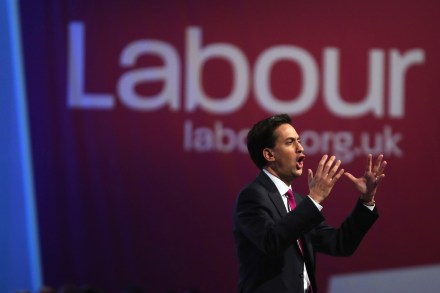
The first thing to remember about Ed Miliband’s speech to the Labour conference today is that it’s not about you, it’s about us. That is, it was designed to persuade the media to give Miliband a fresh look more than it was an attempt to impress the general public, far less the Labour members gathered in Manchester. Initial impressions are that he succeeded in this aim. See Tim Shipman and Fraser Nelson, neither of whom are normally considered much of a Milibander, for good examples of this reappraisal. (John Rentoul is, of course, an exception.) Indeed, I can’t recall when the British half of my twitter timeline was last quite

Ed Miliband hints at realism on NHS reforms

There’s a great temptation for an opposition leader to give answers praising motherhood and apple pie when taking part in a Q&A with members of the public. Especially when that session marks the start of your party’s conference season and your party has set out very few formal policies so far. But Ed Miliband today, as well as announcing crowd pleasers on energy and pensions, caused a bit of a stir by accepting that a Labour government would not ‘spend another’ £3 billion dismantling the frameworks created by the Government’s Health and Social Care Act. He said: ‘There’s no more important institution that expresses, I think, the real soul of

Burstow goes rogue to attack Treasury

Hell hath no fury like a government minister sacked (as proven by our anonymous ‘Dumped by Dave’ piece this week). Another former minister, Paul Burstow, lost his job because Nick Clegg was miffed at the way the Lib Dem had failed to flag up the dangers in the Health and Social Care Bill. He’d already formed a habit of briefing against his own department when he was in office, so it’s no great shock that Burstow has decided to dish the dirt on the Treasury in the Telegraph today, claiming it is responsible for blocking reform of the social care system. He writes: ‘Of course, if fixing this was easy

What will happen to the NHS budget?

George Osborne has long regarded support for the NHS as the most important aspect of Tory modernisation. For this reason, I think it is highly unlikely that the ring-fence will be removed from around the NHS budget. But I suspect that the practical, as opposed to symbolic, importance of the ring-fence will be diluted by more and more things being classified as health spending. At a Quad meeting on the Dilnot proposals on social care, George Osborne told Andrew Lansley that the £1.7bn cost of them, which rises to £5bn within 3 years, should be met out of the NHS budget. Lansley resisted this idea. But I understand from senior

Anna Soubry’s NHS clean-up operation

Anna Soubry has given a wonderfully colourful interview to The Times today about her new job as Health Minister. The Conservative MP jumps through the usual hoops of having to talk about how she loves wearing high heels but doesn’t enjoy baking cupcakes, but she also makes a number of striking comments about health policy. The most-widely-picked-up have been her comments on euthanasia. She told the newspaper: ‘The rules that we have about who we don’t prosecute allow things to happen but there’s a good argument that we should be a bit more honest about it.’ Norman Lamb appeared on Sky News this morning to say he also felt there

Jeremy Hunt and NHS spending

Reshuffles are significant when they change policy and not just personnel. The reason that so much attention is focused on Transport is that the decision to move Justine Greening does suggest that Number 10 wants, at the very least, more room to maneuver on aviation policy. But speaking on the Today Programme this morning, Matthew d’Ancona – the coalition’s biographer —suggested two other departments where a personnel change could be a prelude to a policy change. He said that George Osborne was keen to have new Secretaries of State in the Department of International Development and the Department of Health so that he could explore removing the ring fences round

Ministers take brand NHS to the world

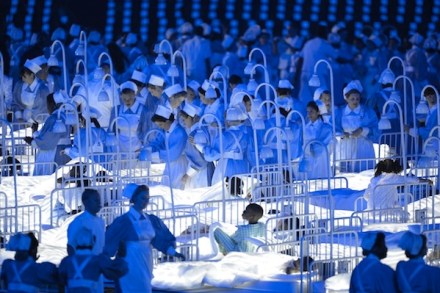
Danny Boyle had us all fooled. There we were, thinking the dancing nurses and luminous NHS logo in his opening ceremony for the Olympic Games were part of a piece of ‘Marxist propaganda’, when actually he was sneakily paving the way for what Labour this morning derided as the ‘rampant commercialisation’ of the health service. Yes: it turns out that the Olympic opening ceremony was just one big fat right wing advertising ploy to entice the world to buy into Brand NHS. Whoops. The government is opening an agency called Healthcare UK, which is designed to set up contacts between world-respected NHS operations and private clients overseas. The Health department

The straightforward solution for mental health treatment

Yesterday Nick Clegg published an ‘implementation framework’ for the government’s  mental health strategy. This follows his announcement in February 2011 of a ‘No Health without Mental Health’ policy, which has not been delivered and is now fragmenting under the changes being implemented to the commissioning structure of the health service. I have a special interest in this subject. About four years ago the failure of both the NHS and the private sector to deliver moderately competent mental health treatment (to me) nearly killed me; I was very ill with complex PTSD. The cost to the state of my death (in the absence of other resources and leaving behind a family

Closing cardiac units might be right, but it won’t be easy

Yesterday, Health Secretary Andrew Lansley reported to MPs on the state of the NHS. The state of the NHS, you’ll be relieved to know, is good, or at least it is in Mr Lansley’s estimation. Budgets are in surplus, waiting lists are down and, unless you are very unlucky, you won’t have to hang around for more than four hours in A&E before they see you. One thing, however, that the Health Secretary didn’t volunteer – curiously, since it was the biggest NHS news of the day – was the reorganisation of heart care for children, and the closure of three specialist surgery centres in England. This is probably just

The PFI bailout machine has run out of juice

Although it is nearly 20 years ago, I can still recall being lobbied by the representatives of a private consortium who had nascent plans to redevelop a hospital in south London using the then fabulous new idea we called the private finance initiative.  Before you jump to too many delirious conclusions, the meeting took place in my office, not in an expensive restaurant, and it was the only one I ever had with the group. I may have splashed out on a plate of civil service issue custard creams. At the time I was the special adviser to the then Secretary of State for Health, Virginia Bottomley, and the main

The doctors’ strike

No public sector strike is easy to sell to the public. I recently did a stint of jury service and witnessed the chaos caused by court staff, members of the PCS union, striking over pensions. It’s one thing working around the inconvenience of jury service, but it’s quite another being kept on the premises when there is little chance of the courts actually sitting, as proved to be the case. But, the BMA have it doubly difficult. Today, doctors decided to strike for the first time in more than 40 years. Doctors have a reputation for being well-paid, a reputation that is ingrained and, when one examines the NHS pay structure,

More evidence of the need for NHS reform

If you want to know why the great Labour-NHS argument about healthcare is wrong, read today’s National Audit Office report on the provision of diabetes care in England. Diabetes is one of this country’s biggest health problems and it is getting worse. There are currently over three million people with diabetes here today, and, on some estimates, by 2020 there will be nearly four. In the last 15 years the number of people with the condition in England has more than doubled. Yet according to the NAO, the treatment they receive from the NHS is little short of shocking. There are nine main standards for proper diabetes care, laid down

Cameron looks to his early leadership period for inspiration

David Cameron’s big parenting push this week is a reminder of what the Prime Minister would have liked to have been before the economic crisis intervened. Cameron believes that encouraging stable, loving families is the best way to prevent social failure. Doing that reduces the demand for government and, so the logic goes, shrinking the state then becomes a lot easier.   How the government can try and help people be better parents without falling into the nanny state is undoubtedly tricky. But Cameron’s emphasis so far has, rightly, been on simply giving people more information to help them make their own decisions. Part of this approach is a series

Choice — easy to talk about, a slog to deliver

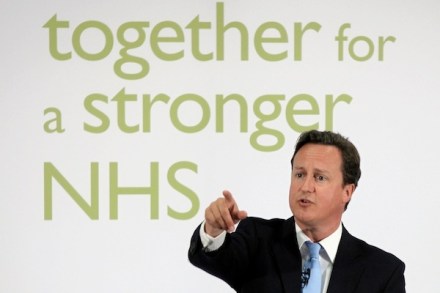
The birth of the White Paper on public service reform was a tortuous business — but, now it’s been out for several months, the government is keen to make the most of it. David Cameron is launching an ‘updated’ version today, with a few new proposals contained therein. He also has an article in the Telegraph outlining those ideas, including the one that seems to be getting the most attention: draft legislation to give people a ‘right to choose’ their public services. It feels like both an important and potentially inconsequential moment all at once. Enshrining choice in the laws of this land is a powerful symbol that people shouldn’t

Lansley has won, in a way

At two thirty this afternoon, the Deputy Speaker announced to the House of Commons that the Queen had granted Royal Assent to the Health and Social Care Act. It seemed fitting that the House was debating assisted suicide at the time. The agonies of watching this cursed legislation twitch and stumble its way onto the statute book were enough to make anyone with half a concern for well-ordered public policy start Googling the names of Swiss exit clinics. Albeit there would have been the risk that Number 10 had already paid for Andrew Lansley’s ticket to join you there. Suddenly, though, the politics of health are very different. Mr Lansley,