Nhs

If you want £10k at 25, you should have to compete for it

From our UK edition

Would it really be fairer, in an inter-generational sense, to whack an ‘NHS levy’ on pensioners while giving every 25-year-old £10,000 to help them buy a first home or start a business? These are recommendations by the Resolution Foundation, chaired by former Tory minister Lord Willetts, to address what it sees as a breakdown in the ‘contract’ between young and old. That contract allegedly says that each generation should expect to be better off than its parents — but in the current economic climate, many of our delicate ‘millennials’ believe they’re going to end up worse off, unable to afford their own homes and saddled with the ever-rising cost of healthcare for oldsters who refuse to pay for it themselves.

The truth about London knife crime – and the prejudice with which the world listens to Trump

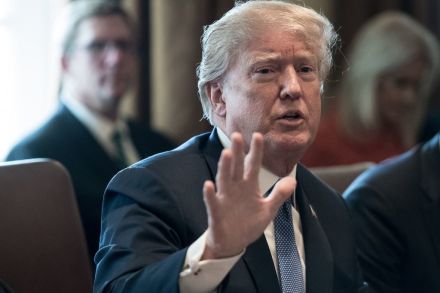
I would love to undertake a behavioural experiment in which a cohort of the public were asked to watch Donald Trump reading out the Gettysburg Address and asked to make comments. I can guess what would happen. There would be an overwhelming negative response. Those who listened would use words like ‘outrageous’, ‘disgraceful’. They would accuse him of ‘slurs’, describe him as ‘demented, as well as throwing in the charge of ‘racist’ for good measure. How can I be so sure? Because of the British reaction to Trump’s speech to the National Rifle Association last week in which he described a London hospital being like in a ‘war zone’, so high are the number of stabbing victims being treated there.

Revealed: the truth about the latest NHS funding poll

From our UK edition

Last week there was an exclusive in the Times – widely followed up – revealing majority support for NHS-linked tax rises. 'For the first time in more than a decade, a majority of Britons say that they are personally willing to pay more to increase spending, according to the respected British Social Attitudes survey'. It followed this up by a leading article to this breakthrough, saying: 'Ministerial hearts may be gladdened, therefore, by a new poll published in The Times today. It suggests that 61 per cent voters back higher taxes to fund the health service, with 25 per cent saying that the government should raise existing taxes and 36 per cent supporting a new tax. A dedicated health tax would be difficult to get right, but it is a good idea.

May announces NHS funding boost

From our UK edition

Who is the most powerful person in government at the moment? In normal times, the automatic answer would be the Prime Minister, but things are rather more complicated at the moment. Theresa May's stock has risen in recent weeks, thanks to her confident handling of the Salisbury attack - and partly because Labour is in a terrible mess. But today we learned a little bit more about quite how influential one of her ministers has become. The Prime Minister spent this afternoon giving evidence to the Commons Liaison Committee, the powerful group of select committee chairs who grill the Prime Minister periodically. She was in her usual defensive mode of not giving anything away for much of the session. But then, towards the end, she announced that the NHS would be getting more money.

There isn’t as much consensus on NHS funding as you might think

From our UK edition

Is there really a cross-party consensus on tax rises for the health and social care system? A group of MPs from across Parliament has written to Theresa May calling for a year-long parliamentary commission on funding for all branches of the health system. Meanwhile Jeremy Hunt is calling for a ten-year settlement for the NHS, attacking a 'feast or famine' approach to funding it. 'There's no doubt that NHS staff right now are working unbelievably hard and they need to have some hope for the future, but their real concern is this rather crazy way that we have been funding the NHS over the last 20 years,' he told ITV's Peston on Sunday.

We were never going to take back control of our fishing waters

From our UK edition

My decision to vote Remain was driven in part by an exercise in which I tried to identify anyone close to me in Yorkshire — family, neighbour, business owner, farmer — who was worse off as a result of UK membership of the EU. The only people uncontestably in that category, I concluded, were the east-coast fishermen whose livelihoods have been eroded by 45 years of punitive quotas and unfair competition. So I felt for them on Monday, when their interests were traded away yet again as part of the Brexit ‘transition’. Instead of being released from the Common Fisheries Policy in March 2019, as Environment Secretary Michael Gove proclaimed barely a week ago, our diminished fleet is stuck with the status quo until the end of 2020.

The Tory tax bombshell

From our UK edition

The single most important domestic policy decision that the Conservatives must take is what to do about public spending. After the snap election went so wrong last year, many Tories rushed to blame ‘austerity’. Gavin Barwell, now Theresa May’s chief of staff, said this was one of the principal reasons he had lost his Croydon Central seat. Even the Chancellor, Philip Hammond, admitted that the public was weary of the long slog to balance the books. This belief — that the public has had enough of austerity — explains why the Tories aren’t behaving as governments traditionally do.

The American tax system is a one-way street

From our UK edition

Last week, the New York Times ran a very un-New-York-Times-y article, ‘Resentment Grows Over Who Gets Health Care Aid’. It contrasts two women in New Hampshire. Married with one child at 30, last year Gwen Hurd paid more than $11,000 for her family’s health insurance, purchased through the Affordable Care Act exchange. They had to shell out $6,300 per person — $18,900 — before the insurance kicked in. Both parents were working. Their pre-tax earnings just exceeded the $82,000 cut-off for government insurance subsidies. The couple dropped date night, and couldn’t save for retirement.

Letters | 1 March 2018

From our UK edition

Corbyn and the zeitgeist Sir: Your leading article is right about university tuition fees and the fruitlessness of Tory half-measures, name-calling and then unedifying policy-swapping (‘Corbyn’s useful idiots’, 24 February). But I believe the writing is on the wall for the wider involvement of ‘free markets’ in the public sector. We have seen growing public support for taking the railways and water companies back into public ownership as people justifiably ask what is in it for them under the current system. In the NHS, as Max Pemberton makes clear (‘Wasting away’, 24 February), the internal market has been a wasteful disaster. We were told that costs would be driven down as standards went up. All too often the reverse has been the case.

The all give and no take of US taxes

From our UK edition

Last week, the New York Times ran a very un-New-York-Times-y article, ‘Resentment Grows Over Who Gets Health Care Aid’. It contrasts two women in New Hampshire. Married with one child at 30, last year Gwen Hurd paid more than $11,000 for her family’s health insurance, purchased through the Affordable Care Act exchange. They had to shell out $6,300 per person — $18,900 — before the insurance kicked in. Both parents were working. Their pre-tax earnings just exceeded the $82,000 cut-off for government insurance subsidies. The couple dropped date night, and couldn’t save for retirement. A few miles away, single and living at home, an aspiring opera singer of 28 is careful to keep her earnings just below $15,000, so she continues to qualify for Medicaid.

American Healthcare and the NHS

Donald Trump recently disparaged Britain’s National Health Service for “going broke and not working,” leading Health Secretary Jeremy Hunt to express his pride in a system “where all get care no matter the size of their bank balance.” But the news has been filled for months with stories of people unable to access care they need under the NHS, regardless of their efforts or financial resources. Beyond the nationalistic pride and defensiveness of politicians both sides of the Atlantic, how do British and American healthcare really compare? Are both sides as crazy as the other imagines, or do they each know something the other can learn from?

Wasting away

From our UK edition

The NHS is in dire straits. I never thought I’d say this but as a doctor, and having seen the extent of the current crisis, I’d be scared if a family member had to go into hospital. Despite the best efforts of staff, the pressures are such that it’s all too easy for mistakes to be made. Doctors and nurses are going to work fearful of the situation they will find. They know how unsafe it is, and yet they are utterly powerless to do anything about it. The predictable response is to call for more money to be hurled at the NHS. It’s all because of cuts, they say.

Letters | 8 February 2018

From our UK edition

Stop knocking May Sir: I find this knocking of Theresa May increasingly depressing (‘Theresa’s choice’, 3 February). She has a terrible job which she was dropped into when David Cameron resigned. She was a Remainer, yet she is expected to steer the UK through the Brexit process of leaving the EU with no experience, as it has never happened before. She needs all the support she can get, so please give it to her. No one wants her job right now anyway. Lindy Wiltshire Alton, Hants My NHS experience Sir: I am very glad to hear that Mr Hawkes has had better experiences in NHS hospitals than I did (Letters, 3 February). Perhaps in leafy Bucks there are private hospitals which compete with their NHS counterparts, unlike in this part of the world.

Donald Trump has got a point about the NHS

From our UK edition

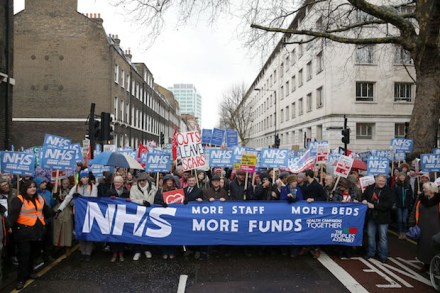
Donald Trump has found himself in the midst of another international spat, fuelled this time by his attack on the UK’s national religion. In an attempt to verbally jab the opposition in his own country, the President has managed to rile up many thousands, if not millions, of people who have deep reverence for Britain’s National Health Service: https://twitter.com/realDonaldTrump/status/960486144818450432?ref_src=twsrc%5Etfw I’m rarely on the side of Trump’s Twitter provocations, but this one, I’ll admit, isn’t half bad. While Trump is wrong about the protestors’ motivations (giving the tweet ‘top troll’ status), he is right that they march in the wake of a ‘broke’ system.

Admission of failure

From our UK edition

I am in a good position to report from the NHS frontline, having been in hospital with pneumonia for just over a week from 28 December. I was admitted following an early evening visit from a district nurse to the home I share with my younger daughter, her husband and their three children. The nurse rang A&E to advise them of my impending arrival but warned us that there was a four-hour wait for an ambulance. My daughter therefore decided to drive me in, and we arrived at a packed casualty unit. I was desperate for oxygen and my daughter begged at the reception desk for me to be triaged to access some, with no success. At 11.30 p.m. I was finally examined and hooked up to an oxygen supply. I was found a bed in the admissions ward at 4 a.m., in an atmosphere reminiscent of a war zone.

We can have an efficient health service or one no one complains about. We can’t have both

From our UK edition

This piece first appeared in this week's Spectator magazine.  Recently the NHS postponed a large number of non-urgent operations to cope with what is known as the ‘annual winter crisis’. Naturally, this outcome was treated as a scandal in the press, and there were predictable calls for Jeremy Hunt to resign. But the fact that non-urgent operations are postponed is not by definition bad. It might be evidence that the NHS is working well. Or at least that it is doing what it is supposed to do, which is to deploy necessarily finite resources on the basis of patient need, rather than some other criterion — such as profitability or ability to pay. Making people wait for less urgent operations isn’t a bug of the NHS; it’s a feature.

Boris is right about NHS funding – but he didn’t get his way today

From our UK edition

Cabinet today was not the dramatic showdown over NHS funding that some expected. Boris Johnson was, unsurprisingly given that Theresa May knew what he wanted to say, not called on to speak first. Those Ministers who went before him emphasised that it would be better if these debates took place in private, not public. When it was Boris’s turn to speak, I am told that he slightly pulled his horns in. He made the case for more money for the NHS but he didn’t argue for a specific figure, I understand. Interestingly, and in a sign of how May still views the International Trade Secretary as her bridge to Brexiteers, Liam Fox was called to speak early. Fox, a doctor himself, stressed that these arguments should take place behind closed doors not in the newspapers.

The Tories need a plan for the NHS

From our UK edition

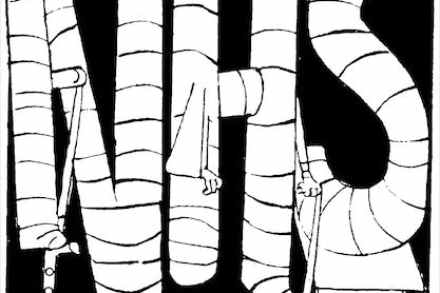
On Tuesday, the Cabinet will discuss the NHS and how it is coping with the winter crisis. But, as I say in the Sun today, the Tories need more than update on what's going on, they need a proper plan for the NHS. It is one of the issues that could cost them the next election. When David Cameron became Tory leader, his main focus was on the NHS. He used to say that you could sum up his priorities in three letters, N H S. He reckoned that until voters trusted the Tories with the health service, they wouldn’t win an election. But right now, the Tories aren’t talking about the NHS more than they absolutely have to.

A special NHS tax would be bonkers or a total fraud

From our UK edition

Some very clever people are rallying around the idea of a specific NHS tax partly because of what has been called a 'winter crisis' in hospitals. It’s an idea that has been around for yonks, but Nick Boles’s book, Square Deal, has kick-started the debate again. He argues for National Insurance to be repackaged as National Health Insurance. This would ‘give the NHS what it needs while removing it from running financial battles in Whitehall,’ he says. Boles makes a strong case, not least as someone who has survived two bouts of cancer thanks to NHS treatment. The key to his piece, I think, is this bit: Currently, we spend 7.

A nice, cuddly NHS would be bad for us

From our UK edition

Recently the NHS postponed a large number of non-urgent operations to cope with what is known as the ‘annual winter crisis’. Naturally, this outcome was treated as a scandal in the press, and there were predictable calls for Jeremy Hunt to resign. But the fact that non-urgent operations are postponed is not by definition bad. It might be evidence that the NHS is working well. Or at least that it is doing what it is supposed to do, which is to deploy necessarily finite resources on the basis of patient need, rather than some other criterion — such as profitability or ability to pay. Making people wait for less urgent operations isn’t a bug of the NHS; it’s a feature.