Nhs

To solve Britain’s social care crisis, follow the Dutch example

From our UK edition

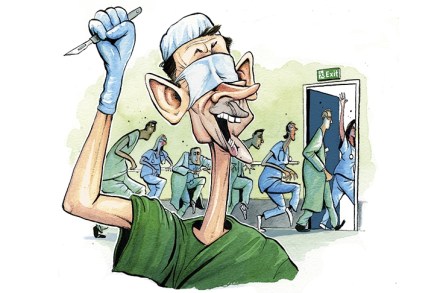
More than a decade ago, four Dutch nurses decided something needed to be done about their country’s care in the community. Back then, it was almost as bad as it is in Britain now — where a recent report found that at least 400 pensioners a week sell their homes to pay for social care. Nursing in the Netherlands had taken a terrible turn in the 1990s, when the government decided healthcare should be more ‘professional’. The ensuing bureaucracy and management doubled the cost, and the quality plummeted. Nurses were forced to spend more time on paperwork and, for want of help, elderly patients ended up in hospital when they could and should have been at home.

How many people have swum the Channel?

From our UK edition

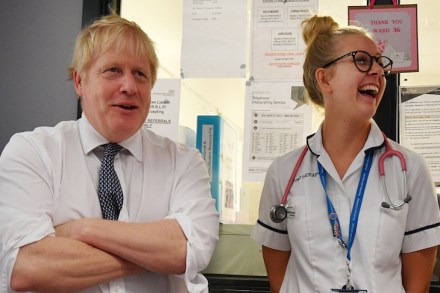
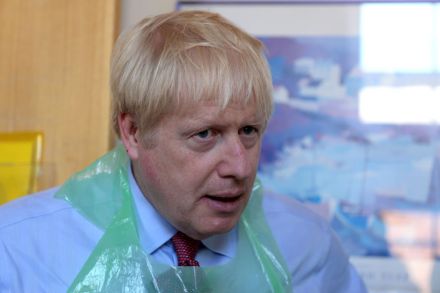
Journey’s end Holidaymakers are being flown home after travel company Thomas Cook failed. The idea might have horrified the company’s eponymous founder, whose first excursion was a temperance outing from Leicester to Loughborough on 5 July 1841, on a charter train from the Midland Railway Company. All 500 tickets were swiftly sold. A holiday from Leicester to Liverpool and North Wales followed in 1845, including several nights in temperance hotels and a night-time ascent of Snowdon. Thomas Cook went on to organise trips to the 1851 Great Exhibition for 150,000 from the Midlands. Financial health A Labour activist and parent of a patient accused the Prime Minister on a visit to a London hospital of ‘destroying’ the NHS.

Watching Stephen Fry was like being in the presence of a god

From our UK edition

Stephen Fry lies prone on an empty stage. A red ball rolls in from the wings and bashes him in the face. He stands up and introduces himself as Odysseus, stranded on an island-kingdom as he makes his way home after the Trojan War. The ball had escaped from the hands of a clumsy maidservant who was playing on the beach with a local princess. Now Fry, as Odysseus, begs her help and asks for a petticoat to cover his nakedness. This tale comes from Homer’s Odyssey, Book Six, but Fry doesn’t quote the reference he merely plunges on with the story. Odysseus shows up at the palace of the local warlord, King Alcinous, and tries to explain how he came to be wearing the princess’s undergarments.

Bill of health

From our UK edition

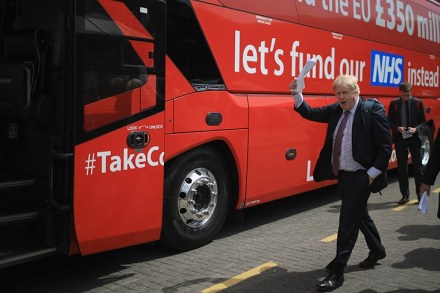
It would be daft for someone to offer you £1.8 billion and you turn it down. That sort of money isn’t to be sniffed at. This is how much Boris Johnson announced he would give to the NHS as an extra funding boost. And I don’t want to seem churlish or ungrateful — after all, those of us who work in the health service are always banging on about how NHS resources are near breaking point. But I have some reservations. The first is the most basic — I’m not sure this is quite the cash windfall it’s made out to be. While Boris has assured us that ‘this is £1.

The Spectator Podcast: the latest plot to oust Corbyn

From our UK edition

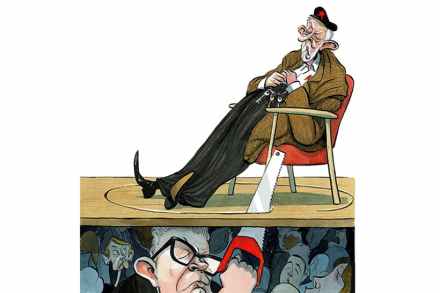
When Labour moderates tried to oust Jeremy Corbyn in 2016, their attempt only made him stronger, protected by swathes of loyal members. But this year, is the tide turning for Corbyn, as even supporters begin to doubt him? First, there were the abysmal European Election results, which for many Corbynites were particularly painful because they disagree with the leadership's ambiguous stance on Brexit. Then, last week's BBC Panorama brought out a dark side to the leadership - the press team's defensive response to the programme, accusing whistleblowers of being 'disaffected', disheartened many most loyal to the project. One high profile Corbynite I spoke to told me that they were disappointed at the response, and believe the party was institutionally anti-Semitic.

It’s time to listen to the NHS gender clinic whistleblowers

From our UK edition

Why are increasing numbers of children designated as transgender? Are the resulting medical interventions safe and justified and in the best long-term interests of those children? These are questions of public interest. Some of the answers being offered are troubling, to say the least. One such answer came this week, and deserves attention from politicians and journalists. It’s an open letter from Dr Kirsty Entwistle, formerly a clinical psychologist at the Gender Identity Development Service, the main NHS service for children who might be transgender. It’s a long piece and should be read in full.

Striking the wrong note | 18 July 2019

From our UK edition

Every summer for the past six years, Bayreuth has risen to its feet to acclaim an English Brünnhilde. Catherine Foster, from Nottingham, was the heroine of Frank Castorf’s anti-capitalist staging of Richard Wagner’s Ring cycle. The director was booed to the rafters, the singer hailed as saviour. Three perfectionist conductors, Kirill Petrenko, Marek Janowski and Christian Thielemann, insisted on her return each year. Across Europe, Foster commands the roles of Elektra, Isolde, Senta (Flying Dutchman) and Turandot. At 44, she is approaching her vocal prime. So it is a bit odd to find that no British company has offered her a leading role, or presently plans to do so. Six years of ovations at Bayreuth count for nothing in Blighty.

Health warning

From our UK edition

Everyone agrees something dramatic has to be done to help the NHS. It is crumbling and the canary in the mine is general practice. I work as a psychiatrist but my GP colleagues are almost all frazzled, overworked and frustrated at not being able to give the care they want to their patients. They’re quitting in their droves. So it makes sense that politicians, desperate for a quick and easy answer to an overwhelming and complex problem, have leapt on technology as a solution. And, in particular, on  the idea of an app that offers a GP consultation via your mobile phone. In theory, it sounds great: the patient can dial up, speak to and (via phone camera) see a doctor, who could be anywhere. The poster boy is an app called GP at Hand, run by British start-up Babylon.

Hancock given hard time over sugar tax and social care

From our UK edition

On the subject of MPs who hope Boris Johnson might give them a job, Matt Hancock was before the Health Select Committee this afternoon, where he ended up taking a fair bit of flak for what the current government hasn't done, and what the next administration might do. After his own failed leadership bid, the Health and Social Care Secretary backed Johnson, which made for a very awkward section in today's hearing about the sugar tax. Hancock was repeatedly pressed on Johnson's pledge to review 'sin taxes', including the one on sugary drinks, and he repeatedly answered that the most important thing was to look at the evidence behind the policy.

Doctor who? | 27 June 2019

From our UK edition

Last October, Phil Coleman, a journalist on the Carlisle-based News & Star, went to cover the trial of Zholia Alemi, a 56-year-old consultant psychiatrist who was accused of forging the will of an 84-year-old dementia patient in an attempt to inherit her £1.3 million estate. During the trial, Phil realised this complex scam could not have been the work of an amateur fraudster, and suspected previous mischief. How right he was. It turned out that Alemi had been practising in the NHS for 23 years without a medical qualification. Originally from Iran, Alemi moved as a young woman to New Zealand where she claimed she had graduated in medicine from the University of Auckland in 1992.

Letters | 13 June 2019

From our UK edition

The benefits of indecision Sir: Belgium has often been without a government for months on end without suffering any economic collapse. In Britain in recent decades governments with large majorities and led by ideologically driven prime ministers have made disastrous decisions on welfare reform, foreign policy and selling off social housing. Isabel Hardman is correct to say that ‘decisions are needed to solve problems that have festered for years’ (‘The in-tray of horrors’, 8 June). However her analysis should also consider the benefits of government paralysis: the damage that has been avoided because superficial and ill-thought-out policies never saw the light of day.

Playing chicken | 6 June 2019

From our UK edition

Why is it that free trade, which almost everyone agrees is good when conducted with other European countries, suddenly becomes something to be feared when it is proposed with the United States? What is it about American chicken which means that Britons who eat it happily enough when they are on holiday are supposed to fear it when it is imported? And if Americans can offer world-class, well-priced medical services to Britain through the National Health Service, how is that a threat to our social fabric? On his state visit to Britain this week, President Donald Trump reiterated his desire to do a ‘comprehensive’ trade deal with Britain. Given that we are leaving the EU in order to make our own way in the world, this is a prospect that ought to be welcomed.

Protons and cons

From our UK edition

It’s Asco week in Chicago: the biggest meeting of clinical oncologists in the world. McCormick Place convention centre, the largest in the US, is filled to its 2.6 million square foot capacity with people talking about cancer. And one of the hottest topics being discussed is something called proton therapy, a possible new tool in the anti-cancer arsenal. But does it actually work? Given that two private proton therapy machines have already been built in the UK, and that two more NHS machines are on their way at a cool £250 million, you’d think we’d know. The sad truth is that, for many cancers, the medical jury is still out as to how helpful these machines actually are. Proton therapy is a new kind of radiotherapy.

An agonising vigil

From our UK edition

Memoirs about giving birth, a subject once shrouded in mystery, have become so popular that another may seem otiose. We are all produced in variations of anxiety, pain and delight: what is the point of labouring labour? Two years ago, the novelist Francesca Segal gave birth to twins ten weeks prematurely. Her account of their struggle to survive in the neo-natal units of two London hospitals could be mawkish, banal and of no interest to anyone save those who have experienced a similar ordeal. That it is, in fact, as gripping as a thriller and as moving as a love story is testament to her exquisite writing and deep humanity.

Real life | 30 May 2019

From our UK edition

The receptionist fixed me with a withering stare. I had just filled out a repeat prescription form and politely inquired of the girl behind the desk how I would know when it was ready. She harrumphed and asked where I usually picked my prescriptions up from. I told her the pharmacy on site, you know, the one next door to the surgery, the one just there, in the car park of this building. The one you could see out the window. That one. She stared at me as though I were explaining that I collected my prescriptions from the international space station. ‘I’ll look it up,’ she said, as though my theory fell so far short of logic it was not worth even considering. ‘Date of birth?’ I don’t know why they don’t just give us a serial number.

Real life | 2 May 2019

From our UK edition

A leaflet came through my door from the NHS inviting me to take part (if that is the right term) in Cognitive Behavioural Therapy. What a kind offer, I thought. They must know I’m stressed. Fine, so I didn’t think that. I thought: what a blasted cheek! This leaflet is a mailshot, clearly, and has been distributed to every home in my area at a cost of goodness knows how much. I looked at the glossy thing in all its impudence and presumption and decided to chase after the postman. He was three doors down when I caught up with him and he wore a cheery smile as usual. ‘Can I ask you something?’ I called and as I approached him he could see I was waving the leaflet. He grimaced. ‘I know,’ he said, ‘it’s a cheek, isn’t it?

Letters | 4 April 2019

From our UK edition

About the Bible Sir: I was confirmed by Richard Holloway as a schoolboy at Fettes College, and then taught by John Barton while an Anglican ordinand at Oxford University. So I was intrigued to read Holloway’s review of Barton’s latest book, A History of the Bible (30 March), and disturbed by their conclusions. Indeed, both the book and the review go a long way to explaining why the median size of a Church of England congregation is 28, and why numbers are at an all-time low. One doesn’t have to be an anti-intellectual fundamentalist to believe in orthodox biblical Christianity, or to realise that being a disciple of Christ means one cannot have a lower view of the Bible than he did.

It’s time for the NHS to take care of British junior doctors

From our UK edition

For years, Britain has been failing to train enough doctors and has been importing them instead. This has been a well-known and much lamented fact, raising several ethical issues. Is it right for us to rob developing countries of their much-needed medics? Simon Stevens, the head of the NHS, said at the Spectator’s health summit this week that Britain should stop ‘denuding low-income countries of health professionals they need’. Quite so. Which makes it all the more shocking that last year, for the first time ever, the UK imported more doctors than it trained. And the problem Stevens highlights has, under his leadership, been getting steadily worse.

The Spectator Podcast: is Brexit a national humiliation?

From our UK edition

This week opened with the cautious optimism of a third meaningful vote passing, and ends, as our cover depicts, with Theresa May begging the EU for an extension. After John Bercow’s ruling that May’s Brexit deal cannot be voted on a third time, unless with ‘substantive changes’, the chances of May passing her deal before March 29 seemed further than ever. Now, this week has shown that Brexit is dictated at home by warring factions in the Commons, and dictated abroad by the EU. Even though the EU has given May a third chance at her deal, these past weeks lay bare the government’s inability to run the government, and Brexit is on the verge of being taken over by the Commons. Has May been reduced to nothing more than the semblance of a leader?

Lyme disease and me

From our UK edition

Some medical experts claim that Lyme disease is worse than cancer. It’s not a competition, but I do know one thing: at least if you’ve got the Big C you get sympathy, understanding and prompt treatment. With Lyme you’re pretty much on your own. This isn’t a plea for public sympathy. I’ve had Lyme for God knows how long — decades possibly — and though it has disrupted my health and my life in myriad weird, torturous and sometimes hideous ways, I still consider myself one of the fortunate ones. First, it hasn’t killed me; second, I’ve had some state-of-the-art stem cell treatment which with luck will eventually cure me. But it’s definitely not a condition I’d recommend.