New York City

Remembering Orsini’s

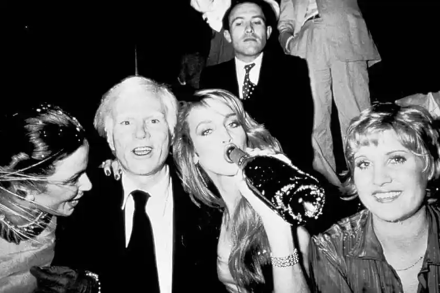
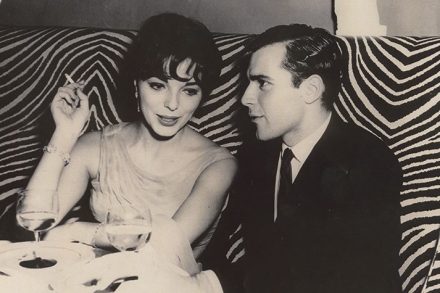
If Paris is cafés and London is pubs, New York is bars. Most of the legendary Big Bagel bars have been Irish: P.J. Clarke’s, still going strong, and the now-shut Elaine’s, where Woody Allen, Jackie Onassis, and Norman Mailer partied and gossiped protected by the formidable Elaine. But for me, although a regular at the above watering holes, there’s one that stands out because it was there where I cut my teeth as a young man about town, where I met Joan Collins, Janet Leigh, and Linda Christian — and debutantes and models galore. That was Orsini’s, at 43 West 56th Street, just off Fifth Avenue.

How ‘right to shelter’ feeds New York’s migration problem

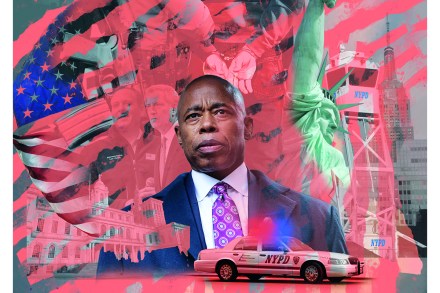
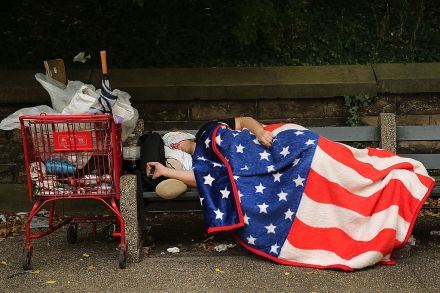
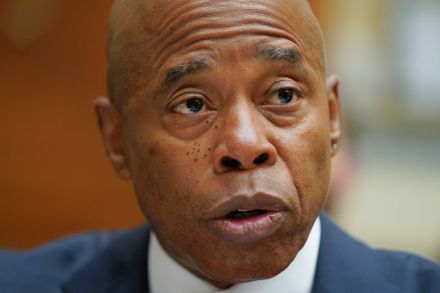
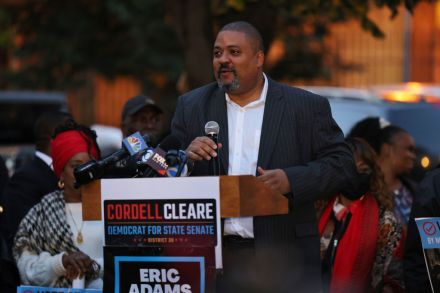
Mayor Eric Adams has found himself stuck between a Texas rock and a New York hard place as thousands of illegal immigrants have been bused to the Big Apple by Lone Star State Governor Gregg Abbott in recent months. Now, a decades-old New York City policy called “right to shelter” has Adams's hands tied as he tries to find beds for the city’s new arrivals. The result is a crisis for the homeless shelter system, mostly of the city’s own making. This week, as Gotham began turning away dozens of homeless New Yorkers from its facilities, the Adams administration suggested it was time to revisit the “right to shelter” policy, which guarantees a bed to anyone in New York City who wants one.

Tragedy strikes: Americans are smoking more weed than tobacco

An unfortunate milestone has been passed in the United States as it is reported that for the first time ever there are more marijuana smokers than cigarette smokers in our once great nation. To put it bluntly, so to speak, this societal transformation has taken iconic American glamor, the Marlboro Man, Humphrey Bogart, Lauren Bacall, and replaced it with Cheech, Chong and Otto the school bus driver from The Simpsons. Here in New York City, where once men in suits and hats and square dames in heels hustled, cigarette betwixt fingers, plowing ahead to the future, it now just smells like weed. Everywhere. Rockefeller Center? Smells like weed. Subway stations? Smell like weed. Washington Square Park? Well, OK, Washington Square Park always smelled like weed. But you get the point.

When the masks come off in blue states

The other night, I went to the Vermont State Fair in distinctly downscale Rutland, where my wife and I watched the pig races, ambled through the livestock exhibits, and examined the farm equipment, while enjoying corndogs and the crowd of distinctly overweight Rutlanders. The next day, I was back in my office in midtown Manhattan. A thin man wearing a mask got into the elevator with me and used a cloth to press the elevator button. Then he used the cloth to open the two doors to the street. He was clearly annoyed to have had to share the elevator with a maskless heathen. As he walked away, it occurred to me that I hadn’t seen a single mask or Covid-crazed person of any sort at the Vermont State Fair.

Covid Mask

From Moscow to Kyiv and back again

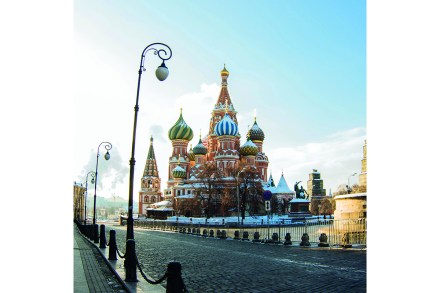
During the best of times, I left New York for gonzo journalism in Moscow; and during the worst of times, I fled a jingoistic wartime Moscow for the post-Covid euphoria of a resurgent New York City. My life in a sense has come full circle: I left New York for Russia in my freewheeling, bohemian twenties in search of future adventure and returned in my fifties when the rose-tinted dreams of the future that fueled Russia’s hedonistic capital were snuffed out in a murderous rage. That rage of a crumbling empire also engulfed lovely Ukraine in flames, battering its gorgeous capital Kyiv, where I had spent a blissful decade. With two of the three cities that I had called home caught up in a fratricidal zero-sum war, New York is once again King of the Hill.

Moscow

How secular humanism is ruining drag

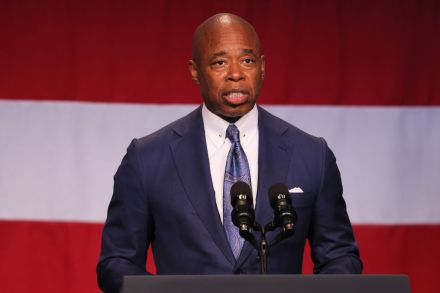
The fanfare over “drag queen story hour” has resurfaced again, this time with New York City mayor Eric Adams throwing his support behind the controversial new trend. “Drag storytellers, and the libraries and schools that support them, are advancing a love of diversity, personal expression, and literacy that is core to what our city embraces,” Adams said. In a metaphysically challenged age such as our own, it can be difficult to recognize the implications of drag, which traces its roots to the phenomenon of the eunuch — the sexual outsider, whose proclivities lie outside the boundaries of the “normal.

My New York nightmare

Throughout the Covid shutdowns, I felt like Wendy Kroy in The Last Seduction. If you’ve never seen the movie, the only thing you need to know is that a running theme is that the protagonist, hiding out upstate after stealing a lot of money, has got to get back to New York. Even the alias she uses is “New York” spelled backwards (sort of). For nearly two years, every morning I’d wake up thinking, I’ve got to get back to New York. Well, I’m back, and this isn’t what I meant at all. I wanted to be in the city that never sleeps, where I could walk around carefree, even at night, take the subway, and live within a few blocks of every possible convenience. Instead, this happened.

New York

Don’t blame Texas for New York’s immigration ‘crisis’

To hear New York mayor Eric Adams tell it, you would think that a crisis has gripped the streets of our nation’s largest city as busloads of illegal immigrants arrive from Texas. Some of the new arrivals, courtesy of Texas Governor Greg Abbott — who wants to send a message about the very real crisis in his state — have been met in person by the mayor. He claims the city is now scrambling to take care of them. It’s a lie. Thus far, Abbott has sent 75, maybe 100 illegal immigrants to New York, a city of 9 million people, a city which, in fact, already has a population of 500,000 illegal migrants. Are we really to believe that a few dozen more from Texas has our system at the breaking point?

New York City wants to rename monkeypox because racism

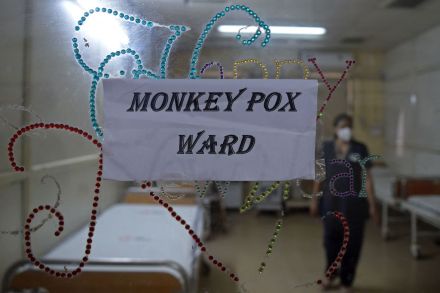
Color Cockburn shocked that the medical establishment is once again enforcing political correctness. The New York City Department of Health and Mental Hygiene recently issued a letter begging the World Health Organization to rename the highly contagious monkeypox virus. Why? They were concerned the word “monkeypox” was offensive to minorities. Cockburn — and Twitter for that matter — know this is a misalignment of priorities. Some names are purely innocent and playing PC police is not the job of the NYC Department of Health. Also why is it that New York authorities hear “monkeypox” and immediately think about black and brown people? Physician, heal thyself! And how far are we supposed to take this?

The attack on Lee Zeldin was an attack on our Constitution

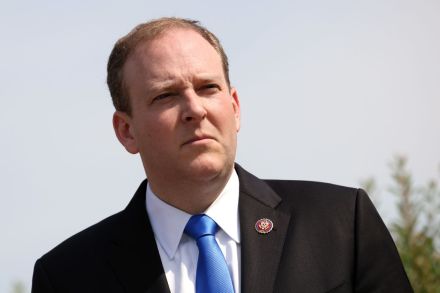
On Thursday, a man jumped onstage and tried to kill one of the two candidates running for New York governor. Fortunately, he failed. Even so, the incident was terrifying, not only because it endangered Representative Lee Zeldin but because it underscores two grave problems facing America. One is the failure of our law enforcement system to treat serious crimes seriously, both to deter them and punish the offenders. This failure makes it a misnomer to speak of our “criminal justice” system. It’s not providing justice, and it's not deterring crime, especially violent crime. The second is the danger violence poses to our established constitutional order, beyond its danger to any individual.

Justice at last for bodega worker Jose Alba

Austin Simon, the thirty-five-year-old convicted felon who assaulted a bodega worker in the Hamilton Heights section of Manhattan earlier this month, might still be alive today — if it weren’t all but impossible for law-abiding New Yorkers to obtain a firearm. Simon — dressed in diamond jewelry and a $300 T-shirt — stepped behind the counter to assault sixty-one-year-old Jose Alba, after Simon’s girlfriend’s EBT card was declined when she attempted to purchase a bag of potato chips. A single shot to the leg would have neutralized Simon long enough for law enforcement and paramedics to arrive. Instead, a gory, now-viral, confrontation ensued.

alvin bragg jose alba

Requiem for the New York Karen

I saw the look on the Uber driver’s face as he dutifully started putting on his mask. “You don’t have to do that for me, buddy,” I let him know. “Thank God,” he smiled, and we were off. Sitting on the parking lot we New Yorkers ironically call the Brooklyn Queens Expressway I thought back to a hungover morning in the winter of 2020, when an email popped up amid my coffee and cigarette. It was from Lyft: there was a picture of me in it, maskless, and a stern warning not to do it again. What a difference two years makes. Today in Gotham, for all intents and purposes, Covid is over. To any sane person, this sounds like good news, but not to the New York Times: the Gray Lady is worried.

new york city karen

A sunshine state of mind

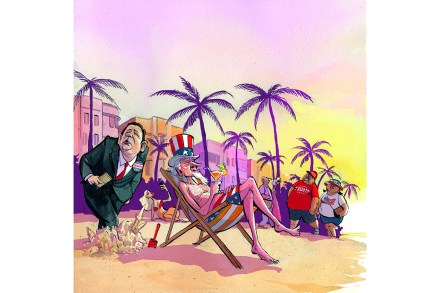
“I thank God for this place.” It might seem a weird thing to say, unapologetically earnest and deeply uncool, but, in Florida, it’s very common to overhear someone saying exactly this. On the beach. By a pool. In a restaurant. At the checkout line at Publix. Some other phrases you hear a lot: “I wish we had made the move sooner.” “I feel like I’ve added years to my life.” “Living the dream.” “Another day in paradise.” It is a unique moment in Florida’s history. The feeling of gratitude is very real. Millions of people seem to have woken up one day and decided they had to become Floridians right away. I am among them. How many exactly is unclear. The US Census estimates 221,000 people moved to Florida between July 2020 and July 2021.

big sort
clubs

Members’ clubs are having a moment

One lunchtime in May, the sixth floor of a restored warehouse on Manhattan’s Ninth Avenue buzzed with the sound of lingering lunch dates, pandemic-postponed reunions and the erratic clatter of computer keyboards beneath the inspired fingertips of creatives and those moonlighting as such. Just beyond the reception desk a gaggle of bespectacled, chino-clad men congregated. In suede sneakers and made-to-look-worn corduroy jackets, they clutched Scandi-chic satchels and laptop bags, poised to pounce on the next available artfully upholstered chair. Even one of the sumptuous velvet sofas would do. Next door, in the dining area, waiters weaved in and among patrons like figure skaters, determined not to risk their precious tips by spilling a drop of Bloody Mary or chai latte.

A flag under foot

On my way to work in Midtown Manhattan each day, I pass down 50th Street. Near the corner of Broadway, not long ago someone glued an American flag to the sidewalk and set fire to it. The scorched remnants cry out in resistance to the attempted insult and erasure. I have no idea what protest prompted this indignity, or whether the person who sealed the flag to where pedestrians would trample it was the same who decided to set it on fire. I haven’t noticed any passersby taking special note of Old Glory reduced to such an inglorious state, surrounded by cigarette butts and other debris. This isn’t New York City’s fault. We are amid more pressing crises. The subway entrance nearby — one of the main points of access to Midtown — reeks of urine and sometimes worse.

flag

Zabar’s is still thriving

You might expect Zabar’s, the world-famous “appetizing” store on Manhattan’s Upper West Side, to have become a shadow of its former self. This seems to be the case for most of New York’s other independent specialty shops. Fairway, Balducci’s, H&H Bagels, Dean & Deluca: the food purveyors of my youth have gone kaput. They were bought, leveraged, expanded, overextended and oversold. They expired past their sell-by dates. But somehow Zabar’s survived. For the Upper West Sider, Zabar’s is our Yale College and our Harvard. Like many I make my way down to 80th Street and Broadway most weekends for continuing education. I head to the appetizing counter and take a number.

zabar's
Hannah

Diaries from Eighties New York

Duncan Hannah, wild child of Andy Warhol’s 1970s, matured to the art world of Eighties New York. The following is an exclusive excerpt from his as-yet-unpublished diaries that chronicle a decade of growing up and getting down — of painting, writing, reading, heroin, AIDS, infatuations, sobriety, Reagan and more. February 15, 1984: Semaphore Gallery sold the painting “Christmas” that I painted on Christmas. Hooray! I was in a cab coming down Broadway with Greg Crane and Simon Lane. We stopped for a red light at Houston Street. Crane said “Oh my God, LOOK!” and pointed to the south side of the street. Above the New-Wave fruit-stand, illuminated in the darkness, was a giant billboard advertising my upcoming show at Semaphore.

Ukrainian

Walking around the Ukrainian Village

When I heard that long lines had begun forming to get into Veselka after Russia invaded Ukraine, I almost rolled my eyes. I’ve been patronizing the restaurant, in the heart of New York City’s Ukrainian Village, for years, and there’s often a queue — at the height of brunch, the line can stretch for a block. But there’s no denying it’s seen an uptick in traffic as New Yorkers aware of the brutal images from Bucha and Mariupol want to feel they’re doing something to help. “Eat borscht, stand with Ukraine” reads a sign; the restaurant is donating all proceeds from sales of its hearty beet soup to Razom for Ukraine, a nonprofit. The Ukrainian Village, or Little Ukraine, is an enclave of Manhattan’s East Village.

The nothingburger investigation into Trump’s finances

If you had "Trump goes to jail" in the office pool, you just lost. The end of any possible criminal prosecution out of New York over Donald Trump's finances has come as the grand jury seated to find them has sunsetted. The possibility of a civil penalty, likely a fine, looks poor, but anything is possible. This is all a long way from predictions that the walls were closing in back when these cases were initiated in the Southern District of New York (SDNY). Dems, dragging all their Biden baggage along, are going to have to beat Trump at the ballot box, assuming anyone can afford the gas to drive out to vote.

The Democrats’ twisted priorities on crime

Crime is on the rise in cities across America and the left is asleep at the wheel. Democrats are set to be routed in the upcoming midterm elections, but instead of getting onboard with tough-on-crime policies, they've focused their efforts on measures that are wildly out of touch with even their own voters. To start, Democrats have their pandemic lockdowns to thank for at least some of the crime crisis. Carjackings are up in cities, which experts attribute to teenagers who are not in school or extracurricular programs. James Alan Fox, a criminologist at Northeastern University, said that the pandemic has given people too much free time, which can lead to an uptick in crime.

US President Joe Biden holds a 9mm pistol build kit (Getty Images)