Nazism

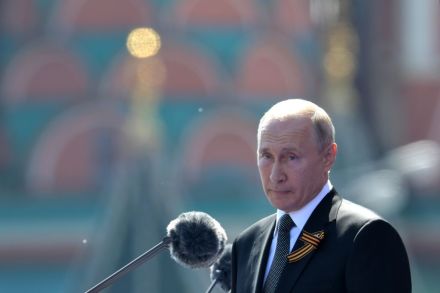
Putin’s Victory Day speech shows he’s not backing down

“Victory Day” is one of the most solemn events on the Russian calendar. Every year on May 9, the country gets together to celebrate the defeat of Nazi Germany in what Russians call “the Great Patriotic War,” in which as many as 26 million Soviet troops and civilians perished. It’s a time for reflection, for an appreciation of history, and, yes, for pomp and circumstance, with Russian troops decorated in dazzling uniforms marching in unison throughout Moscow's Red Square. This year’s Victory Day celebrations, however, had much of the world on edge. In next-door Ukraine, Russian forces were taking a beating, with smaller but nimbler and more determined Ukrainian units continuing to mount stiff resistance against a Russian military offensive in the Donbas.
Can the German military celebrate its history?

From our UK edition

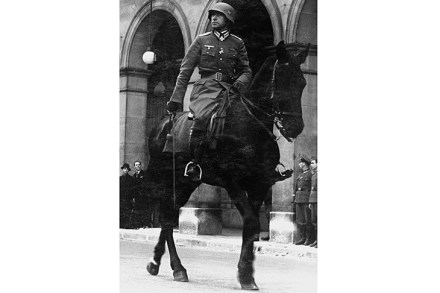
Picture German troops marching in front of the Reichstag in Berlin. Their polished black boots hit the ground in rhythm with the drums. Night has fallen and the soldiers are carrying burning torches that cast an eerie glow over the spectacle. But these aren’t Nazis. This ceremony was held last Wednesday in honour of Germany’s Afghan campaign. The inevitable furore has overshadowed the purpose of the event — to remember the 59 German fallen — exposing the dilemma of the German armed forces: can they have a sense of history and tradition despite their unforgivable role in Nazi crimes? German politicians have been busy debating the purpose of the Afghan campaign since the Reichstag march.

The Prince of Prussia’s Nazi problem

From our UK edition

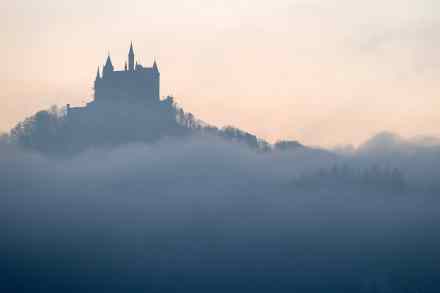
Perched on a mountain top overlooking the Swabian Alps, Hohenzollern Castle, with its picturesque towers, seems like something out of a fairytale. It is a relic from a bygone era. When the proud owner is at home, his flag waves defiantly in the wind, but it bears the colours of a kingdom that no longer exists: the black-and-white of Prussia. Georg Friedrich, Prince of Prussia, is the current head of the House of Hohenzollern. It is strange to look at the smiling businessman in the tailored suits and think of him as a Kaiser. But the 45-year-old father of four would be exactly that had the German monarchy not fallen. His dynasty can trace its roots back to the 11th century.

Churchill did admire Mussolini

From our UK edition

In his ruthless demolition of Geoffrey Wheatcroft's new Churchill biography in last week's Spectator, the historian Andrew Roberts pours scorn on the ‘insinuation that Churchill had fascist leanings in the 1920s’ as it is not supported by ‘any actual evidence (for there is none)’. Well, however justified his hatchet job of Wheatcroft's book is in general, Roberts is deeply mistaken about Churchill and fascism. Like so many in the 1920s and well into the 1930s, from all sides of the political divide, Churchill was a fervent admirer of the former revolutionary socialist Benito Mussolini and the fascist movement which he founded in 1919.

Waiting for Gödel is over: the reclusive genius emerges from the shadows

From our UK edition

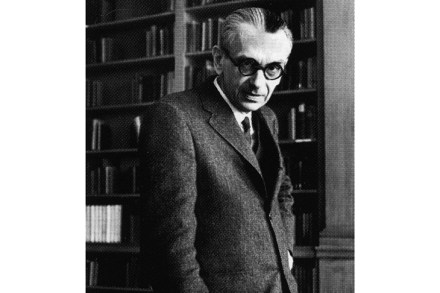
The 20th-century Austrian mathematician Kurt Gödel did his level best to live in the world as his philosophical hero Gottfried Wilhelm Leibniz imagined it: a place of pre-established harmony, whose patterns are accessible to reason. It’s an optimistic world, and a theological one: a universe presided over by a God who does not play dice. It’s most decidedly not a 20th-century world, but ‘in any case’, as Gödel himself once commented, ‘there is no reason to trust blindly in the spirit of the time’. His fellow mathematician Paul Erdös was appalled: ‘You became a mathematician so that people should study you,’ he complained, ‘not that you should study Leibnitz.

Apostle of modernism: Clive Bell’s reputation repaired

From our UK edition

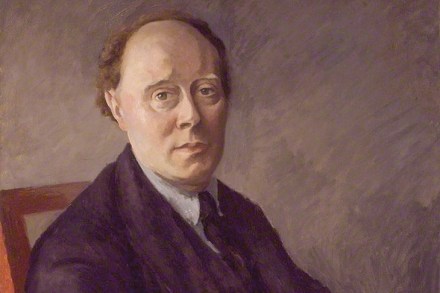
Clive Bell is the perennial supporting character in the biographies of the Bloomsbury group. The husband of Vanessa Bell, brother-in-law of Virginia Woolf and friend of Maynard Keynes and Lytton Strachey, he is often depicted as a witness to historical events rather than a participant in them, a sort of modernist Forrest Gump. At best he is a dilettante with good taste who didn’t quite belong with the intellectuals of Bloomsbury; at worst he is a womaniser with Nazi sympathies who took advantage of Virginia Woolf. In this useful book Mark Hussey lets him take centre stage and delivers a far more nuanced portrait. Bell liked to play up to his bad reputation — describing himself as ‘made for...

An unsuitable attachment to Nazism: Barbara Pym in the 1930s

Novelists’ careers take different paths, and sometimes don’t look much like careers at all. It’s true that some start publishing between 25 and 35, and write a novel respectably every two or three years until they die, like Kingsley Amis. Others don’t start until they are 60, like Penelope Fitzgerald, or stop abruptly without warning, like Henry Green, or write one novel and no more, like Harper Lee. Inspiration, or interest, comes and goes, and both the audience and the industry will have their wilful way with creativity. The ultimate aim of a novel, to be read with pleasure decades after its creator’s death, is reached in tortuous ways.

The fall of Golden Dawn

From our UK edition

Next week, the biggest Nazi-related trial since Nuremberg will come to a close. Following the murder of Greek musician Pavlos Fyssas by a member of the neo-Nazi party Golden Dawn seven years ago, the entire leadership and dozens of members were charged under counter-terrorism legislation with running an organised crime syndicate. The case file, which runs at more than 3,000 pages, includes charges of murder, arson, possession of guns and explosives, and even trafficking. A combination of the famously sclerotic Greek justice system and circumstance held up the trial for years. The pandemic and the lockdown that followed it pushed the verdict back even further. But now, at last, it’s nearly over. The party’s troubles extend beyond the courts.

Hitler’s admiration has severely damaged Wagner’s reputation

From our UK edition

In the early 1920s a French businessman, Leon Bel, was looking for a name for his new brand of processed cheese. He remembered seeing a meat wagon on the first world war battlefields with the sardonic name ‘La Wachkyrie’. Like the Valkyries in Wagner, it brought solace to fallen soldiers in the field. Bel thought it would do very well, and gave his cheese the same name in a more orthodox spelling. La Vache Qui Rit (the Laughing Cow) is still very popular today. Reading this completely unsuspected story of a trademark in Alex Ross’s book, I wondered with some astonishment at this world. A businessman looking for a striking name for a mass-market product hits on a joke about the title of a five-hour German music drama written 70 years earlier — and it succeeds.

A true story that never feels true: Resistance reviewed

From our UK edition

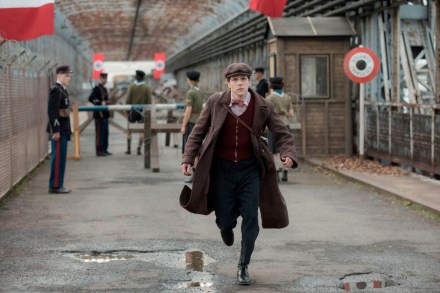
Resistance stars Jesse Eisenberg and tells the true story of how mime artist Marcel Marceau helped orphaned Jewish children to safety in the second world war. I had no idea. I had only ever thought of Marceau as ‘Bip’, who will live on for ever in my nightmares. (God, mime.) But while the story is remarkable, the film is considerably less so, veering between overtelling and undertelling, wavering in tone and never properly coming to any kind of life. If I had to do this review in mime I’d probably be miming nodding off on the sofa but, then again, I’m pretty sure I did that for real.

An eye in the storm

From our UK edition

Ernst Jünger, who died in 1998, aged 102, is now better known for his persona than his work. A deeply confusing and controversial figure who loathed democracy and glorified German militarism, yet despised the Nazis, he not only bore witness to the industrial flesh-mangles of two world wars, but almost the entirety of the 20th century. His writings and insights have long earned him sage status in Germany. This, the first publication in English of his diaries from 1941–45, heightens his complexity but also makes him a more rounded figure.

Theatre of war

From our UK edition

There was a time when you read French literary novels in order to cultivate a certain kind of sophisticated suspicion. Post-modern writers like Robbe-Grillet, Ricardou and Perec were hyper-aware of the political and philosophical problems underlying traditional realist narratives. They produced novels that were as much critiques of novel writing as they were actual stories with actual characters. Nowadays, however, one might go to the French section of a bookshop looking for something more Balzacian. One might read Houellebecq for his excoriating critiques of our political culture, or Édouard Louis for an exposé of the prejudices fostered by French working-class life.

A meeting of remarkable men

From our UK edition

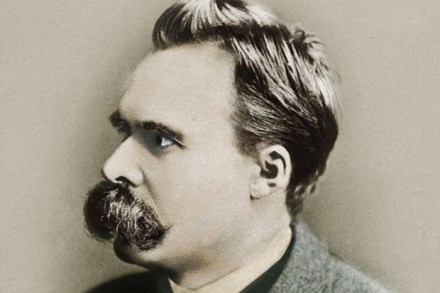
In 1945, with the second world war won bar the shouting, Bertrand Russell polished off his brief examination of Friedrich Nietzsche’s contribution to Western thought with the splendid phrase: ‘His followers have had their innings.’ Russell knew that Nietzsche’s followers didn’t just mean the Nazis. Ten years before Hitler’s acolytes started editing special volumes of Nietzsche’s aphorisms about the Will to Power, the Blond Beast and suchlike, Leon Trotsky declared that ‘the Nietzscheans’ were his natural allies in the creation of the socialist ‘superman’.

Sign of the times

From our UK edition

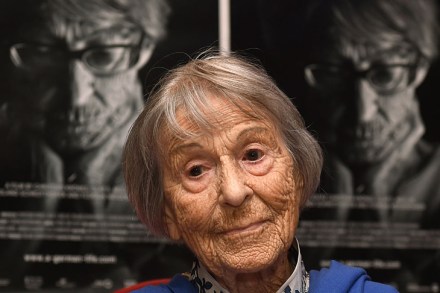
As if on cue, The World At One on Monday (Radio 4) ended with a short (too short) interview with an Austrian documentary film-maker who recently made a film about Brunhilde Pomsel, secretary to Hitler’s propaganda minister, Joseph Goebbels. The announcement of her death in Munich, aged 106, prompted the conversation, which happened to follow all the stories about the repercussions of President Trump’s executive order banning those from certain countries from entering the US. The significance was not lost on the ever-astute Martha Kearney. Florian Weigensamer described Pomsel in great age as ‘just incredible’. She was ‘quick-witted, funny, a great storyteller’. But, said Kearney, ‘She was working at the heart of the Nazi machine, wasn’t she?

A singular horror

From our UK edition

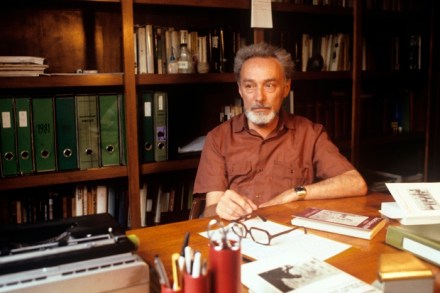
Seventy years after the Nazi Holocaust, against the background of a rich and varied literature, Laurence Rees has achieved the unexpected: a magisterial book that consolidates what has come before and manages to offer fresh perspectives. With Brexit, Donald Trump and Marine Le Pen now centre stage, it also offers a timely reminder of the dangers that are unleashed when the path of demonisation and discrimination is embraced in the name of national well-being. As Primo Levi wrote in 1947, from his own experience, when the ‘unspoken dogma’ of group targeting becomes ‘the major premise in a syllogism, then, at the end of the chain, there is the Lager’.

Haus of ill repute

From our UK edition

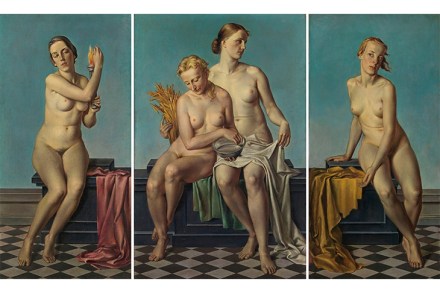
Here in Munich, in the gallery that Hitler built, this year’s big hit show is a spectacular display of modern art. Postwar: Art Between the Pacific and the Atlantic, 1945–1965 is a massive survey of international modernism, curated with typical Germanic can-do. Talk about ruthless efficiency — even the catalogue weighs several kilograms. All the stars of German modern art are here, from Joseph Beuys to Gerhard Richter, but the most interesting exhibit isn’t in this huge central hall, where Hitler staged his Great German Art shows, it’s in a quiet corner of the gallery, at the end of a deserted corridor, up an empty flight of stairs.

A bit player in the great drama

From our UK edition

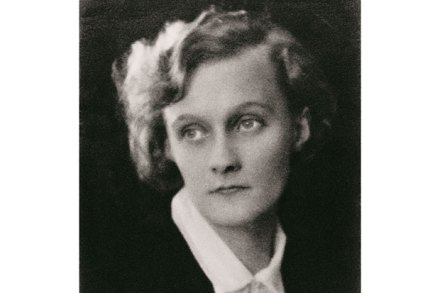
There’s a glorious scene in Astrid Lindgren’s first Pippi Longstocking book in which her fearless, freckled heroine strides to the centre of a circus ring and briskly lays out the World’s Strongest Man. Like most of the adults who expect to control her, he quickly learns that his inflated size, age and title are no match for the child’s bold pin-wielding attitude. As a little fan myself in the early 1980s I probably giggled as the strongman toppled. But reading it to my own children this summer I also felt a deep lurch of sadness. The strongman’s name was Adolf, and the book (published in 1945) was written as an equally ridiculous Adolf was sending train loads of bright little Pippis to their ‘final solution’.

Frankly impenetrable

From our UK edition

One day in April 1969 Theodor Adorno began teaching a new course entitled ‘An Introduction to Dialectical Thinking’. Feel free, the sociologist-cum-philosopher told the packed hall at Frankfurt University, to ask questions as I go. Two of his charges did so immediately. When was Adorno going to apologise for having set the cops on those campus protesters three months earlier? Before Adorno could reply, another student scrawled ‘If Adorno is left in peace, capitalism will never cease’ on the blackboard. At which point the whole class shrieked ‘Down with the informer!’ Then a group of women surrounded Adorno, bared their breasts, and showered him with rose petals. Grabbing his hat and coat, the hapless prof ran.

Dramatic effect

From our UK edition

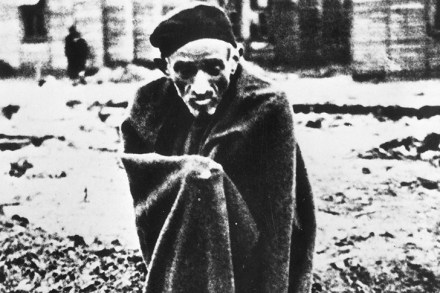
It was hard to believe that Monday morning’s introduction to the Italian writer Primo Levi on Radio 4 lasted for only 15 minutes. It was so rich, multi-layered, filled with meaning. Presented by Janet Suzman, it was intended as a fanfare for the 11-part adaptation of Levi’s most original book, The Periodic Table, in which he explores the chemical elements by equating them to episodes in his own story. Levi, an Italian chemist, was captured by the Nazis as a resistance fighter and a Jew, and at first detained and later sent to Auschwitz. His science training and his knowledge of German saved him from the gas chambers; and a timely bout of scarlet fever ensured he did not die on the death marches from Auschwitz that preceded its liberation.

Reclaiming Nietzsche

From our UK edition

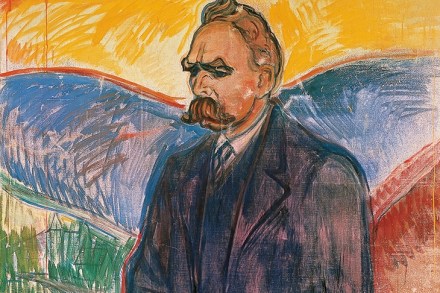
Had you been down at Naumburg barracks early in March 1867, you might have seen a figure take a running jump at a horse and thud down front first on the pommel with a yelp. This was Friedrich Nietzsche, midway through his 23rd year and, thanks to a sickly childhood, no stranger to hospitals. Nietzsche lost part of his sternum, leaving him not so much pigeon-chested as angle-grinded. Once recovered, he celebrated by having his picture taken in full uniform, sabre at the ready, glaring at the ‘miserable photographer’ like a warrior set for battle. Daniel Blue regards the photo as ‘unflattering’ — though it's nowhere near as unflattering as the picture Elisabeth Förster-Nietzsche painted of her brother after his death in 1900.