Nazis

How should we honour the ‘angels’ of the Holocaust when they’re gone?

Yom HaShoa is Israel and the Jewish people’s day of remembrance for the Shoa, or Holocaust. It falls this year on 8th April. Its official Hebrew name means ‘Holocaust and Heroism Remembrance Day’, emphasising how we should remember not only the six million Jews who were killed by the Nazis, but also the heroes like those who rose up against their persecution in the Warsaw Ghetto. There is also another group of heroes we should remember. Their actions provide a model of human decency we should all seek to emulate. An apparently disparate group from varied backgrounds, they are known as the ‘Righteous Among the Nations’ – special people who

Gina Carano and the hypocrisy of Hollywood

Godwin’s Law has become a way of life in our polarised political times. Go on social media any given day and you’ll find someone comparing their political opponents to the Nazis. But the case of Gina Carano is the first I can think of in which someone has been fired for suggesting as much. Carano, a former MMA fighter, was one of the stars of The Mandalorian, the hit Star Wars spin-off series on Disney Plus. That was until yesterday, when an Instagram story she posted, in which she seemed to suggest that the plight of conservatives in America had alarming echoes of early Nazi Germany, led to her being

The painful question we must ask about the Holocaust

How should we remember the Holocaust? In the next decade or so, many of the last living Holocaust survivors will pass away. It will then fall to us later generations to confront what Hannah Arendt called ‘the abyss that opened up before us’ by telling their stories. In doing so, we aim to guard against the spectre of Holocaust denial. But when we vow to ‘never forget’ the terrible crimes of Nazism, what exactly is it that we seek to remember? What is sometimes forgotten is that the way we remember the Holocaust is as much a historical process as the event itself. Though the term ‘holocaust’ was used already

No, Spike Lee: Donald Trump is not like Hitler

I wish people would stop comparing Donald Trump to Adolf Hitler. Not because I’m worried about Trump’s feelings — he’s big enough to look after himself — but because of the extraordinary damage these comparisons are doing to historical memory. All the loose, opportunistic, cheap-thrill talk about Trump being the new Hitler is trivialising the Nazi regime and the grotesque crimes of the 1930s. The latest celeb to jump on the Trump-Hitler bandwagon is film director Spike Lee. During an acceptance speech for a special prize from the New York Film Critics Circle, Lee said Trump would ‘go down in history with the likes of Hitler’. Trump and all ‘his

How Hitler’s great gamble nearly paid off

Do we need another wrist-breaking book about Adolf Hitler, the Third Reich and the second world war? Since Ian Kershaw published his two-volume biography of the Führer 20 years ago, there have been at least a dozen similarly weighty tomes on the war by historians including Max Hastings, Andrew Roberts, Antony Beevor and Kershaw himself; not to mention more recent massive lives of the Nazi dictator by Brendan Simms and the German historians Peter Longerich and Volker Ullrich. So what is there left to say that we do not already know? To gain attention, any new study has to have a thesis: some fresh angle that previous writers have overlooked

The unlikely Schindler who saved my wife’s family

As I gaze at my four children on Christmas morning, clambering on to the bed with their stockings, I will think of one particular person to whom, in a roundabout way, they owe their lives. He was a colonel in the first world war and, had it not been for his generosity, my children, their mother, her brothers and sisters, their children, their aunts, uncles and cousins — the entire Bondy clan, in fact — would not exist. The story begins in 1918, as the conflict was nearing its end. Karel Bondy, my wife’s paternal grandfather, was a young Czech officer in the Austro-Hungarian army who had miraculously survived heavy

The legend of Marlene Dietrich

How to sum up the legend of Marlene Dietrich? She was an actor, a singer, a style icon, even a war hero. A retrospective is under way at the BFI, where more than a dozen of her films are being shown throughout this month. Many admirers saw only the shimmering legs and forgot the sharp intellect, the wartime gallantry. But it would be wrong to deny that body image was central to her success. It was with this in mind that the critic Robin Wood christened Dietrich ‘the Venus de Marlene’. Like the statue alluded to, Dietrich is a monument of Western culture, her image cast not in stone, but

The heroic couple who defied Hitler

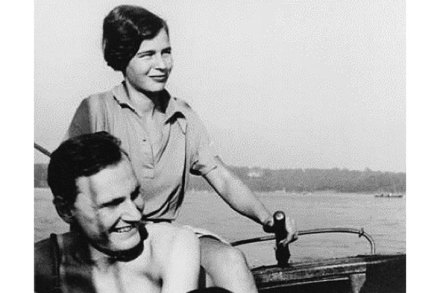
In the face of authoritarian rule, what is a citizen to do? Some will join the oppressors, while others, such as the diarist of the Nazi era Victor Klemperer, will keep their heads down, hoping the horrors will pass (they usually do not). Some, generally a tiny minority, choose the path of civil courage and resistance, of activity that aims to sabotage the regime. Such acts may take many forms, one being to work secretly from within the new establishment of which you are a part. That was the one taken by Libertas Haas-Heye and Harro Schulze-Boysen, two Berlin intellectuals who fell in love and worked to undermine the Nazi

Swanky, stale and sullen, the summer music festival has had its day

‘Festival?’ said Nathan Milstein. ‘What is festival?’ I had naively asked the most immaculate of violinists where he used to play in the summer and he looked at me as if I had proposed an unnatural act. ‘Before the war,’ said Nathan, offering a glimpse of paradise lost, ‘Volodya and I would stay at Senar for six weeks with Rachmaninov.’ Volodya was Horowitz, his best friend. ‘In those days,’ he continued, ‘we liked to spend time with composers. A composer was someone you could talk to. He knew philosophy, literature, lepidoptery. Rachmaninov could name all the butterflies around Lake Lucerne. He liked me better than Volodya, maybe because I was

From ‘divine Caesar’ to Hitler’s lapdog – the rise and fall of Benito Mussolini

In 1919, an obscure political agitator called Benito Mussolini assembled a ragbag of Blackshirt diehards in the Lombard capital of Milan and launched the movement that was to become, two years later, the National Fascist Party. The party took its name from the classical Roman symbol of authority — an axe bound in rods, or fasces. Once in power, Mussolini introduced the stiff-armed Roman salute after the handshake was considered fey and unhygienic. At times he wore a richly tasselled fez and thrust out his chin pugnaciously for the cameras. For all his posturing and demagoguery, Mussolini was widely admired in pre-war Britain, where Lord Rothermere’s Daily Mail routinely carried

René Dreyfus: the racing driver detested by the Nazis

I have driven a racing car. On television, it looks like a smooth and scientific matter. It is not. A racing car is a fearsome environment of engulfing pyroclastic heat, metaphor-testing noise, vision-blurring vibration and nauseating centrifugal forces. Ninety years ago it was even worse. The cars had tyres with little grip, feeble brakes and no crash protection whatever. Hot oil would continuously spray over drivers, who raced in linen caps; and an off, as they call excursions, would often result in mutilation or immolation. Faster is the story of René Dreyfus, who flourished in this atrocious atmosphere, in a culture where the public found the achievement of speed a