Navy

The age of the aircraft carrier is over

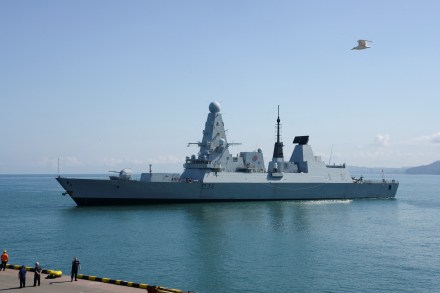
Ever since World War Two, America’s aircraft carrier fleets have served as imposing instruments of imperial power, roaming the oceans to cow recalcitrant nations into obedience. Favored by the Trump administration for this purpose, current experience indicates their day is done thanks to the proliferation of anti-ship missiles and the increasing ubiquity of drones. In America’s last Middle Eastern war but two, against the Yemeni Houthis in 2025, the carrier USS Harry S.Truman, complete with its attendant escorts, was driven into retreat, leaving antagonists in control of the Red Sea. On one occasion, the carrier’s desperate maneuver to avoid a Houthi drone caused an $80 million Hornet jet fighter to slide off the deck and topple into the sea.

Fact-checking the Venezuela war hawks 

As the US Navy remains primed for action in the Southern Caribbean, Venezuelan dictator Nicolás Maduro prepares for what could be an American attempt to remove him. And as President Trump alternates between calling Maduro on the phone and authorizing air strikes, a bevy of misinformation is being peddled by public figures with an agenda. There are so many claims and counter-claims on the air waves right now that it’s difficult to separate fact from fiction. A sizable chunk of this disinformation is of course being sold by Maduro himself, a man who has learned from his predecessor and mentor, the late Hugo Chávez, that it’s easier to blame the United States for all of your problems than own up to your own catastrophic policy errors.

Why the Army needs the cavalry

A generation ago, I was an officer in the US Army National Guard and later in the Army Reserve. I did absolutely nothing important, and never saw any places more exotic than Fort McCoy, Wisconsin, and Camp Atterbury, Indiana. I then spent a dozen years working for the Army as a civilian employee. I had already decided before these events to devote my academic career to the study of the Army. I loved (and still do love) it in an abstract and historical sense. However, only after my personal association with it did I realize how profoundly shortsighted it was. I observed this myopia daily and marveled at its immensity. Veterans may remember the adage that there is “the right way, the wrong way and the Army way.” The Army way is usually just plain dumb.

Army

America’s military isn’t ready for a war with China

China’s 20th Party Congress concluded on October 23, and President Xi Jinping secured a norm-breaking third term as leader of the Chinese Communist Party (CCP). With the Politburo Standing Committee stacked with close confidants and dissent virtually wiped out, Xi is the strongest he has ever been. Xi has also redoubled the Party’s commitment to taking the island of Taiwan, by force if necessary. Secretary of State Antony Blinken recently said that China “was determined to pursue reunification on a much faster timeline.” The alarm has been repeatedly sounded by American military officials, with speculation that a Chinese invasion of Taiwan could occur as soon as 2023.

What is the US Navy doing in the Persian Gulf?

American alliances and security commitments tend to live on long after the world has changed. Many of our far flung military bases are legacies of a Cold War that ended decades ago. With the collapse of the Soviet Union, the Nato alliance became all but obsolete, so it eagerly embraced conflicts in the Balkans, Libya, Syria and other locations far from the Central European theater it was originally designed to protect. However, none of these holdover security commitments seem as absurd as US military operations in the Persian Gulf during a COVID-19 oil market.As recently as last month, the United States was keeping two aircraft carrier battle groups deployed near the Persian Gulf.

navy persian gulf

Geopolitical jockeying in a time of pandemic

You might think a global pandemic and the worst crisis since World War Two would lead to a welcome, if temporary tamping down of military activity in already tense and contested environments. Yet even as the novel coronavirus ravages the world, old fashioned geopolitical jousting continues in Asia, reminding us that the passing phase of COVID-19 will simply return much of the world to the status quo ante of great power competition. In a strange way, the ongoing military activities and geopolitical jockeying of China and the United States in Asia’s vital waterways is almost comforting.

south china sea