Native americans

There is little sadder than the death of a language

From our UK edition

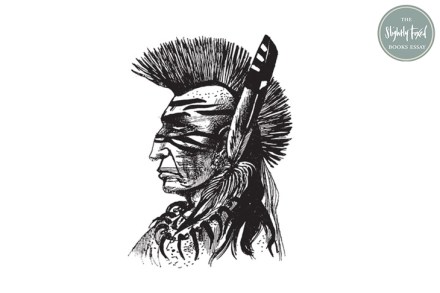
The last Yana-speaker in the world died in 1916. When Ishi was born, the Yana were still a small but healthy collection of tribes ranging the Sierra Nevada mountains of California, where they lived off what they could hunt and the salmon they caught in the rivers. But gold had been discovered in California and every year tens of thousands of settlers were arriving to stake out a claim. When Ishi was four years old, there was a massacre of Yana people near what’s now Mill Creek; Ishi’s father was one of the people killed. The last few survivors disappeared into the hills. The white settlers never encountered them again; as far as they knew the Yana had been wiped out.
The dangerous charm of Peter Matthiessen

From our UK edition

In 1951, the American author Peter Matthiessen moved to Paris. The scion of a wealthy Wasp family, he had studied at Yale and served in the navy, narrowly missing the second world war. He was then recruited to the CIA by James Jesus Angleton and sent to Paris, where he kept tabs on left-wing French intellectuals and expat Americans. As he later explained in a letter to a friend: When you’re 23, it seems pretty romantic to go to Paris with your beautiful young wife to serve as an intelligence agent and write the Great American Novel into the bargain. Weren’t you ever as young and dumb as that? While in Paris, Matthiessen helped to found the Paris Review with funding from CIA sources.

The mystery of Rapa Nui’s moai may be solved

From our UK edition

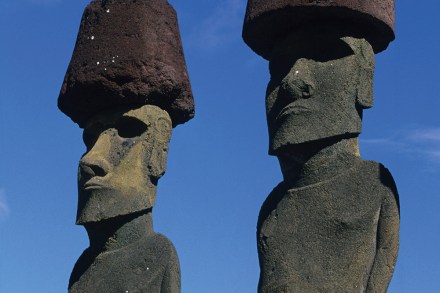
Boris Johnson claims that in his first year at Oxford he attended just one lecture. Delivered in the crepuscular gloom of the Pitt Rivers Museum, it was about Rapa Nui, the tiny Pacific island 2,200 miles from mainland Chile. As a boy, Johnson had read the Norwegian adventurer Thor Heyerdahl’s Aku-Aku: The Secret of Easter Island and had become obsessed. No wonder. For although Rapa Nui – or Easter Island – is only half the size of the Isle of Wight, it has a haunting history teeming with questions. Who first discovered this speck in the Pacific? How did they get there? How did they manage to settle in this place battered by subtropical seas, rat-infested, with no permanent freshwater streams and whose only abundant resource was stone? Were they cannibals?

The world’s most exotic languages are vanishing in a puff of smoke

From our UK edition

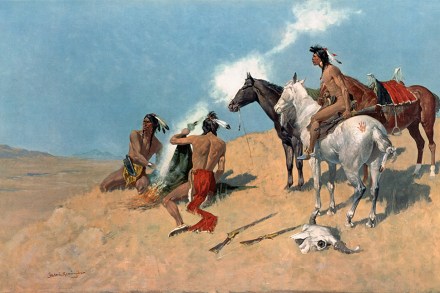
It is one of academia’s horrible ironies that linguistics, the subject devoted to human communication, has managed to communicate nothing about its many startling and fundamental discoveries to the world outside its university departments. So any book such as this linguistic tour of some of the world’s exotic, hidden and endangered languages is to be welcomed with sobbing gratitude. Almost all the languages Lorna Gibb describes are staples of linguistics course books, but I’m assuming each will come as startling news to a general readership. One which was new to me was the sign language used by native north Americans throughout the Great Plains, and thanks to Gibb, I also now know how to interpret their smoke signals: two puffs = all is well; three puffs = help!

Bones, bridles and bits – but where’s the horse?

From our UK edition

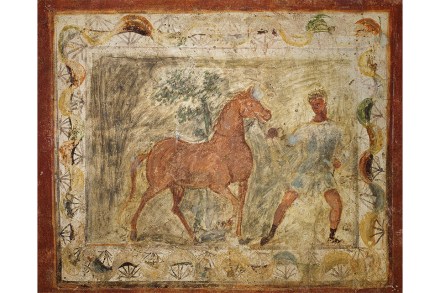
The German cultural scientist Ulrich Raulff has written that horses have as many meanings as bones. In the archaeologist William Taylor’s new history of horses and humans, we meet all those bones. Found in thawing permafrost, in caves, and buried ceremonially in graves in Siberia and Chile, the bones are cracked open by Taylor to show how the horse evolved in the Americas before its early encounters with human hunters. Does a 5,000-year-old worn tooth tell us it once chomped a bit? Does damage to vertebrae indicate a rider? Then came domestication, transforming the species from near extinction to tool and symbol on every major landmass on the planet. After that, horses and their keepers created empires, paced epically long trade routes – and brought plague from the steppes.

A Native American tragedy: Wandering Stars, by Tommy Orange, reviewed

From our UK edition

‘You will ask the librarian what novels are written by Indian people and she will tell you that she doesn’t think there are any,’ reflects Victoria Bear Shield, a Native single mother in Tommy Orange’s polyphonic second novel. It is 1954, in America, and she is working out how to rear her baby daughter so that the child is not puzzled, as she herself was, by being ‘the brownest person in every room’. Seventy years later, one would hope that the librarian’s knowledge of indigenous writers would include at least Orange’s own work and that of Sherman Alexie and Louise Erdrich. Orange is a member of the Cheyenne and Arapaho tribes and his first novel, There There (2018), was one of Barack Obama’s books of the year and a Pulitzer Prize finalist.

Killers of the Flower Moon captures the singular sensation of outside-ness

In the summers my grandmother would drive us south of town to where the black oaks thinned out and the world opened into pasture land and sky: prairie grass as far as you could see. Here, on their tribal land, the Seminole People would hold an annual powwow. Folks congregated to visit and eat frybread tacos, and I would skateboard with my Muskogee friends, Mike and Bobby Harjo on the cement basketball court, or along sections of sidewalk outside the aluminum-sided lodge. Around sundown, when the whippoorwills began to call from the sparse stands of blackjack and the fireflies winked on and off, the sound of drums started to pound the earth. You could feel them coming up through the soles of your shoes.

killers of the flower moon

Ritualistic murder in 1920s America: Cahokia Jazz, by Francis Spufford, reviewed

From our UK edition

Writers dealing with that knottiest of problems in fiction – to what extent can they describe cultures and societies not their own without appropriation, an insulting level of ignorance and/or launching a social media storm – are going about it in different ways. The latest novel by Sebastian Faulks is set in the future (where, pleasingly, everyone still needs a coat, phew). Val McDermid has gone the other way and returned to smoky, bottom-pinching years, starting with 1979. Francis Spufford’s solution to writing about race – and race in America at that – is to propose an alternate reality, invent an intensely detailed city to do it in, and extrapolate new words from the remnants of an ancient language known as Mobilian trade jargon. It’s certainly an original approach.

Coca-Cola’s ‘Indigiqueer’ Pride workshops for kids

Coca-Cola is kicking off Pride Month by sponsoring events for preteens that are taught by Native American "Indigiqueer" and two-spirit artists. On the first day of Pride Month, Coca-Cola is partnering with the Smithsonian’s National Museum of the American Indian to bring workshops from “across the Western Hemisphere working towards equity and social justice for Indigenous peoples” to middle- and high-school students. “Fashion is often used to confirm identities, challenge social structures and display personalities,” the event description reads. “Discover the joy of fashion in our conversation celebrating PRIDE month.” There are four panelists.

coca-cola

How to Blow Up a Pipeline is an ecoterrorist heist movie

How to Blow Up a Pipeline begins with a land acknowledgement.  For those unfamiliar, this is a lengthy paragraph — often found at progressive meetings or on classroom syllabi — stating that the land upon which an activity is occurring was never formally ceded by the Native American tribe to which it once “belonged.” (Never mind that firstly many Native concepts of land management didn’t track what twenty-first-century Westerners mean by “ownership” and secondly the individuals making such acknowledgements clearly have no intention of actually returning the land they supposedly illicitly occupy.

A still from How to Blow Up a Pipeline (Neon)

Going native: is ancestral eating the answer to our dietary woes?

The question of what to eat has plagued Americans since the first conquistadors hit the shores and started rounding up and eliminating the only people who actually knew what was meant to grow and be eaten here. Historical accounts show the first colonists living in abject terror of the foreign foods of Native Americans, believing that if they began eating the strange corn, squash and beans around them then they would literally turn into Indians. As a result, many of them starved trying to grow their old-world crops in America. Now, hundreds of years later, the colonizers’ descendants are looking to the past in search of a solution to the countless health problems that plague consumers of American food. They’re calling it the ancestral diet.

ancestral

Meet the Navajo who wants Native Americans to vote Republican

How well Republicans fared this time around with Native American voters is hazy. Brookings reports that Native Americans “remained solidly Democratic in their voting preferences in 2022, though slightly lower than we observed in 2020.” The Washington Post, meanwhile, reports that support from Democrats’ “diverse voter base… slipped across the board,” and “a majority of voters who are American Indian or Alaska Native favored Republicans this year.” Regardless, Native American voters have always been a tough demographic for Republicans to crack.

The tricky debate over fossil fuels on Native American land

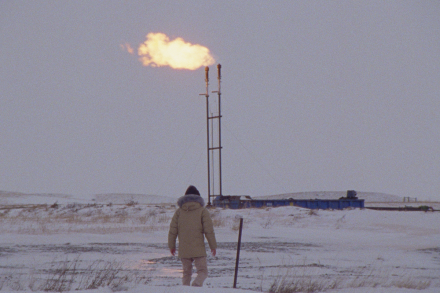
The Biden administration has found itself between a rock and a hard seam of coal. A cohort of Native American tribes have realized just how sacred — and lucrative — their lands really are, and they’re not trusting the promises of an old white man this time. “When the administration says, ‘We're going to create all these millions of jobs if we just switched over [to renewable energy] today,’ they haven't shown us the fine print that says where those jobs are coming, which region, doing what,” Daniel Cardenas, chairman of the National Tribal Energy Association and member of the Pit River Tribe, told Fox News Digital in an interview. "When you start questioning them there, then they start getting defensive.

Both epic and intimate: The Love Songs of W.E. Du Bois, by Honorée Fanonne Jeffers, reviewed

From our UK edition

To write a first novel of 800 pages is either supremely confident or crazy. Honorée Fanonne Jeffers, a professor of English at the University of Oklahoma and the author of five poetry collections, now gives us The Love Songs of W.E.B. Du Bois, a multigenerational saga set over two centuries. It opens in the 18th, with a young black American in search of the Seminole tribe in Florida. Instead, he finds another Native American community in an area of Georgia fabulously named The-Place-in-the-Middle-of-the-Tall-Trees. He calls himself Coromantee, and is embraced by the Creeks. This part of the novel is narrated like a chorus by the collective voice of the community. The settlement is later stolen and disbanded by a slave-owner named Samuel Pinchard.

The Washington Redskins have a new name

Normally Cockburn isn't much of a sports fan, notwithstanding the occasional boozy tailgate for his local kickball team (which was disbanded years ago). But even he couldn't help but blow his whistle this morning when he learned that the Washington Football Team, formerly the Washington Redskins, had changed its name to the Washington Commanders. At first blush, the Commanders isn't such a bad choice. The franchise, after all, is based in the very seat of our military-industrial complex. Certainly it's a better choice than, say, the Washington Corporals (too low-rank) or the Washington Raytheon Lobbyists (too on the nose). And Commanders does have a distinctly DC oomph to it.

Are New England’s stone heaps Native Americans’ sacred ruins?

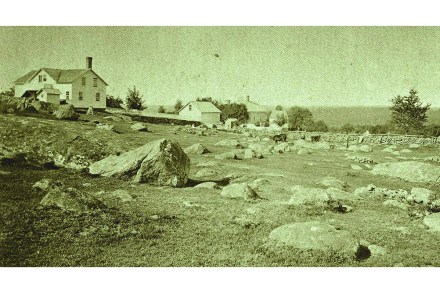
Brightman Hill lies deep in the forests of Hopkinton, Rhode Island. It is named for the Brightmans, one of the families who farmed it, and evidence of its agricultural past is, to most observers, unambiguous: old building foundations, a nineteenth-century burial ground, an extensive network of stone walls and hundreds of stone heaps, the results of field clearing. But in 2019, a federally-funded survey of Brightman Hill shattered these traditional interpretations. The surveyors, Ceremonial Landscapes Research, LLC, are a small group of antiquarians led by Alexandra Martin, a registered professional archaeologist who recently earned her doctorate in anthropology. Instead of stone heaps and walls, the surveyors reported “linear stone groupings” on Brightman Hill.

stone

A matter of life and death

The ice on my right breast is a painful reminder of the limbo I currently find myself in: the anxiety-provoking space between a biopsy and the results. The time when you try to think positively — as if your magical thinking could change the results, the nature of whatever cells the needle procured. I’m simultaneously telling myself ‘worry is praying to the wrong God’ and repeating the word ‘benign’ over and over and over again. But the knot in my stomach is wondering if I’m about to enter a nightmare. You do your best to stay present but work falls through the cracks. You explain it away by apologizing and vaguely mentioning that you have some ‘health stuff’ you’re dealing with: nothing serious, just annoying.

Biopsy

What does ownership of land really mean?

From our UK edition

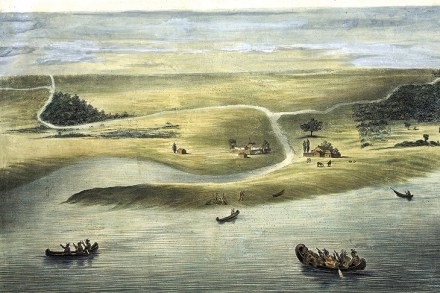
At the end of the last century, Simon Winchester bought 123 acres of wooded mountainside in the hamlet of Wassaic, the village of Armenia, the town of Dover, the country of Dutchess, the state of New York, the country of America. His land had originally been inhabited by the Mohicans, who grew corn and squash and beans until they were expelled by the Dutch. It was then owned, in the titular sense, by Charles II, James II, Mary II, William III and Georges I, II and III, and had passed through the hands of a series of farmers, charcoal-makers and Sicilian immigrants before Winchester became its custodian.

Born to be wild: the plight of salmon worldwide

From our UK edition

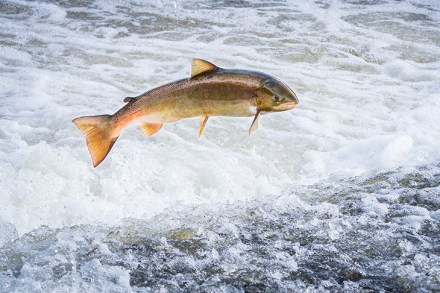
In the Pacific Northwest, Native Americans paint images of salmon on to stones. They say that if you rub those stones you will acquire the fish’s two great qualities: determination and energy. Not so long ago these communities’ diets consisted of more than 80 per cent salmon, and they believed it to be a wondrous thing that the migratory fish returned on the same week every year. They also believed they ‘owed the salmon respect and gratitude’ — and if they failed in this they might stop coming back. In the 19th and 20th centuries their fears were realised. But it wasn’t Native Americans who were disrespectful to the once abundant salmon; it was those who came from Europe, with a wish to get rich and tame the wild.

A colonial adventure in Mohawk Valley

You should never camp in a ravine. Look for higher ground, and a windbreak — a fallen tree is fine, but rocks are the best. Gather balsam wood for bedding, and use your tomahawk to cut firewood from a dead tree. Make two fires. Set the bigger one against the rocks for warmth, and spread the ashes of the smaller one over the ground you wish to sleep on — they will stop it being so cold and damp. Catch fish from the river, but keep an eye out for Indians moving silently through the forest on moccasined feet. This much I have learnt from Ronald Welch’s Mohawk Valley. I just wish I had read it as a boy, for it would have furnished my bivouacking trips in the woods with a far greater level of detail.